The Rise of Internal Delivery Operations: How They Are Shaping the Future of Factory Logistics

By Parry Bold on March 5, 2026

subscription-delivery-models-logistics-futures

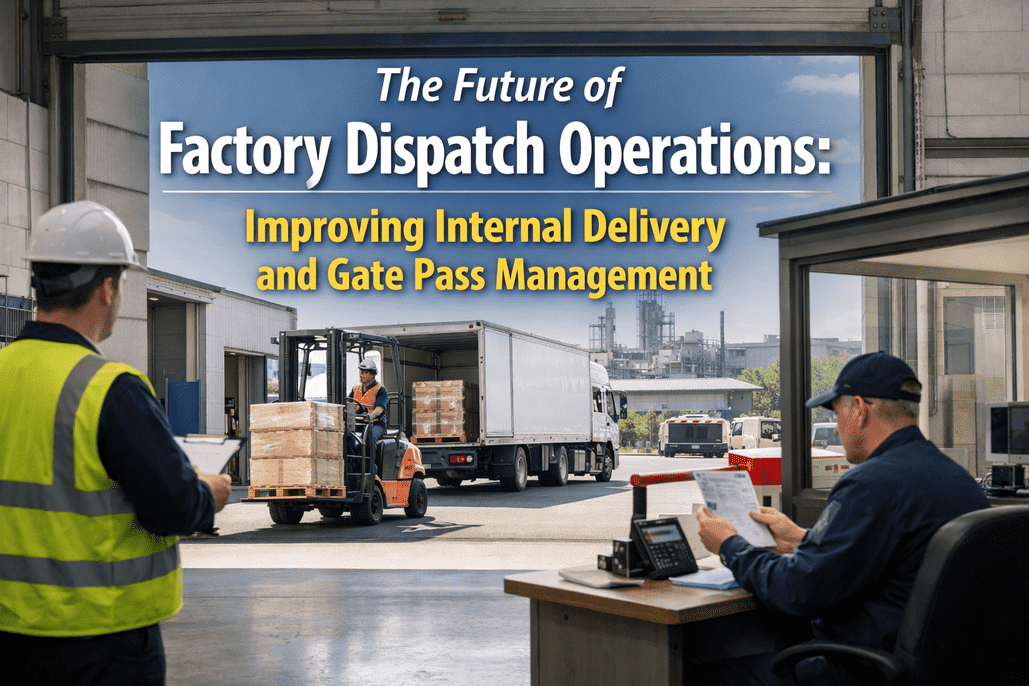
Most factories have digitized their production lines, automated their quality checks, and deployed IoT sensors across their assets — yet the delivery department at the factory gate still runs on paper gate passes, handwritten receiving logs, and dispatcher whiteboards. The result: a single factory receiving 20 vehicles per day loses over 280 minutes of dock time daily to manual gate pass processing alone. Internal delivery operations — inbound receiving, gate pass management, material transfers, vehicle inspections, and dispatch sequencing — are the most under-digitized department in modern manufacturing. That gap is now costing real money, creating compliance exposure, and quietly delaying production every single day. Book a demo with iFactory and see what your delivery department looks like when every movement is visible.

iFactory · Factory Delivery Department Module

Your production floor has dashboards. Your delivery department deserves the same visibility.

iFactory digitizes every gate pass, inbound receipt, material transfer, vehicle inspection, dispatch event, and incident report — giving your operations team real-time visibility into the department that controls everything that enters and exits your plant. Deploy in 7–14 days. No IT project. No hardware procurement. Results visible from day one.

87%
Gate pass time reduction

78%
Faster inbound receiving

100%
Audit trail coverage

14 Days
Full deployment
Book A Demo
Factory Delivery Operations · Internal Logistics · 2026 Guide

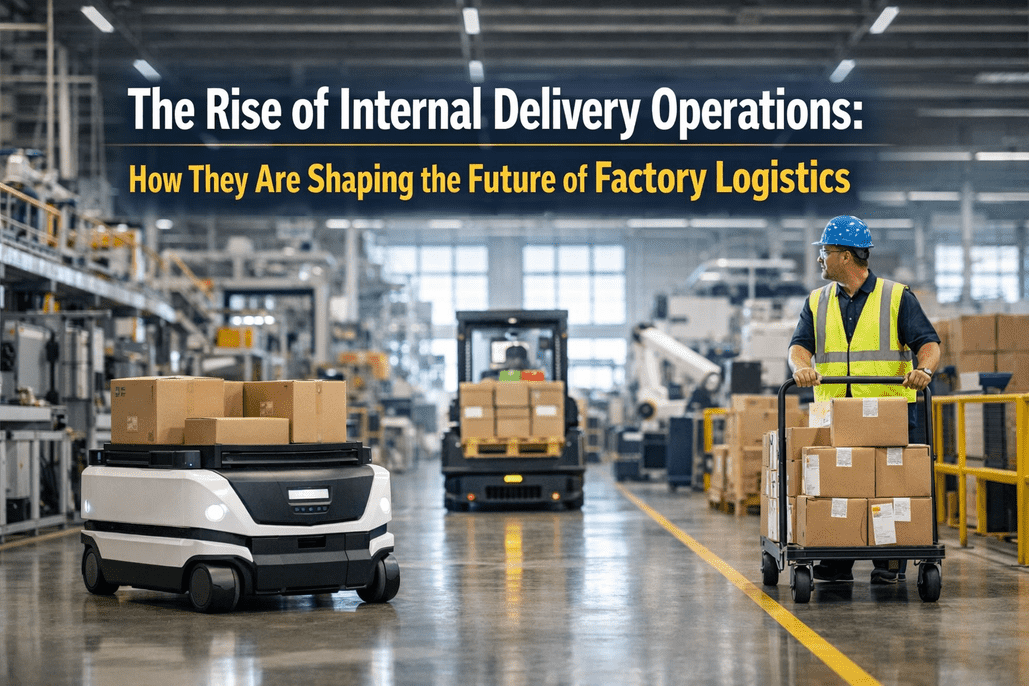
The Rise of Internal Delivery Operations: How They Are Shaping the Future of Factory Logistics

Gate pass delays. Unverified inbound shipments. Material movement with no chain of custody. Skipped vehicle inspections. In 2026, these aren't acceptable operational gaps — they're competitive liabilities with measurable costs. This guide covers how leading factories are digitizing their internal delivery department and what it delivers in return.

280+Minutes of dock time lost daily at a 20-vehicle/day factory using manual gate passes
87%Reduction in gate pass processing time achieved with digital automation
72%Of manufacturers have partially implemented smart factory strategy — delivery departments lag every other function
$11.6BGlobal delivery management software market in 2025, growing to $25.5B by 2035
The Visibility Gap

What Your Factory Tracks — And What It Doesn't

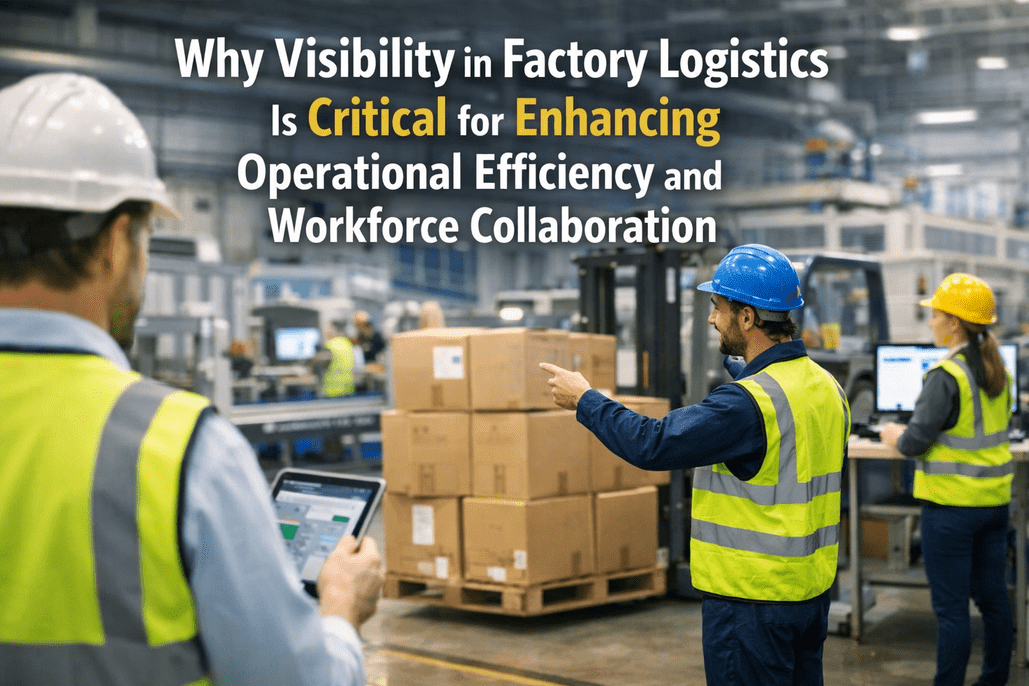
86% of manufacturers actively track OEE. Almost none track gate pass processing time, inbound receiving cycle duration, or internal material transfer status. The production floor has dashboards. The delivery department has clipboards. This is the gap iFactory closes.

Already Tracked With Data
Machine uptime and OEE by production line
Work order completion rate and technician response time
Finished goods inventory levels and stock movement
Quality defect rates per batch and shift
Energy consumption per process and equipment
Preventive maintenance compliance by asset
Production schedule adherence by line
Shift output vs. target across all departments
Still Running Blind
Gate pass processing time per vehicle per day
Inbound shipment waiting time at the receiving dock
Receiving discrepancy rate and PO variance tracking
Internal material transfer location and chain of custody
Vehicle pre-departure inspection completion rates
Dispatch SLA compliance and sequencing error frequency
Incident reporting lag time from event to escalation
Audit trail completeness for every inbound and outbound movement
8 Critical KPIs

The Delivery Department KPIs Every Factory Manager Should Be Measuring

KPI 01
Gate Pass Cycle Time
Time from vehicle arrival at the gate to authorized entry. Manual: 15–20 minutes per vehicle. Digital: under 2 minutes. At 20 vehicles/day the difference is 4.6 hours of recovered dock time daily.
Manual: 15–20 minvsDigital: under 2 min
KPI 02
Inbound Receiving Cycle
Time from dock arrival to verified, system-recorded receipt with PO match. Manual paper receiving: 45–60 minutes per shipment. Mobile digital receiving with photo POD: under 10 minutes.
Manual: 45–60 minvsDigital: under 10 min
KPI 03
Receiving Discrepancy Rate
Percentage of inbound shipments with quantity, condition, or PO-match discrepancies. Without digital verification, most discrepancies surface hours or days after the vehicle departs — making resolution expensive and contested.
Manual: undetected at receiptvsDigital: flagged at dock instantly
KPI 04
Dispatch SLA Compliance
Percentage of outbound dispatches completed within committed SLA windows. Manual sequencing error rate runs 2–3%. Digital dispatch holds this under 0.3% — and critically, SLA misses under manual systems frequently go undetected until a customer complaint surfaces them.
Manual error rate: 2–3%vsDigital: under 0.3%
KPI 05
Vehicle Inspection Rate
Percentage of vehicles completing a logged, verified pre-departure inspection before leaving the facility. On paper systems, inspection completion is self-reported and unverified. iFactory's digital checklists enforce completion — failed vehicles are auto-blocked from dispatch until cleared.
Paper: unverifiable self-reportvsDigital: enforced and timestamped
KPI 06
Material Transfer Traceability
Percentage of internal material movements with a complete chain of custody record. 30–40% of production material search time is eliminable with digital transfer records. Most stoppages attributed to "material unavailability" are locating failures, not stock-outs.
Manual: location unknown mid-transitvsDigital: real-time location known
KPI 07
Incident Reporting Lag
Time from an incident event (damaged goods, safety issue, receiving dispute, vehicle damage) to a documented, escalated record. On paper systems, incidents are discovered days after occurrence. Digital systems capture incidents at the moment of occurrence with photo evidence and auto-escalation.
Paper: days after eventvsDigital: real-time with auto-escalation
KPI 08
Audit Trail Coverage
Percentage of delivery department movements — inbound, outbound, internal transfers, inspections — with a complete, timestamped, person-attributed digital record. iFactory delivers 100% audit trail coverage. Paper-based departments typically cannot reconstruct complete records for any 30-day audit window.
Paper: incomplete and reconstructedvsDigital: 100% coverage, instant retrieval
Is your delivery department generating any of these KPIs today?
iFactory's factory delivery module captures every gate pass, receiving event, material transfer, inspection, and dispatch record automatically — giving your operations team the visibility they need to manage this department like the rest of the plant.
Data Flow

How iFactory Connects Every Stage of Your Factory Delivery Department

From the moment a vehicle is pre-registered to the moment it exits the gate, iFactory creates a connected data layer across every delivery department function. Here is what each stage unlocks.

Stage 01
Pre-Arrival Gate Pass Registration
Suppliers and drivers pre-register vehicle details, cargo manifest, PO references, and expected arrival time through a supplier portal or mobile link. Security staff see the incoming vehicle list before it arrives — no manual data entry at the gate, no queuing while information is collected. Pre-registered vehicles clear the gate in under 2 minutes vs. 15–20 minutes for manual first-time processing.
Pre-registration portalSupplier self-servicePO pre-matchingArrival scheduling

Stage 02
Gate Entry, Vehicle Inspection, and Badge Issue
Security staff complete digital gate pass on mobile device — vehicle reg, driver ID, cargo description, destination dock, and time-stamped entry. Vehicle inspection checklist completed at the gate — any damage, safety defect, or documentation issue is flagged immediately and records the condition of the vehicle on arrival. Visitor or driver badge issued digitally with time-limited access scope. Every field timestamped and attributed to the responsible security officer.
Digital gate passVehicle condition recordDigital badge issueSecurity officer attribution

Stage 03
Inbound Receiving, PO Verification, and Discrepancy Capture
Receiving team meets vehicle at the assigned dock with the mobile app pre-loaded with the expected PO and item list. Items are scanned or counted against the PO — any quantity shortfall, damage, wrong item, or substitute product is flagged with a photo at the moment of discovery, while the delivery vehicle is still at the dock. Digital proof of delivery captured with receiver signature and timestamp. Receiving completion drops from 45–60 minutes to under 10 minutes per shipment.
PO-matched receivingPhoto discrepancy captureMobile POD signatureReal-time stores update

Stage 04
Internal Material Transfer and Location Tracking
Once received, every material movement from the dock to stores, production floor, or sub-assembly area is logged as a digital transfer record — from location, to location, transferred by, quantity, and timestamp. Production supervisors can see exactly where a material batch is without calling the stores team. 30–40% of production search time is eliminated when the system knows where every item was last placed. "Material unavailability" stoppages caused by locating failures — not actual stock-outs — are virtually eliminated.
Chain of custody recordsTransfer log by personProduction floor visibilitySearch time elimination

Stage 05
Outbound Dispatch, SLA Management, and Gate Exit
Dispatch team manages outbound loading against priority-sequenced work orders — iFactory surfaces which outbound shipments are approaching their SLA window and flags at-risk dispatches before they miss the commitment. Pre-departure vehicle inspection is enforced digitally — a vehicle with a failed checklist item cannot be dispatched until the fault is cleared and recorded. Gate exit records the vehicle out with timestamp, load manifest, and assigned driver attribution. Full inbound-to-outbound audit trail complete and instantly retrievable for compliance or dispute resolution.
SLA priority queuePre-departure inspection gateDispatch attributionGate exit audit record
Measurable Results

What Factory Delivery Digitization Delivers — Verified Outcomes

87%
Reduction in gate pass processing time
Pre-registration and digital gate pass workflow cuts vehicle entry time from 15–20 minutes to under 2 minutes per vehicle — recovering hours of dock capacity every single day.
78%
Faster inbound receiving completion
Mobile PO-matched receiving with photo capture drops the inbound cycle from 45–60 minutes to under 10 minutes per shipment — freeing receiving staff for higher-value activities.
100%
Audit trail coverage for every movement
Every gate pass, receiving event, material transfer, vehicle inspection, and dispatch is timestamped and person-attributed. Compliance audits that previously took days of record reconstruction complete in minutes.
90%
Reduction in dispatch errors
Digital SLA-priority dispatch queue replaces whiteboard sequencing. Dispatch error rate drops from 2–3% to under 0.3% — and SLA misses are detected and escalated in real time instead of surfacing as customer complaints.
40%
Reduction in inbound delays
Digital workflows connecting pre-arrival registration, dock assignment, and receiving sequence eliminate the coordination gaps that cause inbound vehicles to queue outside the gate waiting for manual processing to catch up.
7–14 Days
Full deployment timeline
iFactory deploys in under 14 days with no IT infrastructure project required. Cloud-native, mobile-first architecture means security staff, drivers, and receiving teams are operational within the first week. Payback typically within 3–6 months.
Before vs. After

Factory Delivery Department: Manual Operations vs. iFactory Digital

Process Area
Manual / Paper Operations
iFactory Digital Operations
Gate Pass Processing
15–20 min per vehicle · Data entry errors · No pre-arrival visibility
Under 2 min · Pre-registered · Timestamped entry record
Inbound Receiving
45–60 min per shipment · Discrepancies discovered days later
Under 10 min · Discrepancies captured at dock with photo evidence
Vehicle Inspection
Paper checklist · Self-reported · No enforcement · No condition record
Digital checklist · Timestamped · Failed vehicles auto-blocked from dispatch
Material Transfer
No chain of custody · Location unknown in transit · Production stoppages from search
Full chain of custody · Real-time location visible · Search time eliminated
Dispatch Management
Whiteboard sequencing · 2–3% error rate · SLA misses undetected
SLA-priority digital queue · Under 0.3% errors · Misses detected in real time
Incident Management
Discovered days later · Manual escalation · Incomplete evidence
Real-time capture · Auto-escalation · Photo evidence at point of occurrence
Compliance Audit
Days of record reconstruction · Incomplete paper trail · High compliance risk
Instant report generation · 100% trail coverage · Audit-ready in seconds
Supervisor Visibility
No real-time data · Status by walking the floor or calling staff
Live dashboard · Every active gate pass, vehicle, and movement visible in real time
FAQ

Factory Internal Delivery Operations — Detailed Questions Answered

Have more questions? Talk to our support team directly for answers specific to your factory setup.

What exactly is a factory internal delivery department — and how is it different from last-mile logistics?
A factory internal delivery department manages all vehicle and material movement within and directly adjacent to the production facility — inbound supplier deliveries, gate access control, receiving and PO verification, internal material transfers between stores and production lines, outbound dispatch management, vehicle inspections, and incident reporting. It is fundamentally different from last-mile or courier logistics. There is no customer-facing delivery involved. The "customers" of the factory delivery department are internal: the production floor waiting on raw materials, the stores team processing received goods, the dispatch supervisor sequencing outbound loads. The performance metrics that matter are gate cycle time, dock turnaround, PO verification accuracy, material transfer traceability, and dispatch SLA compliance — not customer NPS or on-time delivery to end consumers. Most delivery management software is built for the courier/last-mile use case and is poorly suited to the internal factory context. iFactory is built specifically for manufacturing plants and their internal delivery operations workflow. Book a demo to see the factory-specific features in detail.
Why do manual gate passes cause such significant production impact — the gate seems like a minor process?
The gate pass appears to be a minor administrative step, but the downstream cascade from gate delays is significant and compounds across every inbound shipment in the day. When a vehicle queues at the gate for 15–20 minutes during manual processing, three things happen simultaneously: (1) the dock assignment process is delayed, meaning the dock bay is occupied or idle while the vehicle waits, blocking the next vehicle from accessing the dock; (2) the receiving team's schedule is thrown off by the unpredictable vehicle arrival sequence, reducing their throughput; (3) if the inbound shipment contains materials or components required on the production floor that day, the production schedule absorbs the delay as a starvation event. A factory receiving 20 vehicles per day with 15-minute manual gate pass processing loses 300 minutes of dock and receiving time daily — the equivalent of nearly a full shift across a 5-person receiving team. iFactory's pre-arrival registration and digital gate pass reduces this to under 2 minutes per vehicle, recovering 260+ minutes of operational time daily. Talk to our support team to calculate the dock time recovery specific to your vehicle volume.
How does iFactory handle receiving discrepancies — what happens when an inbound shipment doesn't match the PO?
iFactory's inbound receiving module is built around PO-matched digital verification. Before the vehicle arrives, the purchasing team's PO is pre-loaded into the system against the expected delivery. When the receiving team opens the mobile app at the dock, they see the expected items, quantities, and specifications for that shipment. As items are counted or scanned, any variance — short delivery, over-delivery, wrong item code, substitute product, or damaged goods — is flagged immediately within the receiving workflow. The receiver captures a photo of the discrepancy at the moment of discovery, while the delivery vehicle is still at the dock and the driver is still present. A discrepancy report is automatically created, linked to the original PO and gate pass record, and escalated to the purchasing or quality team based on the severity threshold configured by the plant. The key difference from manual receiving is timing: discrepancies captured at the dock with photo evidence while the driver is present are immediately actionable — the plant can reject the shipment, accept a partial delivery, or request replacement before the vehicle departs. Discrepancies discovered after the vehicle has left — as happens routinely with paper systems — are contested, slow to resolve, and frequently result in production delay while replacement stock is sourced. Book a demo to walk through the receiving workflow for your specific commodity types.
What does "production stoppages from material search" actually mean — can't the stores team just know where things are?
In factories running manual material transfer records, the stores team physically knows where materials are located when they put them there — but that knowledge degrades rapidly as the shift progresses, staff change over, or materials are moved between floor locations without a formal record. The scenario that causes stoppages runs like this: a production supervisor requests a batch of raw material. The stores system shows adequate stock — the material was received two days ago and entered into the stock ledger. The stores team goes to retrieve it and cannot find it. The material was received, partially used by a different production line, and the balance moved to a secondary storage area during a floor reorganization — none of which was recorded. The production supervisor calls a material unavailability stoppage, but the issue is not a stock-out — it is a location failure. iFactory's digital transfer records log every material movement with origin location, destination location, moved-by attribution, and timestamp. The stores team opens the app and sees exactly where the batch was last placed and who moved it. The locating phase — which industry data shows consumes 30–40% of production material search time — is eliminated. Talk to our support team if you want to map this workflow against your stores layout.
How long does iFactory take to deploy and what does the implementation process look like for a manufacturing plant?
iFactory is designed for rapid deployment without an IT infrastructure project. Most manufacturing plants are fully operational on the delivery department module within 7–14 days from contract signing. The deployment follows a structured process: Days 1–2: Platform configuration for your specific facility — gate points, dock locations, supplier list, vehicle types, PO integration or manual PO upload, and user role setup for security staff, receiving team, dispatch supervisors, and operations managers. Days 3–5: Mobile app deployment to field staff devices with a 1-hour guided walk-through of each role's workflow — security gate process, receiving team process, dispatch sequencing process. No multi-day training programmes required because the app is designed for operational personnel, not software users. Days 6–10: Live operation with support team available for real-time assistance as the first shipments, gate passes, and inspections are processed digitally. Days 11–14: Dashboard configuration, KPI baseline establishment, and any workflow refinements based on the first two weeks of live data. There are no heavy implementation fees, no hardware procurement requirements beyond mobile devices (which most plants already have), and no on-premises server installation. The platform is cloud-native and deploys through a web browser and mobile app. Payback is typically achieved within 3–6 months of go-live from dock time recovery and receiving efficiency gains alone. Book a demo to discuss your specific plant layout and deployment timeline.
How does iFactory support regulatory compliance and audit readiness for the delivery department?
Regulatory compliance for factory delivery operations spans multiple frameworks depending on your industry and region: DOT and OSHA vehicle safety requirements in the USA, Schedule M and FSSAI supplier traceability requirements in India, supply chain audit standards in the UK, ISO 9001 traceability requirements across all regions, and customs documentation requirements for international inbound shipments. iFactory creates compliance documentation as a byproduct of daily operations — no separate compliance workflow required. Every gate pass creates an automatically formatted vehicle entry record with timestamp, driver attribution, vehicle condition note, and cargo manifest. Every receiving event creates a PO-verified receipt with discrepancy notes and receiver signature. Every vehicle inspection creates a timestamped checklist completion attributed to the inspecting officer. Every incident creates a timestamped report with escalation chain documentation. When an auditor requests 90 days of inbound vehicle records, receiving discrepancy logs, or vehicle inspection compliance data, the iFactory report generates in under 60 seconds. In paper-based delivery departments, the same request takes days of manual record compilation — and routinely reveals gaps that create compliance exposure. Talk to our support team to discuss compliance requirements specific to your industry and region.
iFactory · Factory Delivery Department Module

Your production floor has dashboards. Your delivery department deserves the same visibility.

iFactory digitizes every gate pass, inbound receipt, material transfer, vehicle inspection, dispatch event, and incident report — giving your operations team real-time visibility into the department that controls everything that enters and exits your plant. Deploy in 7–14 days. No IT project. No hardware procurement. Results visible from day one.

87%
Gate pass time reduction

78%
Faster inbound receiving

100%
Audit trail coverage

14 Days
Full deployment

Share This Story, Choose Your Platform!