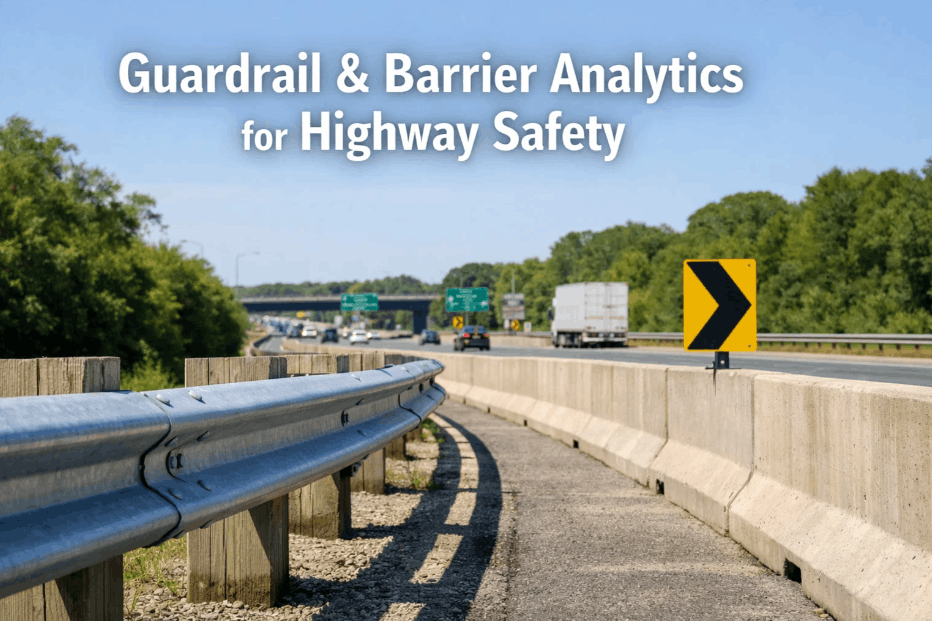
Effective highway guardrail safety programs are the primary defense against catastrophic roadway departures, yet most transportation departments remain trapped in reactive repair cycles that jeopardize public safety. In 2026, guardrail analytics has moved beyond simple inventory to predictive barrier analytics that prioritize repairs based on impact frequency and structural aging. For state and local agencies, maintaining MASH compliance is no longer just a regulatory hurdle; it is a strategic requirement for securing federal funding and reducing liability in high-incident corridors. If your agency is still managing roadside hardware in disconnected spreadsheets, book a demo to see what a purpose-built guardrail management system looks like in real-time operation.
Upgrade to Predictive Guardrail Safety Analytics
See how integrated highway safety barrier software helps public works departments schedule inspections, track MASH compliance, and reduce repair cycle times — all in one platform.
What Is Global Guardrail & Barrier Analytics?
A guardrail analytics program is a proactive framework for mapping, inspecting, and maintaining safety hardware before structural failures occur. Unlike traditional "drive-by" inspections, road barrier analytics utilize geo-spatial tagging and sensor-driven failure modeling to extend asset life and ensure every runs meet MASH compliance. This system covers everything from terminal ends and transitions to bridge rails and median barriers, providing a single source of truth for highway guardrail health. Leading agencies that book a demo with modern guardrail program software often eliminate 30% of their unreported damage backlog within sixty days.
The Cost of Reactive Barrier Maintenance
Waiting for crash reports to trigger a guardrail repair is a recipe for liability; proactive highway guardrail management identifies structural weaknesses before they fail under impact. The common failure points in municipal barrier programs are rarely technical — they are almost always due to documentation gaps and disconnected workflows. Departments that consistently book a demo find that centralized data visibility is the fastest way to bridge the gap between field inspections and budget approvals.
Root Cause
Inspection records stored in separate files from crash damage reports
No centralized repository for MASH certification documents
Manual transcription errors between field notes and office databases
Lack of geo-tagged photos for verify-at-distance repair audits
Root Cause
Inspection intervals based on calendar years rather than traffic volume
No automated escalation for overdue high-priority repairs
Field crews spending 40% of time locating assets without GPS
Seasonal spikes not accounted for in tech maintenance capacity
Root Cause
No unified list of hardware type (W-Beam, Cable, Concrete)
Stockpile levels not linked to active repair work order volume
Manufacturer-specific hardware requirements not readily available
Legacy NCHRP 350 systems not flagged for priority replacement
Implementation Roadmap: Activating Your Barrier Program
Establishing a MASH-compliant safety network requires a repeatable framework for asset onboarding and data verification. Highway barrier best practices consistently emphasize the same foundational steps for building a guardrail inspection schedule that remains resilient under administrative and operational pressure.
Step 1
Geo-Spatial Asset Inventory Onboarding
Establish a unique digital ID for every barrier run. Record the manufacturer, installation date, material type, and exact GPS coordinates to eliminate "hidden" hardware that eludes routine inspection.
Step 2
MASH Compliance Gap Analysis
Benchmark your current inventory against the latest safety standards. Identify high-priority corridors where legacy NCHRP 350 hardware needs immediate upgrade to meet federal and state safety grant requirements.
Step 3
Mobile Digital Inspection Deployment
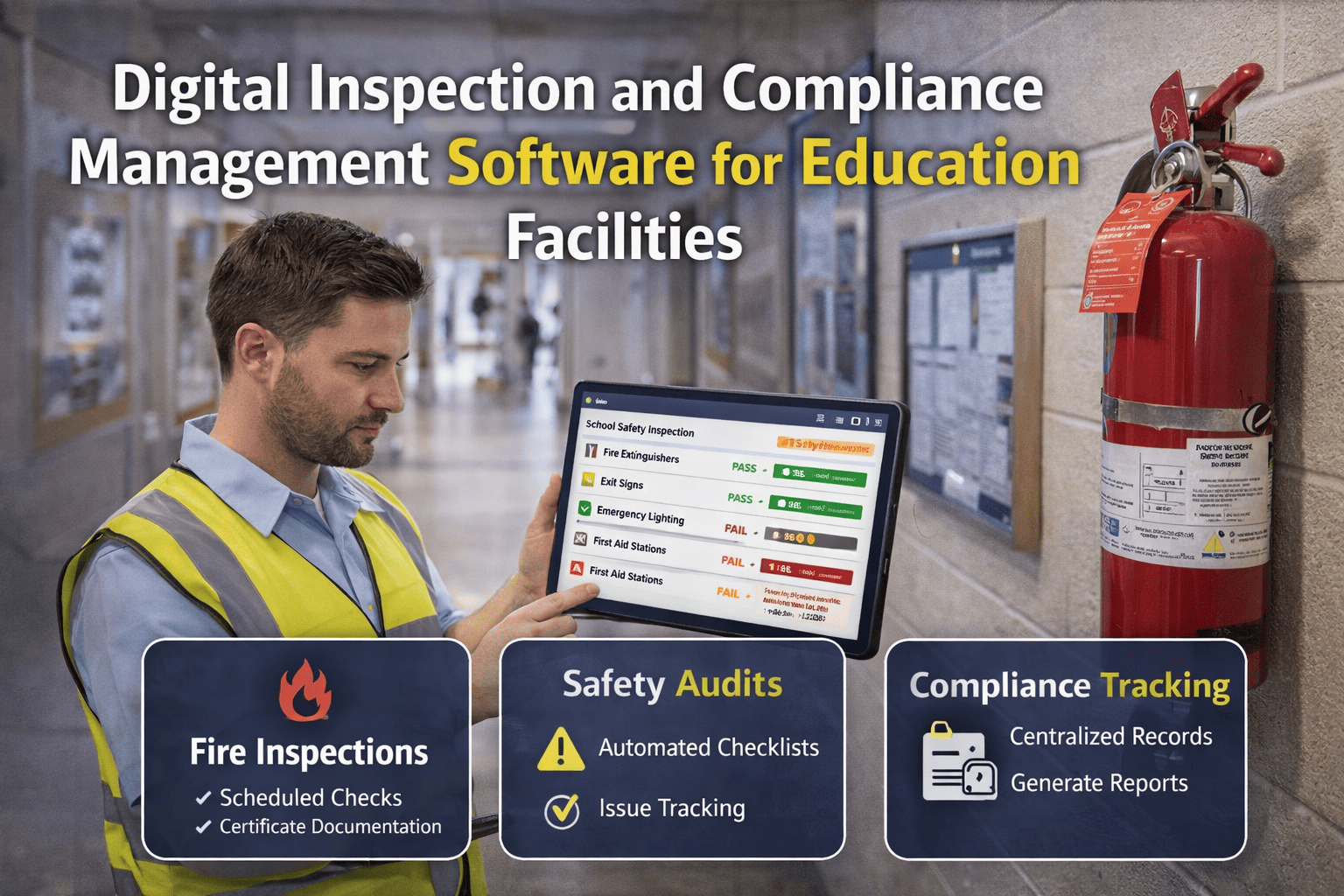
Equip field crews with mobile tools that allow for 1-click inspection logging. High-resolution photo documentation and instant defect categorization ensure that "good enough" repairs are caught before they fail.
Unrepaired highway safety barrier damage costs transportation agencies 4.2x more in litigation and emergency repair fees than scheduled guardrail maintenance. For every $1 invested in proactive guardrail analytics, agencies avoid $4 in corrective spending and significantly reduce the probability of catastrophic override incidents.
Guardrail Safety Metrics: KPIs That Drive Compliance
You cannot improve a guardrail program you cannot quantify; barrier analytics provide the hard data needed to justify budget releases even in tight fiscal years. Agencies that book a demo typically see live KPI dashboards that track these six critical indicators in real-time, allowing for instant management decisions.
MASH Compliance Rate
Target: 95%+
Percentage of roadside hardware currently meeting MASH safety standards
Repair Cycle Time
Target: < 72 Hrs
Average time from damage detection to verified structural restoration
Inspection Completion
Target: 100%
Scheduled guardrail inspection tasks completed within the fiscal window
Deferred Backlog Value
Trending Down
Total dollar value of identified safety hardware repairs awaiting funding
Terminal End Damage Rate
Alert Threshold
Frequency of damage to high-risk end treatments per corridor mile
Audit Finding Rate
Target: 0%
Number of documentation errors or missing certifications per cycle
Run a Live Data Audit of Your Safety Hardware
iFactory connects your existing GIS inventory with real-time field inspection data to create an audit-ready highway guardrail safety report in minutes, not weeks.
Traditional vs. Digital Barrier Management: The ROI Gap
Digital barrier analytics do more than just digitize paper; they provide the predictive intelligence needed to optimize labor and material spending. Comparing the two methods reveals why top state DOTs are abandoning spreadsheet-based guardrail management for integrated software platforms.
| Operational Activity |
Legacy Spreadsheet Method |
Integrated Guardrail Analytics |
Department Benefit |
| Inventory Location |
Mile marker guesses |
GPS Coordinate Mapping |
Save 300+ Field Hours/Year |
| Damage Verification |
Second site visit required |
High-Res Photo Documentation |
Zero Unnecessary Site Visits |
| Compliance Reporting |
2-Week Manual Compilation |
Instant Automated Exports |
100% Audit Readiness |
| Prioritization |
First-In, First-Out |
Risk-Based Safety Scoring |
Eliminate High-Liability Gaps |
Digital Barrier Maturity Model: Four Phases of Safety Evolution
The transition to a high-performing road barrier analytics program is most successful when phased. This model allows departments to build momentum through quick wins in inventory accuracy before moving to predictive guardrail safety modeling. If you are evaluating your department's current status, book a demo to benchmark your team against global peers.
01
Digital Asset Mapping
Eliminate paper registries. Create a single source of truth for every foot of hardware, geo-tagged and linked to manufacturer specifications to ensure correct parts are always on the maintenance truck.
02
Closed-Loop Inspections
Connect inspections directly to work orders. No defect is logged without an immediate trigger for repair, ensuring that damage never "sits" in a database until a major incident occurs.
03
GIS-Integrated Reporting
Overlay hardware health with traffic and crash data. Identify "hot zones" where barriers are frequently struck but and redirected, justifying upgrades to higher-performance systems.
04
Predictive Safety Modeling
Use historical failure patterns to schedule preventive maintenance. Switch from time-based to usage-based cycles, maximizing the lifecycle of every roadside asset.
Municipal Strategies for Guardrail Maintenance Success
Effective resource allocation is where a guardrail program wins or loses its effectiveness. Even the best schedules fail if technician capacity is misaligned with maintenance demand. These strategies reflect highway barrier best practices from high-performing agencies. Teams looking to implement these can book a demo to see these workflows in practice.
1
Risk-Weighted Scheduling
Prioritize inspections on high-speed arterials and sharp curves over light residential zones. Use traffic volume data (AADT) to automatically adjust inspection frequencies for high-fatigue segments.
2
Standardized Material Par Levels
Link your guardrail analytics to inventory levels. Ensure your yards always have MASH-compliant end treatments in stock for high-incident corridors based on historical burn rates.
3
Contractor Compliance Portals
Provide your third-party guardrail repair contractors with access to the platform. They document their repairs, upload photos of the finished work, and you verify compliance before payment.
Frequently Asked Questions: Guardrail Analytics & Safety Programs
How does a guardrail management system handle NCHRP 350 legacy assets?
A modern system flags all pre-MASH hardware with a specific legacy status. This allows agencies to develop a multi-year phase-out plan, prioritizing the replacement of NCHRP 350 units in high-speed or high-crash zones to maintain federal safety funding eligibility.
Does the software support offline data capture for rural highway zones?
Yes. Field crews can complete guardrail inspection forms and capture photos without a cellular connection. The system automatically syncs all data, including GPS stamps, once the device reconnects to the network.
How quickly can we see an ROI after implementing barrier analytics?
Most departments see "soft" ROI within 30 days via improved visibility. Hard ROI, measured in reduced repair cycle time and decreased litigation exposure, typically matures within the first full audit cycle (6-12 months).
Can we track impact history for specific barrier runs?
Every asset in iFactory has a permanent digital log. This includes every inspection, every documented strike, and every repair certification, providing a complete forensic history for roadside safety hardware.
What is the typical cost for implementing a city-wide barrier analytics program?
Costs vary based on network mileage and historical crash volume. However, most agencies find that the software pays for itself in year one through improved insurance recovery from third-party crash damage and reduced administrative overhead.
Does the software require specific hardware or sensor installations?
No specialized hardware is required for the baseline program. The system is built to utilize standard mobile devices for field data capture, though it can integrate with high-speed LiDAR or AI imagery if your agency already uses these tools.
How much training is required for maintenance field crews?
The mobile interface is designed for simplicity. Most field technicians are proficient with the inspection and repair logging workflows following a single 2-hour onboarding session, requiring no advanced IT knowledge.
One Unified Platform for Highway Safety, Mapping, and Repairs
iFactory connects your roadside hardware inventory, predictive guardrail analytics, mobile field workflows, and MASH compliance documentation into one single source of truth for transportation operations.