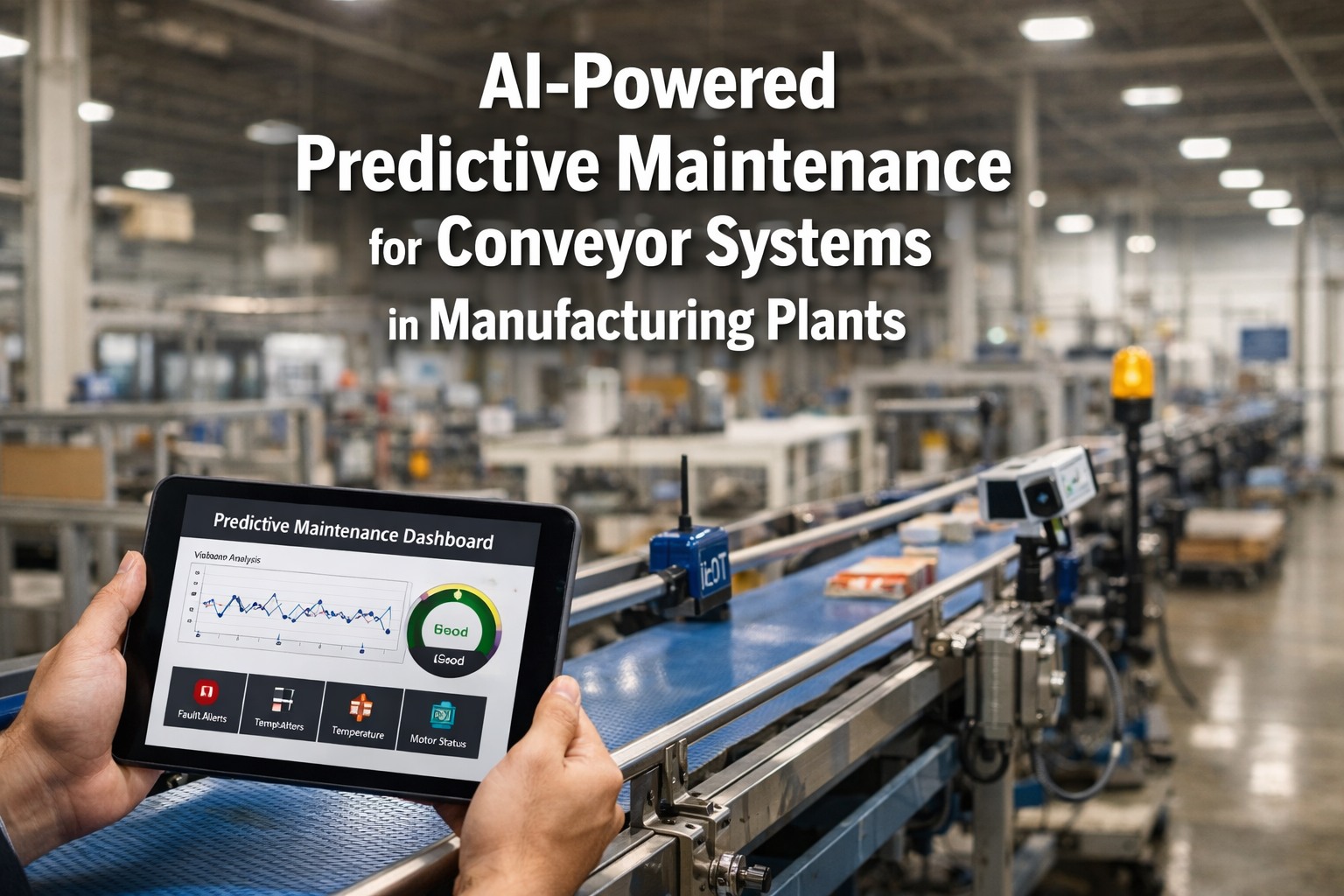
Cloud‑Based EAM Platforms for Manufacturing Asset Management
By oxmaint on March 6, 2026
Every hour of unplanned downtime on a manufacturing floor can cost thousands in lost production, emergency repairs, and missed shipments. Cloud-based Enterprise Asset Management (EAM) platforms are rapidly replacing outdated on-premise systems, giving manufacturers real-time control over every piece of equipment—from the moment it arrives on the shop floor until it is decommissioned. With the EAM software market on track to surpass $9 billion by 2030 and cloud adoption in manufacturing rising sharply year over year, the question is no longer whether to migrate but how quickly you can get started. Schedule a free demo to see how cloud EAM can reduce downtime at your plant.
What Is Cloud-Based EAM and Why Does Manufacturing Need It?
Enterprise Asset Management (EAM) is the discipline of managing physical assets across their full lifecycle—planning, acquisition, operation, maintenance, and retirement. A cloud-based EAM platform delivers all of this through a web-hosted, subscription-based model instead of on-premise servers. For manufacturers operating multiple production lines, shifts, and sometimes multiple plants, cloud EAM eliminates data silos, removes hardware dependency, and ensures every stakeholder has access to the same real-time asset intelligence.
Unlike traditional CMMS tools that focus narrowly on maintenance scheduling, cloud EAM encompasses the entire asset ecosystem: capital planning, compliance tracking, spare parts inventory, vendor management, and performance analytics. This holistic approach is why manufacturers pursuing operational excellence are increasingly choosing EAM platforms that live in the cloud. Get Support now to centralize your asset lifecycle data across every facility.
$9B+
Projected global EAM market size by 2030, growing at 9% CAGR
53%
Average reduction in unplanned downtime with cloud predictive maintenance
47%
Improvement in OEE reported by manufacturers using cloud asset platforms
31%
Operational cost savings within 2 years of cloud manufacturing adoption
Key Features That Define a Manufacturing-Grade Cloud EAM
Not every cloud platform labeled "EAM" is built for the realities of manufacturing. Production environments demand sub-second data from IoT sensors, offline mobile access for technicians in RF-shielded areas, and integration depth that connects to PLCs, SCADA, and MES systems. Here are the capabilities that separate manufacturing-grade cloud EAM from generic asset tracking tools.
Full Asset Lifecycle Tracking
Manage every asset from purchase order through commissioning, daily operation, maintenance cycles, and eventual disposal. Cloud EAM stores the complete digital thread—warranties, repair history, depreciation schedules, and compliance certificates—in one accessible location.
AI-Driven Predictive Maintenance
Machine learning models trained on vibration, temperature, current draw, and historical failure data predict breakdowns days or weeks before they occur. AI scheduling optimizes the timing of interventions so you never maintain too early or too late.
Automated Work Order Engine
Work orders are generated automatically based on condition thresholds, calendar schedules, or meter readings. Each order includes parts lists, safety procedures, manuals, and estimated completion time—pushed directly to technician mobile devices.
Spare Parts and Inventory Control
Demand-driven inventory algorithms correlate parts consumption with maintenance schedules and equipment health scores. Auto-replenishment triggers prevent stockouts while minimum-maximum thresholds eliminate costly overstock across warehouses.
Cross-Plant Benchmarking Dashboards
Compare MTBF, MTTR, maintenance cost per unit, and OEE across every facility on a single dashboard. Identify which plant runs Furnace X most efficiently, then replicate those practices across the entire network.
Regulatory Compliance Automation
Maintain audit-ready documentation for OSHA, ISO 55000, FDA, and industry-specific regulations. Automated inspection reminders, digital sign-offs, and timestamped compliance records eliminate the scramble before audits.
See How Cloud EAM Works for Your Plant
Walk through a live demo tailored to your manufacturing environment. Our team will map your asset challenges to specific cloud EAM capabilities.
How Cloud EAM Solves Critical Manufacturing Pain Points
Manufacturing maintenance teams deal with a predictable set of problems that get worse as operations scale: scattered data, reactive firefighting, bloated spare parts rooms, and zero visibility into what is happening at other sites. Cloud EAM directly addresses each of these pain points with purpose-built functionality.
The Problem
Unplanned Downtime Drains Revenue
Reactive maintenance means equipment fails without warning, halting production lines and triggering expensive emergency repairs. Every hour of downtime compounds in missed orders and overtime labor.
The Cloud EAM Solution
Condition-Based and Predictive Alerts
IoT sensors feed real-time health data into AI models that detect degradation patterns early. Maintenance is scheduled during planned windows, converting emergency stops into controlled interventions.
The Problem
Data Silos Between Plants
On-premise systems lock asset data inside individual facilities. Leadership cannot compare performance across sites, and best practices stay trapped in one location instead of spreading across the organization.
The Cloud EAM Solution
Unified Multi-Site Intelligence
Cloud architecture creates a single data repository for every plant. Executive dashboards show global KPIs while plant managers drill down to local detail, enabling data-driven decision-making at every level.
The Problem
Spare Parts Chaos
Without intelligent inventory management, maintenance teams either stockpile expensive parts that gather dust or face production-stopping shortages. Manual reordering leads to duplicate purchases and wasted capital.
The Cloud EAM Solution
AI-Optimized Inventory Planning
Cloud EAM links parts demand to equipment health, maintenance schedules, and supplier lead times. Automated reorder points keep critical spares in stock while minimizing carrying costs across all warehouses.
Cloud EAM vs. On-Premise EAM: A Side-by-Side Breakdown
The migration from on-premise to cloud EAM is one of the most impactful infrastructure decisions a manufacturing organization can make. Here is how the two approaches compare across the dimensions that matter most to plant operations and IT teams.
Deployment Model Comparison
Evaluation Criteria
On-Premise EAM
Cloud-Based EAM
Upfront Investment
High CapEx: servers, licenses, IT infrastructure, physical space
Low entry cost: monthly or annual subscription, no hardware purchases
Deployment Speed
6 to 18 months including procurement, installation, and configuration
4 to 8 weeks for core functionality; phased expansion for advanced modules
Software Updates
Manual patches and upgrades requiring scheduled IT downtime
Automatic updates pushed by the vendor with zero operational disruption
Multi-Site Access
Data siloed per location; cross-site visibility requires custom integrations
Single platform for all plants; unified dashboards and global benchmarking
Mobile Capability
Limited; often requires VPN and additional mobile middleware
Native mobile apps with offline mode for field technicians
Scalability
Adding sites means purchasing and configuring new hardware at each location
Add users and facilities instantly through license expansion
Disaster Recovery
Dependent on local backup infrastructure; physical damage risks data loss
Automatic cloud backups with geo-redundant storage and 99.9% uptime SLAs
Which Manufacturing Sectors Benefit Most from Cloud EAM?
While cloud EAM delivers value across every manufacturing vertical, certain sectors see outsized returns due to the complexity of their assets, the severity of downtime consequences, or the weight of regulatory compliance requirements.
Automotive and Assembly
High-speed production lines with robotic welders, presses, and conveyors demand near-zero downtime. Cloud EAM enables real-time OEE tracking and just-in-time maintenance scheduling that protects throughput.
Food and Beverage Processing
Strict FDA and HACCP compliance requires documented sanitation schedules, temperature monitoring, and equipment calibration records. Cloud EAM automates compliance workflows and maintains audit-ready logs.
Pharmaceutical Manufacturing
GMP-regulated environments need validated maintenance records, calibration tracking, and full traceability. Cloud EAM delivers 21 CFR Part 11 compliant electronic signatures and immutable audit trails.
Heavy Industry and Metals
Furnaces, crushers, and heavy machinery represent enormous capital investments. Condition-based monitoring through cloud EAM extends asset life by catching degradation early and scheduling overhauls strategically.
Electronics and Semiconductor
Cleanroom environments and precision equipment require micro-contamination control and exact calibration management. Cloud EAM tracks environmental conditions alongside equipment health for holistic quality assurance.
Consumer Packaged Goods
High-volume filling, labeling, and packaging lines need rapid changeover support and multi-SKU scheduling. Cloud EAM optimizes line efficiency and correlates maintenance timing with production demand cycles.
Connecting Cloud EAM to Your Existing Technology Stack
A cloud EAM platform only delivers its full value when it communicates seamlessly with the systems already running your operation. The best platforms offer pre-built connectors and open APIs that eliminate manual data transfer between departments and systems.
ERP Integration
Bidirectional data sync with SAP, Oracle, Microsoft Dynamics, and other ERPs for cost allocation, purchase orders, budget tracking, and financial reporting
MES / SCADA
Real-time production data exchange for OEE calculation, quality correlation, and automated maintenance triggers based on machine output metrics
IoT Sensors
Continuous ingestion of vibration, thermal, acoustic, and pressure data from edge devices for predictive analytics and condition monitoring
Supply Chain
Spare parts demand forecasting, automated purchase order generation, vendor performance scoring, and delivery tracking across all suppliers
HR and Workforce
Technician skill matrices, certification tracking, labor cost allocation, safety training compliance, and shift-based job routing
BI and Analytics
Custom executive dashboards, Power BI and Tableau connectors, KPI trend analysis, and automated regulatory compliance reporting
Ready to Centralize Your Manufacturing Asset Intelligence?
iFactory connects maintenance, operations, and asset lifecycle data into one intelligent cloud platform—giving your team real-time visibility, predictive insights, and automated workflows from the production floor to the boardroom.
Measuring ROI: What Cloud EAM Delivers in Year One
Cloud EAM investments pay for themselves through measurable gains across multiple dimensions. Unlike on-premise systems that require years of amortization, the subscription model means you start seeing returns from the first month of operation. Here is what manufacturers consistently report within the first 12 months of deployment.
55%
Less Unplanned Downtime
Predictive maintenance and condition monitoring catch failures before they cause production stops
40%
Lower Maintenance Labor Costs
Automated work orders, mobile execution, and optimized scheduling reduce wasted technician hours
65%
Faster Work Order Completion
Mobile-first workflows, digital checklists, and instant parts availability eliminate administrative delays
30%
Extended Asset Useful Life
Data-driven maintenance timing prevents both neglect-based failures and unnecessary over-servicing
Step-by-Step: Deploying Cloud EAM in a Manufacturing Environment
Successful cloud EAM deployment follows a structured methodology that minimizes disruption to active production while delivering rapid time-to-value. Most manufacturers achieve full operational capability in under three months, with measurable gains appearing within weeks of initial go-live.
1
Week 1-2
Assessment and Asset Audit
Catalog existing assets, document current maintenance workflows, assess integration requirements with ERP/MES systems, and define KPI targets for the deployment.
2
Week 3-4
Platform Configuration and Data Migration
Configure asset hierarchies, import historical maintenance records, set up preventive maintenance schedules, establish integration bridges with existing plant systems.
3
Week 5-6
Pilot Line Go-Live and Team Training
Launch cloud EAM on a single production line to validate workflows. Train maintenance technicians, supervisors, and managers on mobile work execution and dashboard usage.
4
Week 7+
Full Rollout and Continuous Optimization
Expand to all production lines and facilities. Activate predictive models as data volume grows. Continuously refine PM schedules and KPI thresholds based on real performance data.
How to Choose the Right Cloud EAM for Your Manufacturing Operation
With dozens of cloud EAM vendors in the market—from enterprise giants like IBM Maximo and SAP to agile mid-market platforms—selecting the right fit requires evaluating your operation's specific needs against each platform's strengths. Here are the criteria that matter most for manufacturing environments.
Cloud EAM Selection Criteria for Manufacturers
Manufacturing-Specific Functionality: Does it support OEE tracking, production-correlated maintenance, and shop-floor mobility—or is it a generic asset tracker adapted for manufacturing?
Integration Depth: Can it connect bidirectionally with your ERP, MES, SCADA, and IoT infrastructure through pre-built connectors or open APIs?
Time-to-Value: How quickly can you go from contract signing to live production use? Platforms that require 12+ months of implementation delay your ROI significantly.
Mobile-First Design: Technicians need offline-capable mobile apps with barcode scanning, photo capture, and digital signatures—not a desktop interface squeezed onto a phone screen.
Scalability Architecture: Can the platform grow from one pilot line to dozens of global facilities without performance degradation or architectural rework?
Total Cost of Ownership: Evaluate subscription fees alongside implementation costs, training, customization, and ongoing support—not just the sticker price.
Start Your Cloud EAM Journey with iFactory
Legacy systems and spreadsheets cannot deliver the real-time visibility, predictive intelligence, and multi-plant coordination that modern manufacturing demands. iFactory gives you a cloud-native EAM platform purpose-built for production environments—connecting every asset, automating every workflow, and turning maintenance data into a strategic competitive advantage.
What is the difference between CMMS and cloud EAM for manufacturing?
CMMS (Computerized Maintenance Management System) focuses primarily on maintenance tasks like work orders, PM scheduling, and parts tracking. Cloud EAM encompasses the entire asset lifecycle—from capital planning and acquisition through operation, maintenance optimization, compliance tracking, and eventual retirement. For manufacturers managing complex equipment portfolios, cloud EAM provides the broader strategic visibility that CMMS alone cannot deliver.
How long does cloud EAM implementation take in a manufacturing plant?
Most manufacturers go live with core cloud EAM functionality in 4 to 8 weeks, including asset register migration, workflow configuration, and team training. Complex deployments involving deep ERP integrations or multi-plant rollouts may take up to 12 weeks. This is significantly faster than on-premise EAM systems, which typically require 6 to 18 months. Book a demo to get a deployment timeline customized to your manufacturing setup.
Is manufacturing asset data secure in a cloud EAM platform?
Enterprise cloud EAM platforms employ bank-grade encryption (AES-256), role-based access controls, and SOC 2 Type II certified data centers. Data is encrypted in transit and at rest, with geo-redundant backups ensuring availability. Most platforms offer regional data residency options and comply with ISO 27001 standards. For many manufacturers, cloud security infrastructure actually exceeds the protection their internal IT teams can provide on-premise.
Can cloud EAM integrate with our legacy ERP and SCADA systems?
Yes. Modern cloud EAM platforms offer pre-built connectors for major ERP systems (SAP, Oracle, Microsoft Dynamics) and industrial protocols (OPC-UA, Modbus, MQTT) for SCADA and PLC integration. REST APIs and middleware options ensure compatibility with custom or legacy systems. Data flows bidirectionally, so maintenance costs, work orders, and equipment health data stay synchronized across all connected systems.
What ROI can manufacturers expect from cloud EAM in the first year?
Manufacturers typically report measurable returns within 3 to 6 months of deployment. Common first-year outcomes include 40-55% reduction in unplanned downtime, 20-30% decrease in maintenance labor costs, 25-40% reduction in spare parts inventory carrying costs, and a 10-30% extension of average asset useful life. Get Support today and let our team model the projected savings for your specific operation.