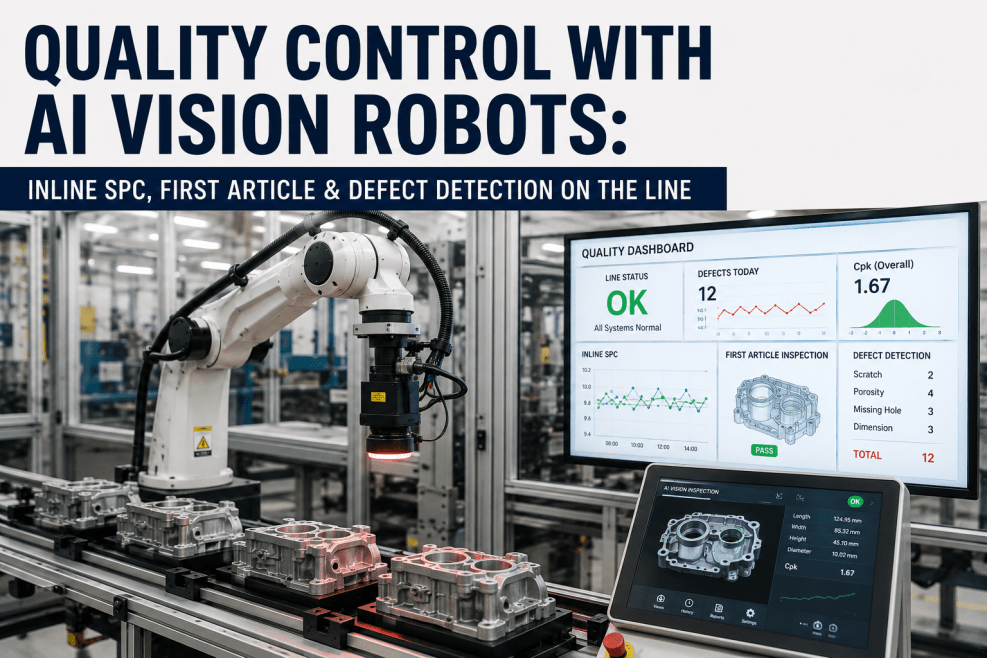
An assembly line operator installs the wrong trim color in automotive interior assembly because similar parts sit side by side without visual distinction, and the defect travels through three downstream stations before quality inspection catches it, triggering rework that costs 42 minutes of production time, scraps $340 in labor and materials, and delays customer delivery by one shift. This preventable error happens because traditional quality control relies on detection after mistakes occur rather than prevention before they happen. iFactory's AI-powered poka-yoke system transforms error proofing from passive detection to active prevention using computer vision that verifies part selection in real time, smart fixtures with sensors that prevent incorrect assembly sequences, and machine learning that identifies error patterns across production data to automatically generate new mistake-proofing rules. The wrong part that should have never reached the assembly station is now flagged before the operator picks it up. Book a demo to see AI poka-yoke in your facility.
iFactory implements AI-enhanced poka-yoke through computer vision verification (detects wrong parts before assembly), sensor-integrated smart fixtures (prevent incorrect sequences), pick-to-light guidance (eliminates selection errors), torque verification systems (ensure proper fastening), and machine learning pattern recognition (identifies recurring error modes to auto-generate prevention rules). Result: 91% reduction in assembly defects, 76% decrease in rework costs, zero-defect pass-through to next stations, and continuous improvement through automated error analysis.
iFactory's AI poka-yoke detects wrong parts, incorrect sequences, and assembly errors in real time, stopping defects at the source before they reach downstream stations.
How AI-Powered Poka-Yoke Works
Traditional poka-yoke relies on physical fixtures, guides, and sensors that only prevent predefined errors. iFactory's AI system learns from production data, adapts to new error modes, and automatically generates prevention rules as manufacturing processes evolve.
Three Types of AI Poka-Yoke Implementation
Poka-yoke systems range from simple contact methods to sophisticated AI-driven prediction. iFactory implements all three types, selecting the appropriate level based on error criticality, production volume, and cost-benefit analysis.
Regional Safety & Quality Compliance
Error-proofing systems must comply with regional safety standards and quality management requirements. iFactory's poka-yoke implementation includes automated compliance documentation, audit trail generation, and regulatory-specific validation protocols for manufacturing operations in US, UAE, UK, Canada, Europe, Germany, Saudi Arabia, and Australia.
| Region | Key Standards | Error-Proofing Requirements | iFactory Compliance |
|---|---|---|---|
| United States | OSHA, ANSI, FDA 21 CFR Part 820 (Medical Device QMS), IATF 16949 (Automotive) | FDA requires error-proofing integration with CAPA. IATF mandates poka-yoke in process FMEA and control plans. OSHA expects mistake-proofing for safety-critical operations. | FDA-compliant CAPA documentation, IATF process FMEA integration, OSHA incident prevention audit trails, automated compliance reporting. |
| United Arab Emirates | UAE Federal Law No. 8 (OSH), ESMA Standards, Dubai Municipality Regulations, OSHAD (Abu Dhabi) | OSHAD framework requires systematic error prevention in manufacturing processes. ESMA standards mandate quality verification systems. Documentation in English and Arabic required for inspections. | OSHAD-aligned error prevention workflows, ESMA compliance validation, bilingual Arabic/English documentation, UAE OSH audit-ready reporting. |
| United Kingdom | Health & Safety at Work Act 1974, PUWER 1998, BS EN ISO 9001, UKCA Marking | HSE expects systematic approach to error prevention in risk assessments. ISO 9001 requires mistake-proofing as part of continual improvement. PUWER mandates equipment error prevention measures. | HSE risk assessment integration, ISO 9001 QMS alignment, PUWER compliance documentation, UKCA marking validation support. |
| Canada | Canada Labour Code Part II, CCOHS Guidelines, CSA Standards, Provincial OHS Regulations | Federal and provincial regulations require hazard prevention through engineering controls including error-proofing. CSA standards specify equipment safety verification. Bilingual (English/French) documentation for federal compliance. | Multi-jurisdictional compliance templates, CSA standard alignment, bilingual English/French reporting, provincial OHS audit trails. |
| European Union | Machinery Directive 2006/42/EC, CE Marking, EN ISO 13849 (Safety), General Product Safety Regulation | Machinery Directive requires risk reduction through design including error-proofing measures. EN ISO 13849 mandates safety-related control systems. CE marking requires error prevention documentation in technical files. | Machinery Directive compliance, CE technical file generation, EN ISO 13849 safety validation, multilingual EU support. |
| Germany | ArbSchG (OSH Act), ProdSG (Product Safety), DGUV Regulations, DIN Standards | DGUV requires systematic workplace hazard prevention. ProdSG mandates product safety measures including manufacturing error prevention. DIN standards specify quality verification methods. | DGUV-compliant hazard prevention, ProdSG documentation, DIN standard alignment, German-language reporting. |
Compliance data current as of April 2026. Regional standards subject to updates. iFactory maintains current compliance templates through continuous regulatory monitoring.
Platform Comparison: Error-Proofing Capabilities
Manufacturing execution systems offer basic error detection, but lack AI-driven prevention and adaptive learning. iFactory differentiates through computer vision verification, predictive error analysis, and automated poka-yoke rule generation from production data patterns.
| Capability | iFactory | Tulip | Plex MES | Evocon | MaintainX |
|---|---|---|---|---|---|
| Vision-Based Error Prevention | |||||
| Computer vision part verification | Real-time detection | Limited vision apps | Not available | Not available | Not available |
| AI pattern recognition for error prediction | ML-powered | Not available | Not available | Not available | Not available |
| Operator Guidance | |||||
| Pick-to-light integration | Full integration | Supported | Partial support | Not available | Not available |
| Torque tool verification | Automatic validation | Manual logging | Basic tracking | Not available | Not available |
| Adaptive Learning | |||||
| Auto-generation of new poka-yoke rules | AI-automated | Manual config | Manual config | Not available | Not available |
| Defect pattern analysis | ML correlation | Basic analytics | Reports only | Basic reports | Not available |
Comparison based on publicly available vendor documentation as of April 2026. Feature availability may vary by tier or module.
iFactory's computer vision, smart fixtures, and predictive analytics prevent errors before they occur, eliminating rework and scrap costs while accelerating production throughput.
Implementation Roadmap
Deploying AI poka-yoke across manufacturing operations follows a phased approach that delivers measurable defect reduction within 30 days while expanding to comprehensive error prevention across all assembly stations.
Measured Results
Client Success Story
Frequently Asked Questions
Related Manufacturing Solutions
iFactory's computer vision verification, smart fixtures, and predictive analytics eliminate defects at the source, reducing rework costs by 76% while accelerating production throughput and ensuring zero-defect quality.