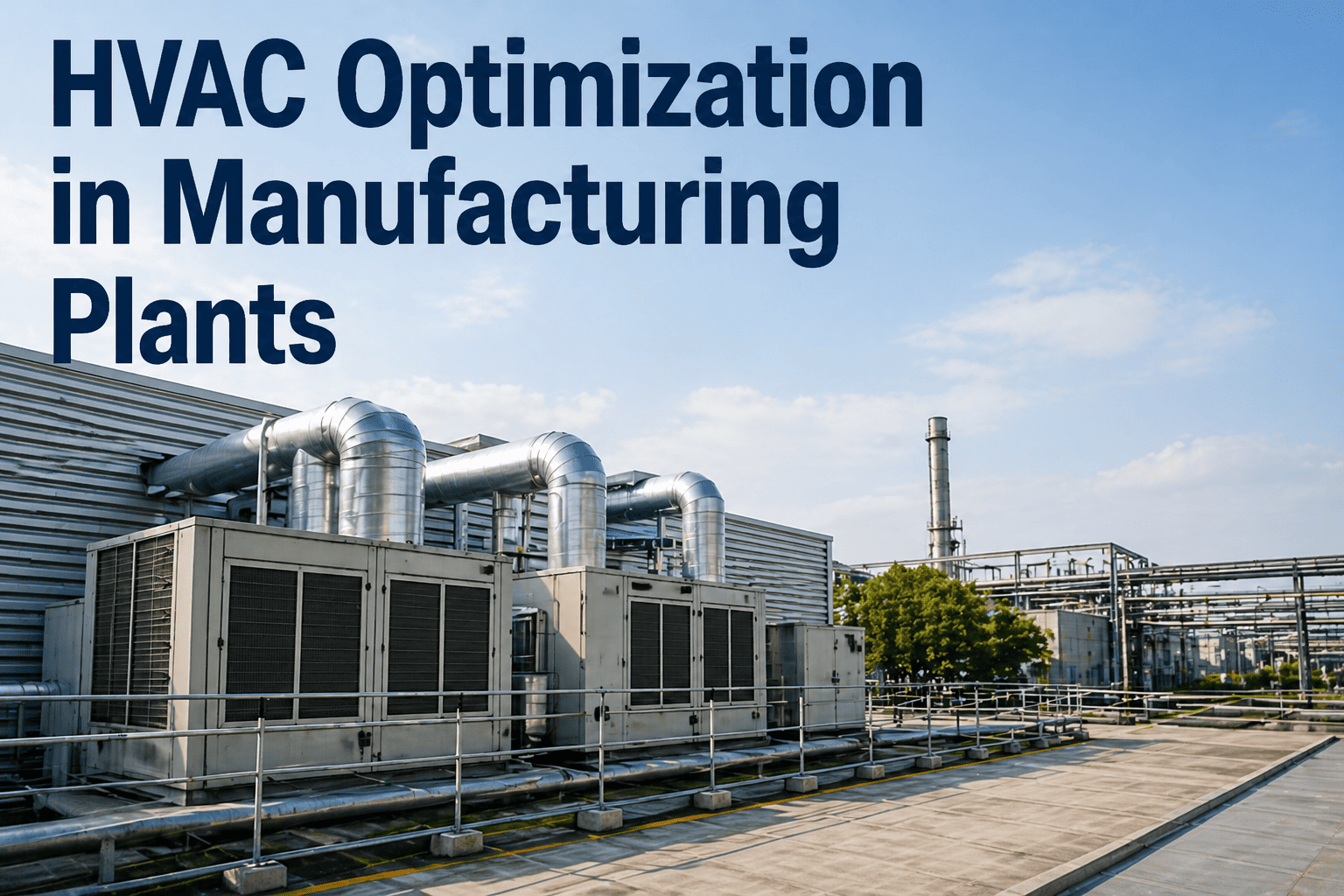
The factory floor runs on airflow. Whether it's a cleanroom assembling semiconductors, a paint booth pulling solvent vapors, or a stamping plant managing heat and dust, the HVAC and ventilation system is the invisible infrastructure that keeps workers safe, equipment reliable, and regulatory auditors satisfied. Yet HVAC is routinely the last system to get structured preventive maintenance attention — until a failed air handler shuts down a temperature-sensitive production line or an OSHA inspector flags inadequate exhaust ventilation. This checklist gives U.S. manufacturing facilities a structured, frequency-based framework for inspecting, servicing, and documenting every major HVAC and ventilation component. Plant leaders looking to digitize and automate these rounds can book a demo with iFactory AI to see how preventive maintenance scheduling, inspection workflows, and work order dispatch come together in one platform.
Automate Your HVAC Maintenance Schedule With iFactory AI
iFactory AI's Preventive Maintenance module digitizes your HVAC checklist, auto-schedules inspection rounds, assigns technicians, and tracks completion — so nothing slips through the cracks.
Why HVAC Maintenance Is a Production-Critical Priority
Industrial HVAC systems don't just control temperature — they manage contaminants, maintain pressure differentials in controlled environments, remove combustible dust and chemical fumes, and regulate humidity that affects product quality and equipment corrosion. A clogged filter doesn't just raise energy costs; it reduces airflow to a paint booth below the minimum required for safe solvent concentration levels. A failed economizer damper on a cold snap drives heating costs up 30% overnight. A cracked duct in a pharmaceutical facility breaks GMP room classification.
The maintenance case is compelling on its own numbers: a well-maintained industrial HVAC system consumes 15–25% less energy than a neglected one, and unplanned HVAC failures cost an average of $14,000 per incident in downtime, emergency service, and parts premium — not counting OSHA exposure.
Daily HVAC and Ventilation Inspection Checklist
Daily walk-through checks catch developing problems before they escalate. These tasks take under 20 minutes for a trained operator and should be completed at the start of each shift in critical production areas.
Weekly HVAC Maintenance Checklist
Weekly tasks require a maintenance technician with basic HVAC familiarity. Plan 1–2 hours per facility zone and document all readings for trend analysis.
Monthly HVAC Inspection and Service Checklist
Monthly tasks combine mechanical inspection with performance measurement. Assign a qualified HVAC technician and allocate 4–6 hours per major system.
Quarterly and Annual HVAC Maintenance Checklist
Quarterly and annual tasks require licensed HVAC technicians or certified specialists. These tasks drive regulatory compliance, system commissioning verification, and long-range reliability planning.
Turn Paper HVAC Checklists Into Automated Preventive Maintenance Schedules
iFactory AI auto-generates work orders, assigns technicians, tracks completions, and triggers alerts when inspections are overdue — all from one digital platform built for manufacturing facilities.
HVAC Component Maintenance Frequency Reference Table
Use this table as a quick reference when building your facility's preventive maintenance schedule. Adjust intervals based on actual operating conditions.
| Component | Task | Frequency | Responsible | Key Standard |
|---|---|---|---|---|
| Pre-filters (MERV 8) | Inspect / replace at ΔP limit | Monthly or by condition | Operator / Tech | ASHRAE 52.2 |
| Final filters (MERV 13+) | Inspect ΔP, replace at limit | Quarterly or by condition | HVAC Tech | ASHRAE 52.2 |
| HEPA filters | Integrity test + ΔP log | Semi-annual / Annual | Specialist | ISO 14644-3 |
| AHU fan belts | Inspect tension, wear | Monthly | HVAC Tech | Manufacturer spec |
| Fan bearings | Lubricate, vibration check | Monthly / Quarterly | HVAC Tech | Manufacturer spec |
| Evaporator coil | Clean, inspect drain pan | Monthly | HVAC Tech | ASHRAE 62.1 |
| Condenser coil | Clean fins, measure approach temp | Quarterly | Licensed Tech | Manufacturer spec |
| Fire / smoke dampers | Test operation, inspect blades | Annual | Certified Specialist | NFPA 80 / NFPA 105 |
| Cooling tower | Clean basin, Legionella risk assessment | Annual (+ quarterly water treatment) | Specialist | ASHRAE 188 |
| Process exhaust fans | Belt, bearing, airflow check | Monthly | HVAC Tech | ACGIH Industrial Ventilation |
| BMS sensors (temp/RH/CO2) | Calibrate vs. reference | Quarterly | Controls Tech | ASHRAE 135 |
| Air balance (TAB) | Full system CFM verification | Annual | TAB Specialist | NEBB / AABC |
Expert Review — A Practitioner's View of Industrial HVAC Maintenance
The most expensive HVAC maintenance failure in manufacturing isn't a compressor burnout or a cooling tower collapse — it's the slow, invisible degradation that never triggers an alarm. Clogged filters running 40% over their design differential pressure. Exhaust fans with 15% belt slip operating at reduced airflow. Economizer dampers stuck open through a heat wave, running mechanical cooling at full load all day.
The most common gap in industrial HVAC programs is the absence of trended data. A filter differential pressure reading taken once is a data point; the same reading taken monthly for a year is a fingerprint that tells you whether your production process is generating more particulate, whether a coil is fouling faster, or whether a replacement filter batch is lower quality than the previous one.
For U.S. manufacturing teams moving from paper-based checklists to digital maintenance management, the transition pays off fastest when the CMMS auto-escalates overdue inspections and captures technician readings in a structured format that feeds trend reports. Plants evaluating that transition can book a demo with iFactory AI.
Key Regulatory and Industry Standards for Industrial HVAC
The following standards define minimum performance requirements, inspection frequencies, and documentation obligations for U.S. manufacturing facilities.
Ventilation for Hazardous Processes
Covers minimum ventilation requirements for spray finishing, open-surface tanks, and grinding operations. Sets face velocity minimums for exhaust hoods and requires periodic airflow measurement documentation.
Ventilation for Acceptable Indoor Air Quality
Specifies minimum outdoor air rates, filtration requirements, and system maintenance obligations for occupied commercial and industrial spaces.
Fire and Smoke Damper Testing
Requires annual inspection and operational testing of all fire dampers and smoke dampers. Failure to comply is one of the most commonly cited HVAC-related life-safety violations.
Legionella Risk Management
Mandates a Water Management Program for building water systems including cooling towers. Facilities must conduct annual Legionella risk assessments and maintain documented water treatment records.
Industrial Ventilation Design Manual
The authoritative reference for capture velocity, transport velocity, and exhaust hood design in process ventilation. Sets the benchmark for annual air balance validation.
Cleanroom Classification and Testing
Defines particle count classification, air change rates, and periodic requalification testing requirements for controlled environments in pharmaceutical and semiconductor manufacturing.
Building a Sustainable HVAC Maintenance Program
A structured HVAC maintenance program isn't just about avoiding equipment failures — it's about running a facility where workers breathe clean air, production processes operate within specified environmental conditions, and energy is spent where it creates value rather than compensating for degraded equipment.
The path from checklist to program requires three things: consistent execution, systematic data capture, and trend analysis that turns inspection readings into actionable decisions. To see how iFactory AI's Preventive Maintenance module handles HVAC scheduling, work order dispatch, and inspection data capture, book a demo with our solutions team.
Frequently Asked Questions — Industrial HVAC Maintenance
How often should industrial HVAC filters be replaced in a manufacturing plant?
Filter replacement should be driven by measured differential pressure, not calendar time alone. Most MERV 8 pre-filters in moderate-dust environments hit their replacement threshold in 30–90 days; MERV 13 final filters typically last 3–6 months. In high-dust processes like metalworking or woodworking, replace pre-filters monthly or shorter.
What OSHA regulations apply to industrial ventilation maintenance?
The primary OSHA standard is 29 CFR 1910.94, which governs ventilation for spray finishing, open-surface tanks, and abrasive grinding. OSHA 1910.1000 (Air Contaminants) sets permissible exposure limits (PELs) that your ventilation system must maintain. NFPA 91 applies to exhaust systems handling combustible materials.
What is the difference between industrial ventilation and comfort HVAC in a manufacturing plant?
Comfort HVAC manages temperature and humidity for worker comfort; industrial process ventilation controls contaminant concentrations, manages heat from equipment, and maintains pressure relationships between production zones. Process ventilation is typically designed to ACGIH Industrial Ventilation Manual standards; comfort HVAC to ASHRAE 62.1.
How can a CMMS or preventive maintenance software help with HVAC management?
A CMMS centralizes HVAC maintenance by auto-generating work orders on the correct schedule, routing tasks to qualified technicians, capturing inspection readings in structured data fields, and tracking completion against schedule. The most valuable capability is trend reporting — a CMMS that logs filter differential pressure at every inspection can alert you when pressure drop climbs faster than normal.
What are the most common causes of industrial HVAC failure in manufacturing plants?
The top causes, in order of frequency: deferred filter replacement causing fan overload and motor failure; belt wear reducing fan airflow below design; condenser coil fouling tripping high-pressure cutouts; failed economizer dampers causing excess mechanical cooling runtime; and refrigerant leaks leading to compressor failure. All five are preventable with the inspection tasks in this checklist.
Digitize Your Plant HVAC Maintenance Program With iFactory AI
iFactory AI gives manufacturing facility teams one platform to schedule, assign, execute, and track every HVAC and ventilation maintenance task — with trend reporting that turns inspection data into predictive insight.