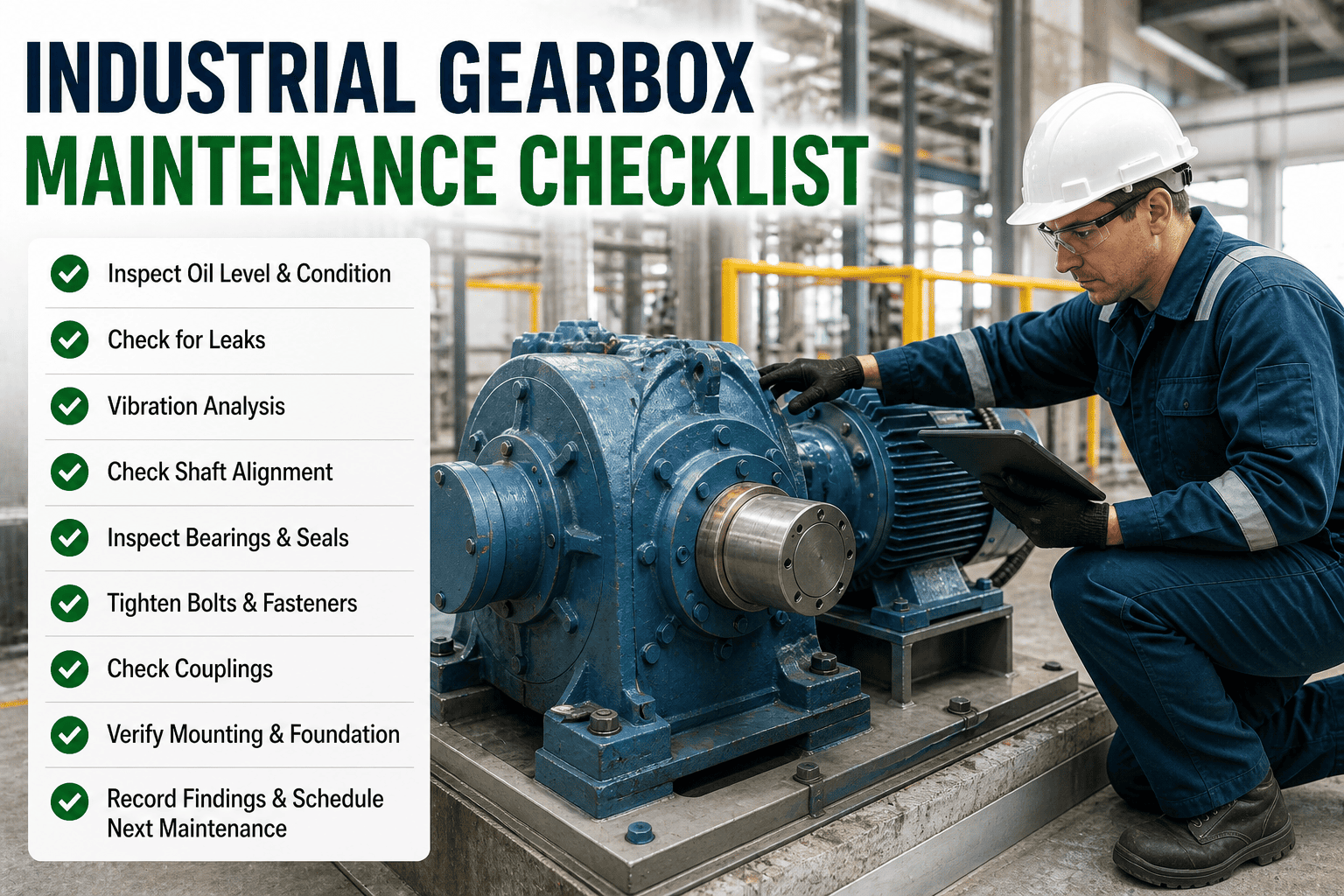
Manufacturing plants lose an average of $2.8M annually to unplanned gearbox failures, with a single catastrophic failure costing $180,000-$640,000 in emergency repairs, production downtime, and supply chain disruption. Yet 68% of industrial plants still rely on time-based maintenance schedules rather than condition-based inspection, replacing gearboxes prematurely or discovering failures after they've already damaged downstream equipment. A structured gearbox inspection program catches 87% of failure signatures 2-4 weeks before catastrophic failure occurs, preventing the majority of emergency downtime. Book a demo to see how iFactory converts this checklist into digital inspection work orders assigned to your manufacturing plant asset hierarchy.
Maintenance ChecklistIndustrial Gearbox Maintenance and Inspection Checklist18 min read
2.8M
Average annual gearbox failure costs per manufacturing plant across emergency repairs and production loss
87%
Of gearbox failures detected early through structured condition monitoring vs 42% with calendar maintenance only
$640K
Cost of single catastrophic gearbox failure including emergency parts, labor, and 8-16 hours line downtime
2-4 wks
Early detection window before failure using AI-powered vibration and oil analysis trending
Checklist Scope and Usage
Five inspection zones with priority ratings per item. Critical—remove from service immediately. Monitor—raise work order, re-inspect within 7 days. Routine—document and trend. All Critical and Monitor findings require photo documentation and oil sample capture before any work order is raised. Run routine inspections monthly, comprehensive inspections quarterly, and full failure mode analysis annually on all gearboxes.
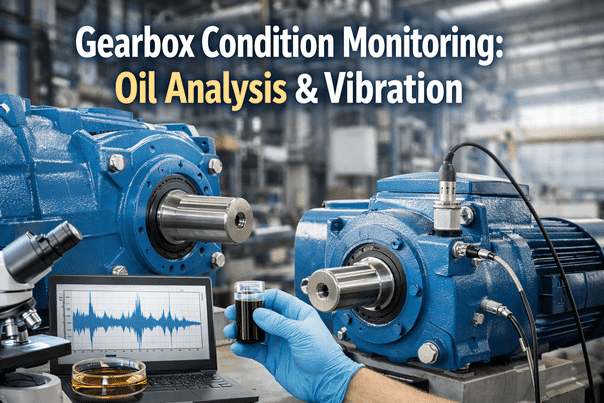
Gearbox lubrication is the primary defense against wear and fatigue failure. Oil analysis captures the earliest signs of gear tooth degradation, bearing wear, and contamination—2-4 weeks before vibration or temperature changes become detectable. Monthly oil sampling with trend analysis enables predictive maintenance decisions based on actual wear rates, not manufacturer recommendations. Book a demo to see how iFactory captures oil analysis data and trends it against each gearbox asset record.
Oil Level and Appearance
Oil Analysis Results and Trending
Zone 2: Vibration Analysis and Acoustic Signature
Vibration signature changes indicate bearing wear, tooth damage, misalignment, and lubrication failures 1-3 weeks before catastrophic failure. Modern condition monitoring devices capture vibration in multiple frequency bands, detecting early-stage bearing spalling and gear tooth cracks that produce specific vibration harmonics. Monthly vibration trending on critical gearboxes identifies degradation progression and enables planned maintenance before emergency intervention becomes necessary. Book a demo to see how iFactory captures vibration data and correlates it with oil analysis for early failure detection.
Vibration Measurement and Trending
Acoustic Assessment and Audible Anomalies
Zone 3: Temperature Monitoring and Thermal Analysis
Gearbox temperature directly indicates lubrication effectiveness and internal friction. Rising oil temperature precedes vibration changes and signals inadequate cooling or lubricant degradation. Monthly temperature trending captures early signs of bearing preload loss, inadequate lubrication, and cooler fouling. Thermal imaging identifies hot spots on housing indicating localized bearing or gear wear.
Oil Temperature and Cooling System Performance
Thermal Imaging and Housing Assessment
Zone 4: Alignment, Wear, and Play Assessment
Gearbox misalignment accelerates bearing wear, increases vibration, and degrades lubrication film thickness. Annual laser alignment verification ensures input-output shafts remain concentric within tolerance. Bearing end-play measurement captures wear progression and predicts replacement timing.
Shaft Alignment and Coupling Condition
Bearing and Gear Play Assessment
Zone 5: Housing, Seals, and Structural Integrity
Gearbox housing integrity and seal condition prevent contamination ingress that accelerates wear. Slow oil seeps eventually create environmental hazards and require emergency shutdown. Monthly visual inspection catches deteriorating seals and develops replacement schedules before failures occur.
Seal Condition and Oil Leakage Assessment
Housing Structural Condition
Inspection Zone Summary: Frequency and Priority Distribution
Inspection Zone
Monthly
Quarterly
Annual
Critical Items
Total
Zone 1: Lubrication
Oil sampling
All items
Full audit
2
11
Zone 2: Vibration
Trending
All items
Analysis
1
7
Zone 3: Temperature
Monitoring
All items
Analysis
1
4
Zone 4: Alignment
Visual check
Laser check
Full audit
0
4
Zone 5: Housing
Visual only
All items
Full audit
2
6
iFactory Results at Manufacturing Plants Using Digital Gearbox Inspection
94%
Early Detection Rate
Gearbox failures detected at trending stage vs 34% with calendar maintenance only
71%
Reduction in Unplanned Downtime
Shift from emergency repairs to planned maintenance reduces line impact
87%
Maintenance Cost Reduction
Planned replacement vs emergency repair costs; extended equipment life
3 wks
Deployment Time
From asset hierarchy setup to live digital gearbox inspections across plant
Frequently Asked Questions
QWhat inspection frequency does industry standard recommend for critical gearboxes?
ISO 13373 and NFPT recommend monthly condition monitoring on critical gearboxes, quarterly for moderate risk, annual for low-risk applications. Digital inspection enables compliant monitoring without field technician burden. Book a demo to see how iFactory schedules inspection intervals per your risk classification.
QHow do oil analysis and vibration monitoring work together to predict failure?
Oil analysis detects wear particles and degradation 1-3 weeks before vibration changes become measurable. Vibration trending confirms bearing or gear damage progression. Combined trending gives 2-4 week advance notice. Start free trial to see integrated oil + vibration trending dashboards.
QWhat's the difference between calendar-based and condition-based gearbox maintenance?
Calendar-based: replace oil/parts on fixed schedules regardless of actual condition. Condition-based: replace only when inspection data shows degradation has reached thresholds. Condition-based extends asset life 25-40% while eliminating premature replacement costs.
QHow quickly can iFactory digital inspections be deployed across a plant's gearbox portfolio?
Most plants complete gearbox asset hierarchy registration and inspection template setup within 3 weeks. Mobile app enables field technicians to photograph, measure, and capture oil samples immediately. First digital inspections run within days of deployment start.
QDoes this checklist work for both helical and spur gearboxes?
Yes. Both gear types share common inspection zones—lubrication, vibration, temperature, alignment, and housing. Only threshold values and acceptable wear rates differ slightly per gearbox design. Book a demo to configure thresholds for your specific gearbox models.
Digitize This Checklist as Live Gearbox Inspections Across Your Plant
Every zone and every item available as structured digital inspection in iFactory. Assigned to your gearbox asset hierarchy, completed on mobile with photo documentation, and automatically routing Critical and Monitor findings to corrective work orders before the technician leaves the site.