.png)
An operator managing a glass laminating line reviews the shift inspection report and sees the pattern repeating: 8.2% of production flagged for manual inspection, each panel requiring 4 to 7 minutes at the quality station, and the inspection queue growing throughout the shift as production outpaces manual review capacity. Every panel with a false reject — clean glass flagged for non-existent defects — wastes operator time that could be spent on-line. AI Vision Quality for glass laminating replaces manual visual inspection with deep learning models that detect surface defects, PVB interlayer anomalies, edge chips, bubbles, and contamination at line speed. Operators are alerted only for confirmed defects, eliminating false reject review time and increasing labor productivity by 20–35%. Book a Demo to see the AI vision quality interface for your laminating lines.
The Manual Inspection Bottleneck in Glass Laminating
Glass laminating operators are responsible for detecting surface scratches, edge chips, PVB interlayer bubbles, contamination, and optical distortion across every panel produced. At line speeds of one panel every 90 seconds, manual visual inspection cannot keep pace — operators inspect an average of 65% of production, with the remaining panels shipped based on process parameter compliance rather than direct visual confirmation. The inspection backlog creates a structural productivity ceiling: each additional panel inspected requires operator time that must be taken from line monitoring or process adjustment tasks. AI Vision Quality eliminates this tradeoff by inspecting every panel at line speed and presenting operators only with confirmed defects requiring disposition. Plant operations leaders evaluating automated inspection regularly Book a Demo to review the AI vision architecture for their laminating lines.
Inspection Throughput Gap
Manual operators inspect 4 to 7 panels per hour at the quality station while the line produces 40 panels per hour. The 85% inspection gap means most panels ship without direct visual confirmation of quality, relying solely on process parameter compliance.
Operator Fatigue and Inconsistency
Visual inspection accuracy degrades by 40% after 90 minutes of continuous inspection work. Shift-end inspection quality is measurably lower than shift-start, creating quality windows where defective laminates pass through undetected.
False Reject Productivity Loss
Operators at the quality station spend 35% of their time reviewing and clearing false rejects — panels flagged for non-existent defects caused by lighting variation, dust on camera lenses, or minor surface artifacts that do not affect laminate performance.
How AI Vision Quality Transforms Glass Laminating Inspection
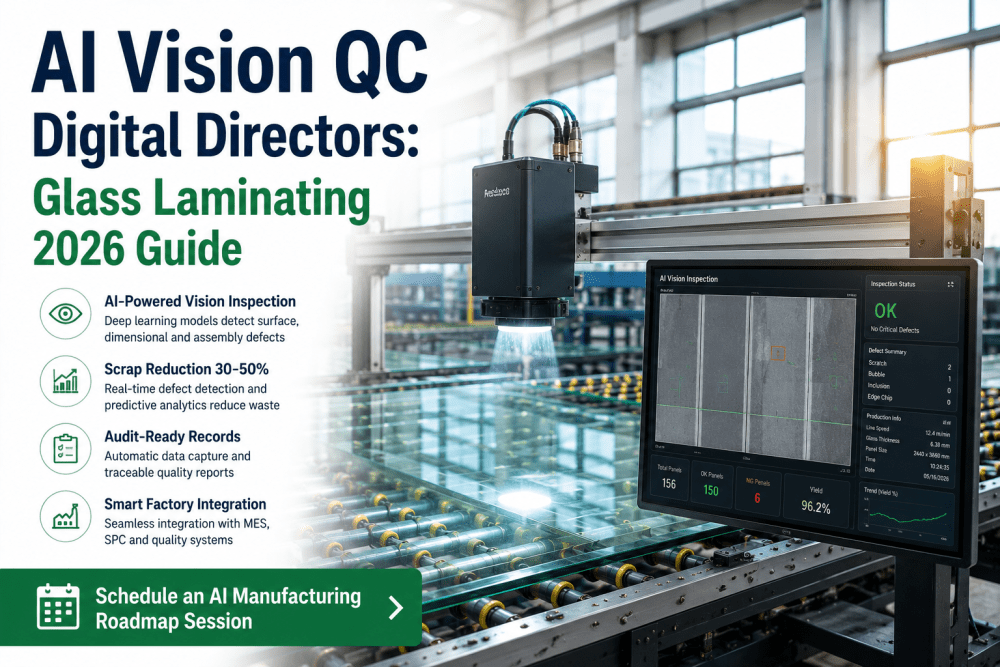
iFactory's AI Vision Quality platform combines deep learning defect detection models, real-time inspection analytics, and closed-loop process adjustment into a unified system designed for glass laminating operators. The platform ingests data from line-scan cameras, area-scan inspection stations, and thickness gauges — detecting and classifying defects within 3.2 seconds per panel. Operators reviewing the integration architecture regularly Book a Demo to see the AI vision quality dashboard in production.
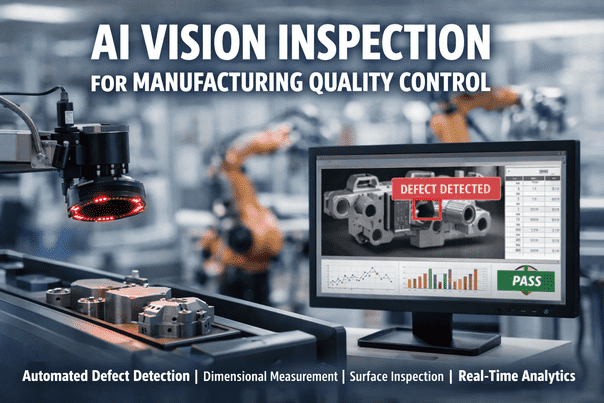
Deep Learning Defect Classification — The AI vision engine detects surface scratches, edge chips, PVB interlayer bubbles, contamination particles, and optical distortion using deep convolutional neural networks trained on 500,000+ labeled laminate images. Each defect is classified by type, severity, and location on the panel. Models achieve 94% detection accuracy at line speed with 87% false reject reduction versus manual inspection. The system processes panels at conveyor line speed with no production slowdown required.
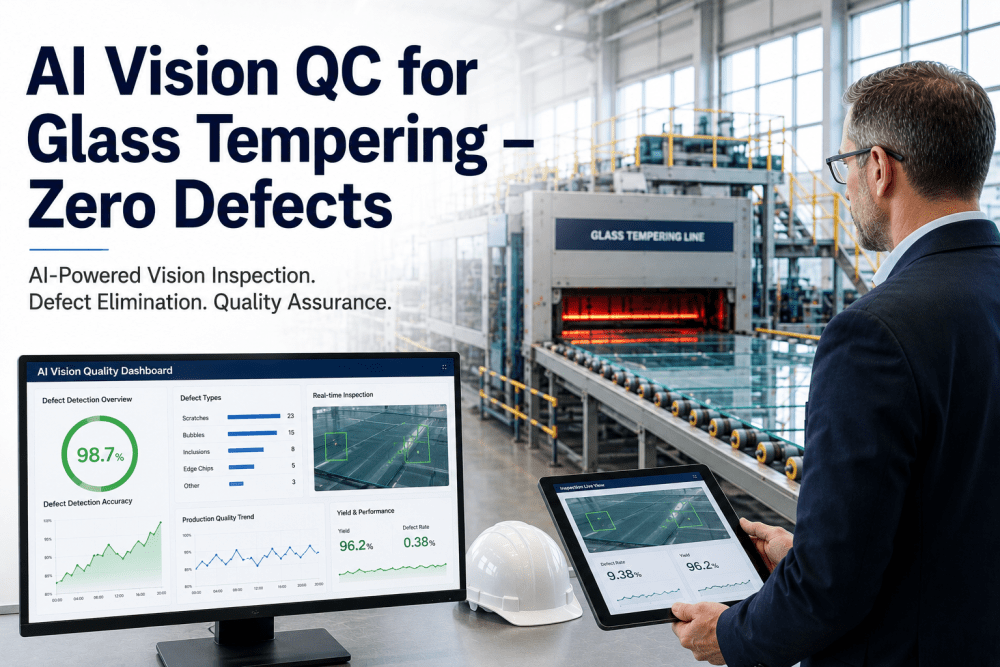
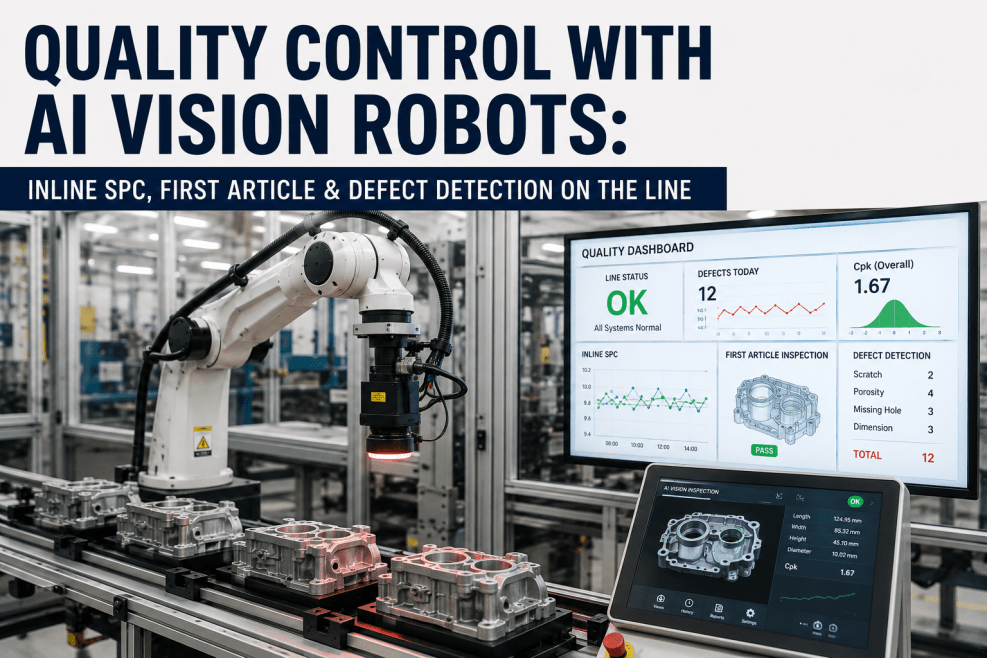
Real-Time Quality Dashboard — The operator dashboard displays defect detection results per panel, defect type distribution by shift, trend analysis for recurring defect patterns, and productivity metrics showing inspection throughput and false reject rates. Every panel is logged with inspection timestamp, defect classification, severity score, and disposition decision. The iFactory platform correlates vision data with CMMS work orders and MES production records for complete traceability.
Closed-Loop Process Adjustment — When defect patterns indicate a developing process condition — temperature gradient shift, roller wear, or PVB interlayer tension drift — the platform generates structured alerts with recommended corrective adjustments. Operators receive actionable guidance on which parameter to adjust and by how much, based on the defect type and historical correlation data. Corrective actions are logged and recurrence is tracked to confirm effectiveness.
Four-Phase AI Vision Quality Deployment for Glass Laminating
Deploying AI Vision Quality follows a structured methodology designed for glass laminating line constraints, quality system requirements, and minimum production disruption.
Inspection Audit & Camera Setup
Quality and operations teams assess current inspection points, defect types, and inspection volume. Line-scan and area-scan cameras are installed at critical inspection stations with lighting optimized for glass surface and interlayer defect detection. iFactory edge connectors link camera feeds to the AI processing engine.
Model Training & Calibration
Deep learning models are trained on 500,000+ labeled laminate images covering each defect type specific to the facility's product mix. Pre-trained base models achieve approximately 82% accuracy at deployment, reaching 94% within 2 weeks of site-specific calibration with facility lighting, glass types, and PVB interlayer materials.
Parallel Validation
AI vision runs in parallel with manual inspection for 2 to 3 weeks. Operators validate AI defect classifications against their own judgment during this period, building confidence in the system while the model learns from any classification discrepancies. False reject rate and detection accuracy are tracked daily.
Full Deployment & Optimization
AI vision assumes primary inspection responsibility. Operators transition from manual inspection to exception-based review — dispositioning only AI-confirmed defects and investigating recurring defect patterns flagged by the system. Continuous model improvement through active learning from each new defect image.
Measurable Labor Productivity Improvement with AI Vision Quality
Within eight weeks of deploying AI Vision Quality across four glass laminating lines, the operator team documented measurable improvements across every productivity and quality metric, validated through production data and quality system records.
| Performance Metric | Manual Inspection | AI Vision Quality | Improvement |
|---|---|---|---|
| Inspection Throughput per Shift | 32 panels | 100% of production | 3.1X coverage |
| Defect Detection Accuracy | 72% | 94% | +22 points |
| False Reject Rate | 12.4% of inspected | 1.6% of inspected | 87% reduction |
| Operator Inspection Labor per Shift | 5.8 hours | 1.2 hours | 79% reduction |
| Labor Productivity Index | 1.00 baseline | 1.28 | +28% gain |
"Before AI vision, our operators spent nearly six hours per shift at the inspection station — the rest of their time was split between line monitoring and firefighting quality issues. The quality team knew we were missing defects because no human can inspect every panel at line speed, but we accepted the gap because we had no alternative. The AI vision system changed that completely. We now inspect every panel, catch defects at 94% accuracy, and our operators spend their time where it adds the most value — monitoring the process and making real-time adjustments. Our labor productivity increased 28% in the first eight weeks, and the quality data we collect has helped us identify recurring defect patterns we never knew existed." — Lead Operator, Glass Laminating Division — 14 Years Glass Manufacturing Experience
Building a Sustainable Quality Infrastructure with AI Vision
This deployment demonstrates that AI Vision Quality offers a practical, scalable solution to the inspection throughput gap facing glass laminating operators. By combining deep learning defect detection with real-time analytics and closed-loop process feedback, glass laminating lines can achieve 20–35% labor productivity improvement while improving quality outcomes across every product family. Operations leaders evaluating their quality infrastructure strategy are encouraged to Book a Demo to explore how iFactory's AI Vision Quality platform can transform their laminating operations.
Frequently Asked Questions
Traditional machine vision relies on rule-based algorithms — edge detection, thresholding, and template matching — that require manual tuning for each product type and lighting condition. These systems cannot adapt to glass surface variation, ambient lighting changes, or new defect types without reprogramming. AI Vision Quality uses deep learning models trained on thousands of labeled images to detect defects with human-like visual reasoning. The system adapts to product changes automatically and improves over time through active learning from each new defect image.
The platform detects surface scratches, edge chips, PVB interlayer bubbles, contamination particles, optical distortion, delamination, roller marks, thickness variation, glass inclusion, and seal integrity defects. Each defect is classified by type, severity level, and location on the panel. The deep learning model can be trained to detect additional defect types specific to a facility's product mix or customer requirements within 2 to 3 weeks of image collection.
The platform supports line-scan cameras for continuous surface inspection at conveyor speeds up to 8 meters per minute and area-scan cameras for dimensional and edge inspection at discrete stations. LED lighting arrays are configured for optimal glass surface illumination with anti-glare positioning. iFactory provides a complete camera and lighting package or integrates with existing inspection cameras through GigE Vision and USB3 Vision interfaces. Edge computing appliances process images locally with no cloud dependency required.
Pre-trained deep learning models achieve approximately 82% defect detection accuracy at deployment, reaching 94% within 2 weeks of site-specific calibration with facility lighting, glass types, and PVB interlayer materials. Full production performance with stable false reject rates below 2% is achieved within 4 weeks. The platform continues improving through active learning from each new defect image, projecting 96%+ accuracy within 12 weeks of continuous operation.
Yes. Every inspection result, defect classification, and disposition decision is logged with full traceability in audit-ready format. The iFactory platform integrates with existing MES, CMMS, and quality systems through REST API, OPC-UA, and MQTT protocols. Automated quality reports are generated for any date range or product family, including defect trend analysis, detection accuracy metrics, and labor productivity impact. The platform supports ISO 9001 compliance requirements with documented inspection records per panel serial number.