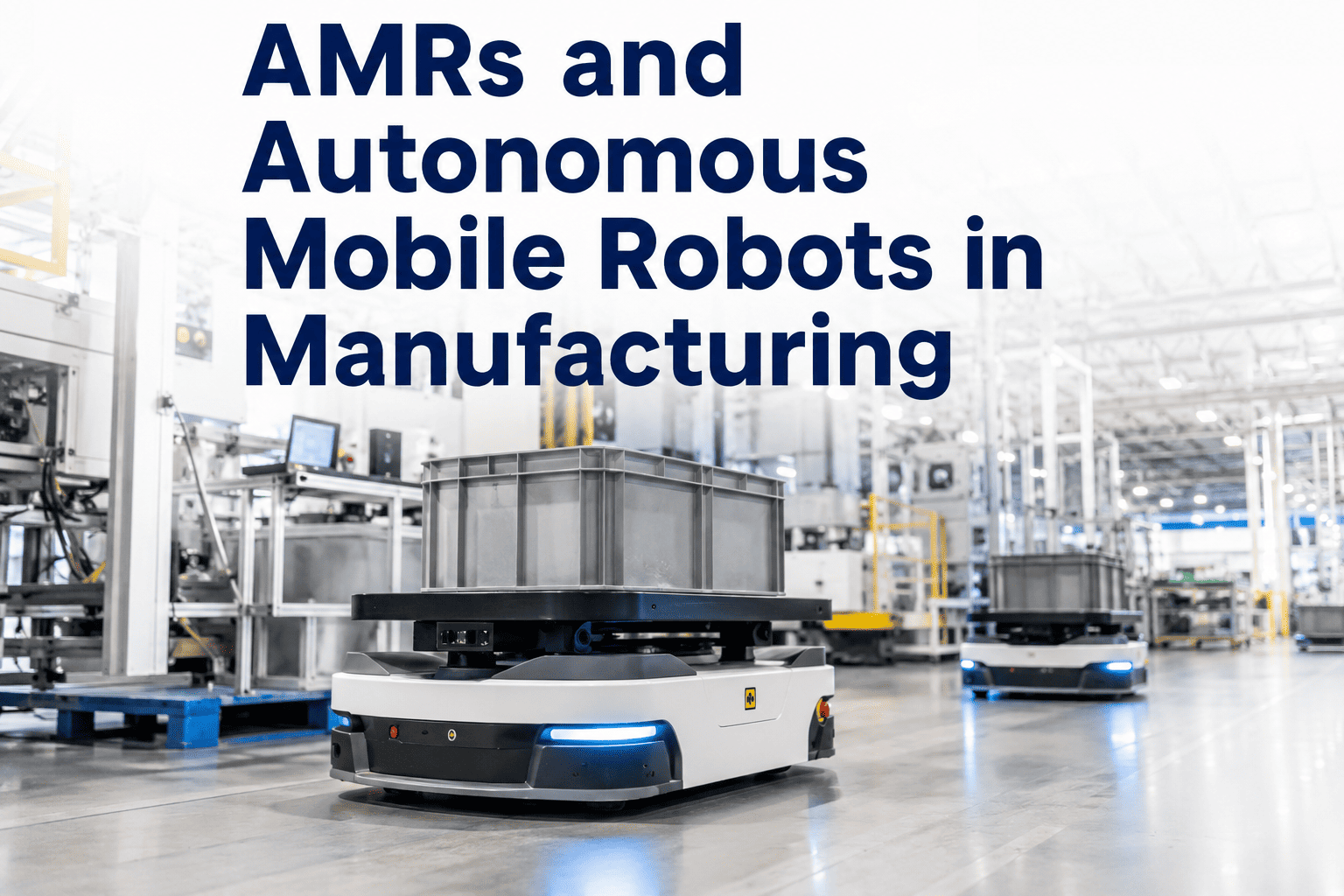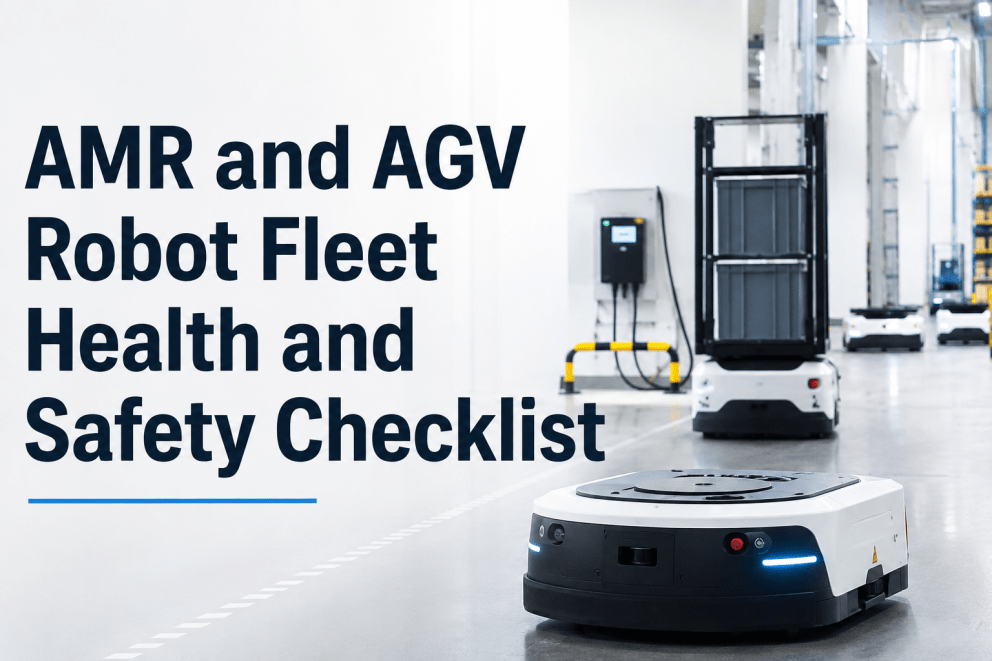
AMR and AGV fleet health management in U.S. manufacturing facilities is not a periodic maintenance task — it is a continuous operational discipline that determines whether autonomous mobile robots deliver the uptime and throughput they were deployed to achieve. A warehouse or production facility running 20 to 150 AMRs and AGVs without a structured inspection and health monitoring framework will encounter battery degradation surprises, sensor drift incidents, charging infrastructure failures, and navigation accuracy deviations that accumulate into unplanned robot downtime, workflow disruptions, and — in the worst cases — workplace safety events. iFactory's Robotics and Cobot Analytics Tracking module provides the data infrastructure to execute this checklist systematically: connecting to robot fleet management APIs, charging station controllers, and navigation software to monitor battery state-of-health, sensor calibration status, software version compliance, and fleet-level safety metrics in real time. U.S. facilities that have deployed iFactory's robot fleet monitoring report unplanned AMR downtime reductions of 34 to 51%, mean time between failures improvements of 2.2 to 3.8x, and safety incident rates near zero when checklist compliance is maintained at 95% or above. Book a Demo to see iFactory's robot fleet health monitoring configured for your AMR and AGV deployment.
Why AMR and AGV Fleet Health Requires a Structured Checklist — Not Ad-Hoc Inspection
The operational complexity of a modern AMR and AGV fleet exceeds what any inspection regime based on visual observation and operator reports can manage reliably. A single AMR may carry 12 to 18 sensors, a lithium-ion battery pack with 200 to 400 individual cells, navigation software updated on a rolling release cycle, and mechanical systems including wheels, motors, and lift actuators that each degrade at different rates depending on load patterns and floor conditions. Multiply that complexity across a fleet of 30, 80, or 150 robots running 16 to 24 hours per day, and the gap between what ad-hoc inspection captures and what is actually happening in the fleet becomes a direct liability — in production throughput, in maintenance cost, and in worker safety.
A structured health and safety checklist converts that complexity into a manageable, auditable inspection framework. The checklist below covers the six inspection domains that account for over 90% of AMR and AGV unplanned downtime events across U.S. warehouse and manufacturing deployments: battery systems, navigation and sensing, charging infrastructure, software and firmware, mechanical and drive systems, and workplace safety compliance.
Domain 1: Battery System Health Checklist
Battery system failures are the single largest cause of unplanned AMR and AGV downtime in U.S. facilities — accounting for 38 to 44% of all unplanned stops in fleets older than 18 months.
Domain 2: Navigation and Sensor System Checklist
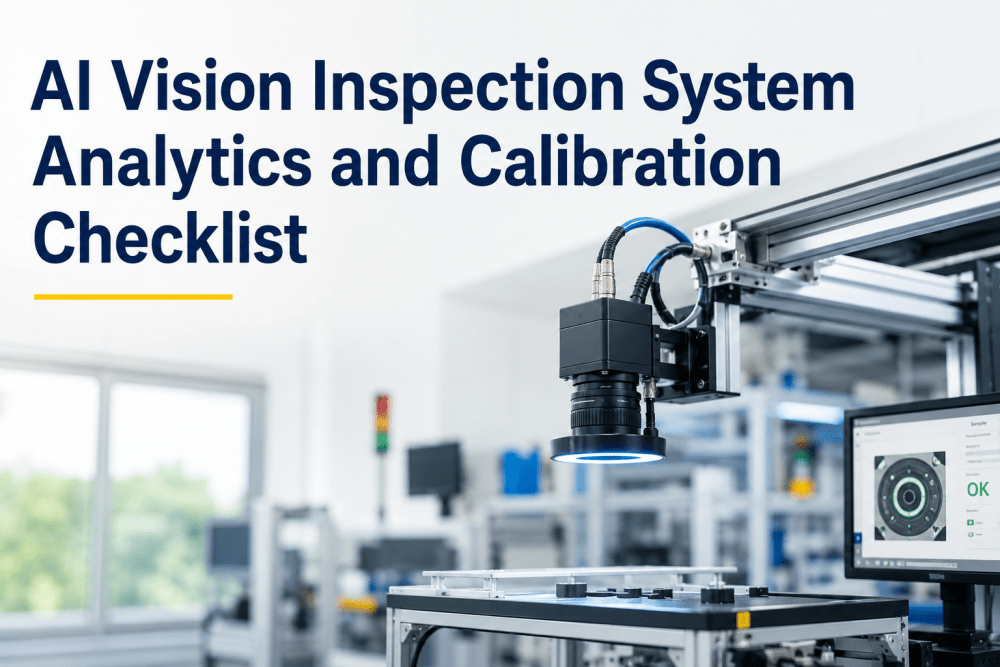
Navigation accuracy degradation is the second most common cause of AMR operational disruption — producing route deviations, missed waypoints, docking failures, and collision-avoidance system activations that interrupt workflow throughput.
Domain 3 and 4: Charging Infrastructure and Software Compliance Checklist
Charging station failures and software version noncompliance together account for 28 to 35% of AMR fleet availability losses that are misattributed to robot hardware failures.
Domain 5 and 6: Mechanical Systems and Workplace Safety Compliance Checklist
Mechanical system wear in AMR and AGV drive components is gradual, predictable, and entirely preventable with structured inspection intervals. The workplace safety compliance domain covers the procedural and infrastructure checkpoints that OSHA and ANSI/RIA R15.08 require for facilities operating autonomous mobile robots in shared human-robot workspaces.
Checklist Execution Framework — Frequency, Ownership, and iFactory Integration
Plants that automate data collection for battery, sensor, and software domains report checklist completion rates 40 to 60% higher than facilities relying on manual data entry.
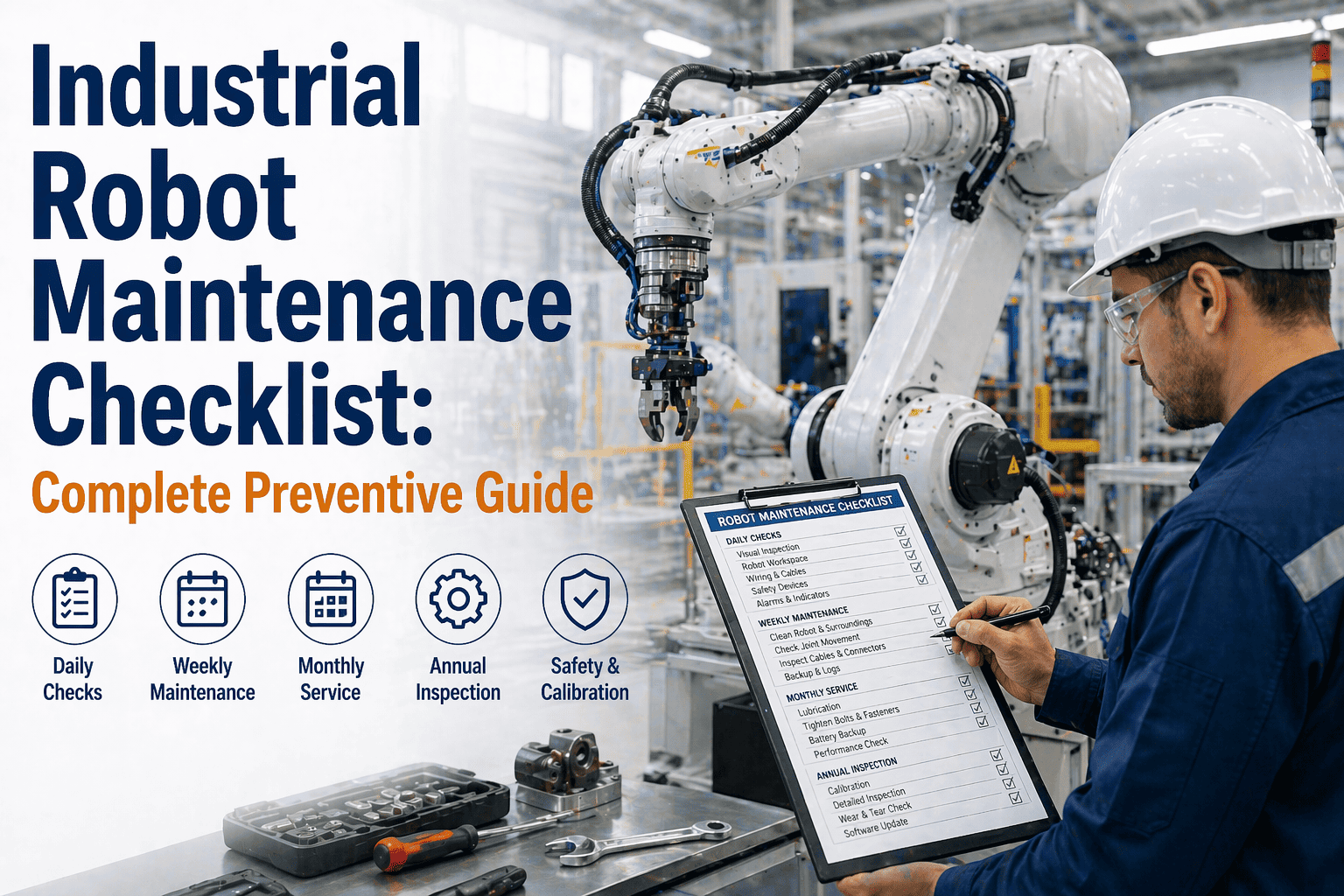
| Inspection Domain | Daily | Weekly | Monthly | Quarterly | Primary Owner | iFactory Automation |
|---|---|---|---|---|---|---|
| Battery System Health | SOC log, temp check | SOH, cell voltage, docking | Cycle count, BMS faults, connectors | Efficiency ratio trend | Fleet Technician | Automated via robot API telemetry |
| Navigation and Sensors | LiDAR clean, map version | Position accuracy, camera, ultrasonic, docking | IMU calibration status | Full LiDAR recalibration | Process/Automation Engineer | Position deviation alerts automated |
| Charging Infrastructure | — | Contact clean, alignment, utilization, fault log | Power output, firmware version | — | Facilities / Electrical Tech | Station utilization and fault alerts |
| Software and Firmware | — | Version compliance, error log | Safety firmware, FMS license, cybersecurity patches | Update staging process review | OT/IT Engineer | Version noncompliance flagging automated |
| Mechanical and Drive | Body inspection | Wheel tread, casters | Motor current, lift actuator | Lubrication service | Maintenance Technician | Motor current trending automated |
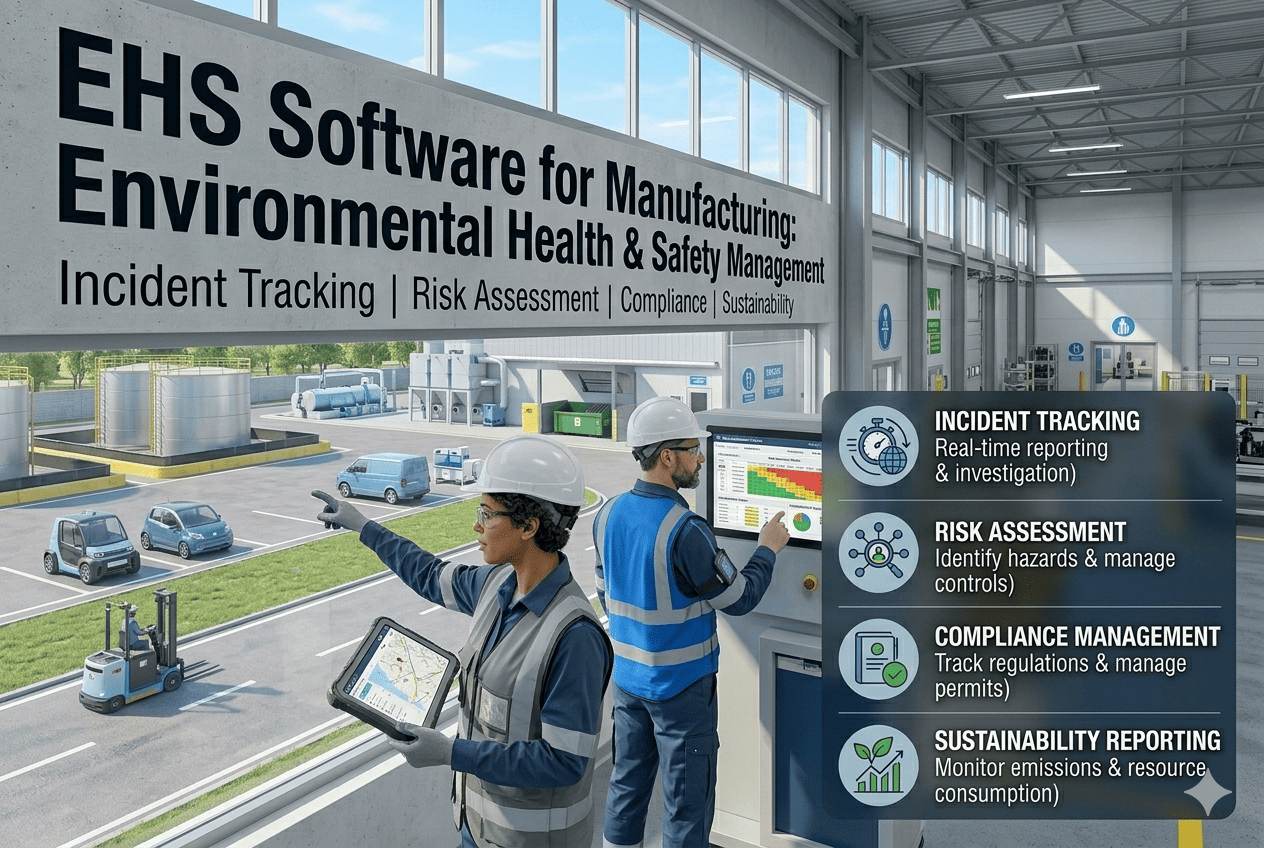
| Workplace Safety | E-stop test, alerts, near-miss log | Safety zone config, collision detection | — | Training records audit | EHS / Floor Supervisor | Near-miss and E-stop event logging |
Expert Review: What AMR Fleet Managers Say About Structured Health Monitoring
We deployed 47 AMRs across two distribution center shifts over 14 months before we implemented a structured health monitoring framework, and the experience before versus after is not comparable. After implementing iFactory's Robotics Analytics module alongside a structured checklist, our unplanned AMR downtime dropped 44% in the first six months. Year-one total value from the combined checklist and monitoring program was approximately $380,000 in downtime recovery and maintenance cost avoidance at our 47-robot facility.
— AMR Fleet Operations Manager, U.S. E-Commerce Distribution Center — 8 Years in Warehouse Automation — Certified in Robotics Systems Integration (CSIA Member)Frequently Asked Questions
iFactory connects via REST API and OPC-UA integration — supporting MiR Fleet, Fetch Robotics, Locus Robotics, and custom fleet management systems. Battery telemetry, navigation event logs, software version data, and safety event records are ingested continuously without replacing existing fleet management software.
U.S. AMR and AGV deployments fall under ANSI/RIA R15.08 (Industrial Mobile Robots — Safety Requirements), OSHA 29 CFR 1910.212 (Machine Guarding), and OSHA 29 CFR 1910.147 (Lockout/Tagout). ANSI/RIA R15.08 specifically addresses collaborative space operation, safety zone configuration, and worker training requirements.
Replacement is indicated when SOH falls below 80%, cell voltage imbalance exceeds 100mV, charge-to-discharge efficiency declines more than 15% from baseline, or the pack reaches 80% of the manufacturer's rated cycle count. In high-utilization deployments, replacement typically occurs every 18 to 30 months per pack.
The most common cause is LiDAR sensor contamination combined with stale facility maps that do not reflect current floor layout. Dust and film on LiDAR optics reduces scan range and point cloud density, causing positioning errors that compound over extended routes.
Yes. iFactory supports multi-vendor mixed fleets through brand-specific API connectors and a configurable checklist template system that maps inspection checkpoints to each robot model's specific telemetry fields, maintenance intervals, and fault code definitions. Book a Demo for a mixed-fleet configuration walkthrough.
Conclusion
An AMR and AGV fleet operating without a structured health and safety checklist is not an autonomous operation — it is a reactive one. The six inspection domains covered in this checklist represent the complete set of failure modes that cause over 90% of unplanned robot downtime and safety events in U.S. warehouse and manufacturing deployments. The 34 to 51% downtime reduction and 2.2 to 3.8x MTBF improvement documented at iFactory-monitored AMR deployments are achievable only through the systematic health monitoring and inspection discipline this checklist establishes. Book a Demo to see iFactory's robot fleet monitoring configured for your AMR and AGV deployment.