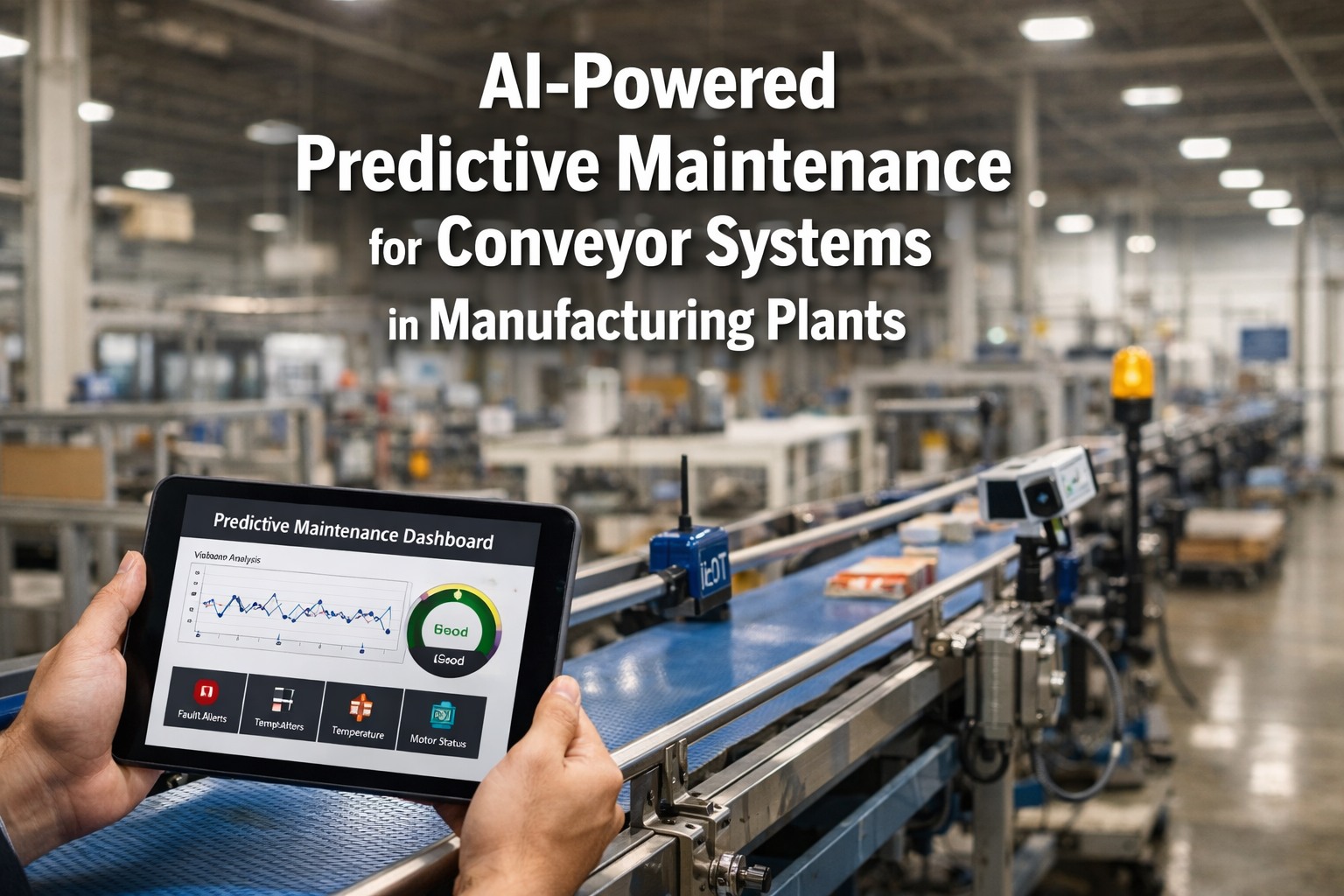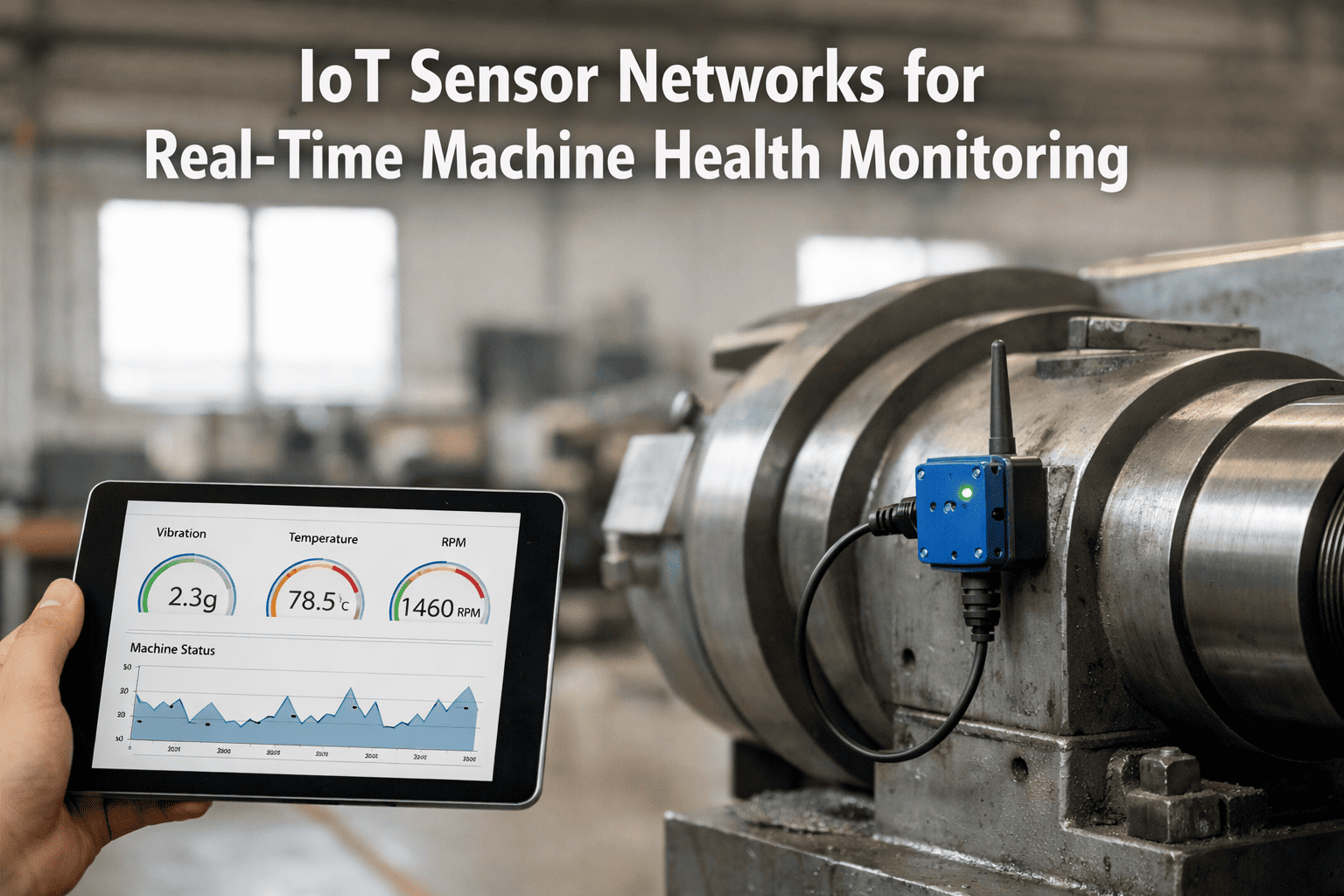
Every minute of unplanned machine downtime costs manufacturers an average of $2,000 or more—adding up to billions in losses across the industry each year. IoT sensor networks are eliminating this problem by giving production teams continuous, real-time visibility into the health of every critical asset on the plant floor. Wireless sensors tracking vibration, temperature, pressure, and electrical signatures detect the earliest signs of mechanical degradation—weeks before a breakdown ever occurs. The result is a fundamental shift from reactive firefighting to intelligent, data-driven maintenance. Ready to see what hidden equipment problems your plant is missing? Schedule a free equipment health assessment and get a sensor deployment roadmap tailored to your production floor.
What Makes IoT Condition Monitoring Essential for Smart Factories
Manual inspections and calendar-based maintenance schedules cannot keep pace with the demands of modern production. Walk-around checks happen weekly or monthly, leaving long blind spots where equipment can silently degrade. IoT sensor networks eliminate these gaps by collecting thousands of data points every second—transforming machine health from a periodic snapshot into a continuous, high-definition picture.
Manufacturers adopting sensor-based condition monitoring are seeing transformative results. Industry data shows that predictive approaches powered by IoT sensors reduce unplanned downtime by up to 50%, cut maintenance costs by 25%, and extend critical asset lifespans by 20-40%. With the global predictive maintenance market projected to reach $47.8 billion by 2029, this technology is rapidly becoming the standard—not the exception. Want to start tracking your machines around the clock? Get Support free and connect your first sensors in minutes.
Wireless Sensor Technologies Driving Real-Time Equipment Diagnostics
No single sensor can capture the full health profile of a machine. Comprehensive condition monitoring requires a multi-sensor strategy—where vibration, thermal, acoustic, electrical, and fluid sensors work together to detect different failure modes. Modern wireless sensors are battery-powered, industrially hardened, and communicate via protocols like LoRaWAN, Zigbee, BLE, and Wi-Fi—making them easy to retrofit on legacy equipment without any modification to the machine itself.
From Raw Data to Predictive Intelligence: How the System Works
Installing sensors is only the first step. The real value comes from the data pipeline—how raw vibration, temperature, and pressure readings are transformed into actionable maintenance decisions. A modern IoT condition monitoring architecture involves four interconnected layers, each building intelligence on top of the last.
Which Equipment Benefits Most from IoT Health Monitoring
Not every asset needs the same monitoring intensity. The 80/20 rule applies—roughly 20% of your equipment accounts for 80% of downtime risk and maintenance cost. Prioritizing sensor deployment on these high-impact assets ensures the fastest return on investment while building the data foundation for plant-wide expansion.
| Asset Category | Recommended Sensors | Sampling Rate | Failure Modes Detected |
|---|---|---|---|
| Electric Motors & Drives | Vibration, temperature, current | 1-second intervals | Bearing wear, rotor imbalance, stator faults, thermal overload |
| Pumps & Compressors | Vibration, pressure, flow, temperature | 1-second intervals | Cavitation, seal degradation, impeller erosion, valve failure |
| CNC & Precision Machines | Vibration, spindle current, acoustic | 100ms intervals | Spindle bearing failure, tool wear, axis misalignment, backlash |
| Gearboxes & Conveyors | Vibration, temperature, oil quality | 5-second intervals | Gear tooth wear, chain/belt degradation, lubrication breakdown |
| Hydraulic Systems | Pressure, temperature, particle count | 1-second intervals | Pump wear, cylinder leakage, fluid contamination, seal failure |
| HVAC & Utilities | Temperature, pressure, vibration | 10-second intervals | Compressor degradation, refrigerant leaks, fan imbalance |
Reactive vs. Predictive: The Real Cost Difference
The financial gap between reactive maintenance and IoT-powered predictive maintenance is staggering—and it widens with every unplanned failure. Here is how the two approaches compare across the metrics that matter most to plant managers and operations leaders.
Industry-Specific IoT Monitoring Use Cases
Different manufacturing sectors face different equipment profiles, environmental conditions, and regulatory requirements. IoT monitoring platforms adapt sensor configurations, analytics models, and alarm thresholds to address the specific challenges of each industry.
| Industry | Critical Equipment | Primary Monitoring Focus | Key Outcome |
|---|---|---|---|
| Automotive | Stamping presses, robotic welders, paint booths | Press force deviation, joint wear, spray uniformity | Reduced scrap rates and line stoppages |
| Food & Beverage | Mixers, fillers, packaging, CIP systems | Motor health, seal integrity, cleaning efficiency | Compliance assurance and batch consistency |
| Pharmaceutical | Reactors, centrifuges, tablet presses, HVAC | Vibration stability, pressure control, environment | GMP compliance and contamination prevention |
| Steel & Heavy Metals | Rolling mills, furnaces, overhead cranes | Bearing health, thermal profiles, load patterns | Prevented catastrophic failures and safety events |
| Semiconductor | Vacuum pumps, chillers, clean room HVAC | Pump degradation, particle count, airflow balance | Yield protection and contamination control |
| Plastics & Packaging | Injection molders, extruders, blow molders | Screw wear, hydraulic health, motor current | Reduced cycle variability and energy consumption |
Connecting IoT Data to Your Existing Plant Systems
Sensor data delivers maximum value when it flows seamlessly into the systems your maintenance, production, and management teams already use. Modern IoT platforms support bidirectional integration with all major industrial software—eliminating data silos and enabling end-to-end automated workflows from anomaly detection to work order completion.
Step-by-Step Deployment: Getting Started with IoT Monitoring
A successful IoT monitoring rollout does not require ripping out existing infrastructure or monitoring every machine at once. The most effective deployments follow a phased, value-driven approach—starting with the assets that will deliver the fastest payback and expanding systematically based on proven results.
Overcoming Common IoT Deployment Barriers
Every manufacturing IoT deployment encounters real-world obstacles—from legacy equipment compatibility to cybersecurity concerns. Understanding these challenges upfront and planning for them is the difference between a stalled pilot and a plant-wide success.
| Challenge | Why It Matters | Proven Solution |
|---|---|---|
| Legacy equipment lacks connectivity | Older machines have no built-in sensors or digital interfaces | External wireless retrofit sensors ($1K-5K per asset) attach magnetically with zero equipment modification |
| Harsh RF environments | Metal structures, EMI, and extreme temperatures disrupt wireless signals | Industrial mesh networks (LoRaWAN, Zigbee), hardened enclosures, and edge buffering for connectivity gaps |
| Alert fatigue from false alarms | Too many alerts cause maintenance teams to ignore critical warnings | AI-driven adaptive thresholds, context-aware filtering, and severity-based prioritization reduce noise by 80%+ |
| Skills gap in analytics | Maintenance teams may lack data interpretation expertise | Intuitive dashboards with plain-language recommendations and guided CMMS workflows eliminate complexity |
| Cybersecurity exposure | Connected equipment expands the attack surface (IoT attacks up 400%) | Zero-trust architecture, encrypted data paths, network segmentation, and regular security audits |