Electrical Panel and Power Distribution Inspection Checklist
By Hannah Baker on June 1, 2026
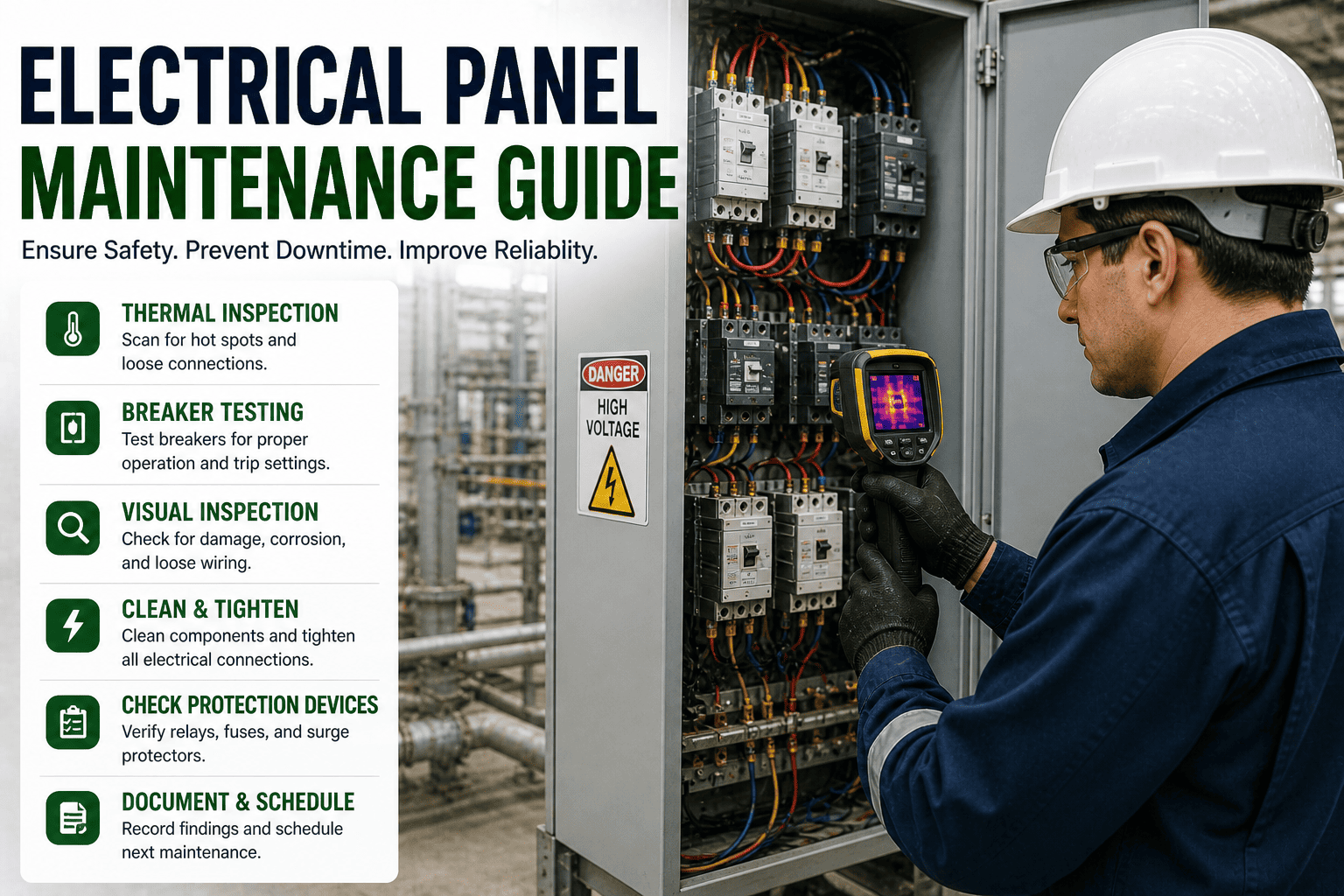
Electrical panels and power distribution systems are among the most under-inspected assets in U.S. manufacturing plants. Loose terminations, degraded breaker contacts, compromised grounding, and stale arc flash labels develop slowly and invisibly — until a production shutdown, arc flash event, or OSHA citation makes the cost visible. This checklist covers the six core inspection areas required for a defensible electrical preventive maintenance program: visual inspection, thermal imaging, breaker condition, grounding verification, torque checks, and NFPA 70E compliance documentation. iFactory AI's Compliance & Audit Trail Management platform digitizes this workflow — scheduling rounds, capturing photo-documented findings, auto-generating corrective work orders, and producing the audit trail your safety program requires. To see the platform applied to your facility, Book a Demo.
Electrical Safety · NFPA 70E · OSHA Compliance
Electrical Panel and Power Distribution Inspection Checklist
Thermal imaging, breaker testing, grounding verification, torque checks, and arc flash compliance — for U.S. manufacturing maintenance engineers and safety managers.
Of electrical failures detectable in advance through thermal imaging
$50K+
Average cost per arc flash incident including downtime and remediation
NFPA 70E
Requires documented safety programs and qualified worker training
Annual
Minimum thermal imaging frequency for critical panels per NETA MTS
Section 1 of 6
Visual and Physical Panel Inspection
Complete before opening any panel door. Document findings with dated photos for the compliance audit trail.
Panel Exterior and Enclosure Checks
Assess with panel energized — no door opening required for this section
Section 2 of 6
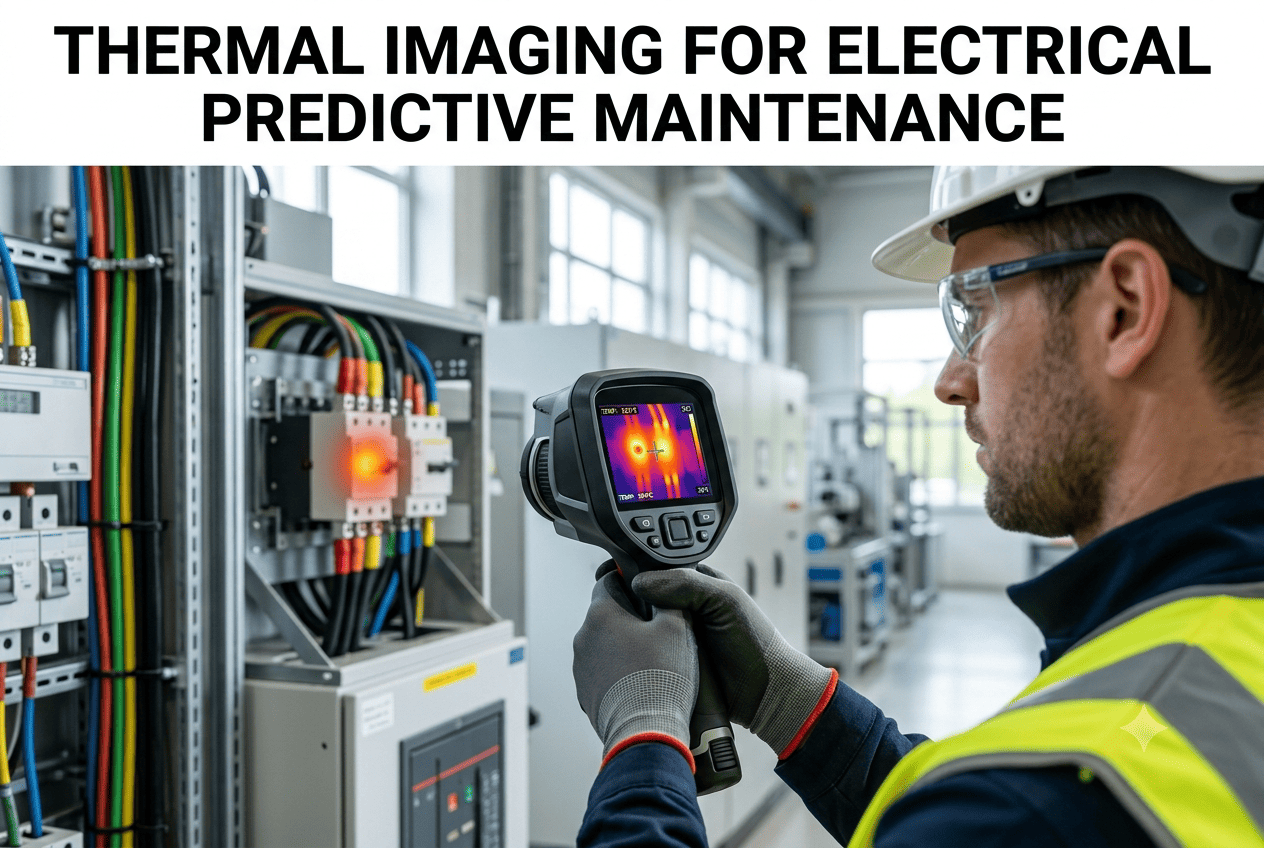
Thermal Imaging Inspection
Must be performed under load conditions of at least 40% rated capacity. Requires qualified thermographer and appropriate PPE per NFPA 70E.
Thermal Imaging Protocol
Document all images with timestamp, emissivity setting, ambient temperature, and load conditions
Section 3 of 6
Circuit Breaker and Overcurrent Protection Inspection
Verify physical condition, trip accuracy, and interrupting capacity — especially for breakers that have operated under fault conditions.
Breaker Condition and Functional Assessment
De-energize per LOTO before physical terminal inspection
iFactory AI Automates Your Electrical Inspection Workflow — Scheduling, Findings, Work Orders, and Audit Trail in One Platform
Digital checklists, photo-documented findings, auto-generated corrective work orders, and OSHA-ready compliance records. Book a Demo to see it applied to your facility.
Grounding system degradation is invisible to casual inspection — requires a low-resistance ohmmeter (DLRO) and verification against system design documentation. Perform with LOTO established per OSHA 1910.147.
Grounding System and Bonding Checks
LOTO required — use calibrated DLRO for resistance measurements
Section 5 of 6
Torque Verification and Conductor Termination Inspection
Loose or improperly torqued connections are a leading root cause of electrical panel failures. Must be performed by a qualified electrician with a calibrated torque tool — LOTO required.
Termination Torque and Conductor Condition
LOTO required — torque values from manufacturer terminal specs; document tool calibration date and serial number
Section 6 of 6
Arc Flash Compliance and NFPA 70E Documentation
NFPA 70E requires documented electrical safety programs, arc flash risk assessments, current equipment labeling, and qualified worker records. This section verifies compliance documentation is current and accessible.
Arc Flash and Electrical Safety Program Compliance
Review documentation during inspection — flag gaps in written program, labeling, or worker qualification records
Expert Perspective
What Electrical Safety Leaders Say About Panel Inspection Programs
Every arc flash incident I have investigated has one thing in common: the signs were there before the event. Thermal imaging performed six to eighteen months prior would have identified the loose connection that initiated the fault. The gap between walking past a panel and actually inspecting it — with calibrated instruments, documented findings, and follow-through on corrective actions — is the gap between having a maintenance activity and having a compliance program. Plants that bridge that gap with digital tools are the plants where arc flash events go from a recurring operational reality to an exceptional one.
Senior Electrical Safety Consultant, NFPA 70E Program Advisor22 Years U.S. Industrial Electrical Safety · CESCP Certified · IEEE Industry Applications Society Member
80%
Detectable in Advance
Electrical failures are detectable through thermal imaging before producing a failure event.
5-Year
Arc Flash Study Cycle
NFPA 70E requires arc flash assessments reviewed at maximum 5-year intervals or after system changes.
OSHA
1910.303 Compliance
Digital audit trails provide direct compliance evidence for OSHA electrical standard requirements.
Conclusion
A Documented Inspection Program Is a Compliance Asset, Not Just a Safety Activity
The six inspection sections in this checklist form a complete electrical preventive maintenance framework meeting OSHA 1910.303, NFPA 70E, and NETA MTS documentation requirements. The most important characteristic of this program is that it produces a written, dated, photo-supported record of every finding, corrective action, and resolution — the documentation that demonstrates due diligence to OSHA inspectors, insurance carriers, and your own risk management program. iFactory AI's Compliance & Audit Trail Management platform makes this documentation automatic, consistent, and permanently accessible. Book a Demo to see how the platform manages your facility's electrical inspection program from scheduling through audit-ready documentation.
Turn Your Electrical Inspection Rounds Into a Defensible Compliance Program
Automated scheduling. Mobile finding capture with photos. Auto-generated corrective work orders. Permanent audit trail. iFactory AI makes your electrical panel inspection program OSHA-ready and audit-defensible.
Electrical Panel Inspection — Questions from U.S. Manufacturing Leaders
How often does NFPA 70E require electrical panel inspections and arc flash study updates?
NFPA 70E 130.5 requires arc flash risk assessments to be reviewed following any system modification and at a maximum 5-year interval. For panel inspections, NETA MTS recommends annual thermal imaging for critical distribution equipment. Any change affecting available fault current — transformer replacement, utility upgrade, or significant load changes — triggers a new arc flash study requirement regardless of when the last one was conducted. Book a Demo to see how iFactory AI tracks arc flash study currency and triggers alerts when system changes require reassessment.
What qualifications are required to perform electrical panel inspections in a U.S. manufacturing facility?
For visual exterior inspections with no panel door opening, general maintenance technicians with electrical hazard awareness training may perform the work. For any inspection requiring open-door access, thermal imaging of energized components, or electrical measurements, NFPA 70E requires a "qualified person" as defined by OSHA 1910.399 — someone with demonstrated skills and safety training for electrical hazards. Torque verification requires LOTO establishment first per OSHA 1910.147. Many facilities partner with a certified electrical testing contractor for annual thermal imaging and torque inspection activities.
What NETA severity thresholds require immediate corrective action?
NETA MTS classifies thermal imaging findings by temperature differential (ΔT): 1–3°C is a possible deficiency requiring monitoring; 4–15°C is a deficiency requiring a planned corrective work order within 30–60 days; greater than 15°C is a serious deficiency requiring prompt action within days, with circuit isolation considered as an interim measure. A ΔT greater than 40°C on critical distribution equipment is treated as an emergency requiring immediate de-energization and repair. All thresholds assume measurements taken at 40% or greater rated load.
How does iFactory AI integrate with electrical inspection and compliance workflows?
iFactory AI's Compliance & Audit Trail Management platform connects to the inspection workflow at every step: automated scheduling with technician assignment and overdue escalation; mobile digital checklists with photo-documented findings captured at the point of discovery; automatic corrective work order generation from flagged findings with NETA severity-based priority; and permanent resolution-linked compliance records instantly retrievable for OSHA inspections or insurance audits. The platform integrates with SAP PM, IBM Maximo, Infor EAM, and other major CMMS systems.
What are the most common OSHA citation items found during electrical inspections of U.S. manufacturing plants?
The most frequently cited violations include: OSHA 1910.303(g)(1) — working clearance violations from materials stored within the required 36-inch panel access zone; OSHA 1910.303(f) — improperly guarded live parts from open knockouts or missing breaker blanks; OSHA 1910.303(b)(2) — equipment used outside listing or labeling; and NFPA 70E program deficiencies cited under the General Duty Clause — missing arc flash labels, lack of a written electrical safety program, and inadequate worker training documentation. A digital compliance audit trail that demonstrates consistent inspection and corrective action follow-through is the most effective defense against these citation categories.