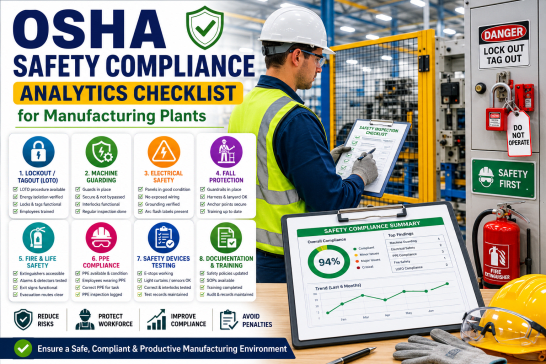
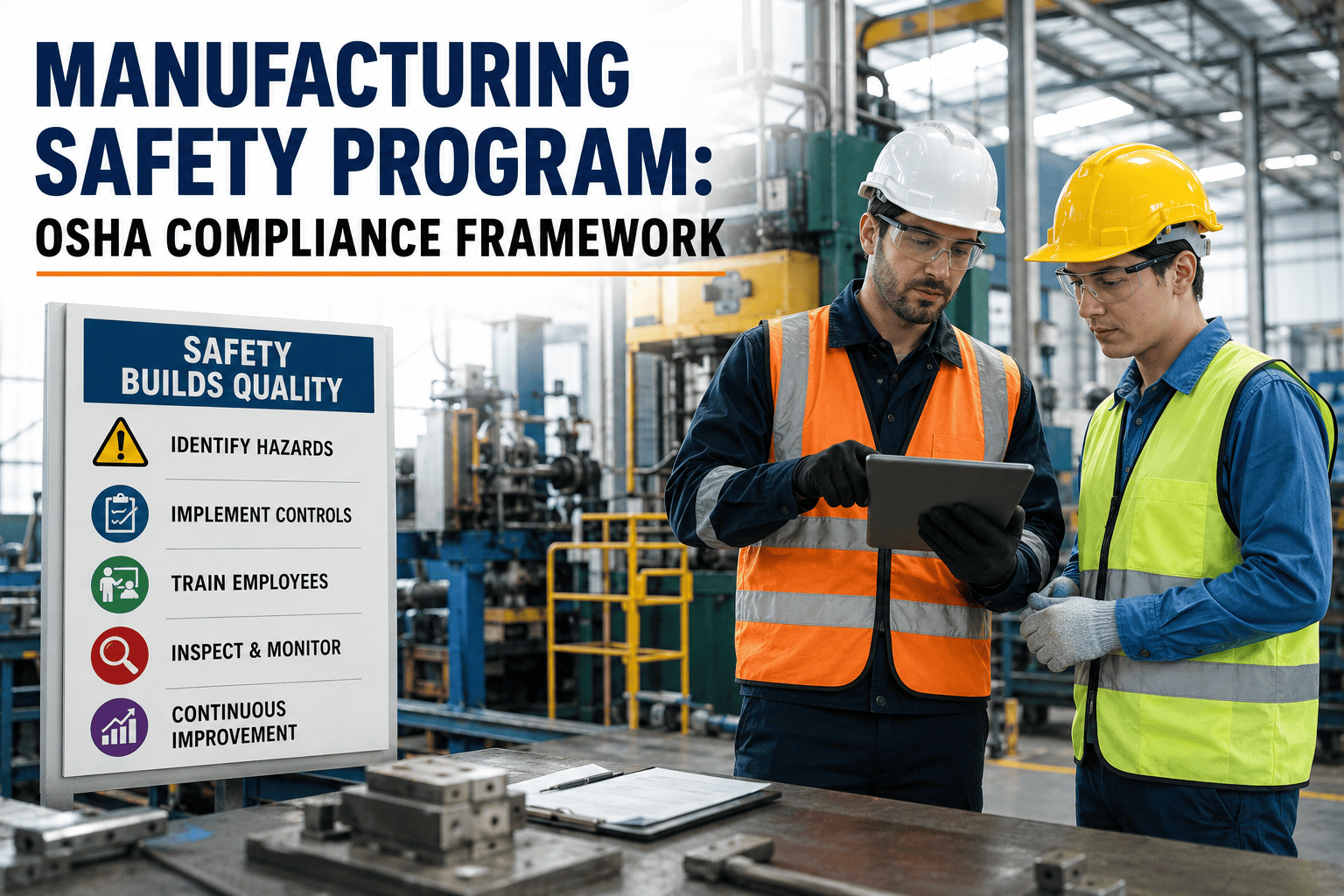
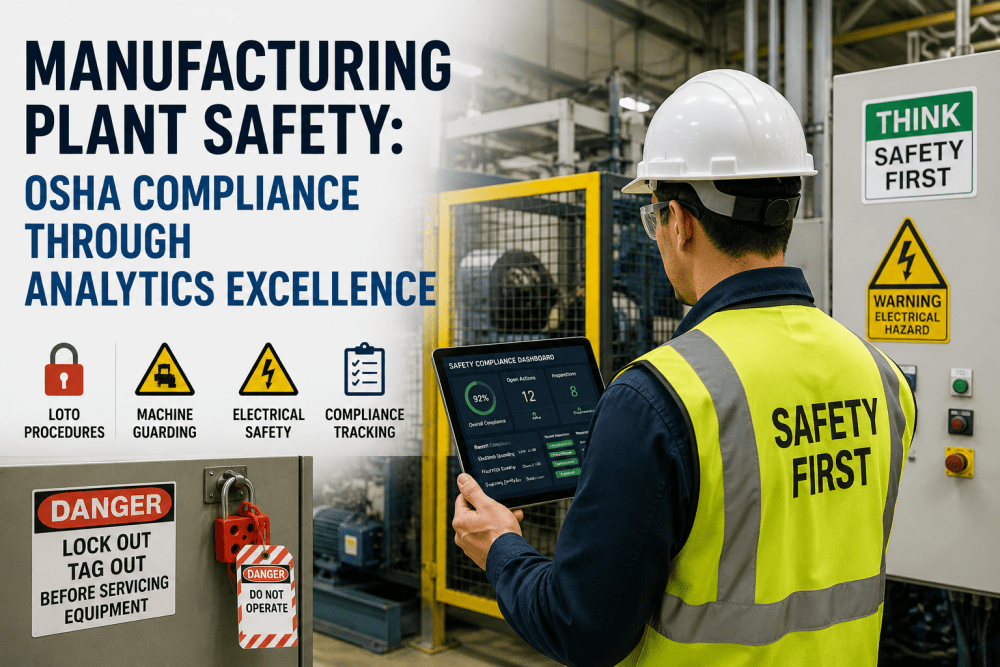
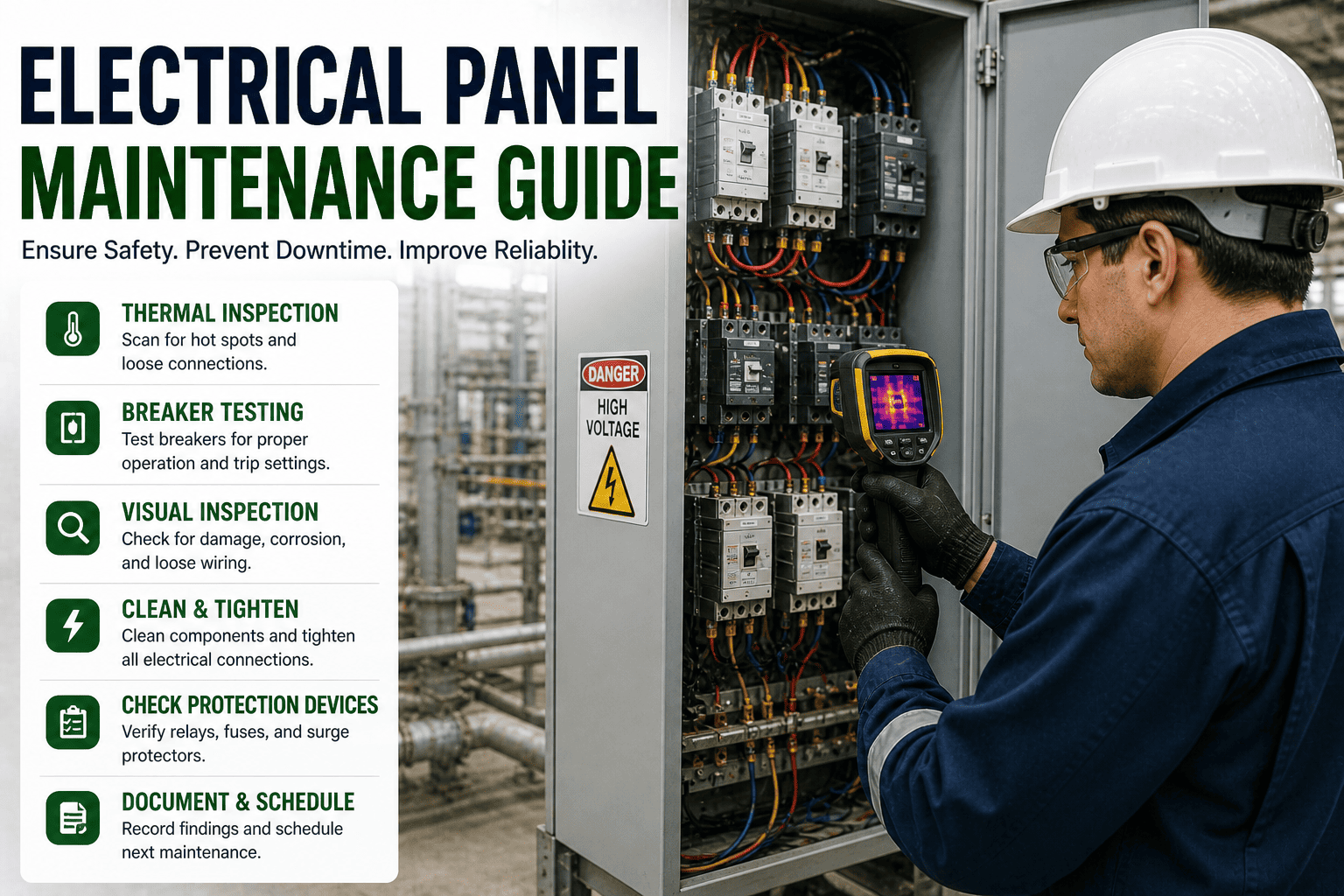
Manufacturing plants face more OSHA scrutiny today than at any point in the past decade. With penalties exceeding $156,000 per willful violation, inconsistent safety documentation is a liability — not just a compliance gap. This checklist covers every major OSHA compliance category relevant to U.S. manufacturing: LOTO, machine guarding, electrical safety, fall protection, PPE and fire systems — and shows how iFactory AI's Compliance & Audit Trail Management module turns each checkpoint into a timestamped, audit-ready record. Book a Demo to see iFactory working across your plant floor.
OSHA Compliance · Manufacturing Safety · Audit Trail Management
Your Plant Needs More Than a Paper Checklist. It Needs a System That Proves Compliance.
iFactory AI digitizes every OSHA safety checkpoint — from LOTO procedures to fire suppression inspections — creating timestamped, inspector-ready documentation automatically from the plant floor.
$156K+
Max OSHA penalty per willful violation
40%
OSHA citations involve documentation failures
3x
Faster audit response with digital compliance trail
60%
Reduction in compliance documentation time
Why Digital Beats Paper
The Problem With Traditional OSHA Compliance in Manufacturing
No Audit Trail Integrity
Paper records can be backdated or lost. Digital records with system timestamps remove any question of integrity during OSHA inspections.
Inspection Gaps Go Unnoticed
No automatic escalation when inspections are missed. Gaps only surface during audits or, worse, after an incident occurs.
No Cross-Department Visibility
Safety managers cannot see real-time compliance status across departments. Digital platforms surface status across every work area simultaneously.
Corrective Actions Stall
Paper findings have no automatic work order generation. Open safety findings age without follow-up, increasing liability every day they remain unresolved.
Section 1 of 6
Lockout/Tagout (LOTO) — 29 CFR 1910.147
LOTO violations rank among OSHA's top-10 most-cited standards in manufacturing. Every energy control procedure must be documented, verified, and accessible at the point of use.
Section 2 of 6
Machine Guarding — 29 CFR 1910.212 & 1910.217
Machine guarding violations are a top source of amputations in manufacturing. Any machine part creating a hazard must be guarded and regularly inspected.
Section 3 of 6
Electrical Safety — 29 CFR 1910.303–1910.399
Electrical hazards account for roughly 4% of all manufacturing fatalities. OSHA requires installations meet NFPA 70 and workers are protected through engineering controls, PPE, and documented procedures.
Turn Every Checklist Item Into a Timestamped Compliance Record — Automatically
Completed inspections generate dated records, open findings auto-generate work orders, and your entire compliance history is searchable for OSHA audits in seconds — not hours.
Section 4 of 6
Fall Protection — 29 CFR 1910.23, 1910.28 & 1910.29
Falls remain the leading cause of manufacturing fatalities. OSHA requires fall protection for workers at heights of four feet or more.
Section 5 of 6
PPE Program — 29 CFR 1910.132–1910.138
OSHA requires a written, certified hazard assessment before selecting PPE. Many plants issue PPE without the assessment — leaving them exposed to citation even when employees are physically protected.
Section 6 of 6
Fire Safety & Emergency Systems — 29 CFR 1910.157, 1910.165 & 1910.38
Fire safety citations most commonly stem from blocked emergency exits, overdue extinguisher inspections, and undocumented emergency action plans.
Before vs. After
Paper-Based OSHA Compliance vs. iFactory AI Compliance Management
Paper-Based
Reactive · Manual · Fragmented
Records in binders or shared drives — hours to locate during OSHA audit
No escalation when inspections are overdue — gaps found only after incidents
Open findings have no automatic work order or follow-up tracking
Training expiration tracked manually in spreadsheets — error-prone
iFactory AI
Predictive · Automated · Centralized
Timestamped records searchable across 24-month history — audit-ready in seconds
Automated escalation alerts before inspection gaps occur
Open findings auto-generate CMMS work orders with priority and deadline
Training expiration reminders automated — no missed re-certification dates
Expert Review
What Safety Managers Say After Deploying Digital Compliance Management
We had an unannounced OSHA inspection at our Midwest fabrication facility last spring. Before iFactory, I would have spent an entire day pulling binders and hoping our LOTO records were complete. This time, I pulled the entire compliance history — LOTO, machine guarding, PPE, fire extinguisher inspections — for the past 24 months in under 15 minutes. The inspector specifically commented on our documentation quality. We received zero recordkeeping citations for the first time in our facility's history.
EHS ManagerMid-size metal fabrication manufacturer — 3 facilities, 420 employees
Compliance Benchmarks
What Plants Achieve With AI-Driven OSHA Compliance
Reduction in OSHA recordkeeping citations after digital deploymentUp to 80%
Reduction in compliance documentation preparation time60%
Inspection completion rate when overdue alerts are automated95%+
Compliance audit trail availability — all records timestamped and searchable24/7
Conclusion
A Checklist Is a Starting Point. An Audit Trail Is What Protects You.
Risk of Manual Compliance
What Paper-Based OSHA Management Costs
The real liability in most facilities isn't the physical hazard — it's the documentation failure. Missing LOTO annual review records, incomplete PPE hazard assessments, or fire extinguisher tag gaps become citations regardless of whether a physical hazard existed. OSHA's own data shows 40% of citations involve recordkeeping deficiencies — most entirely preventable with digital systems.
$156K
Max penalty per willful violation
40%
Citations from recordkeeping failures
The iFactory Advantage
What Digital Compliance Returns
Facilities that pass OSHA inspections consistently have the most complete, auditable documentation systems. iFactory ensures every LOTO review, machine guarding inspection, fire extinguisher check, and PPE assessment is recorded, timestamped, and retrievable in seconds. Safety findings auto-generate corrective work orders. Training expirations surface before they create gaps. Book a Demo to see iFactory's compliance workflow.
Zero
Recordkeeping citations for iFactory deployments
15 min
To pull 24-month compliance history for audit
Your Plant Is Already Generating the Data for Complete OSHA Compliance. The Question Is Whether It's Being Captured and Protected.
iFactory AI's Compliance & Audit Trail Management module digitizes every OSHA checklist category into a centralized, timestamped, inspection-ready record. Corrective actions auto-generate as work orders. Overdue inspections trigger automatic escalation. Audit prep drops from days to minutes.
Frequently Asked Questions
OSHA Safety Compliance — What Safety Leaders Ask First
How often does OSHA require LOTO procedures to be formally reviewed?
OSHA's 29 CFR 1910.147(c)(6) requires an annual periodic inspection of each energy control procedure, certified in writing with machine name, inspection date, employees included, and name of the person performing the review. iFactory automatically creates the certification record when a digital LOTO inspection is completed, with all required fields populated from the user profile and timestamp.
What documentation does OSHA require for a PPE program?
Three core documents are required under 29 CFR 1910.132: a written hazard assessment certification signed by a qualified person, training records for each employee, and retraining documentation when workplace changes render prior training obsolete. Many facilities issue PPE correctly but cannot produce the underlying assessment — which is what generates the citation. iFactory stores all three document types and surfaces training re-certification expiration dates automatically.
What are the most commonly cited OSHA standards in manufacturing?
Based on OSHA's annual citation data, the top standards cited in general industry manufacturing are: Lockout/Tagout (1910.147) for missing machine-specific procedures or incomplete annual reviews; Respiratory Protection (1910.134) for missing written programs or fit test records; Hazard Communication (1910.1200) for missing SDSs and training records; Electrical General Requirements (1910.303) for open knockouts and labeling deficiencies; and Machine Guarding (1910.212) for unguarded rotating parts. The majority of citations in each category involve documentation failures rather than physical conditions.
How does iFactory connect safety checklist findings to corrective maintenance work orders?
When an inspector marks a finding in a digital iFactory checklist — a damaged guard, a failed extinguisher, an unguarded shaft — the platform automatically generates a CMMS work order pre-populated with the finding description, location, OSHA standard reference, inspector name, and timestamp. Priority and resolution deadline are configurable by hazard type. Safety managers monitor open findings in real time, and closure records link back to the original inspection — creating a complete corrective action audit trail with no manual documentation steps.
Does iFactory support compliance management across multiple facilities?
Yes. iFactory's Compliance & Audit Trail Management module supports multi-facility deployment. Each site maintains its own inspection records and schedules while corporate EHS leadership sees a unified dashboard of compliance status, overdue alerts, and open finding trends across all locations. Facilities with different regulatory jurisdictions can maintain separate checklist sets while sharing a unified compliance history.
Contact support for multi-site deployment details.