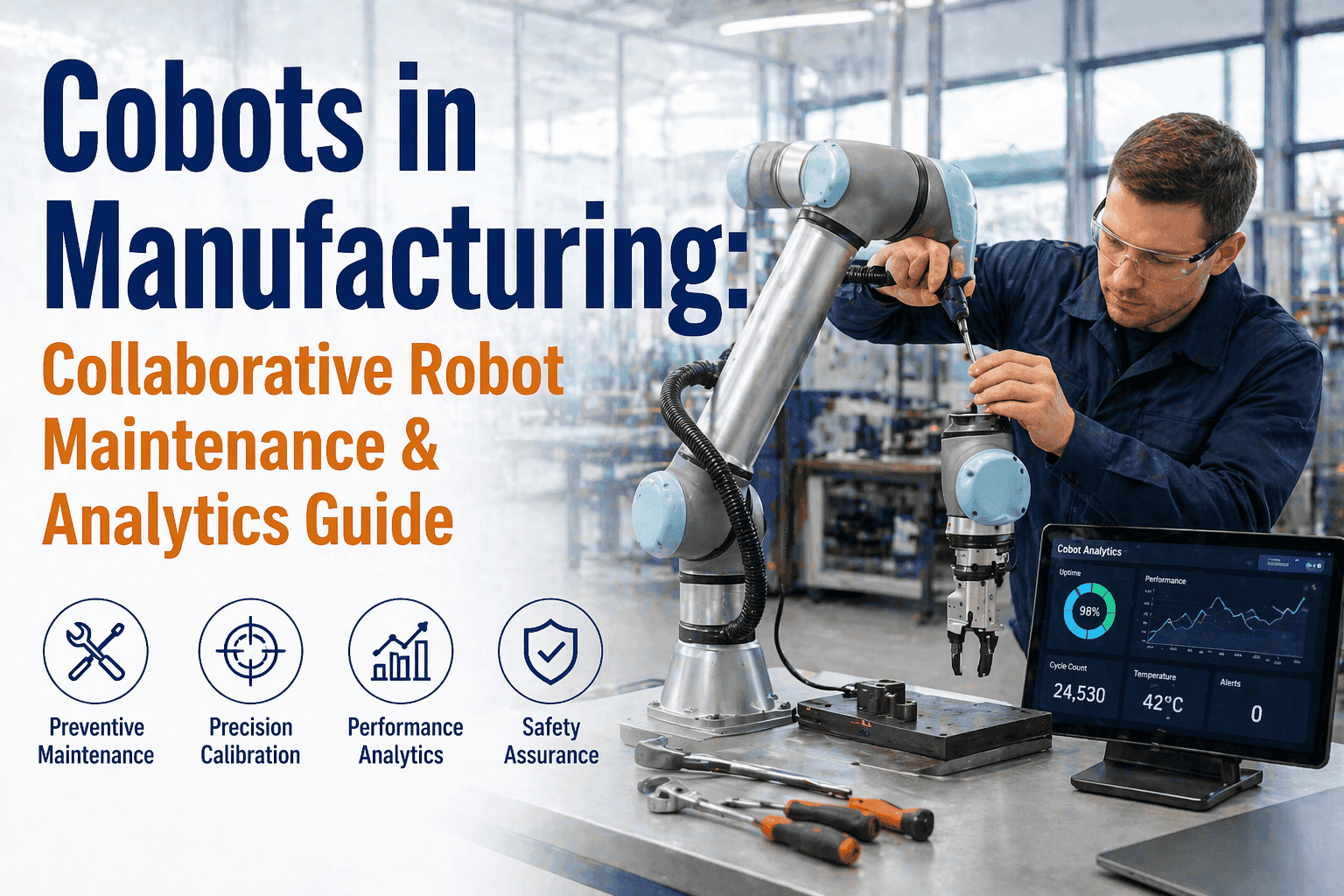
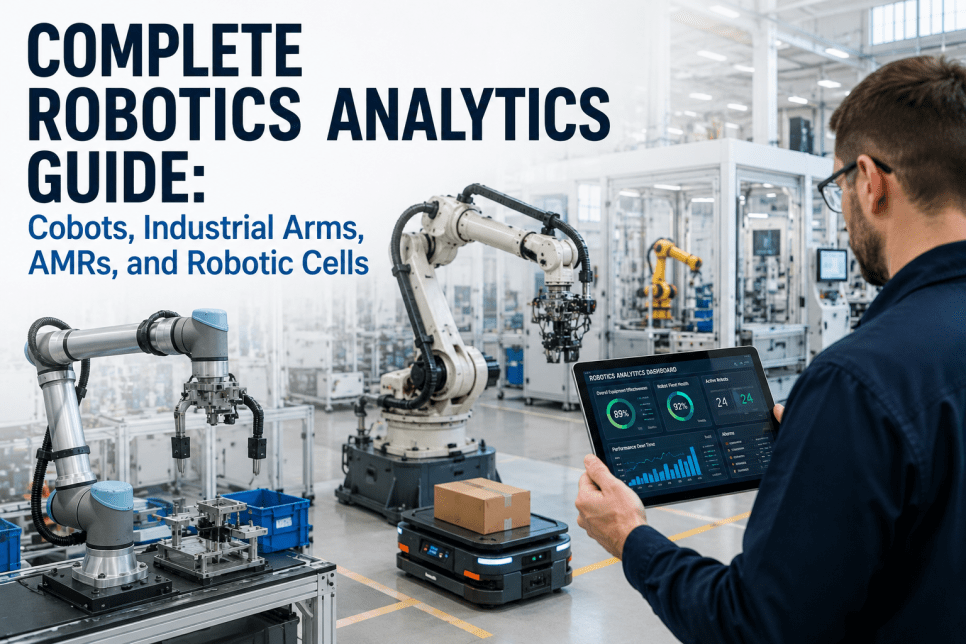
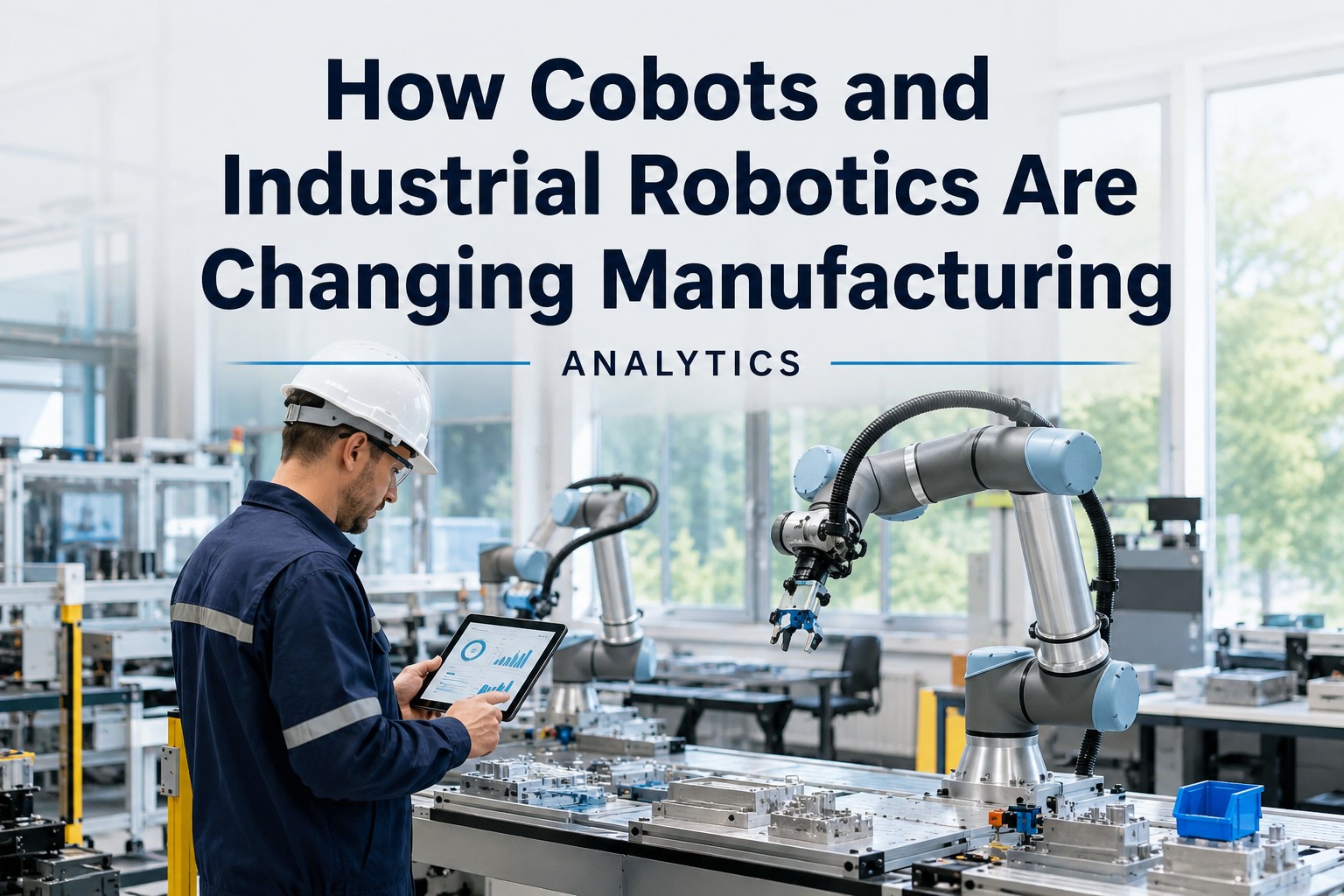
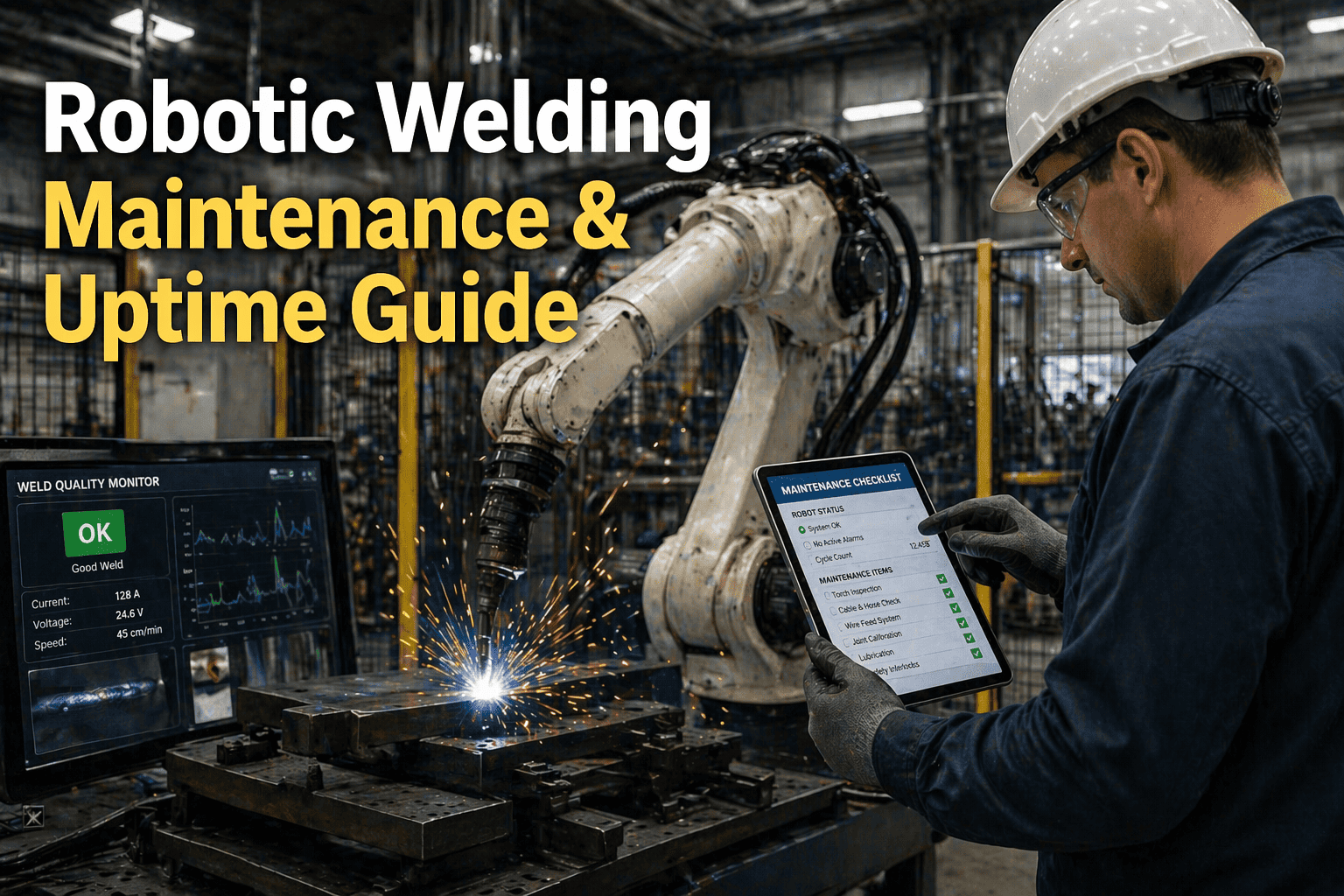
Manufacturing plants operating collaborative robot fleets lose 18-26% of potential cobot availability to unplanned maintenance interventions that predictive analytics could have prevented — not from catastrophic mechanical failures, but from gradual performance degradation that no periodic service check or manual inspection schedule catches in time. By the time a cobot exhibits measurable performance loss, joint accuracy drift, speed reduction, or safety system degradation, the precursor signals have been visible in telemetry data for weeks. Legacy cobot maintenance relies on fixed calendar schedules, manual calibration checks, and reactive troubleshooting that cannot scale across dozens of robots operating at different cycle rates and duty cycles. iFactory's AI-powered cobot maintenance platform changes this — detecting joint wear, actuator fatigue, safety system drift, and performance anomalies in real time through multi-parameter sensor fusion, classifying maintenance urgency before production impact occurs, and integrating directly into your existing SCADA, MES, and maintenance management systems without operational disruption. Book a Demo to see how iFactory deploys AI cobot analytics across your robot fleet within 8 weeks.
89%
Cobot maintenance issue detection before performance degradation appears
$3.6M
Average annual unplanned downtime cost avoided per 30-cobot fleet
76%
Reduction in reactive maintenance interventions vs. calendar-based servicing
8 wks
Full deployment from fleet audit to live analytics go-live
The Complete AI Platform for Manufacturing Operations
iFactory's AI engine monitors joint torque, actuator temperature, speed profiles, safety system status, and calibration drift across your entire cobot fleet — 24/7, without operator observation or maintenance downtime. Predict Failures Before They Stop Production. AI That Turns Downtime Into Planned Maintenance.
How iFactory AI Solves Cobot Fleet Maintenance
Traditional cobot maintenance relies on periodic service schedules, manual calibration verification, and reactive troubleshooting after performance loss is observed. iFactory replaces this with continuous AI models trained on cobot-specific degradation patterns that detect wear, drift, and safety system anomalies before measurable performance impact appears. Built for Manufacturing Plants, Not Generic CMMS. See a live demo of iFactory detecting simulated joint wear and calibration drift events in collaborative robots.
01
Multi-Parameter Cobot Telemetry Fusion
iFactory ingests data from joint motors, actuator encoders, force-torque sensors, thermal probes, and safety system diagnostics simultaneously — fusing multi-source signals into a single robot health score per unit, updated every 5 seconds. Real-Time Visibility Into Every Production Line.
02
AI Cobot Fault Classification
Proprietary ML models classify each detected anomaly as joint wear, encoder drift, actuator hysteresis, thermal stress, speed ramping error, or safety system degradation — with severity scores and recommended service actions. False positive rate under 5%.
03
Predictive Maintenance Forecasting
iFactory's time-series forecasting identifies cobot components trending toward maintenance intervention point 3-14 days before performance threshold — giving maintenance teams time to plan service during scheduled changeovers, not emergency downtime.
04
SCADA, PLC & MES Integration
Connects to Your Existing SCADA/PLC Systems. iFactory integrates with Siemens, Allen-Bradley, Schneider Electric PLCs plus SAP MII, Rockwell FactoryTalk, Wonderware MES via OPC-UA and MQTT. Maintenance alerts auto-populate work order systems. Integration under 2 weeks.
05
Automated Fleet Performance Reporting
Eliminate Manual Logs with AI Digital Shift Logbooks. Every cobot service event — detected, performed, and verified — auto-logs to maintenance records with timestamp, part replaced, technician ID, and pre/post-service performance data. Knowledge base preserved for future maintenance decisions.
06
Maintenance Decision Support
iFactory presents ranked maintenance recommendations per robot — lubricate joint, replace encoder, perform calibration, or full service — with risk scores and estimated production impact per hour of delay. Teams schedule maintenance on evidence, not calendar cycles.
How iFactory Is Different from Generic Cobot Monitoring
Most cobot vendors offer basic status dashboards with no predictive capability or maintenance intelligence. iFactory is purpose-built for collaborative robot fleet management where component wear patterns, duty cycle variation, and safety system requirements determine maintenance needs. Talk to our cobot analytics specialists and compare your current approach.
| Capability |
Generic Cobot Dashboards |
iFactory AI Platform |
| Maintenance Detection |
Manual periodic service schedules. Reactive troubleshooting after performance loss. No predictive analytics or degradation forecasting. |
ML models trained on 12 cobot failure modes (joint wear, encoder drift, actuator hysteresis, thermal stress, calibration loss, safety drift). Predicts maintenance needs 3-14 days before performance threshold. |
| Data Integration |
Standalone cobot controller status only. No integration with SCADA, MES, or maintenance systems. Service data not captured or analyzed. |
Fuses joint telemetry, actuator data, safety diagnostics, and MES production schedules into unified fleet health scoring. Real-time alerts auto-populate maintenance systems. |
| Alert Quality |
Binary fault codes from robot controller. High false positive volumes from single-parameter thresholds that technicians ignore. |
Multi-variable degradation classification with maintenance urgency scores. False positive rate under 5%. Seasonal and production mode filtering reduces alert fatigue. |
| Manufacturing Focus |
Generic robot status adapted from industrial automation. Not optimized for cobot-specific duty cycles, safety requirements, or factory scheduling. |
Purpose-built for collaborative robots. Accounts for payload variation, speed ramping cycles, force-limiting safety engagement, human-robot interaction patterns. Factory scheduling integrated. |
| Compliance Output |
Manual service logs. No structured audit trails for ISO 10218, safety certifications, or compliance documentation. |
Auto-generated maintenance and safety compliance reports formatted for ISO 10218, ISO/TS 15066, OSHA, and regional robot safety standards. Audit trails complete and timestamped. |
| Deployment Timeline |
12-24 weeks for enterprise robot management system. Extensive integration and configuration required. |
8-week fixed deployment program. Pilot results in week 4. Full fleet monitoring by week 8. Pre-configured for manufacturing cobot operations. |
Cobot Fleet Maintenance Implementation Roadmap
iFactory follows a structured 6-stage deployment methodology for collaborative robot fleets — delivering pilot analytics in week 4 and full fleet monitoring by week 8. One Platform for Smart Manufacturing with AI-Powered Maintenance, OEE, and Operations.
01
Fleet Audit
Robot inventory & telemetry mapping
02
System Integration
PLC/SCADA/MES connection via OPC-UA
03
Model Baseline
AI training on historical cobot data
04
Pilot Analytics
Live monitoring on 8-12 highest-utilization robots
05
Alert Calibration
Threshold refinement & technician training
06
Full Fleet
Complete fleet AI analytics, 24/7
8-Week Deployment and ROI Plan
Every iFactory engagement follows an 8-week program with measurable maintenance improvements appearing from week 4 pilot operation. Request the full deployment scope document for your fleet size and composition.
Weeks 1-2
Infrastructure Setup
Complete robot inventory audit across all manufacturing lines with telemetry availability assessment
PLC, SCADA, and MES system connection via OPC-UA and MQTT protocols
Historical cobot performance data and maintenance record ingestion for AI baseline training
Weeks 3-4
Model Training & Pilot
AI models trained on your fleet's specific robot types, duty cycles, and maintenance history
Pilot monitoring activated on 8-12 highest-utilization robots in production
First maintenance anomalies detected — ROI evidence begins here
Weeks 5-6
Calibration & Expansion
Alert thresholds refined based on pilot false positive and detection accuracy data
Coverage expanded to full fleet inventory across all cell types
Maintenance technician training completed — predictive service protocols activated
Weeks 7-8
Production Go-Live
Full fleet AI analytics live — all robots, all maintenance modes, continuous monitoring
Digital maintenance logbooks activated with auto-captured service records
ROI baseline report — downtime reduction, maintenance optimization, fleet performance data
ROI IN 6 WEEKS: MEASURABLE RESULTS FROM WEEK 4
Plants completing the 8-week program report an average of $380,000 in avoided cobot downtime and unplanned maintenance costs within the first 6 weeks of production monitoring — with maintenance issue detection improvements of 64-78% detected by week 4 pilot validation.
$380K
Avg. savings in first 6 weeks
64-78%
Maintenance detection improvement
76%
Reduction in reactive interventions
Full AI Cobot Analytics. Live in 8 Weeks. ROI Evidence in Week 4.
iFactory's fixed-scope deployment means no open timelines, no months of system integration, and measurable maintenance improvements from pilot forward.
Use Cases and KPI Results from Live Cobot Deployments
These outcomes are drawn from iFactory deployments at manufacturing facilities operating collaborative robot fleets. Each use case reflects 6-month post-deployment performance data. Request the full case study report for your robot type or application.
A manufacturer operating 28 mobile collaborative robots performing pick-and-place assembly was experiencing 8-12 unplanned downtime incidents per month from joint bearing wear that periodic 90-day service schedules could not anticipate. Legacy maintenance identified joint degradation only after measurable accuracy loss appeared — typically 3-5 weeks into wear progression. iFactory deployed joint torque and encoder fusion monitoring across all robots. Within 6 weeks of go-live, AI detected 22 early-stage joint wear events 10-18 days before accuracy threshold — enabling scheduled maintenance during shift changes.
22
Joint wear events predicted before downtime in first 6 weeks
$1.8M
Annual unplanned downtime cost avoided through predictive maintenance
92%
Early detection accuracy on cobot joint degradation events
An electronics assembly plant operating 16 collaborative robots for precision component placement was generating 80-120 quality escapes per month from undetected calibration drift — costing $8-12K per incident in rework and customer warranty. Manual calibration verification every 30 days was insufficient to catch drift progression. iFactory integrated encoder and force-torque fusion with real-time calibration monitoring. Calibration drift detection rate improved from 35% to 89% with alerts appearing 5-12 days before quality impact threshold.
89%
Calibration drift detection rate — up from 35% with manual checks
$1.2M
Annual quality escape and warranty cost eliminated
5-12 days
Early warning time before calibration impacts part quality
An automotive OEM operating 42 collaborative robots in mixed-model assembly lines was conducting manual safety system checks quarterly due to regulatory requirements — missing degradation signals that appeared between inspection cycles. iFactory deployed continuous safety diagnostic monitoring covering force-limiting response, emergency stop responsiveness, and human-robot interaction safety features. AI detected 8 safety system anomalies within 8 weeks — all before regulatory audits would have found them, preventing potential compliance violations.
$980K
Regulatory compliance and incident avoidance value
8
Safety system anomalies detected before quarterly audits
87%
Safety system integrity verification accuracy improvement
Results Like These Are Standard. Not Exceptional.
Every iFactory deployment is calibrated to your specific robot types, production workflows, and duty cycles — delivering results tuned to your manufacturing environment, not generic benchmarks.
What Manufacturing Teams Say About iFactory Cobot Analytics
Testimonials from plant managers and maintenance directors at facilities running iFactory's AI cobot monitoring platform.
We went from reactive cobot maintenance to predictive. iFactory flagged joint wear before accuracy loss appeared. Our 28-robot fleet downtime dropped by 71% in the first four months without increasing technician headcount.
Plant Manager
Assembly Manufacturing, USA
The calibration drift detection saved us from a major quality escapes issue. We were generating 100+ escapes per month before. Now the system alerts us 8 days before quality impact. Our rework costs dropped 88%.
Quality Director
Electronics Assembly, India
Integration with our Siemens PLC and SAP maintenance system took 11 days. The iFactory team understood both the factory automation layer and the maintenance workflow. That technical depth is rare in software vendors.
Maintenance Manager
Automotive Manufacturing, UAE
We detected a safety system issue in month two that our quarterly audit would have missed. The system is protecting our operators and our compliance record simultaneously. That dual value is something we did not expect.
HSE Manager
Production Plant, UK
Frequently Asked Questions
Which collaborative robot brands does iFactory integrate with?
iFactory integrates with Universal Robots, ABB GoFa, FANUC CRX, KUKA LBR iiwa, and Techman robots via native SDK support. Vision and telemetry layers are robot-agnostic and deploy on existing hardware without replacement. Integration scope confirmed during Week 1 fleet audit.
Book a demo to see robot compatibility.
Does iFactory require new sensors or monitoring hardware on existing robots?
In most deployments, iFactory connects to native robot controller telemetry and joint sensor data — no new hardware required. Where additional monitoring is beneficial, iFactory recommends optional external force-torque sensors or thermal probes only. Deployment cost is determined during Week 1 fleet assessment.
How does iFactory account for different robot models and duty cycles in the same fleet?
iFactory trains separate sub-models per robot type and application — accounting for payload variation, speed profiles, and duty cycle differences between pick-and-place, assembly, machining, and palletizing robots. Multi-model fleets fully supported within single deployment. Model-specific parameters configured during Week 3-4 training.
What compliance standards does iFactory support for cobot operations?
iFactory auto-generates maintenance and safety compliance records formatted for ISO 10218, ISO/TS 15066 collaborative safety, OSHA, and regional robot safety standards. Maintenance audit trails are complete and timestamped for regulatory compliance. Safety documentation packages included.
How long does it take before cobot maintenance predictions become reliable?
Baseline model training typically takes 5-7 days using 60-90 days of cobot operating history. First live predictions validated during Week 3-4 pilot phase. Full model calibration — with false positive rate under 5% — achieved within 6 weeks for standard manufacturing environments.
Can iFactory monitor safety system integrity alongside maintenance analytics?
Yes. iFactory continuously monitors force-limiting response, emergency stop responsiveness, and human-robot interaction safety features. Safety diagnostics integrated with maintenance analytics to provide unified fleet health scoring. Safety anomalies trigger both maintenance alerts and compliance documentation.
Stop Maintaining Robots on Calendar Cycles. Start Predicting Maintenance Needs. Deploy AI Cobot Analytics in 8 Weeks.
iFactory gives manufacturing teams real-time cobot health monitoring, multi-parameter telemetry fusion, predictive maintenance scoring, and automated compliance reporting — fully integrated with your existing PLC and maintenance systems in 8 weeks, with ROI evidence starting in week 4.
89% maintenance issue detection before downtime
PLC, SCADA & MES integration in under 2 weeks
Graded alerts with under 5% false positive rate
Digital maintenance logbooks with auto-captured records