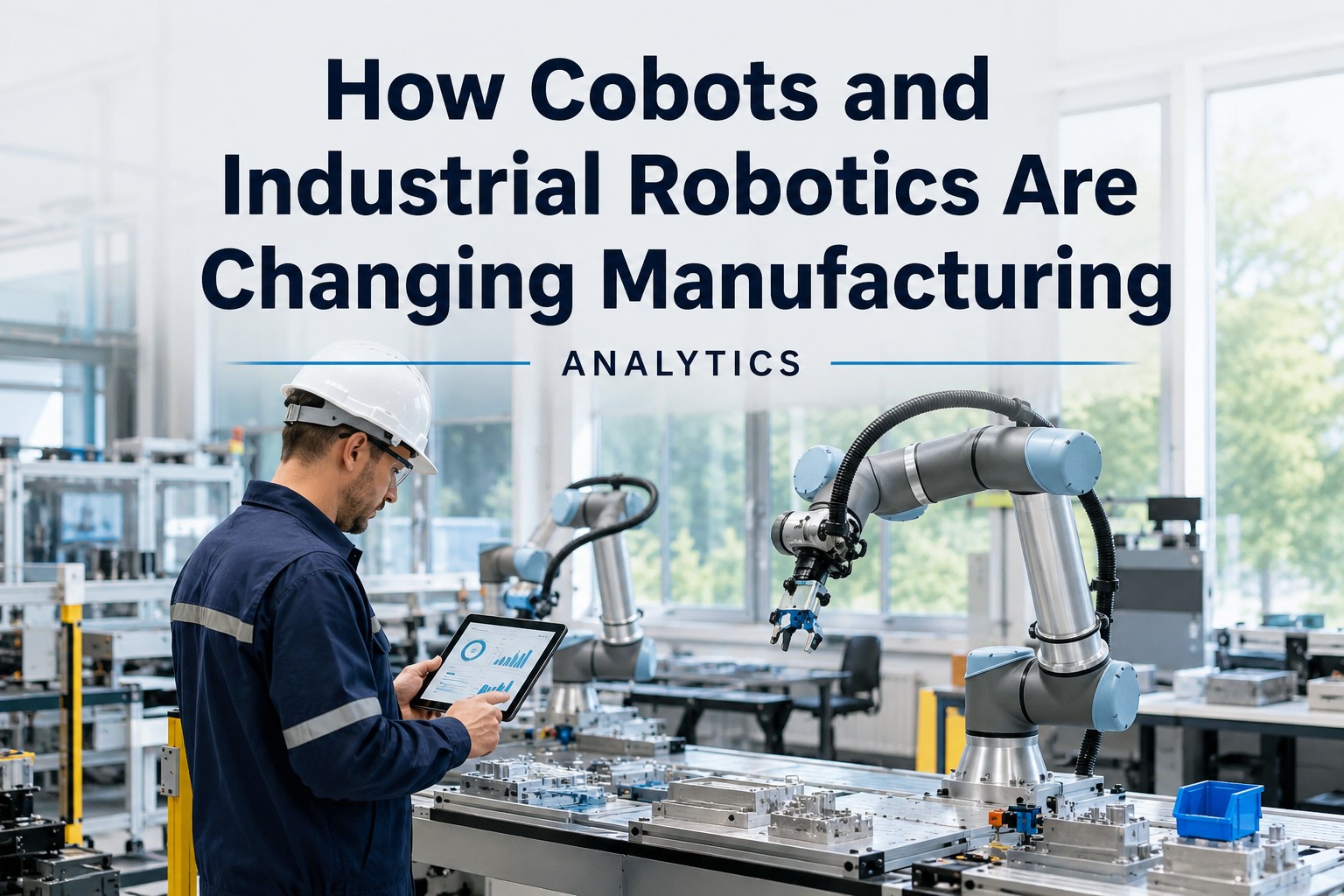
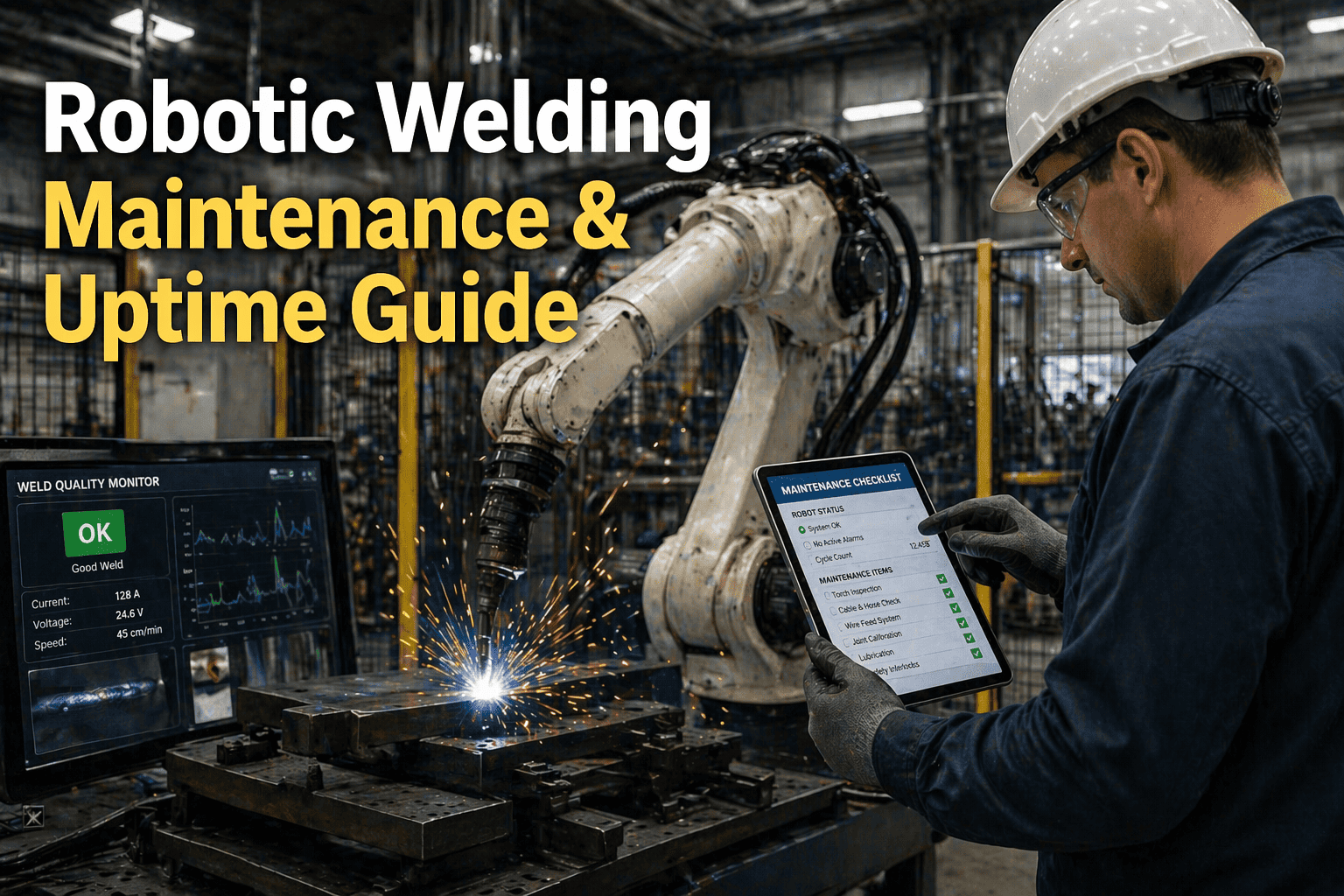
Manufacturing plants operating robotic welding cells experience 37% calibration drift annually producing reject welds while costing $10,000 per hour of downtime. Maintenance teams struggle with unplanned stoppages from wire feed degradation torch wear and TCP loss with no visibility into root causes forcing reactive firefighting. iFactory's AI platform predicts welding failures 30 days advance detecting wire feed anomalies and torch wear through continuous sensor monitoring integrated with SCADA PLC systems enabling scheduled maintenance eliminating unplanned stoppages. Book demo to see iFactory predict welding failures 30 days advance.
95%+
Welding cell uptime achievable through predictive maintenance eliminating unplanned failures
30 days
Advance failure prediction enabling maintenance scheduling during planned downtime
$10K
Hourly downtime cost per welding cell avoided through predictive maintenance program
8 wks
Complete deployment from sensor integration to predictive alerts and optimization
Predict Failures Before They Stop Production. AI That Turns Downtime Into Planned Maintenance.
iFactory enables manufacturing plants to achieve 95%+ welding cell uptime through predictive maintenance detecting wire feed degradation torch wear and calibration drift 30 days advance enabling maintenance scheduling during planned downtime windows eliminating unplanned robot stoppages.
The Reality: Why Manufacturing Plants Struggle With Welding Cell Reliability
Every hour a robotic welding cell sits idle costs manufacturing plants upward of $10,000 in lost production with 37% of welding robots experiencing calibration drift annually turning precision machines into scrap generators. Maintenance teams operating with reactive firefighting approaches discover unplanned stoppages only after production halts losing critical time to diagnose whether failures stem from wire feed degradation torch consumable wear TCP calibration loss or other equipment issues. Without predictive intelligence integrated with SCADA PLC systems manufacturing plants cannot identify degradation patterns before failures occur forcing extended troubleshooting during production windows. Traditional CMMS platforms require manual logbook entries across disconnected systems providing no visibility into root causes of welding cell downtime or predictive capability enabling proactive maintenance scheduling.
Manufacturing Plant Welding Cell Performance Reality
$10K per hour
Welding cell downtime cost making reactive maintenance economically unsustainable
37% calibration drift
Annual rate of robotic welding robots experiencing TCP deviation producing reject welds
30 minutes MTTR
Target mean time to repair for high-performing manufacturing plants achieving 95%+ uptime
2% reject rate
Weld quality standard requiring continuous monitoring to prevent defects and rework
What Modern Manufacturing Plants Need for Welding Cell Excellence
AI Predictive Maintenance
ML models analyzing vibration temperature arc current patterns predicting wire feed degradation torch wear TCP drift 30 days advance enabling preventive intervention before failures occur.
Real-Time Weld Quality Monitoring
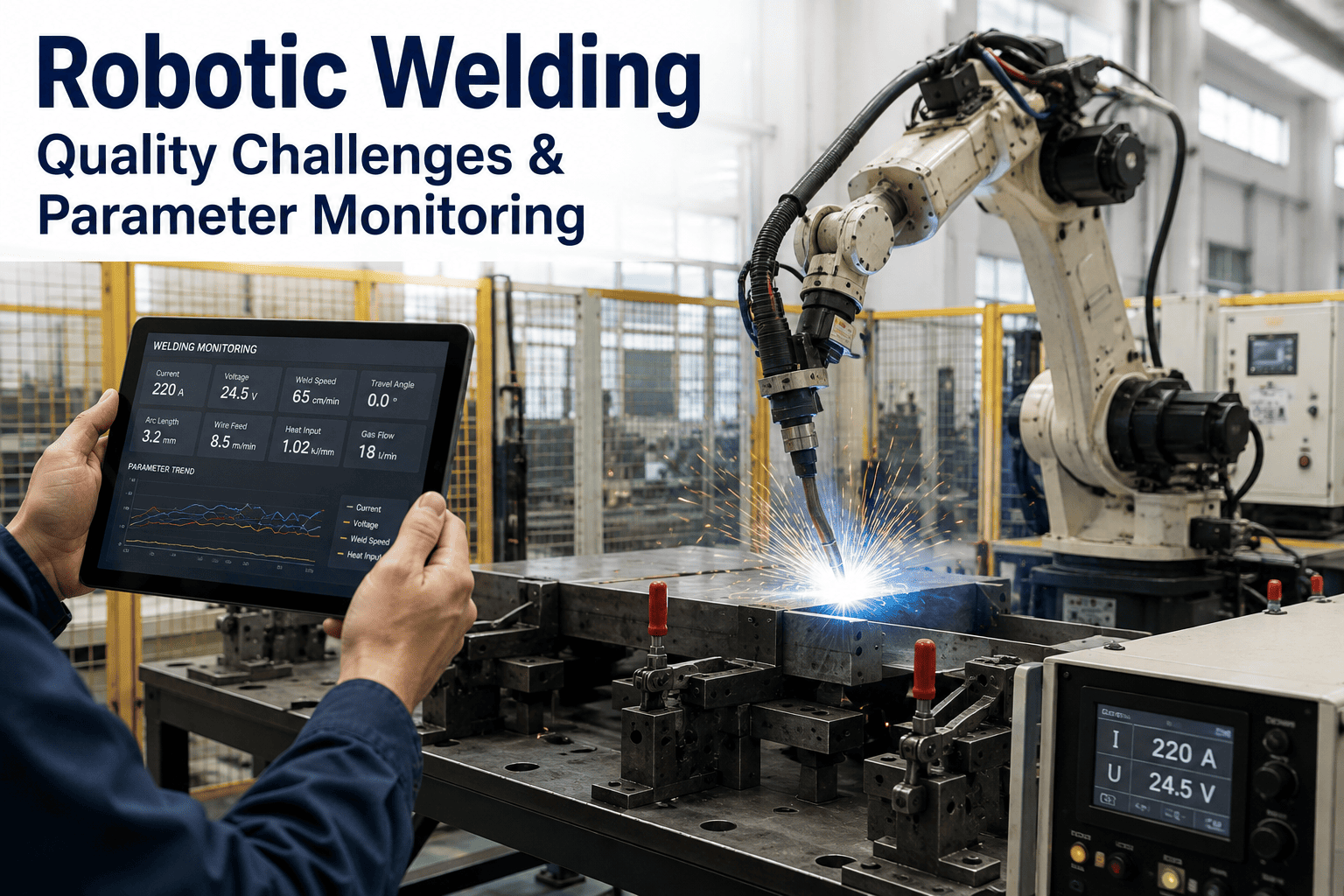
Continuous sensor data detecting penetration variations bead profile anomalies and dimensional drift triggering alerts when parameters exceed quality thresholds preventing scrap generation.
Digital Shift Logbooks
Automated capture of arc-on time downtime incidents torch changes and consumable replacements through SCADA integration eliminating manual entries.
Smart Maintenance Planning
Predictive scheduling of PM activities consumable orders and technician dispatch based on AI forecasts enabling proactive action before failures.
SCADA PLC Integration
Native connectivity to robot controllers PLC systems extracting real-time signals without custom middleware enabling immediate performance visibility.
How iFactory Enables 95%+ Welding Cell Uptime
Traditional maintenance platforms treat welding cells as generic assets requiring manual configuration and offering no predictive capability. iFactory is purpose-built for manufacturing plants with pre-trained AI models understanding welding robotics failure patterns integrated directly with SCADA PLC systems capturing real-time performance data. See live demo of iFactory predicting welding cell failures.
01
Continuous Sensor Monitoring
Real-time data from arc current voltage wire feed speed and torch temperature integrated with SCADA capturing complete welding behavior enabling AI models to detect degradation patterns.
02
Predictive Failure Detection
ML algorithms identify early warning signatures of wire feed degradation torch wear and TCP drift with 30-day advance notice enabling preventive maintenance scheduling.
03
Automated Work Order Generation
AI automatically creates PM work orders including labor time parts needed and scheduling recommendations enabling maintenance teams to plan activities proactively.
04
Quality Control Analytics
Continuous analysis of weld penetration and dimensional data triggering alerts when quality metrics trend toward reject levels before producing scrap.
05
Compliance Documentation
Automated capture of PM completion torch calibration and quality checks generating compliance records meeting automotive OEM and ISO requirements.
Why iFactory Is Different From Traditional CMMS Platforms
Generic CMMS platforms require extensive customization for welding robotics offering no predictive capability and forcing manual data entry across disconnected systems. iFactory is manufacturing-first platform with AI models pre-trained on welding cell failure patterns fully integrated with SCADA PLC systems enabling immediate deployment. Compare iFactory against traditional CMMS.
| Platform |
AI Capability |
Predictive Maintenance |
SCADA Integration |
Deployment Speed |
Manufacturing Fit |
| iFactory |
Pre-trained welding AI. 30-day failure prediction. |
30-day advance warnings. Wire feed torch wear TCP detection. |
Native SCADA PLC connectivity. Real-time bidirectional data. |
8 weeks to predictive operation. |
Purpose-built for welding cells. |
| IBM Maximo |
Generic industrial AI requiring extensive customization. |
Limited predictive. Not optimized for welding. |
Custom integration. Months of work. |
12-18 months implementation. |
Enterprise CMMS not manufacturing-specific. |
| SAP EAM |
No predictive AI. Transactional only. |
Threshold alerts. No real predictions. |
Limited OT connectivity. |
18+ months integration. |
ERP system not production-focused. |
| QAD Redzone |
No AI. Operator communication only. |
Not available. Reactive only. |
Not designed for SCADA. |
2-4 weeks setup. |
Communication tool. No analytics. |
| Evocon |
OEE dashboards. No predictions. |
Not available. Monitoring only. |
Basic SCADA read only. |
4-8 weeks deployment. |
Monitoring dashboard only. |
| Fiix |
No AI. CMMS database. |
Manual PM only. |
No OT connectivity. |
4-6 weeks basic. |
Cloud CMMS not AI-powered. |
| UpKeep |
Mobile-first. No predictive AI. |
Not available. Manual scheduling. |
No SCADA integration. |
2-4 weeks mobile setup. |
Mobile CMMS no AI. |
Robotic Welding AI Implementation Roadmap
iFactory follows structured 6-stage deployment enabling predictive capability in week 4 delivering 95%+ welding cell uptime by week 8.
01
Data Integration
SCADA PLC robot connectivity
02
Asset Mapping
Welding cell sensor inventory
03
AI Training
Predictive models live
04
Alerts
Automated notifications live
05
Optimization
Quality and performance tuning
06
Scale
95%+ uptime achieved
8-Week Deployment and ROI Timeline
Weeks 1-2
Infrastructure Setup
SCADA PLC robot controller connections
Welding cell sensor inventory documentation
Historical data extraction and ingestion
Weeks 3-4
AI Model Training
Predictive models trained on welding patterns
Pilot predictions on 5-10 welding cells
First maintenance recommendations generated
Weeks 5-6
Full Deployment
Predictive alerts live across all welding cells
Team training on alert response procedures
Quality monitoring dashboard live
Weeks 7-8
Optimization
95%+ uptime target achieved
Compliance documentation automated
ROI report showing downtime reduction
ROI IN 6 WEEKS: PREDICTIVE CAPABILITY FROM WEEK 4
Manufacturing plants completing 8-week program achieve 95%+ welding cell uptime within 6 weeks with first predictive alerts identifying maintenance requirements by week 4 reducing unplanned downtime by 35-50% documented in pilot deployments showing wire feed and torch wear detection eliminating $10K per hour stoppage costs.
95%+
Welding cell uptime target
35-50%
Downtime reduction vs baseline
30 days
Advance failure prediction capability
Eliminate Manual Logs with AI Digital Shift Logbooks. Connects to Your Existing SCADA/PLC Systems.
iFactory purpose-built manufacturing platform delivers 95%+ welding cell uptime through AI predicting failures 30 days advance fully integrated with SCADA PLC systems eliminating unplanned robot stoppages enabling production teams to plan maintenance strategically.
Use Cases: Welding Cell Uptime Results From Live Manufacturing Plants
Use Case 01
Automotive Assembly - 48 Robotic Welding Cells
Tier 1 automotive supplier operating 48 robotic welding cells experienced 14 unplanned stoppages monthly from wire feed degradation and torch wear costing $140K per month. iFactory deployed predictive maintenance detecting wire feed degradation 28 days before failure enabling scheduled maintenance during planned downtime. Achieved 95% cell uptime reducing downtime incidents 88% saving $120K monthly.
Use Case 02
Heavy Equipment - 24 Welding Robots Multi-Model Production
Heavy equipment manufacturer operating 24 welding robots struggled with 37% annual calibration drift causing reject welds. iFactory predictive monitoring detected TCP drift patterns alerting technicians 15 days before producing rejects. Eliminated reactive quality issues reducing reject rate from 2.8% to under 1.5% and increasing arc-on time from 76% to 86%.
1.5%
Reject rate achieved
15 days
TCP drift prediction
Regional Manufacturing Plant Requirements and iFactory Solutions
| Region |
Challenges |
Compliance |
iFactory Solution |
| US |
High labor costs driving automation ROI. Skilled technician shortage. 24/7 welding operations safety requirements. |
OSHA safety requirements. IATF 16949 automotive compliance. EPA emissions monitoring. |
Predictive maintenance reducing labor needs. Remote monitoring enabling distributed operations. Automated safety compliance documentation. |
| UK |
Brexit supply chain complexity. Energy cost pressure. EV transition manufacturing requirements. |
UKCA marking requirements. HSE workplace safety. WLTP emissions standards. |
Energy consumption optimization through predictive efficiency. Supply chain visibility integration. EU standard compliance. |
| India |
Rapid industrial growth. Skilled workforce building. Complex multi-facility operations coordination. |
ISO 9001 quality management. BIS industrial standards. Local labor regulations. |
Multi-language AI interface supporting Hindi English operations. Training automation for workforce building. Centralized monitoring enabling facility coordination. |
| UAE |
Extreme heat affecting equipment. Limited local technical expertise. Rapid manufacturing expansion. |
UAE Fire Safety standards. ESMA industrial regulations. ISO 9001 certification. |
High-temperature equipment monitoring and predictive maintenance. Remote international technical support. Arabic language interface support. |
| Europe |
Industry 4.0 adoption pressure. Multi-country operations. Strict emissions and safety standards. |
CE marking machinery directive. EU GDPR data protection. ISO 9001 automotive standards. |
Multi-language AI deployment. GDPR-compliant data handling. Cross-border production coordination. EU standard compliance automation. |
What Manufacturing Engineers Say About iFactory Welding Uptime
We went from 14 unplanned welding stoppages monthly to less than 2. iFactory detected wire feed degradation 28 days before our systems would have failed enabling us to plan torch changes during scheduled downtime. This is the difference between reactive firefighting and proactive manufacturing planning.
Plant Engineering Manager
Automotive Assembly Plant, Michigan
TCP calibration drift is invisible until it produces reject welds. iFactory's predictive alerts let us recalibrate before quality issues occur. Our arc-on time jumped from 76% to 86% and reject rates dropped from 2.8% to under 1.5%. The platform paid for itself in month two.
Quality Engineering Director
Heavy Equipment Manufacturer, Ohio
Integration with our SCADA and PLC systems happened in days not months. iFactory understands manufacturing plant automation deeply. Our maintenance team spent 12 hours weekly on manual compliance documentation. Now it's automatic and perfect. We passed our OEM audit with zero findings.
Maintenance Systems Manager
Metal Fabrication Facility, Pennsylvania
Predictive maintenance is not a nice-to-have in manufacturing it is essential. Every hour of unplanned downtime costs us $10,000. iFactory gives us a crystal ball into our welding cells enabling us to stay ahead of failures. This is how modern manufacturing operates.
Operations Director
Contract Manufacturing, Texas
Frequently Asked Questions
How does iFactory integrate with our existing SCADA and PLC systems?
iFactory connects natively to Siemens Allen-Bradley Mitsubishi Fanuc robot controllers through standard OPC UA protocols extracting real-time signals from production historians without custom middleware. Integration typically takes 2-5 days enabling immediate access to welding cell performance data.
Book demo to discuss your specific systems.
What sensors do we need to add to our robotic welding cells?
Most welding robots already generate arc current voltage wire feed speed and other signals accessible through controller data. iFactory can also integrate external sensors for torch temperature pressure and other parameters if available. We assess your current sensor infrastructure and recommend optimal monitoring approach during initial consultation.
How long before iFactory provides predictive maintenance recommendations?
Predictive models begin generating alerts within 3-4 weeks of deployment as they learn your welding cell patterns. Full 30-day advance failure predictions typically emerge around week 6 as AI accumulates sufficient data. Initial value often visible in weeks 4-5 through quality and performance anomaly detection.
Can iFactory help with OEM automotive compliance and audits?
Yes. iFactory automates capture of PM records torch service logs calibration events and quality measurements generating audit-ready compliance documentation meeting IATF 16949 requirements. Customers have achieved zero audit findings with complete automated compliance records.
Start free trial to see compliance automation.
What ROI can we expect from iFactory welding uptime optimization?
Documented results show 35-50% downtime reduction saving $10,000+ per hour per welding cell. Additional benefits include reduced reject rates improved arc-on time and elimination of manual compliance documentation. Typical payback 6-12 months with 3-5x annual ROI. Most plants see measurable improvement by week 6 of deployment.
Predict Failures Before They Stop Production. Achieve 95%+ Welding Cell Uptime in 8 Weeks.
iFactory is the Complete AI Platform for Manufacturing Operations delivering AI predictive maintenance digital shift logbooks real-time weld quality monitoring and compliance automation fully integrated with your SCADA PLC systems in 8 weeks enabling 95%+ welding cell uptime eliminating $10K per hour downtime costs.
30-day advance failure prediction proven
35-50% downtime reduction documented
100% compliance documentation automated
Manufacturing-first AI design


.png)