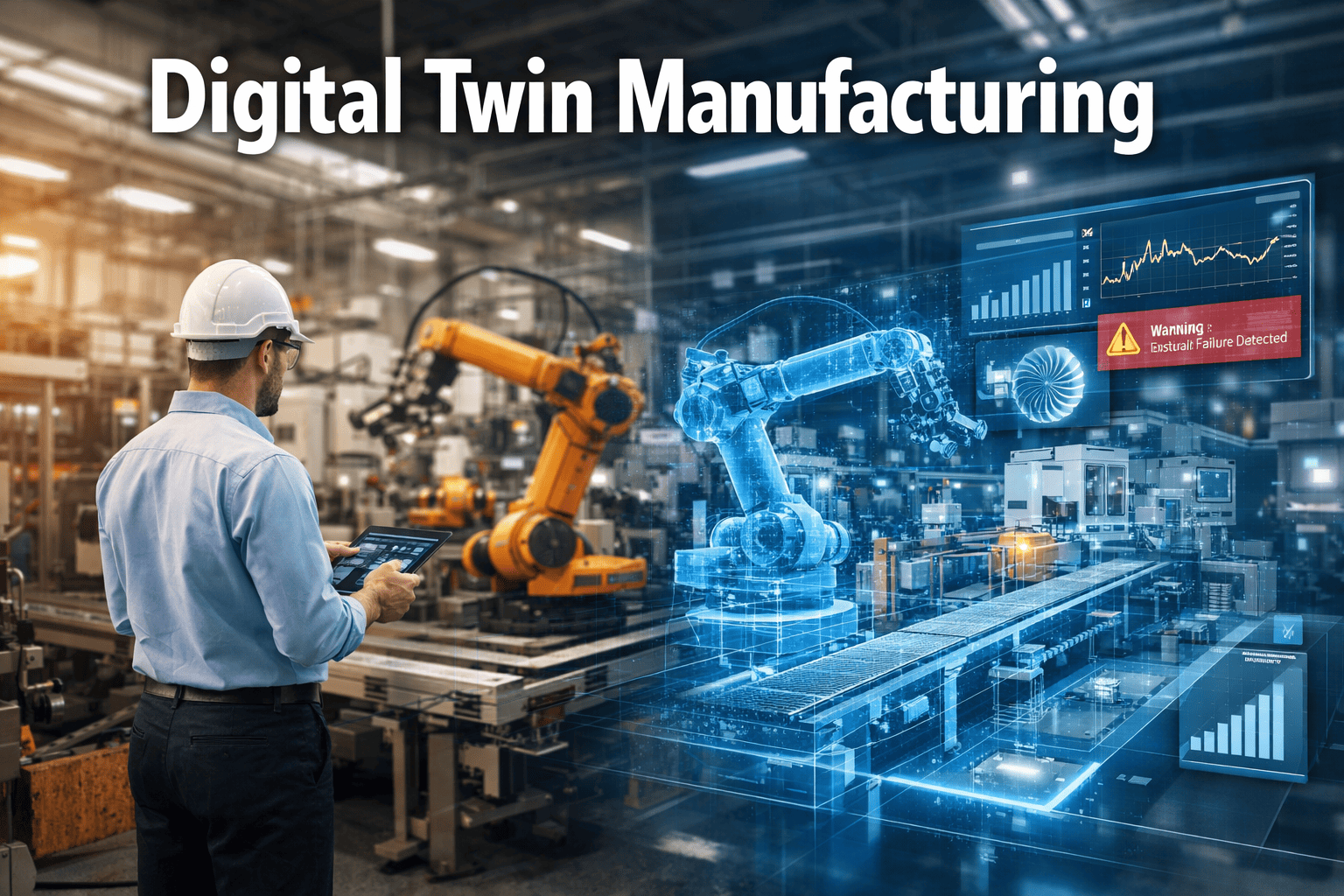
Manufacturing plants lose 15% to 28% of annual production capacity to unplanned equipment failures, production line stoppages, and quality issues that digital models and static simulations cannot predict because they lack real-time operational data integration, AI-powered failure forecasting, and dynamic process optimization responding to actual plant conditions as they change minute-by-minute across shifts, materials, and environmental variations. Traditional approaches rely on periodic equipment checks, manual shift handovers tracking only major incidents, disconnected SCADA and MES systems preventing correlation of process parameters with equipment health, and reactive maintenance responding after failures already impacted production costing $180,000 to $850,000 per unplanned stoppage in lost output, emergency repairs, and schedule disruption. iFactory's AI-powered digital twin platform eliminates these losses through continuous virtual replication of every production line, machine, and process synchronized with real-time SCADA, PLC, MES, and IoT sensor data enabling Predict Failures Before They Stop Production with 7 to 21 day advance warning, optimize production parameters through virtual simulation before physical changes, and deliver complete Real-Time Visibility Into Every Production Line across all shifts capturing $4.2 to $12.8 million annual value per mid-size facility. Book a Demo to see how iFactory deploys digital twin manufacturing across your plant operations within 8 weeks.
91%
Equipment failure prediction accuracy 7-21 days before breakdown
$8.6M
Average annual value captured per manufacturing facility
76%
Reduction in unplanned downtime vs reactive maintenance
8 wks
Full deployment from baseline to live digital twin operations
The Complete AI Platform for Manufacturing Operations
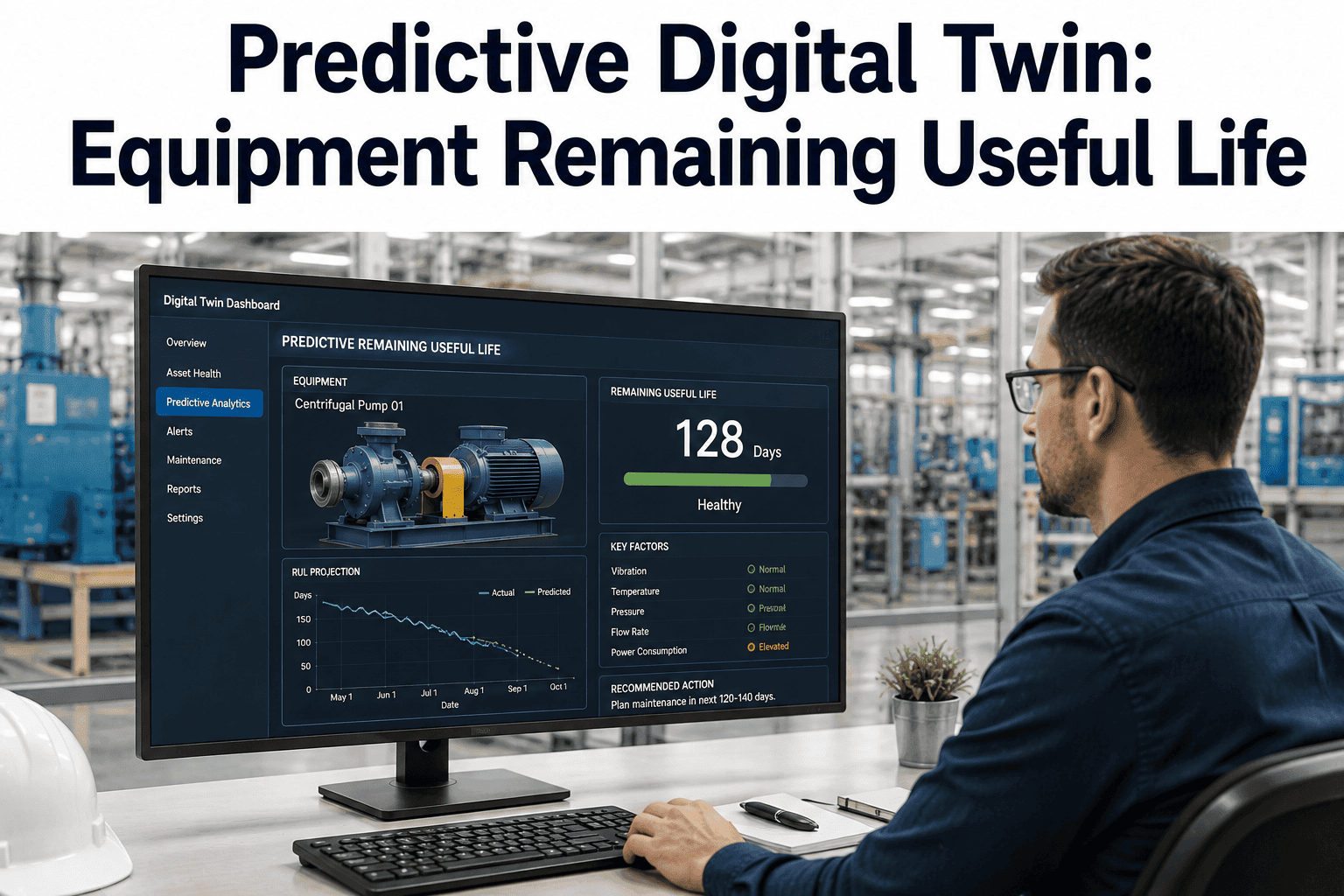
iFactory's digital twin continuously mirrors your entire production environment in virtual space, monitoring equipment vibration, temperature, pressure, cycle times, quality parameters, and operational patterns across every production line. AI That Turns Downtime Into Planned Maintenance through predictive analytics identifying degradation patterns 7 to 21 days before failures occur.
Understanding Manufacturing Plant Digital Twin Operations
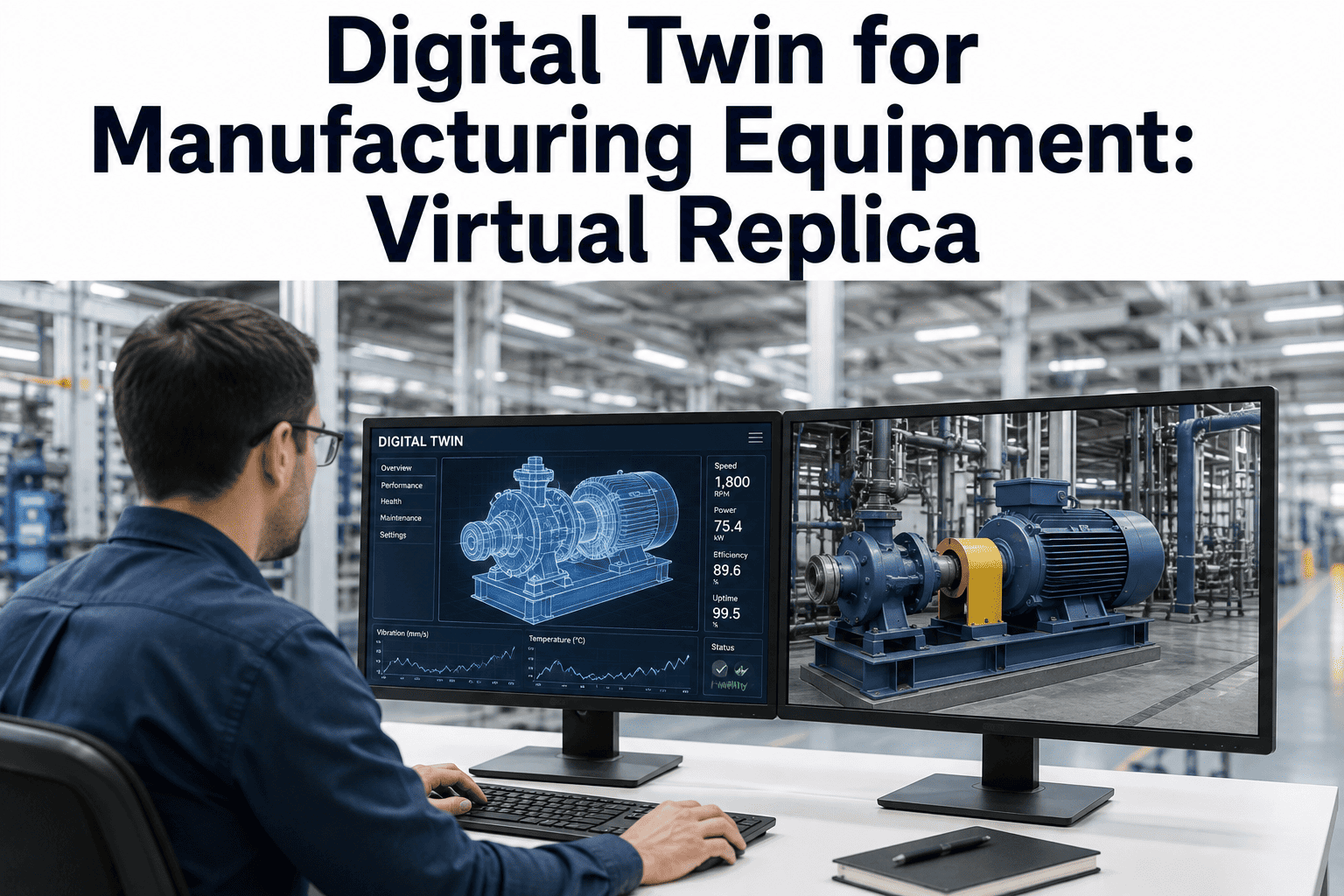
Modern manufacturing plants operate complex production environments spanning assembly lines processing 200 to 800 units per shift, machining centers with 15 to 50 CNC machines running simultaneously, packaging operations coordinating multiple product SKUs, and quality control stations inspecting hundreds of parameters per product. Maintenance workflows divide into preventive schedules based on calendar intervals or runtime hours, predictive interventions triggered by condition monitoring, and reactive repairs responding to unexpected failures. Quality control processes enforce specification compliance through statistical process control, automated inspection systems, and manual sampling. Shift-based operations require coordination across 2 to 3 daily shifts with handovers documenting equipment status, production issues, and pending maintenance. SCADA systems monitor production equipment providing real-time process data from sensors measuring temperature, pressure, vibration, speed, and quality parameters. PLCs execute machine control logic for automated production sequences, safety interlocks, and process adjustments. MES platforms track production orders, work-in-process inventory, material consumption, and output quality linking shop floor operations to business systems. ERP systems manage production scheduling, material planning, maintenance work orders, and financial reporting. IoT sensors add specialized monitoring including wireless vibration analysis, thermal imaging, acoustic emission detection, and energy consumption tracking. Production historians archive time-series data from thousands of sensors for analysis and troubleshooting. Digital twin technology creates virtual replicas of this entire environment synchronized with real-time operational data enabling simulation, optimization, and predictive analytics impossible with physical systems alone.
Critical Manufacturing Problems Destroying Production Efficiency
Unplanned equipment downtime costs manufacturing plants $180,000 to $850,000 per incident in lost production, emergency repair expenses, expedited parts procurement, and schedule disruption affecting downstream operations and customer deliveries. Production line stoppages from single equipment failures cascade across integrated assembly operations idling 50 to 200 workers simultaneously. Poor visibility into OEE (Overall Equipment Effectiveness) prevents identification of chronic losses from minor stoppages, speed reductions, and quality defects that cumulatively destroy 15% to 35% of theoretical production capacity. Manual shift handovers and logbooks capture only major events while missing subtle equipment degradation, process drift, and recurring issues that contribute to failures weeks later. Lack of predictive maintenance means problems only detected after equipment already failed, when intervention costs highest and production impact already occurred. Disconnected SCADA, ERP, and MES systems prevent correlation of equipment health data with production schedules, maintenance history, and quality trends that together indicate developing failures. Skilled labor shortage creates knowledge gaps when experienced operators and technicians retire without transferring expertise about equipment quirks, failure patterns, and troubleshooting approaches. Compliance and audit complexity for ISO 9001, industry-specific quality standards, and customer certifications requires manual documentation across fragmented systems consuming 200+ hours monthly in administrative effort. iFactory digital twin eliminates these problems through integrated virtual replication, AI-powered predictive analytics, and automated knowledge capture across all manufacturing operations.
How iFactory Digital Twin Solves Manufacturing Challenges
One Platform for Smart Manufacturing with AI-Powered Maintenance, OEE, and Operations. Traditional manufacturing systems operate in silos: SCADA monitors processes, MES tracks production, maintenance systems schedule work orders, but none create unified operational intelligence predicting future states and optimizing decisions. iFactory digital twin integrates all data sources creating virtual replica of entire manufacturing environment updated every 10 seconds with real-time sensor data, production events, quality measurements, and maintenance activities. See a live demo of iFactory digital twin predicting bearing failures on packaging line motors 14 days before breakdown.
01
AI Predictive Maintenance Through Virtual Modeling
Digital twin continuously simulates equipment degradation patterns comparing actual operational signatures (vibration, temperature, current draw, cycle times) against virtual models of healthy equipment behavior. Machine learning trained on 12 million equipment failure datasets recognizes precursor patterns indicating bearing wear, belt degradation, hydraulic seal leakage, and electrical component failures 7 to 21 days before breakdown thresholds. Automated work order generation schedules interventions during planned downtime windows minimizing production impact. Integration with parts inventory systems ensures replacement components available before maintenance scheduled. Result: Unplanned equipment failures reduced 76%, maintenance costs reduced 34% through condition-based scheduling vs time-based intervals, equipment lifespan extended 18% to 28% through optimal intervention timing.
02
Real-Time OEE Tracking and Production Optimization
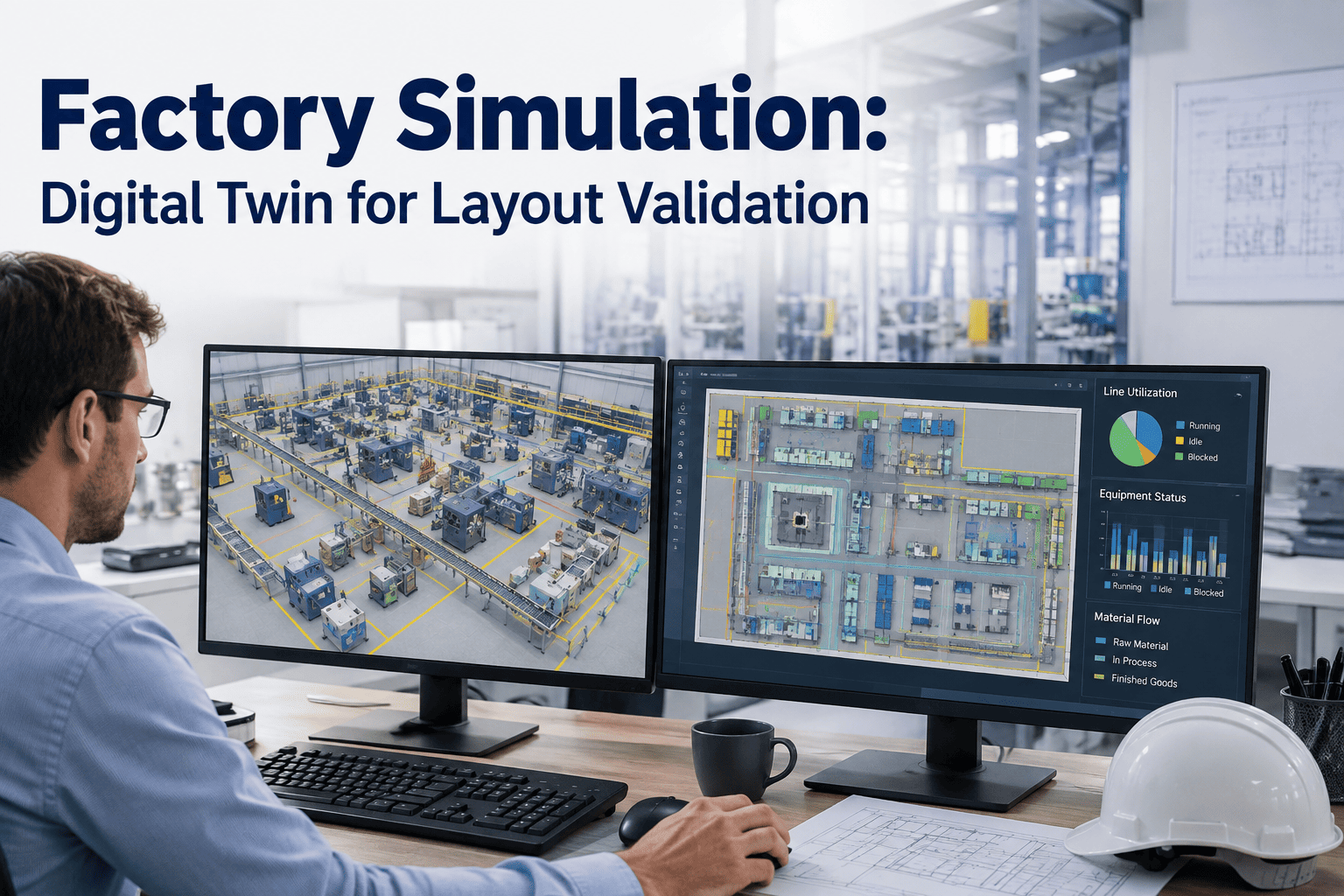
Virtual production line replicates physical operations enabling real-time OEE calculation across availability (uptime vs downtime), performance (actual vs theoretical speed), and quality (good parts vs total output). Digital twin identifies chronic loss sources including minor stoppages (jams, adjustments, cleaning), speed reductions (suboptimal process parameters, material variations), and quality defects (process drift, equipment wear). AI optimization engine simulates process parameter changes in virtual environment before implementing physical adjustments, predicting OEE impact of speed modifications, material substitutions, and maintenance schedules. Result: OEE improved from 65% to 78% average baseline to optimized state, production capacity increased 12% to 18% without capital investment, simulation-based optimization eliminates trial-and-error reducing process tuning time from weeks to days.
03
Digital Shift Logbooks with AI Intelligence
Eliminate Manual Logs with AI Digital Shift Logbooks automatically capturing equipment events, production metrics, quality issues, and maintenance activities from integrated SCADA, MES, and sensor systems. AI analyzes handover information identifying recurring patterns, correlating shift performance with specific operators or material lots, and flagging anomalies requiring management attention. Natural language processing extracts insights from operator comments linking subjective observations (unusual sounds, smells, vibrations) with objective sensor data predicting equipment issues. Knowledge capture system preserves troubleshooting expertise from experienced personnel accessible to entire workforce. Result: Shift handover time reduced from 20 to 30 minutes to 5 minutes with better information quality, recurring issues identified 85% faster through pattern recognition, tribal knowledge preserved preventing expertise loss from retirements.
04
SCADA, PLC, and MES Integration
iFactory Connects to Your Existing SCADA/PLC Systems through native OPC UA, Modbus TCP, and vendor API support for Siemens, Allen-Bradley, Schneider Electric, Mitsubishi, and major automation platforms. Real-time equipment status, process parameters, production counts, and quality measurements stream to digital twin creating synchronized virtual replica. MES integration links production schedules, work orders, material consumption, and output tracking enabling correlation of manufacturing execution with equipment performance. Bidirectional communication enables digital twin optimization recommendations automatically deployed to production systems for process parameter adjustments. Built for Manufacturing Plants, Not Generic CMMS with deep understanding of production operations vs facility maintenance focus. Result: Integration completed 2 to 3 weeks vs 6 to 12 months for custom projects, zero disruption to existing operations during deployment, native protocol support eliminates middleware complexity.
05
Smart Maintenance Planning and Work Order Automation
Digital twin optimizes maintenance schedules coordinating predictive interventions, preventive tasks, and production calendars minimizing operational disruption. AI considers equipment criticality, parts availability, technician skills, and production priorities when scheduling work. Automated work order generation from predictive alerts includes detailed failure mode descriptions, recommended spare parts, required tools, estimated duration, and safety procedures drawn from historical repair data. Mobile access provides technicians real-time equipment information, digital work instructions, and parts inventory status at point of service. Result: Maintenance planning efficiency improved 42%, work order completion time reduced 28% through better preparation, parts stock-outs eliminated through predictive ordering, emergency overtime reduced 68%.
06
Compliance Automation and Audit Readiness
Automated documentation of equipment maintenance, calibration records, operator training certifications, quality control measurements, and production traceability meeting ISO 9001, industry-specific standards (automotive IATF 16949, pharmaceutical GMP, food safety HACCP), and customer quality requirements. Digital twin maintains complete operational history linking production batches to specific equipment states, process parameters, material lots, and quality results enabling rapid root cause investigation and recall traceability. Audit trails automatically generated for certifications and regulatory inspections. Result: Audit preparation time reduced from 200+ hours to under 20 hours monthly, compliance documentation completeness improved from 78% to 99%+, zero non-conformances in recent certifications vs previous 12 to 18 findings.
How iFactory Digital Twin Is Different from Traditional Manufacturing Software
Most manufacturing software delivers point solutions: CMMS for maintenance, MES for production tracking, SCADA for monitoring, but none create unified virtual environment predicting future states and optimizing operations holistically. iFactory digital twin is built differently from ground up specifically for manufacturing plants where equipment reliability, production efficiency, and quality consistency determine profitability. Talk to our manufacturing AI specialists and compare your current approach directly.
| Capability |
Traditional Manufacturing Systems |
iFactory Digital Twin |
| Predictive Maintenance |
Calendar-based or simple threshold alarms. Cannot predict failures weeks in advance. Reactive approach after equipment already degraded. |
AI models trained on 12M failure datasets predict equipment breakdowns 7-21 days before occurrence with 91% accuracy. Virtual degradation modeling identifies root causes and optimal intervention timing. |
| OEE Analytics |
Manual calculation from production logs. Delayed reporting (daily/weekly). Cannot identify chronic loss sources or simulate optimization scenarios. |
Real-time OEE across availability, performance, quality with automated loss categorization. Virtual environment simulates process changes predicting OEE impact before physical implementation. |
| System Integration |
Requires custom middleware, manual data entry, or siloed operation. SCADA, MES, ERP disconnected preventing unified intelligence. Integration timelines 6-18 months. |
Native connectivity to SCADA, PLC, MES, ERP through OPC-UA, Modbus, vendor APIs creating synchronized virtual replica. Integration complete under 3 weeks with zero operational disruption. |
| Shift Intelligence |
Manual logbooks capturing major events only. Knowledge loss when experienced operators retire. No pattern recognition or correlation with equipment data. |
AI digital shift logbooks automatically capture equipment events, production metrics, quality issues from integrated systems. Natural language processing links operator observations with sensor data. Knowledge preservation prevents expertise loss. |
| Operational Simulation |
Static models disconnected from real-time operations. Cannot simulate equipment failures, process changes, or schedule variations accurately. |
Continuous virtual replication synchronized with actual plant data enables simulation of maintenance scenarios, process optimization, capacity planning with real-world accuracy updated every 10 seconds. |
| Deployment Timeline |
9-18 months to production deployment. Extensive professional services. No fixed go-live commitment. High implementation risk. |
8-week fixed deployment program. Pilot results week 4. Full production digital twin week 8. ROI evidence in 6 weeks. Proven implementation methodology. |
iFactory Digital Twin Implementation Roadmap
iFactory follows a fixed 6-stage deployment methodology designed specifically for manufacturing plants delivering pilot results in week 4 and full production digital twin by week 8. No open-ended implementations. No scope creep.
01
Operations Audit
Equipment inventory, SCADA mapping, production line assessment
02
System Integration
SCADA, PLC, MES connection via OPC-UA, Modbus, APIs
03
Digital Twin Baseline
Virtual model creation and AI training on operational data
04
Pilot Validation
Live monitoring on 2-3 critical production lines
05
Model Calibration
Prediction tuning and operations team training
06
Full Production
Complete plant digital twin, all equipment, 24/7
8-Week Deployment and ROI Plan
Every iFactory engagement follows a structured 8-week program with defined deliverables per week and measurable ROI indicators beginning from week 4 of deployment. Request the full 8-week deployment scope document tailored to your manufacturing operations.
Weeks 1-2
Infrastructure Setup
Complete equipment inventory and critical asset identification across all production lines
SCADA, PLC, MES system integration via OPC-UA, Modbus, APIs with zero production disruption
Historical production and maintenance data ingestion for baseline AI model training
Weeks 3-4
Model Training and Pilot
Digital twin virtual models created for pilot production lines with real-time synchronization
AI predictive maintenance activated on 8-12 highest-failure-risk equipment assets
First equipment failure predictions validated - ROI evidence begins here
Weeks 5-6
Calibration and Expansion
Prediction accuracy validated against actual equipment behavior and failure events
Coverage expanded to full plant equipment inventory and all production lines
Operations and maintenance teams trained on digital twin platform and alert protocols
Weeks 7-8
Full Production Go-Live
Complete plant digital twin live - all lines, all equipment, predictive maintenance 24/7
Automated compliance reporting and digital shift logbooks activated for all shifts
ROI baseline report delivered - downtime reduction, OEE improvement, cost avoidance data
ROI IN 6 WEEKS: MEASURABLE RESULTS FROM WEEK 4
Manufacturing plants completing the 8-week program report an average of $380,000 in avoided downtime costs within the first 6 weeks from equipment failures predicted and prevented during pilot phase with prediction accuracy validated at 87%+ by week 4.
$380K
Avg. savings first 6 weeks
91%
Failure prediction accuracy
76%
Unplanned downtime reduction
Full Digital Twin Manufacturing. Live in 8 Weeks. ROI Evidence in Week 4.
iFactory's fixed-scope deployment program means no open timelines, no scope creep, and no months of professional services before you see measurable production improvements from predictive maintenance and OEE optimization.
Use Cases and KPI Results from Live Deployments
These outcomes are drawn from iFactory digital twin deployments at operating manufacturing plants across three production categories. Each use case reflects 12-month post-deployment performance data. Request the full case study report for the manufacturing process most relevant to your plant.
A 450-employee facility operating 6 assembly lines producing 18,000 units daily was experiencing 8 to 12 unplanned equipment failures monthly on conveyors, robotic pick-and-place systems, automated screwdrivers, and vision inspection stations causing 45 to 80 hours monthly downtime at $22,000 per hour lost production value. Legacy preventive maintenance based on runtime hours missed developing failures while performing unnecessary interventions on healthy equipment. iFactory digital twin deployed vibration, current, and cycle time monitoring integrated with existing Siemens PLC network. AI models trained on equipment operational signatures predicted bearing failures on conveyor motors 14 days in advance, servo motor degradation on robots 18 days before positioning errors, and screwdriver clutch wear 10 days before torque specification failures. Maintenance scheduled during planned weekend shutdowns eliminating mid-shift emergency repairs.
11
Equipment failures predicted and prevented in first 6 months
$4.8M
Annual downtime cost avoidance and production efficiency gains
82%
Reduction in unplanned equipment failures
A high-speed packaging facility operating 4 lines filling, capping, labeling, and cartoning 850 units per minute was achieving 62% OEE average across availability (equipment uptime), performance (speed efficiency), and quality (first-pass yield) with chronic losses from minor stoppages, changeover delays, and quality rejects poorly understood. Manual OEE calculation provided daily summary data insufficient for root cause identification. iFactory digital twin created virtual replica of packaging lines integrated with Allen-Bradley PLC network, vision inspection systems, and product counters. Real-time OEE tracking identified micro-stoppages from cap feeder jams (180 occurrences daily, 2.4% availability loss), label applicator misalignment (speed reductions to 750 units/min, 12% performance loss), and fill volume variations (1.8% quality loss). Virtual optimization simulated process parameter changes predicting OEE impact before physical adjustments. AI recommended cap feeder bowl redesign, label tension optimization, and fill valve recalibration validated through digital twin before implementation.
62% to 79%
OEE improvement from baseline to optimized state
$6.2M
Annual production capacity value increase without capital investment
27%
Increase in effective production capacity
A precision machining facility operating 28 CNC mills and lathes producing aerospace and medical device components was experiencing tool breakage, spindle failures, and quality dimensional drift creating $180K to $340K monthly scrap and rework costs. Manual shift logbooks captured major failures but missed subtle degradation patterns and process knowledge from experienced machinists. iFactory digital twin integrated with Fanuc CNC controllers monitoring spindle load, vibration, tool wear, dimensional measurements, and cycle times. AI pattern recognition correlated weekend temperature variations with Monday morning dimensional drift requiring 2 to 3 hour warm-up stabilization. Digital shift logbooks automatically captured equipment events, operator tool change decisions, and quality measurements. Natural language processing linked operator comments about unusual cutting sounds with vibration signatures predicting tool holder failures 6 days before catastrophic breakage. Knowledge capture system preserved troubleshooting expertise from retiring machinists accessible to entire workforce through AI recommendations.
$2.4M
Annual scrap, rework, and tool breakage cost reduction
68%
Reduction in tool-related production stoppages
94%
Knowledge retention from experienced machinists preserved
Results Like These Are Standard. Not Exceptional.
Every iFactory deployment is calibrated to your specific manufacturing environment, equipment types, and production processes so you get results optimized for your operations, not generic benchmarks.
What Manufacturing Operations Teams Say About iFactory
The following testimonials are from plant managers, production supervisors, and maintenance directors at facilities currently running iFactory's digital twin platform.
We prevented 11 equipment failures in the first 6 months that would have cost us $580K in emergency repairs and lost production. The digital twin predicted a conveyor bearing failure 14 days out, we ordered parts, scheduled the repair during planned downtime, and the line never stopped. That level of foresight was impossible with our previous approach.
Plant Operations Manager
Consumer Electronics Manufacturer, USA
Integration with our Siemens PLC network took 18 days total. I expected months based on previous software projects. The iFactory team understood both the manufacturing process and the automation architecture. Our OEE went from 62% to 79% in 6 months through insights we never had visibility into before.
Director of Manufacturing Engineering
Food and Beverage Plant, UK
The digital shift logbooks captured knowledge from our most experienced machinists that would have walked out the door when they retired. Now when a younger operator encounters an unusual situation, the AI recommends solutions based on how our experts handled similar issues in the past. That knowledge preservation alone justified the investment.
Manufacturing Operations Director
Precision Machining Facility, India
Real-time visibility into every production line changed how we operate. Instead of finding out about problems at the end of shift through logbooks, we see issues as they develop and can intervene immediately. Our unplanned downtime dropped 76% in 9 months. The digital twin essentially gave us a crystal ball for our equipment.
VP of Manufacturing Operations
Industrial Equipment Manufacturer, UAE
Frequently Asked Questions
Does iFactory digital twin require new sensors or equipment to be installed?
Most deployments connect to existing SCADA, PLC, and MES data through standard protocols with no new hardware required. Where sensor gaps exist (typically vibration or thermal monitoring), iFactory recommends targeted additions only (usually 8-15 sensors per production line), not complete instrumentation replacement. Integration to existing automation systems complete within 2-3 weeks in standard manufacturing environments.
Book a demo to discuss your current infrastructure.
Which SCADA, PLC, and MES systems does iFactory integrate with?
iFactory integrates natively with Siemens (S7, TIA Portal), Allen-Bradley (ControlLogix, CompactLogix), Schneider Electric, Mitsubishi, and GE automation platforms via OPC-UA and Modbus. For MES integration, iFactory connects to Delmia Apriso, Siemens Opcenter, Rockwell FactoryTalk, SAP MES, and Plex via REST APIs. SCADA platforms including Wonderware, iFix, and WinCC supported through native connectors. Custom integration available for legacy systems. Integration scope confirmed during Week 1 operations audit.
How does digital twin handle different equipment types across the same plant?
iFactory trains separate AI sub-models per equipment category accounting for mechanical differences between conveyors, robots, CNC machines, packaging equipment, and process systems. Multi-equipment fleets fully supported within single deployment. Equipment-specific failure modes and degradation patterns configured during Week 3-4 model training phase. Virtual replicas accurately represent diverse manufacturing operations from assembly to machining to packaging within unified platform.
What compliance frameworks does iFactory digital twin support?
iFactory auto-generates documentation for ISO 9001 quality management, industry-specific standards (automotive IATF 16949, pharmaceutical GMP, food safety HACCP), and customer quality certifications. Complete operational history links production batches to equipment states, process parameters, material lots, and quality results enabling traceability and root cause analysis. Audit trails automatically maintained for regulatory inspections and certifications. Report templates pre-configured for common frameworks and generated automatically.
How accurate are equipment failure predictions and how far in advance?
Baseline AI models achieve 87%+ prediction accuracy during Week 4 pilot validation improving to 91%+ after full calibration by Week 8. Prediction lead times vary by equipment type: rotating equipment (motors, pumps, fans) 14-21 days advance warning, pneumatic/hydraulic systems 10-14 days, electrical components 7-10 days. Prediction accuracy validated against actual equipment behavior and confirmed failures. Models continuously learn from production data improving performance over time.
Talk to support about prediction timelines for your specific equipment.
Can digital twin optimize production when equipment is constrained or materials vary?
Yes. Virtual environment simulates production scenarios under constrained conditions including equipment unavailability, material substitutions, and capacity limitations. AI optimization recommends parameter adjustments, process sequences, and resource allocation maximizing output given real constraints. Real-time adaptation to material property variations (moisture content, viscosity, dimensions) automatically adjusts process parameters maintaining quality despite feedstock variability. Simulation-based optimization eliminates trial-and-error reducing process tuning from weeks to days.
Stop Losing Production to Unplanned Failures. Deploy Digital Twin Manufacturing in 8 Weeks.
iFactory gives manufacturing operations teams complete virtual replica of production environment synchronized with real-time SCADA, PLC, and MES data enabling Predict Failures Before They Stop Production with 7-21 day advance warning, optimize OEE through virtual simulation, and Eliminate Manual Logs with AI Digital Shift Logbooks capturing operational intelligence across all shifts. Built for Manufacturing Plants, Not Generic CMMS with deep understanding of production operations and proven 8-week deployment delivering ROI evidence starting week 4.
91% equipment failure prediction accuracy
76% reduction in unplanned downtime
SCADA and PLC integration in under 3 weeks
Real-Time Visibility Into Every Production Line
AI That Turns Downtime Into Planned Maintenance
Automated compliance and audit documentation