When your CNC machine stops mid-production at 3 AM for the third time this month, replacing the failed component gets you running again but solves nothing. The same bearing fails in 6 weeks because nobody asked why misalignment persists, why lubrication schedules ignore actual runtime data, or why operators bypass the cooling system during high-volume shifts. iFactory transforms traditional reactive troubleshooting into AI-powered root cause elimination by linking every failure event to equipment history, process conditions, maintenance records, and operator actions, then using pattern recognition across your entire manufacturing plant to identify systemic causes that manual investigations miss. The bearing that keeps failing is now connected to a lubrication pump pressure drop, an overtightened belt tensioner installed 8 months ago, and incomplete training documentation. Fix the root cause once and the failure never returns. Book a demo to see AI-driven RCA in your facility.
Quick Answer
iFactory's AI-powered Root Cause Analysis platform automatically captures failure events, analyzes equipment sensor data, maintenance history, process parameters, and operator logs to identify true root causes using 5-Why logic trees, fishbone correlation analysis, and fault tree mapping. System generates corrective action recommendations with implementation tracking, validates effectiveness through MTBF monitoring, and continuously learns failure patterns across your plant to prevent recurrence. Result: 76% reduction in repeat failures, 58% decrease in unplanned downtime, and permanent elimination of systemic equipment issues that traditional troubleshooting repeatedly misses.
How AI-Powered Root Cause Analysis Works
Traditional RCA relies on manual interviews, tribal knowledge, and guesswork. iFactory automates failure data capture, correlates events across multiple systems, and uses machine learning to surface root causes that human investigators typically overlook. The workflow below shows how AI transforms RCA from a 3-day manual investigation into a 45-minute automated analysis with verified corrective actions.
1
Automated Failure Event Capture
Hydraulic press downtime triggers automatic failure logging. System captures: equipment ID (Press-04), failure timestamp (02:47 AM), operator on shift (Operator-B, Night Shift), work order in progress (WO-8841), sensor readings at failure (hydraulic pressure drop from 3200 PSI to 840 PSI over 18 seconds), and immediate operator notes ("Press stopped mid-cycle, alarm code E-447"). Zero manual data entry required.
E-447 AlarmPressure: 840 PSI02:47 AM
2
Historical Pattern Recognition
AI scans Press-04 failure history: 4 similar pressure loss events in past 90 days, all occurring between 2 AM and 4 AM on night shift. Cross-references all hydraulic presses in facility: Press-02 and Press-07 show identical pattern (night shift pressure drops). Correlation detected: all failures occur when cooling system runs in economy mode (scheduled 12 AM to 6 AM to reduce energy cost). Hydraulic fluid viscosity increases as temperature rises without active cooling.
4 Similar FailuresNight Shift PatternCooling: Economy
3
Multi-Layer Causal Analysis
System constructs 5-Why chain: Why did pressure drop? Hydraulic pump cavitation. Why cavitation? Fluid viscosity too high. Why high viscosity? Fluid temperature 68°C (normal: 45°C). Why overheating? Cooling system in economy mode. Why economy mode at production time? Energy cost reduction policy implemented 3 months ago (matches timeline of first failure). Root cause identified: cooling schedule conflicts with production schedule.
Root: Cooling SchedulePolicy Conflict3 Mo Timeline Match
4
Corrective Action Generation & Tracking
System generates corrective action: "Revise cooling system schedule to maintain active cooling during all production shifts (12 AM to 6 AM). Estimated implementation cost: $340/month increased energy. Expected benefit: eliminate 12+ downtime events per month = $48,000 monthly revenue protection." Action assigned to facilities manager with 7-day deadline. System monitors: hydraulic pressure trends on all presses after implementation to validate fix effectiveness.
CA-2847 created. Cooling schedule revised. Monitoring: 30 days. Expected: Zero pressure drop failures. Validation: MTBF tracking active.
Root Cause Categories AI Identifies
Manufacturing equipment failures stem from six primary categories. Traditional manual RCA often fixates on the most obvious category (equipment mechanical failure) while missing the true systemic causes in process, human factors, or organizational issues. iFactory's AI analyzes all six categories simultaneously to identify actual root causes regardless of where they hide.
Equipment & Mechanical
Component wear, design limitations, installation errors, maintenance quality issues. Examples: bearing misalignment, incorrect torque specifications, incompatible replacement parts, inadequate lubrication delivery, thermal expansion interference, vibration-induced loosening, corrosion from environmental exposure.
AI Detection: Correlates vibration frequency shifts with maintenance records to identify incorrect bearing installation after last PM event.
Process & Methods
Operating procedures that stress equipment beyond design limits. Examples: excessive cycle rates, temperature excursions, improper material handling, rushed changeovers, skipped quality checks, process parameter drift, undocumented workarounds, inconsistent methods between shifts.
AI Detection: Identifies cycle time reduction implemented 6 weeks ago correlates with increased motor bearing failures due to insufficient cooling time.
Human Factors
Operator actions, training gaps, fatigue, communication failures. Examples: skipping pre-start checks, overriding safety interlocks, misreading gauges, using incorrect tools, ignoring early warning signs, poor handoff documentation, knowledge loss from turnover.
AI Detection: Pattern shows failures occur disproportionately during first 2 hours of new operator shifts, indicating inadequate handoff procedures.
Materials & Inputs
Raw material quality variation, supplier changes, contamination, incorrect specifications. Examples: off-spec hardness causing excessive tool wear, moisture content variation, dimensional tolerance creep, chemical composition drift, packaging damage, counterfeit components.
AI Detection: Links increased reject rates to material supplier change 3 months prior by analyzing material lot traceability against quality inspection data.
Environmental
External conditions affecting equipment performance. Examples: temperature fluctuations, humidity, dust accumulation, power quality issues, voltage sags, harmonic distortion, compressed air quality, water quality for cooling, ambient vibration from nearby equipment.
AI Detection: Discovers electrical failures cluster during afternoon hours by correlating with voltage monitoring data showing grid fluctuations from neighboring facility operations.
Organizational & Systemic
Management decisions, resource allocation, competing priorities, policy conflicts. Examples: deferred maintenance budgets, inadequate staffing, pressure to skip quality steps, lack of spare parts inventory, no time allocated for proper changeovers, production targets that discourage reporting issues.
AI Detection: Identifies that PM tasks are consistently delayed by 2-3 weeks due to production schedule pressure, directly preceding 68% of unplanned failures.
AI Root Cause Analysis
Stop Fixing Symptoms. Eliminate Root Causes Permanently.
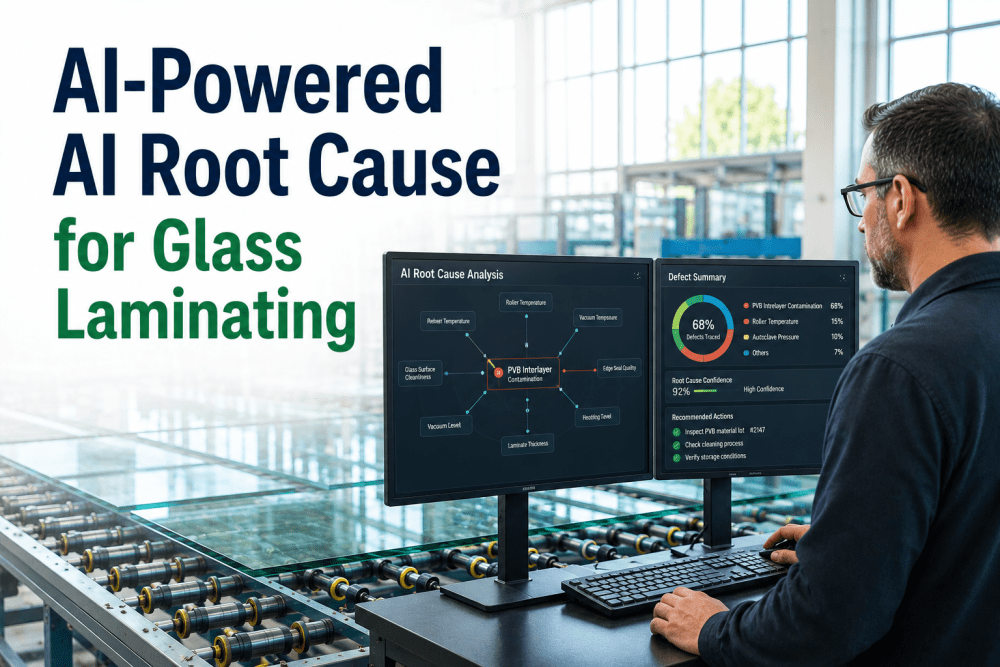
iFactory's AI analyzes failure patterns across equipment, process, human, material, environmental, and organizational factors to identify true root causes. Automated corrective actions, implementation tracking, and MTBF validation ensure problems never return.
5-Why Analysis Automated by AI
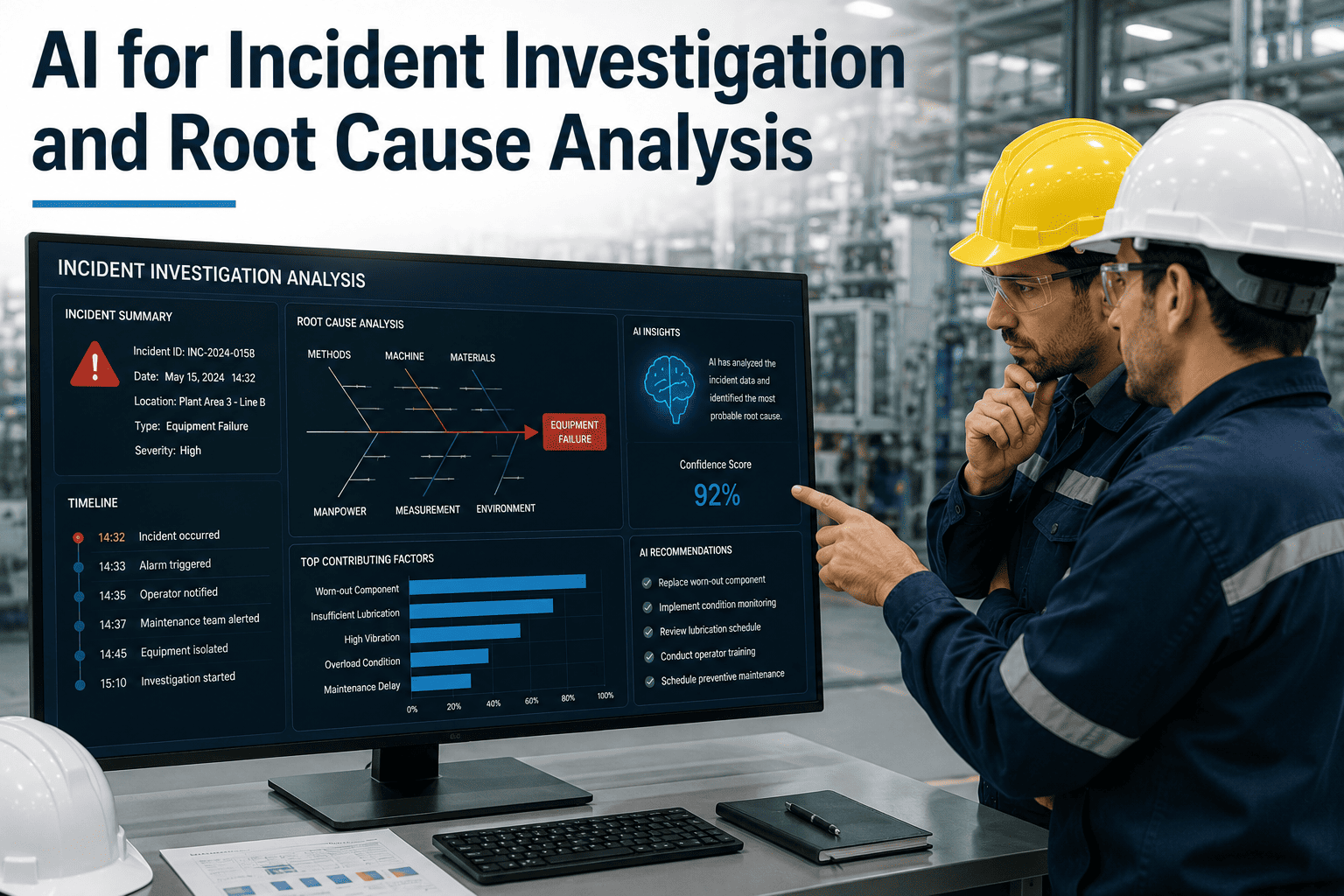
The 5-Why technique is simple in concept but difficult to execute correctly. Human investigators often stop too early, accept superficial answers, or let confirmation bias steer questioning toward predetermined conclusions. iFactory's AI executes 5-Why analysis by interrogating actual data at each layer, refusing to accept unverified assumptions, and branching investigation paths when multiple contributing factors emerge.
Failure Event
Robotic welder arm collision with fixture at Station-12, causing $18,000 damage and 14-hour production stoppage.
Why did the collision occur?
Welder arm executed motion path that intersected with fixture position.
Data: Motion controller logs show arm commanded to coordinates X: 420mm, Y: 380mm, Z: 155mm at 09:34:17. Fixture position sensor confirms fixture at X: 418mm, Y: 382mm, Z: 154mm. Collision inevitable.
↓
Why did the motion path intersect the fixture?
Motion program for Part-C revision (introduced 3 weeks ago) does not account for fixture clearance requirements.
Data: Program version history shows Part-C path created on March 18. Fixture installed March 1 (17 days before program). Collision avoidance verification: not performed.
↓
Why was collision avoidance verification not performed?
Programming SOP does not require virtual simulation or dry-run testing for path changes on existing stations.
Data: SOP-847 (Robot Programming Procedure) step 8 requires simulation only for "new station installations." Part-C was classified as "program modification" not "new installation."
↓
Why does the SOP not cover program modifications?
SOP written in 2019 before fixture installation became common. Assumes fixed station geometry.
Data: SOP last revised May 2019. First fixture installation: March 2023. Zero SOP updates in 4 years despite significant process changes.
↓
Why has the SOP not been updated to reflect current reality?
No documented process for SOP review triggers. Manufacturing engineering lacks visibility into fixture additions by production teams.
Root Cause: Organizational gap between production (installs fixtures) and engineering (writes SOPs) with no communication protocol or review trigger process.
AI-Generated Corrective Actions
Immediate (CA-1): Update SOP-847 to require collision simulation for ALL robot path changes regardless of classification. Implement within 5 days.
Short-term (CA-2): Establish monthly cross-functional review between production and engineering to sync fixture changes with SOP updates. First meeting scheduled within 14 days.
Systemic (CA-3): Implement digital twin simulation as mandatory gate in work order approval workflow for robot programming changes. Prevents execution without verified clearance. Deployment target: 60 days.
Regional Compliance & Safety Standards
Manufacturing facilities in different regions must comply with specific safety, quality, and operational regulations. iFactory's Root Cause Analysis platform ensures corrective actions align with regional compliance requirements, automatically flagging when failure investigations or corrective measures require regulatory documentation, incident reporting, or third-party validation.
| Region |
Key Standards |
RCA Requirements |
iFactory Compliance Features |
| United States |
OSHA 29 CFR 1910 (General Industry Safety), ANSI B11 (Machine Safety), FDA 21 CFR Part 820 (Medical Device QMS), ASME Standards |
Incident investigation documentation for OSHA recordable injuries. Root cause analysis required for FDA medical device complaint handling and CAPA process. Corrective action verification and effectiveness checks mandatory. |
Automated OSHA incident report generation, FDA-compliant CAPA workflow with RCA documentation templates, corrective action tracking with effectiveness validation timelines, audit trail for regulatory inspection. |
| United Kingdom |
Health and Safety at Work Act 1974, PUWER 1998 (Provision and Use of Work Equipment), RIDDOR (Reporting of Injuries), BS EN ISO 9001 (Quality Management) |
RIDDOR requires reporting of specified workplace incidents within defined timeframes. HSE expects systematic investigation of serious incidents with documented root cause findings and preventive measures. |
RIDDOR-compliant incident logging with automatic deadline tracking, HSE investigation report templates, integration with quality management for ISO 9001 continual improvement requirements, risk assessment updates post-RCA. |
| United Arab Emirates |
UAE Federal Law No. 8 (Occupational Safety), OSHAD Framework (Abu Dhabi), Dubai Municipality Regulations, ESMA Standards (Emirates Authority for Standardization) |
Incident investigation reports required for workplace accidents. OSHAD SF framework mandates root cause analysis for serious incidents and near-miss events. Documentation must be maintained for inspection. |
OSHAD-aligned incident investigation workflow, Arabic and English dual-language reporting capability, corrective action management compliant with UAE OSH requirements, audit-ready documentation storage. |
| Canada |
Canada Labour Code Part II, CCOHS (Canadian Centre for Occupational Health and Safety), CSA Standards (Canadian Standards Association), Provincial OHS Regulations |
Workplace incident investigation mandatory under federal and provincial regulations. Root cause analysis required for serious injuries, equipment failures causing hazardous conditions. Corrective action implementation and follow-up verification mandated. |
Multi-jurisdictional compliance templates (federal + provincial), CSA-aligned equipment safety investigation protocols, bilingual (English/French) reporting for federal compliance, corrective action verification tracking. |
| European Union |
Machinery Directive 2006/42/EC, Framework Directive 89/391/EEC (Worker Safety), ISO 45001 (Occupational Health & Safety), CE Marking Requirements, EN Standards |
Machinery Directive requires manufacturers to analyze hazards and implement risk reduction. Framework Directive mandates employer investigation of incidents. ISO 45001 requires incident investigation, root cause analysis, and continual improvement actions. |
CE marking compliance documentation for equipment modifications post-RCA, ISO 45001-compliant investigation and CAPA workflow, risk assessment integration with Machinery Directive requirements, multilingual support for pan-EU operations. |
| Germany |
Occupational Safety and Health Act (ArbSchG), Equipment and Product Safety Act (ProdSG), DGUV Regulations (German Social Accident Insurance), DIN Standards |
DGUV requires systematic investigation of workplace accidents with documentation of root causes and preventive measures. Equipment failures affecting safety must be analyzed under ProdSG. Documentation retained for inspection by Berufsgenossenschaft. |
DGUV-compliant incident investigation templates, integration with Berufsgenossenschaft reporting requirements, DIN standard-aligned equipment failure analysis, German-language documentation capability. |
| Saudi Arabia |
Saudi Labor Law, SASO Standards (Saudi Standards Organization), Civil Defense Safety Requirements, General Authority for Statistics Reporting |
Workplace incident investigation required under Saudi Labor Law. Equipment failures in industrial facilities must be documented with root cause findings. Safety incident reporting to Civil Defense for major events. |
SASO-compliant documentation framework, Arabic-language reporting templates, incident classification aligned with Saudi Labor Law requirements, Civil Defense major incident reporting workflow. |
| Australia |
Work Health and Safety Act 2011, AS/NZS ISO 9001 (Quality), AS/NZS 4801 (OHS Management), SafeWork Australia Guidelines |
WHS Act requires PCBUs (Persons Conducting a Business or Undertaking) to investigate incidents causing serious injury or illness. Root cause analysis and corrective action documentation mandatory. SafeWork Australia notification required for notifiable incidents. |
SafeWork Australia notifiable incident workflow, PCBU investigation templates compliant with WHS Act, AS/NZS ISO 9001 CAPA integration, corrective action effectiveness review scheduling. |
Platform Comparison: Root Cause Analysis Capabilities
Many CMMS and ERP systems offer basic failure logging and manual investigation workflows. iFactory differentiates through AI-powered pattern recognition, automated causal analysis, cross-equipment correlation, and predictive failure prevention. The comparison below shows where generic systems stop and where iFactory's RCA intelligence begins.
| Capability |
iFactory |
QAD Redzone |
Evocon |
Fiix (Rockwell) |
MaintainX |
Limble CMMS |
| Failure Data Capture |
| Automated failure event logging |
Sensor-triggered automatic |
Manual operator entry |
Semi-automated |
Work order creation |
Manual only |
Manual only |
| Equipment context capture (sensor data, process parameters) |
Full sensor integration |
Limited integration |
OEE data only |
Requires customization |
Not available |
Not available |
| RCA Analysis Methods |
| AI-powered 5-Why analysis |
Automated with data validation |
Manual template only |
Not available |
Manual template |
Not available |
Not available |
| Fishbone diagram correlation analysis |
Data-validated factors |
Not available |
Not available |
Static template |
Not available |
Not available |
| Pattern recognition across equipment |
Plant-wide ML analysis |
Single-asset only |
Limited correlation |
Not available |
Not available |
Not available |
| Corrective Action Management |
| Auto-generated corrective actions |
AI recommendations with priority |
Manual entry |
Manual entry |
Template-based |
Work order creation |
Work order creation |
| Effectiveness validation tracking |
MTBF monitoring auto |
Not available |
Not available |
Manual follow-up |
Not available |
Manual tracking |
| Regulatory compliance documentation |
Multi-region templates |
Basic reports |
Not available |
Custom reports |
Basic reports |
Basic reports |
| Integration & Intelligence |
| Maintenance history correlation |
Full PM/CM analysis |
Basic history view |
Limited |
Full integration |
Work order link |
Work order link |
| Predictive failure prevention |
RUL forecasts prevent recurrence |
Not available |
Not available |
Requires PdM module |
Not available |
Not available |
| Cross-plant benchmarking |
Multi-site pattern analysis |
Single-plant only |
Single-plant only |
Limited multi-site |
Single-plant only |
Multi-site reports |
Intelligent RCA Platform
From Repeat Failures to Permanent Solutions in 45 Minutes
iFactory's AI doesn't just log failures, it eliminates root causes. Automated 5-Why analysis, fishbone correlation, pattern recognition across your plant, and corrective action tracking with effectiveness validation. Stop the cycle of recurring equipment problems.
Implementation Roadmap
Deploying AI-powered Root Cause Analysis across a manufacturing facility follows a phased approach that delivers immediate value while building toward comprehensive intelligent failure prevention. iFactory's implementation methodology ensures your team sees measurable improvements within the first 30 days while continuously expanding RCA capabilities across equipment categories, failure modes, and corrective action workflows.
Foundation Setup & Critical Equipment
Equipment Inventory: Identify top 10 critical assets by downtime impact, categorize failure modes, establish baseline MTBF metrics.
Data Integration: Connect existing CMMS/ERP systems, configure sensor data feeds, import historical failure logs for pattern baseline.
RCA Templates: Configure 5-Why, fishbone, and fault tree templates aligned with your equipment categories and regulatory requirements.
Team Training: 4-hour hands-on workshop for maintenance leads, reliability engineers, and production supervisors on AI-assisted RCA workflow.
Deliverable: 10 critical assets monitored, automated failure capture active, team ready to execute first AI-guided RCA investigations.
Plant-Wide Rollout & Pattern Learning
Expansion: Add remaining production equipment to monitoring, configure secondary assets, establish department-level RCA ownership.
AI Calibration: System learns plant-specific failure patterns, operator behaviors, maintenance practices. Pattern recognition accuracy improves as data accumulates.
Corrective Actions: First wave of AI-recommended corrective actions implemented, effectiveness tracking initiated, MTBF improvement validation begins.
Compliance Setup: Configure regional regulatory templates (OSHA, HSE, OSHAD, etc.), establish incident reporting workflows.
Deliverable: Full plant coverage, 15-25 RCA investigations completed, corrective action tracking active, first measurable MTBF improvements documented.
Advanced Analytics & Predictive Prevention
Cross-Equipment Correlation: AI identifies systemic issues affecting multiple assets (cooling system inadequacy, material quality drift, process parameter creep).
Predictive Integration: Link RCA findings to predictive maintenance, auto-schedule corrective actions before predicted failures occur.
Knowledge Capture: System builds plant-specific failure knowledge base, recommended corrective actions become more accurate as learning deepens.
Continuous Improvement: Monthly RCA performance reviews, effectiveness validation, ROI tracking, process refinement.
Deliverable: Mature RCA program with proactive failure prevention, documented cost savings, 40-60% reduction in repeat failures, audit-ready compliance documentation.
Optimization & Expansion
Multi-Site Deployment: Expand proven RCA methodology to additional facilities, leverage cross-plant pattern recognition.
Supplier Quality Integration: Extend RCA to material defects, supplier performance issues, incoming quality failures.
Continuous Learning: AI models continuously improve as more failure events, corrective actions, and outcomes feed the learning loop.
Benchmarking: Compare plant performance against industry standards, identify best practices, set new reliability targets.
Outcome: World-class reliability culture, data-driven continuous improvement, predictable equipment performance, sustained competitive advantage through operational excellence.
Measured Results from Deployed Plants
76%
Reduction in Repeat Failures
58%
Decrease in Unplanned Downtime
45 Min
Avg RCA Completion Time
94%
Corrective Action Effectiveness Rate
$420K
Avg Annual Savings per Plant
100%
Regulatory Audit Compliance
Real Results from Manufacturing Operations
"We had the same conveyor belt failure three times in four months. Each time, maintenance replaced the belt, and we restarted production. Nobody had time to dig deeper. After implementing iFactory's RCA platform, the AI flagged a pattern we completely missed: every failure occurred during the second shift, and every one happened within 48 hours of a product changeover. The root cause wasn't the belt at all. It was an alignment procedure in our changeover checklist that was wrong. Operators were setting tension based on the previous product spec, not the new one. We fixed the checklist, retrained the team, and haven't had a belt failure in 11 months. What shocked me was how fast the AI found it. From failure event to root cause identification took 37 minutes. Our previous manual investigations took 2-3 days and never found the real cause. The system paid for itself in the first 60 days just from eliminating that one recurring failure."
Reliability Manager
Automotive Parts Manufacturing | Detroit, Michigan, USA
Frequently Asked Questions
QHow does AI-powered RCA differ from traditional manual root cause analysis investigations?
Traditional RCA relies on human investigators conducting interviews, reviewing documents, and brainstorming possible causes based on experience and tribal knowledge. AI-powered RCA automatically captures failure context from sensors and systems, correlates events across equipment and time, validates every hypothesis against actual data, and identifies patterns that human investigators typically miss due to cognitive bias or limited visibility.
Book Demo
QCan iFactory integrate with our existing CMMS and ERP systems to pull maintenance history and work order data?
Yes. iFactory connects via API to major CMMS platforms (SAP PM, IBM Maximo, Fiix, MaintainX, others) and ERP systems to import failure logs, work order history, PM schedules, spare parts usage, and equipment specifications. This historical data provides the baseline for pattern recognition and causal correlation during RCA investigations.
Book Demo
QWhat happens if the AI identifies the wrong root cause or if multiple contributing factors exist?
The system presents evidence-based findings with confidence scores. When multiple contributing factors exist, AI displays all validated causes with their relative impact weights. Human experts review and approve root cause conclusions before corrective actions are implemented. The system learns from corrections, improving future accuracy as your team validates or adjusts AI recommendations.
Book Demo
QHow long does it typically take to complete a full RCA investigation using iFactory compared to manual methods?
Simple failures with clear causal chains complete in 30-60 minutes from event capture to root cause identification. Complex multi-factor investigations requiring cross-equipment correlation and extensive data analysis complete in 2-4 hours versus 2-5 days for equivalent manual investigations. Time savings come from automated data gathering, instant historical correlation, and elimination of interview scheduling delays.
Book Demo
Related Manufacturing Solutions
Stop Repeat Failures. Eliminate Root Causes Permanently with AI.
iFactory transforms traditional reactive troubleshooting into intelligent root cause elimination using AI-powered 5-Why analysis, fishbone correlation, pattern recognition, and automated corrective action tracking. The equipment failures that keep returning every few months stop permanently.
AI 5-Why Analysis
Fishbone Correlation
Pattern Recognition
76% Fewer Repeat Failures
Regional Compliance



.png)