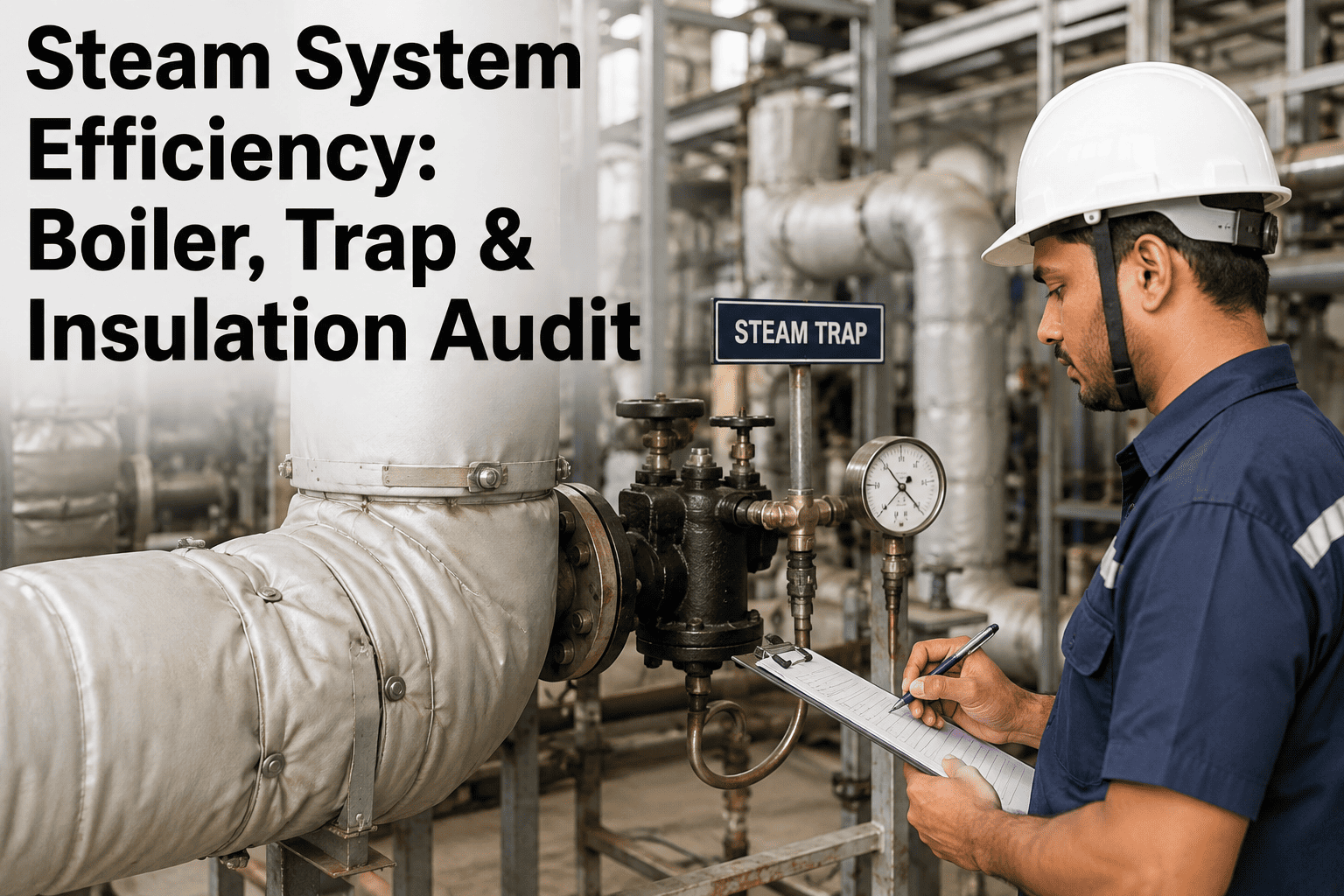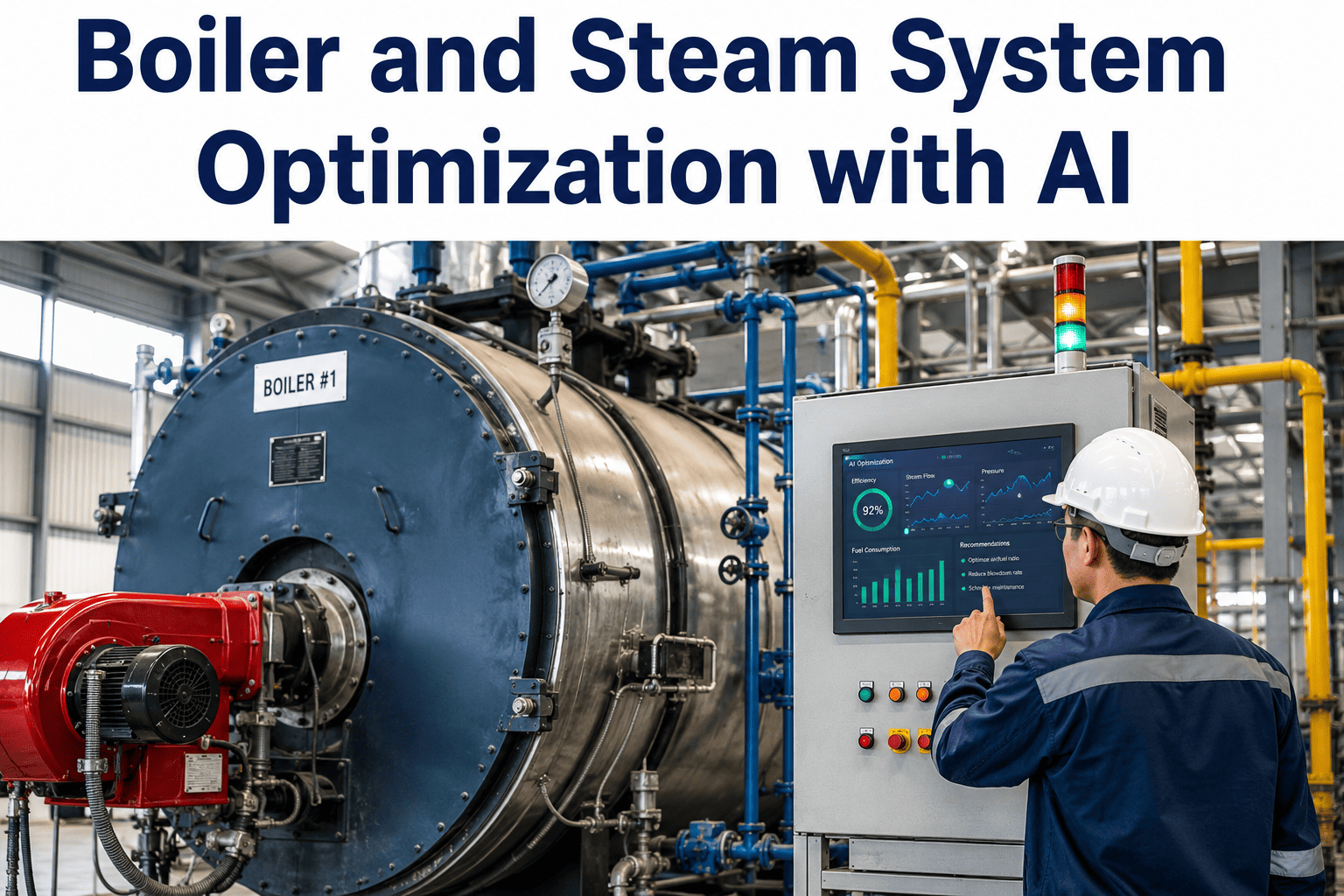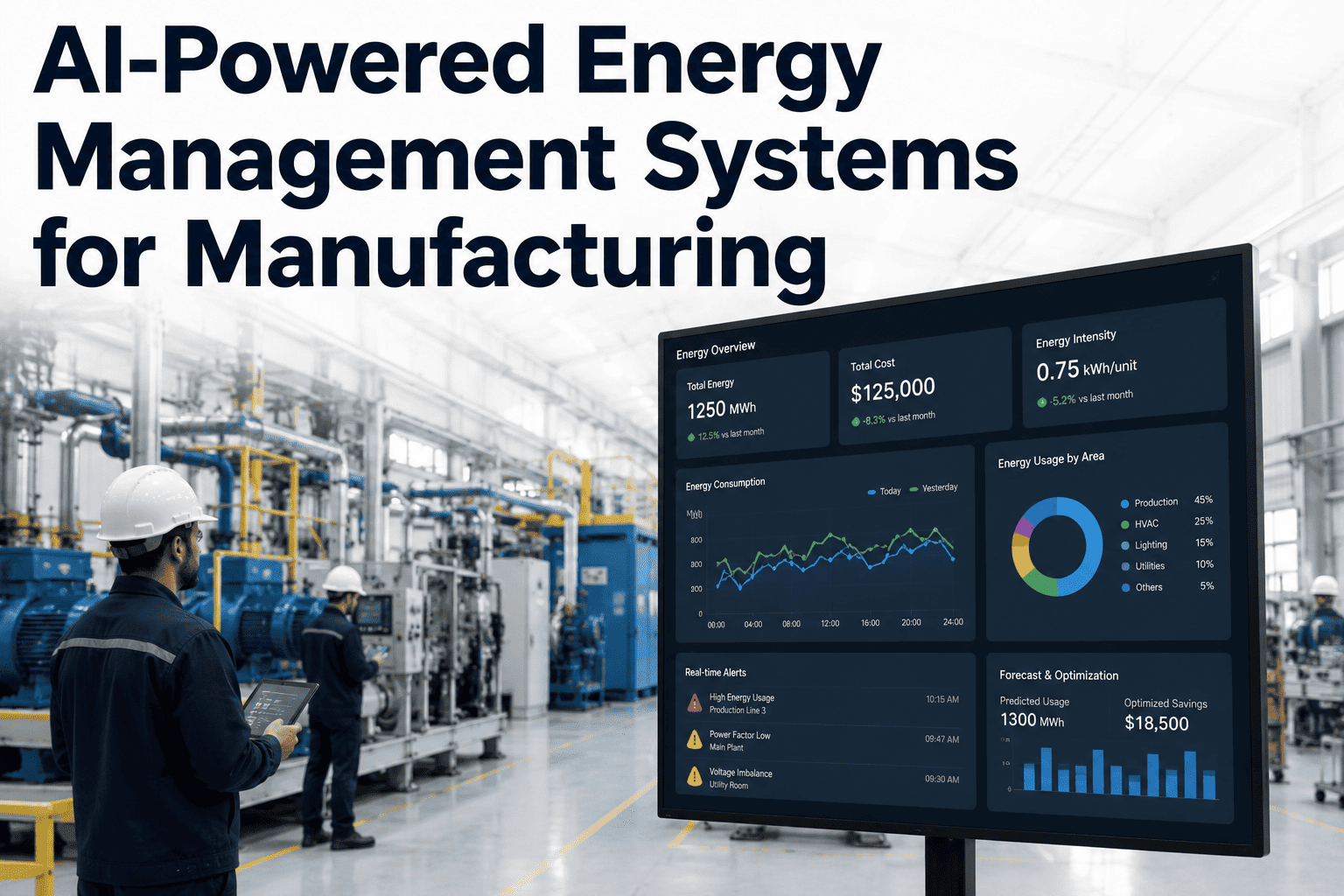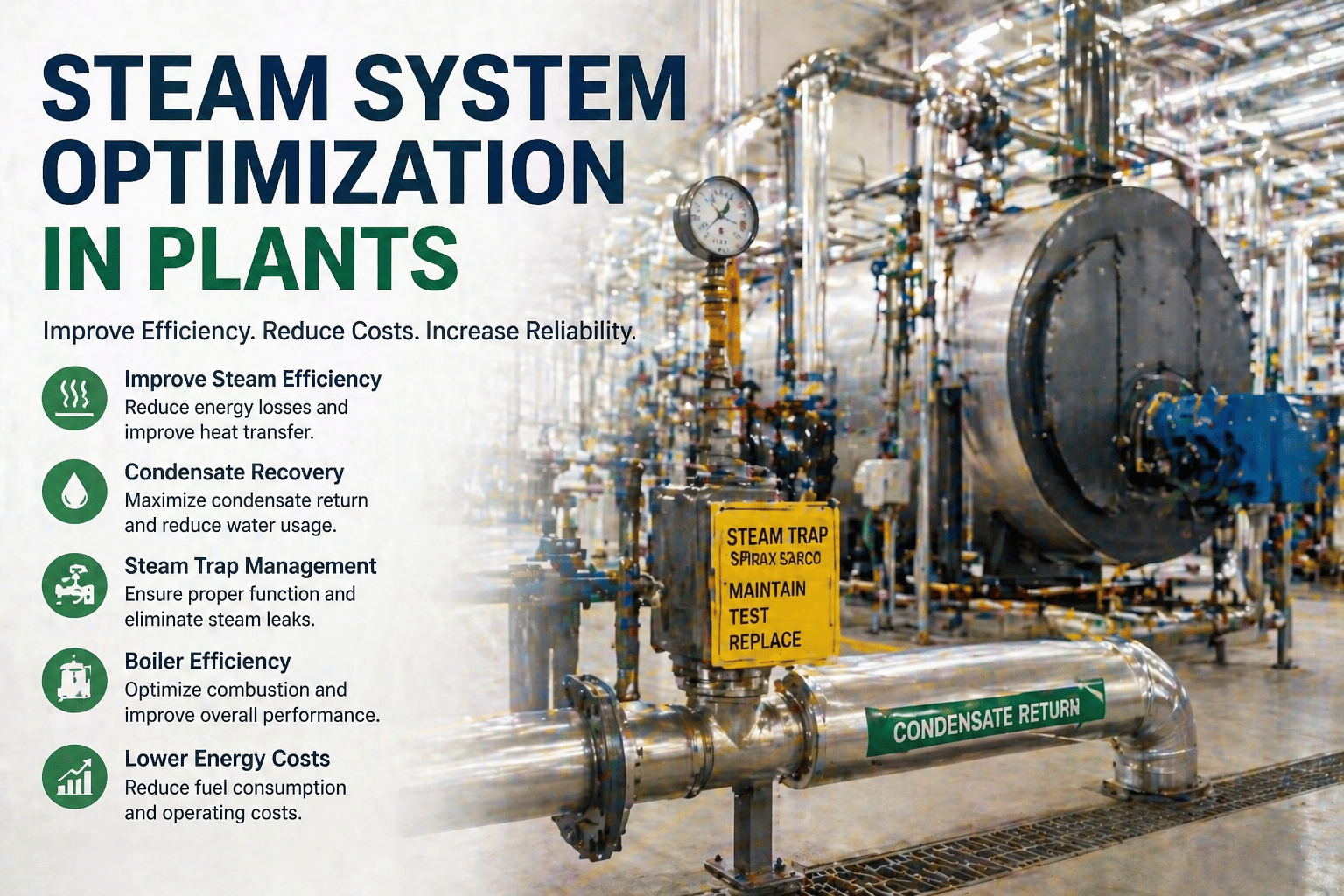
Manufacturing plants operate centralized steam systems providing thermal energy across 12-40 production operations including heating, sterilization, process cooling, power generation, and drying where steam generation consumes 15-35% of facility energy budgets yet 20-40% of generated steam energy escapes as waste through failed steam traps, uninsulated piping, inadequate condensate recovery, and unoptimized operating pressures creating cumulative losses of 200-800 million BTU monthly translating to $80,000-$320,000 monthly utility costs that remain invisible within aggregate energy billing until detailed steam audit reveals optimization opportunities hidden in system inefficiency. Steam trap failures progress silently as internal wear degrades valve seals allowing live steam bypass into condensate systems creating simultaneous problems where downstream steam consumption increases requiring additional boiler capacity while energy content of escaped steam dissipates into facility environment as waste heat reducing overall system efficiency 3-8% per failed trap undetected until production scheduling reveals unexpected boiler stress or energy costs spike unexpectedly.iFactory's AI-powered steam optimization platform transforms steam system management by continuously analyzing boiler efficiency trends, detecting steam trap failures in real-time, optimizing operating pressure schedules, tracking condensate recovery performance, and automating maintenance procedures preventing the efficiency losses destroying profitability through undetected system degradation. Book a Demo to see how iFactory's steam optimization detects system waste and reduces energy costs within 8 weeks.
Steam System Operations in Manufacturing Plants
Manufacturing steam systems convert boiler thermal energy into distributed heating and cooling resources serving production lines, sterilization chambers, heat exchangers, process vessels, and facility comfort systems where steam distribution networks stretch 500-2000 feet from central boiler rooms through insulated piping to 20-40 consumption points creating opportunities for efficiency loss at every system component from boiler generation through final steam condensation. Steam generation requires continuous balancing between demand across simultaneous production operations where process equipment runs independently with intermittent steam demand while facility heating requires continuous baseline consumption and peak-hour demand spikes from production line activation create pressure fluctuations testing system regulation and creating valve inefficiency when operating conditions deviate from design parameters. Condensate return systems present critical recovery opportunity where steam at consumption point already transferred 80-95% of energy content to production equipment yet remaining condensate contains valuable latent energy enabling reuse in lower-pressure applications or heat recovery from condensate stream reducing overall fresh water consumption and boiler make-up water treatment costs while recovering 30-50% of original steam investment for second-stage heating applications.
Manufacturing Steam System Optimization Challenges
Predict Failures Before They Stop Production. AI That Turns Downtime Into Planned Maintenance. Real-Time Visibility Into Every Production Line represents the transformation required in steam system management from reactive failure response to predictive efficiency optimization where visibility into system component performance enables proactive maintenance preventing catastrophic failures while continuous optimization monitoring detects efficiency degradation opportunities enabling cost reduction.
Manual steam trap inspection requires physical observation of trap discharge identifying failures through visual steam/water patterns requiring skilled inspector training and regular site visits detecting only 50-65% of failures. Ultrasonic testing provides occasional snapshot diagnostics without continuous monitoring enabling trap failures to progress undetected between inspection intervals. Acoustic monitoring using permanently installed sensors combined with AI analysis enables continuous monitoring detecting trap condition changes immediately upon emergence enabling rapid corrective response.
Traditional boiler performance monitoring relies on periodic efficiency calculations from fuel consumption and steam production data creating lag between efficiency degradation and detection enabling problem acceleration. Real-time efficiency monitoring using combustion analysis, steam flow measurement, and thermal loss calculation enables immediate identification of efficiency trends identifying fouling, tube erosion, or control system drift immediately upon occurrence preventing extended periods of degraded performance.
Manual pressure management requires operator judgment coordinating demand across multiple simultaneous processes without complete visibility into pressure needs at consumption points enabling over-pressure operation wasting energy. Automated pressure optimization analyzing demand profiles across all consumption points enables dynamic pressure scheduling minimizing operating pressure while maintaining reliability satisfying peak demand periods with rapid pressure modulation reducing average operating pressure 10-20 PSI reducing fuel consumption proportionally.
Condensate return verification requires flow measurement at collection points determining actual recovery rates often revealing 20-40% of condensate diverts to drain systems through leaking return lines, failed trap isolation preventing return flow, or operational practice discharging condensate locally. Identifying specific recovery losses enables targeted intervention repairing identified leaks or installing condensate recovery equipment recovering 80-95% of condensate return improving boiler feed-water quality and reducing make-up water treatment costs.
How iFactory AI Solves Manufacturing Steam Optimization
Traditional steam system management relies on periodic efficiency calculations, scheduled trap inspections, and manual operator pressure decisions missing continuous visibility into system performance degradation and optimization opportunities. iFactory replaces reactive steam management with predictive systems detecting trap failures immediately, monitoring boiler efficiency continuously, optimizing pressure schedules dynamically, and automating condensate recovery verification creating autonomous steam efficiency improvement. See a live demo of iFactory detecting steam trap failures, predicting boiler efficiency loss, and optimizing pressure schedules.
iFactory Steam Optimization vs. Traditional Approaches
Legacy steam system management relies on periodic efficiency calculations and scheduled inspections missing continuous visibility into system performance and optimization opportunities. iFactory delivers real-time intelligence transforming steam operations from reactive problem response to predictive efficiency optimization.
| Capability | Traditional Approach | iFactory AI Platform |
|---|---|---|
| Steam Trap Monitoring | Manual inspection detecting 50-65% of failures. Periodic ultrasonic testing providing snapshot diagnostics. Trap failures progress undetected between inspection intervals. Emergency failures discovered when equipment floods or energy costs spike unexpectedly. | Continuous acoustic monitoring detecting trap failures immediately upon emergence. AI analysis of sensor data predicting trap failure 15-30 days in advance enabling proactive replacement. 94% failure detection rate preventing catastrophic failures. Real-time monitoring eliminating inspection scheduling and travel time. |
| Boiler Efficiency Monitoring | Periodic efficiency calculation from fuel consumption and steam production. Efficiency degradation from fouling or control drift goes undetected for weeks. Fixed efficiency assumptions assuming equipment performs to design specifications throughout service life. | Continuous real-time efficiency calculation detecting immediate changes from fouling, tube erosion, or control drift. Trend analysis predicting efficiency degradation 20-30 days in advance enabling preventive boiler maintenance. Equipment-specific efficiency models accounting for equipment age and service hours. |
| Pressure Schedule Optimization | Manual operator pressure decisions based on experience and limited real-time demand visibility. Over-pressure operation satisfies peak demand while wasting energy during normal periods. Optimization opportunities missed because operators lack complete demand picture across all consumption points simultaneously. | Automated pressure optimization analyzing real-time demand across all consumption points identifying optimal pressure satisfying all equipment needs minimizing overall generation. Dynamic pressure scheduling adjusting pressure profiles based on production schedule enabling lower baseline pressure during low-demand periods. 10-20 PSI reduction in average operating pressure reducing fuel consumption proportionally. |
| Condensate Recovery Verification | Manual flow measurement at collection points discovering recovery losses only through billing analysis comparison. Specific loss sources difficult to identify without specialized diagnostics requiring external energy audit. Recovery losses continue unaddressed because leak locations unknown. | Continuous condensate flow monitoring identifying specific return line losses immediately upon emergence. System alerts identify failed trap isolation, leaking condensate lines, or operational practice discharges enabling targeted repair. Real-time recovery tracking quantifying impact of recovery improvements enabling ROI calculation for insulation and equipment upgrades. |
| Maintenance Coordination | Reactive trap replacement in response to failures or scheduled replacement intervals. No coordination between trap maintenance and production requirements causing maintenance disrupting active production. Boiler maintenance scheduled on fixed intervals regardless of actual equipment condition. | Predictive maintenance enabling scheduled trap replacement during planned downtime preventing emergency failures. Boiler maintenance timing based on actual efficiency degradation rather than fixed intervals optimizing maintenance efficiency. Work order automation coordinating steam system maintenance with production schedules preventing unexpected disruptions. |
| Operator Knowledge | Experienced steam engineers train successors through observation and experience taking years to develop competency. Knowledge transfer incomplete when engineers retire losing decades of optimization insights. New technicians operate from generic training without facility-specific optimization understanding. | Knowledge capture system documenting steam system operation patterns, trap performance characteristics, and control strategies specific to facility. Searchable knowledge base enabling new technicians rapid learning from historical experience. AI identifies recurring issues indicating training gaps or inadequate procedures preventing repeated efficiency problems. |
iFactory Steam Optimization Implementation Roadmap
iFactory follows a fixed 6-stage steam system deployment delivering efficiency insights in week 4 and full facility optimization by week 8. Transparent delivery roadmap prevents scope creep ensuring defined timeline for steam cost reduction.
8-Week Deployment and ROI Plan
Every iFactory engagement follows a structured 8-week program with energy savings beginning in week 4 of deployment. Request the full 8-week steam optimization deployment scope document customized for your facility.
Use Cases and KPI Results from Live Deployments
These outcomes are drawn from iFactory deployments at operating manufacturing facilities across food processing, chemical, pharmaceutical, and general manufacturing segments. Each use case reflects 6-month post-deployment performance data. Request the full case study report for the steam optimization application most relevant to your facility.
Regional Steam Management Requirements and Solutions
Steam system optimization requirements vary by region reflecting different fuel sources, water availability, environmental regulations, and facility types. iFactory adapts steam optimization strategies for region-specific requirements while maintaining consistent efficiency improvement principles.
| Region | Key Challenges | Compliance Standards | iFactory Solution |
|---|---|---|---|
| United States | Natural gas price volatility affecting boiler fuel costs. Aging boiler infrastructure in older facilities. Water scarcity in certain regions affecting condensate recovery economics. ASHRAE energy code compliance requirements. | ASME boiler code compliance, ASHRAE energy efficiency standards, EPA emissions reporting for some facilities, state energy efficiency requirements varying by region. | Boiler efficiency optimization reducing fuel consumption. Condensate recovery maximizing water reuse reducing treatment costs. Pressure optimization minimizing generation requirements. Emissions tracking supporting EPA reporting requirements. |
| United Kingdom | High natural gas costs from grid infrastructure aging. EU environmental regulations driving energy efficiency. Water quality variations affecting boiler tube chemistry. Building energy code compliance requirements. | Building Energy Code compliance, CRC Energy Efficiency Scheme, Streamlined Energy and Carbon Reporting (SECR) for large companies, boiler efficiency minimum standards. | Boiler efficiency monitoring supporting compliance reporting. SECR emissions tracking from steam generation. Pressure optimization reducing baseline fuel consumption. Automated emissions reporting supporting carbon accounting. |
| UAE and Middle East | High ambient temperature affecting cooling load and steam demand variation. Water scarcity limiting condensate recovery options. Thermal comfort requirements from extreme heat. Fuel oil and gas pricing affecting boiler economics. | Local environmental regulations, water conservation requirements, building sustainability standards specific to region, equipment operational temperature limits. | Temperature-adjusted efficiency models accounting for ambient heat affecting system performance. Condensate recovery optimization for water scarcity environments. Cooling system optimization integrating steam chiller operation. Fuel switching analysis supporting cost optimization. |
| India | Power supply intermittency affecting boiler operation stability. Water quality variability requiring extensive boiler feed-water treatment. Diverse facility equipment conditions and maintenance practices. Diverse fuel sources including coal, gas, and biomass boilers. | Indian Boiler Regulation compliance, environmental pollution control board regulations, energy efficiency code requirements varying by state, water usage regulations. | Boiler operation stability monitoring during power variations. Water quality monitoring guiding boiler feed-water treatment optimization. Equipment-specific efficiency models for diverse boiler types. Fuel consumption tracking supporting energy intensity reduction reporting. |
| Europe | EU environmental directives driving emissions reduction. Complex energy markets with varying natural gas prices across countries. High labor costs for manual steam system inspection. Industrial symbiosis opportunities for steam sharing between facilities. | EU Energy Efficiency Directive compliance, methane reduction requirements, ISO 50001 energy management system standards, carbon pricing scheme participation. | EU EED compliance documentation and energy audit reporting. Emissions quantification supporting carbon accounting. Boiler efficiency improvement reducing Scope 1 emissions. Condensate recovery supporting circular economy principles. Multi-facility steam optimization enabling system-wide efficiency. |
Steam System Optimization vs. Competitor Platforms
Leading manufacturing maintenance platforms vary significantly in steam-specific capability, real-time optimization, and equipment integration. iFactory delivers superior steam efficiency through manufacturing-focused design and predictive intelligence competitors cannot match.
| Capability | QAD Redzone | Evocon | Mingo | L2L | iFactory |
|---|---|---|---|---|---|
| AI Capability | Rule-based trap maintenance scheduling. No steam-specific ML. Limited predictive capability. | Basic condition monitoring without steam specialization. Limited predictive intelligence for trap failures. | Generic maintenance scheduling. No steam system-specific AI models. | Supply chain focused. No steam system optimization capability. | Advanced ML predicting trap failures 15-30 days in advance. Real-time boiler efficiency degradation detection. Pressure optimization algorithms unique to steam systems. Multi-variate analysis correlating efficiency to specific system components. |
| Trap Failure Detection | Manual scheduling of trap inspections. No continuous monitoring. Failures discovered through maintenance response to equipment problems. | Basic equipment tracking without trap-specific intelligence. No acoustic analysis or real-time monitoring. | Supply-focused platform. No steam trap monitoring capability. | No steam system specialization. | Continuous acoustic monitoring of all traps. AI analysis detecting failures immediately upon emergence. 94% failure detection rate vs. 50-65% manual inspection. Predictive failure forecasting 15-30 days in advance enabling proactive replacement. |
| Boiler Efficiency Monitoring | No continuous efficiency calculation. Reactive response to fuel bill increases. No real-time efficiency data. | Limited performance tracking without continuous efficiency analysis. No real-time monitoring capability. | No boiler efficiency focus. Supply chain metrics only. | No manufacturing equipment monitoring. | Real-time boiler efficiency calculation from combustion analysis and thermal loss data. Immediate identification of fouling requiring tube cleaning. Efficiency trend analysis predicting degradation 20-30 days in advance. Equipment age and service hour accounting in efficiency models. |
| Pressure Optimization | No pressure optimization or load coordination. Fixed maintenance approach. | Basic equipment status monitoring without optimization recommendations. | No manufacturing floor optimization capability. | Procurement focused. No production optimization. | Automated pressure optimization analyzing real-time demand across all consumption points. Dynamic pressure scheduling adjusting operating pressure based on production requirements. 10-20 PSI average pressure reduction achieving 3-5% fuel consumption reduction. Integration with production planning enabling schedule-based pressure optimization. |
| Condensate Recovery | No condensate recovery monitoring or optimization. | Basic flow tracking without recovery-specific analysis. | No thermal recovery capability. | Logistics focused. No manufacturing thermal systems. | Continuous condensate flow measurement identifying specific recovery losses. System alerts for failed trap isolation or local discharge. Recovery rate tracking quantifying improvement impact. Cascade application analysis identifying secondary use opportunities for recovered condensate. |
| Integration Depth | Basic SCADA connection without steam system specialization. | Standard system integration. Limited boiler control integration. | No manufacturing equipment integration. | Supply chain systems. No manufacturing equipment. | Deep SCADA/PLC integration capturing boiler control parameters, steam generation, distribution pressures, and consumption profiles. Building automation system integration coordinating facility heating demand. Real-time optimization analysis using complete system visibility. |