Bearing failures are the single most common cause of forced outages in power plant rotating equipment — responsible for more unplanned generation losses, more emergency maintenance mobilizations, and more secondary equipment damage than any other failure mode in turbines, pumps, fans, and compressors. The frustrating operational reality is that themost bearing failures are entirely preventable. Every stage of bearing degradation — from initial lubrication film breakdown through subsurface fatigue crack formation to spalling and eventual seizure — produces detectable signals weeks before mechanical failure vibration frequency signatures, oil particle counts, temperature rise, and acoustic emission patterns that are invisible to scheduled inspection but clearly visible to continuous sensor monitoring and AI-driven pattern recognition. The problem for most power plants is not a lack of data — modern vibration transmitters, oil analysis programs, and temperature monitoring systems generate bearing condition data across hundreds of assets simultaneously. The problem is that this data sits in separate systems, gets reviewed episodically rather than continuously, and is rarely integrated with the CMMS in a way that converts a sensor alert into a tracked, scheduled work order with the parts confirmed and the procedure attached. iFactory's AI-driven analytics platform closes that integration gap — connecting vibration, oil analysis, and temperature data to structured maintenance workflows that convert bearing condition signals into planned interventions before they become forced outage events. Need to assess where your bearing program stands today? book a demo for a program review.
Power Plant AI-drivenhttps://calendly.com/contact-ifactoryapp/30min · Bearing Reliability · Predictive Maintenance
Bearing Failure Prevention in Power Plants: Vibration, Oil Analysis, and AI-Driven Tracking Combined Into One Coordinated Program.
iFactory integrates vibration sensor alerts, oil analysis findings, and temperature trending into a single bearing condition tracking program — converting multi-source degradation signals into scheduled maintenance work orders that prevent bearing failures before they become forced outage events.
40–50%
Of all rotating equipment failures in power plants are bearing-related — the #1 failure mode
$2.4M
Average cost of a turbine forced outage from undetected bearing failure including secondary damage
4–8 wks
Detectable vibration signal window before catastrophic bearing failure in most power plant applications
85%
Of bearing failures are preventable with continuous multi-parameter monitoring and AI-driven tracking
The Degradation Timeline
The Four Stages of Bearing Degradation — and When Each Monitoring Method Detects It
Bearing degradation is not sudden — it follows a predictable multi-stage progression over weeks or months. Understanding which monitoring method detects each stage is the foundation of a multi-layer bearing failure prevention program that catches degradation at the earliest possible point.
Stage 1 · Weeks 1–4
Lubrication Breakdown
Lubricant film begins to thin from contamination, oxidation, or incorrect viscosity. Detectable by oil analysis: particle count increase, viscosity change, acid number rise. Vibration levels normal. No temperature change. Oil analysis is the only method that catches this stage.
Stage 2 · Weeks 2–6
Subsurface Fatigue
Metal fatigue initiates below the raceway surface. Detectable by high-frequency vibration analysis (ultrasonic, acoustic emission) and wear metal particle analysis in oil sampling. Vibration amplitude still near normal at running frequency.
Stage 3 · Weeks 4–8 — Detection Window
Spalling Initiates
Surface material begins to break away from raceway. Vibration amplitude increases at bearing defect frequencies (BPFO, BPFI, BSF). Temperature begins to rise. Audible acoustic changes may emerge. This is the primary multi-parameter detection window — the optimal point for planned intervention.
Stage 4 · Without Intervention
Catastrophic Failure
Bearing seizure or fracture. Shaft damage, seal failure, coupling damage — all requiring emergency repair rather than bearing replacement alone. Average unplanned event cost 8–12× higher than planned Stage 3 intervention. Secondary damage often exceeds the cost of the bearing itself by a factor of 20–50×.
4 Program Components
The Multi-Layer Bearing Failure Prevention Program — What Each Component Monitors and What It Catches
No single monitoring method catches bearing degradation at every stage. An effective bearing failure prevention program layers four complementary techniques, each covering a different part of the degradation timeline and a different failure mechanism class.
Layer 01
Continuous Vibration Monitoring
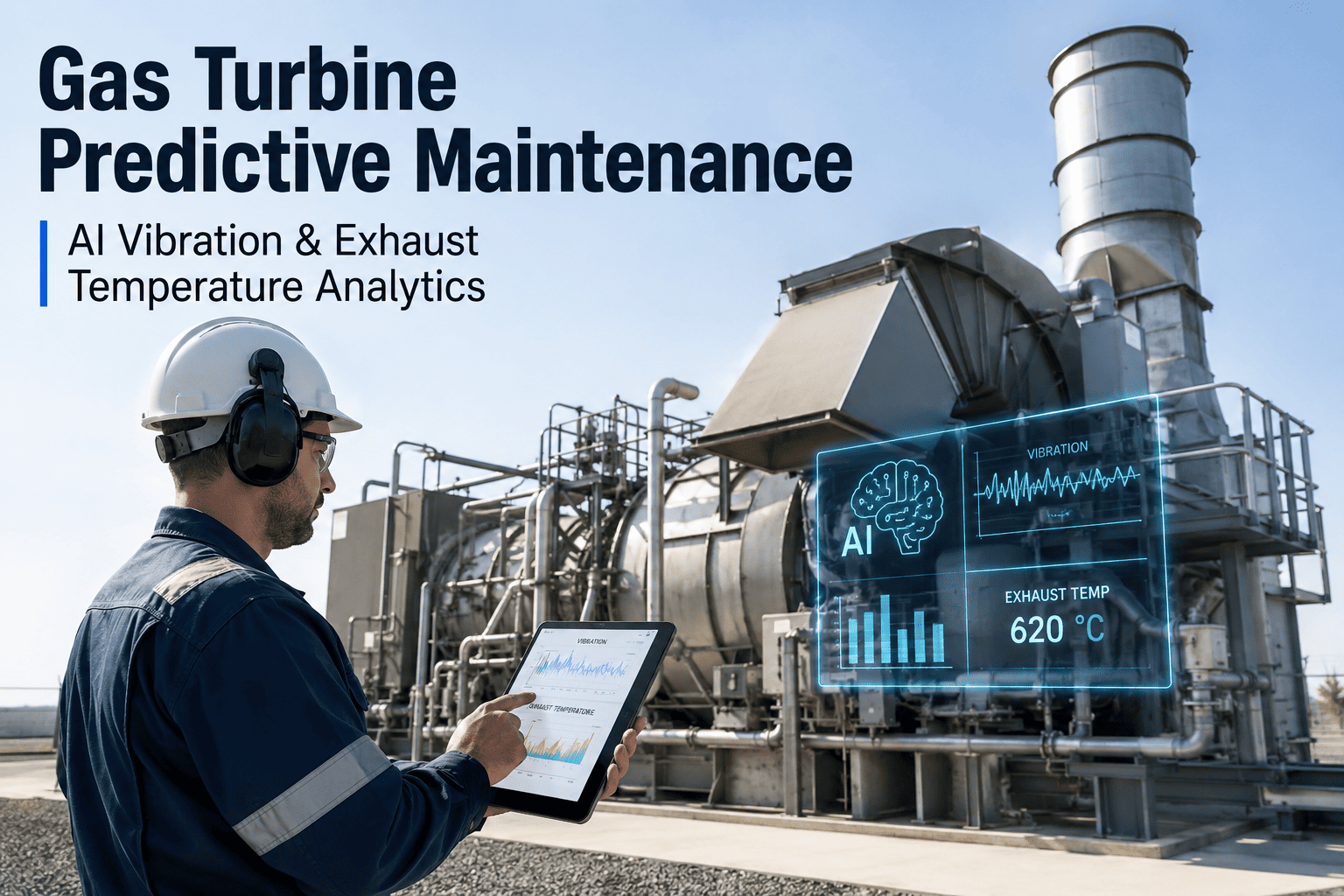
Accelerometers mounted on bearing housings stream vibration data continuously to iFactory's analytics engine. AI models calculate overall vibration level, identify bearing defect frequencies (BPFO, BPFI, FTF, BSF), and flag amplitude changes at those frequencies as they develop — providing 4–8 weeks of advance warning on spalling initiation before overall vibration levels reach alarm thresholds. Time-waveform and envelope spectrum analysis applied automatically per asset.
4–8 weeks
advance detection window on spalling initiation
Layer 02
Oil Analysis Integration
Oil analysis findings from laboratory or online particle counters imported directly into the bearing asset record — wear metal type and concentration, viscosity, acid number, and particle count trend tracked per lube system. iFactory's oil analysis integration catches Stage 1 and Stage 2 degradation that vibration monitoring cannot yet see, providing the earliest possible warning on lubrication breakdown and subsurface fatigue initiation before surface spalling begins.
Stage 1–2
earliest detection — before vibration signals emerge
Layer 03
Temperature Trend Monitoring
Bearing housing temperature trends tracked continuously from thermocouple or infrared sensors — establishing individual asset baselines during healthy operation and flagging deviations that indicate lubrication starvation, overloading, or early thermal runaway conditions. Temperature-rise pattern correlation with vibration data provides multi-parameter confirmation that converts a single-sensor alert into a high-confidence maintenance trigger, reducing false positives and missed detections simultaneously.
Multi-param
confirmation reduces false positives by 60%+
Layer 04
AI-Driven Work Order Generation
When multi-layer bearing condition data crosses configurable risk thresholds, iFactory automatically generates a bearing replacement or inspection work order with the asset location, bearing specification, required parts, recommended procedure, and condition trend data attached — so the planner has everything needed to schedule the intervention in the next available maintenance window. The sensor signal becomes a tracked, planned work order rather than an informal alert that depends on individual follow-through.
Automated
alert-to-work-order with parts and procedure pre-loaded
The Prevention Workflow
How iFactory Converts Multi-Sensor Bearing Data Into a Scheduled Maintenance Intervention
The gap between a vibration alert and a completed bearing replacement is where most bearing failures occur — not from a lack of sensor data, but from a lack of a structured system that converts the alert into a tracked work order with the right parts, right procedure, and right scheduled window.
Multi-Sensor Data
Vibration · Oil · Temperature
AI Risk Engine
Stage scoring · Trend velocity · Multi-param confirm
Work Order
Parts confirmed · Procedure attached · Window scheduled
Failure Prevented
Bearing replaced · Asset returned to service · Record complete
Every completed bearing intervention generates a record linked to the condition trend that triggered it — building the asset-level failure history that makes the next prediction more accurate and the next program review more data-driven.
iFactory Converts Your Plant's Vibration and Oil Analysis Data Into Scheduled Bearing Replacements — Before Failures Occur.
Multi-sensor bearing condition tracking, AI-driven risk scoring, and automatic work order generation with parts and procedures attached — all inside the analytics platform your maintenance team already uses. No separate PdM system required.
Before vs. After
Bearing Program Without AI-Driven Tracking vs. With iFactory Multi-Layer Monitoring
Without AI-Driven Tracking
Reactive · Single-Parameter · Fragmented
Vibration alerts generated in PdM system — rarely linked to CMMS work orders or parts procurement
Oil analysis results emailed as PDF reports — not integrated with bearing asset records or work order generation
Temperature exceedances trigger manual investigation — no trending baseline to distinguish degradation from process variation
Bearing replacement decisions made informally — not informed by multi-source condition data or failure stage classification
No failure history per bearing position — root cause analysis relies on technician memory rather than data
Emergency parts procurement for every bearing failure — 3–5 day lead time delays and 3–5× cost premium
With iFactory Bearing Analytics
Predictive · Multi-Layer · Integrated
Vibration alerts automatically converted to CMMS work orders with bearing spec, parts list, and procedure attached
Oil analysis findings imported to asset record — trend tracked alongside vibration for multi-parameter stage classification
Individual bearing baselines established — temperature deviations from that specific bearing's healthy operating range flag degradation not process variation
AI risk engine classifies degradation stage from multi-source data — replacement scheduled in optimal window, not after emergency
Per-bearing failure history in asset record — root cause analysis data-driven, failure patterns visible across asset class
Planned bearing procurement from condition trend forecast — standard lead time, standard cost, no emergency premium
Program Performance
Documented Results From AI-Driven Bearing Failure Prevention Programs at Power Plants
Bearing Failures Detected at Stage 3 or Earlier (vs. Stage 4)85%+
Reduction in Bearing-Related Forced Outage Events65–75%
Reduction in Secondary Equipment Damage per Bearing Event80–90%
Reduction in Emergency Parts Procurement Events55–65%
Alert-to-Work-Order Conversion Rate (vs. informal tracking)92%+
Program ROI (Year 1 Avoided Costs vs. Program Investment)6–12× ROI
Expert Perspective
What Power Plant Reliability Engineers Say About Multi-Layer Bearing Analytics
The shift from single-parameter vibration monitoring to integrated multi-layer bearing analytics changes the maintenance decision calculus permanently — because it eliminates the ambiguity that causes teams to defer action on borderline alerts until it is too late.
"Before we integrated our vibration and oil analysis data into the CMMS, we had exactly the problem most plants have — the PdM analyst would flag a bearing on the watch list, the vibration coordinator would add it to a spreadsheet, and then it would compete with 40 other watch-list items for planner attention. About a third of those items actually got scheduled before the bearing failed. The other two-thirds we found out about through an emergency call or a protection system trip. The worst one cost us $1.9 million — turbine bearing, shaft contact, rotor rebalancing, seal replacement, six days offline. And the oil analysis from two months earlier showed elevated iron wear metals that in retrospect were a clear signal. The data was there. It just wasn't connected to anything that would generate a work order and track it to completion. When we configured iFactory to pull vibration alerts and oil analysis findings into the same bearing asset record and trigger CMMS work orders automatically when multi-parameter risk thresholds were crossed, the change was immediate. In the first 12 months we had zero bearing-related forced outages on our monitored equipment population. Not reduced. Zero. We had seventeen planned bearing replacements that year. Every one of them was scheduled, parted out, and executed in a maintenance window. The total cost was $340,000 including parts and labor. The year before, three reactive bearing events alone had cost us $2.6 million. The math is not subtle."
— Reliability Engineering Manager, 740 MW Combined Cycle Plant, U.S. Mid-South · PE Licensed · 20 Years Power Plant Reliability · SMRP Certified Maintenance and Reliability Professional
ZeroBearing forced outages year 1
$2.3MAnnual cost avoidance
17Planned replacements vs. 3 reactive
How iFactory Fits
The Integration Layer Between Sensor Data and Scheduled Maintenance
Vibration analyzers detect the signal. Oil analysis labs quantify the wear. iFactory is the operational layer that connects both data sources to the CMMS work order system — so every bearing risk signal generates a tracked, scheduled work order rather than an informal entry on a watch-list spreadsheet. The difference between 85%+ early detection and 30–40% early detection is not sensor coverage. It is structured follow-through from alert to completed replacement.
Alert → Work order → Replacement → Outage prevented
Conclusion
Bearing Failures Are Not Surprises — They Are Data That Was Not Connected to Action
Every power plant running continuous vibration monitoring and periodic oil analysis already generates the data needed to prevent 85%+ of bearing failures. The gap is not in the sensors — it is in the system that converts sensor signals into scheduled work orders with confirmed parts, attached procedures, and tracked completion. Most plants have a PdM program and a separate CMMS that communicate through informal watch-list spreadsheets and email threads. Items get missed. Bearings fail. Emergency calls go out. And the root cause analysis almost always finds a data trail that would have prevented it.
iFactory closes that integration gap by connecting vibration monitoring, oil analysis, and temperature data to the CMMS work order system through AI-driven risk scoring that converts multi-parameter bearing condition data into planned maintenance work orders automatically. The sensor coverage your plant already has becomes a prevention program instead of a documentation program for failures that have already occurred. Book a Demo to see iFactory's bearing analytics configured for your plant's monitoring architecture and asset population.
Frequently Asked Questions
Power Plant Bearing Failure Prevention — What Reliability and Maintenance Teams Ask First
Which vibration analysis platforms does iFactory integrate with for bearing condition monitoring data?
iFactory integrates with the major continuous vibration monitoring platforms used in power plants — including Emerson AMS Machinery Manager, Bently Nevada System 1, SKF @ptitude Observer, Rockwell Automation Dynamix, and Pruftechnik OMNITREND. For online continuous monitoring systems (permanently mounted accelerometers), data integration uses the platform's API or OPC-UA server connection. For route-based portable data collection programs, iFactory accepts direct import from the data collector's export format. The key fields required for bearing condition tracking — overall vibration level, bearing defect frequency amplitudes (BPFO, BPFI, BSF, FTF), and time-waveform peak values — are available from all major platforms in compatible formats. For oil analysis integration, iFactory accepts laboratory report imports from most commercial oil analysis labs in CSV format, or direct API connection from online particle counters.
Book a Demo to confirm the integration path for your specific vibration platform and oil analysis program.
How does iFactory establish individual bearing baselines rather than using generic alarm thresholds?
Individual bearing baselines are established during a configurable observation period — typically 4–8 weeks of continuous data collection after integration go-live — during which iFactory's analytics engine profiles the bearing's normal operating vibration signature, temperature range, and oil analysis parameter levels under the plant's actual load conditions. This produces a statistical baseline unique to that specific bearing position, accounting for machine-specific resonances, load variation patterns, and normal operating temperature ranges that generic ISO alarm thresholds cannot capture. Bearings operating in high-temperature environments, under variable load cycles, or with non-standard mounting configurations benefit most from individual baselines — their "normal" operating signatures differ significantly from the ISO fleet averages that generic thresholds are built on. After baseline establishment, deviation alerts are generated when a parameter crosses a multiple of that bearing's own standard deviation — not a fixed absolute alarm level. This approach dramatically reduces false positives while improving sensitivity to real degradation onset.
How does the AI risk scoring engine combine vibration and oil analysis data into a single bearing risk classification?
iFactory's bearing risk engine assigns a risk score from 1–100 per bearing based on a weighted combination of up to seven condition parameters: (1) vibration overall level deviation from baseline, (2) bearing defect frequency amplitude at BPFO, BPFI, BSF, or FTF, (3) high-frequency vibration energy (ultrasonic band), (4) temperature deviation from individual baseline, (5) oil analysis wear metal concentration and rate of change, (6) oil viscosity deviation from specification, and (7) time since last successful condition baseline. Parameter weights are configurable by asset criticality tier — critical turbine bearings weight vibration defect frequency and oil analysis more heavily; auxiliary pump bearings may weight overall vibration and temperature more heavily based on the monitoring coverage available. When the risk score crosses a configurable threshold, a CMMS work order is generated automatically. The risk score history and the specific parameter contributions that drove it are attached to the work order — so the technician and planner understand exactly what data justified the intervention, not just that a threshold was crossed.
How does iFactory manage bearing analytics for assets with both online continuous monitoring and periodic route-based data collection?
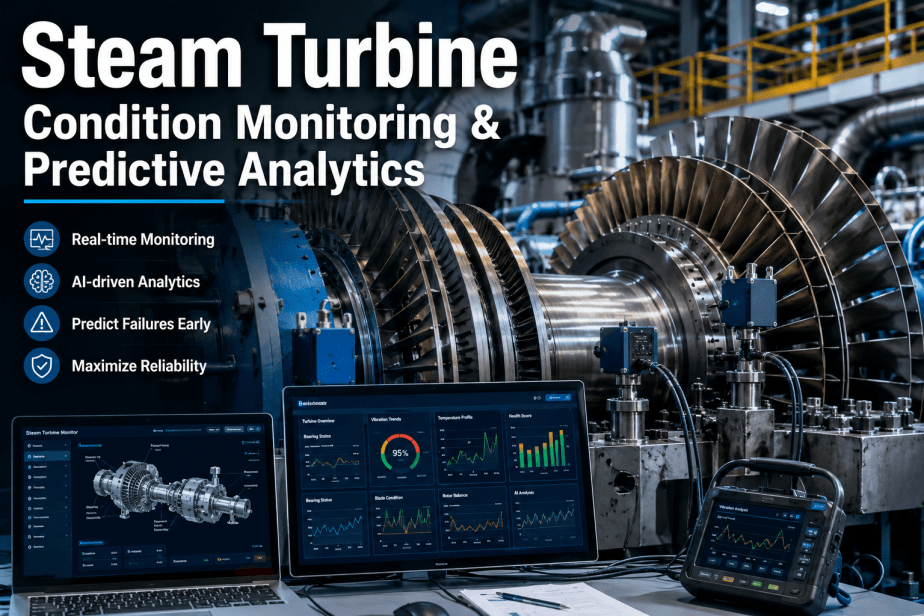
iFactory's bearing analytics layer handles mixed monitoring coverage across the asset population — a common configuration at power plants where turbine-generator bearings have continuous online monitoring while auxiliary equipment is covered by quarterly or monthly portable data collection routes. For continuously monitored assets, real-time data feeds trigger alerts and work orders as condition changes develop. For route-monitored assets, each data collection upload updates the bearing's condition record and recalculates the risk score based on the latest readings. The risk scoring methodology adapts to monitoring frequency — route-monitored assets receive a slightly more conservative risk threshold to account for the possibility that condition has changed since the last data point. The CMMS work order output is identical regardless of monitoring method: parts confirmed available, procedure attached, urgency level set based on risk score and available maintenance window. The maintenance planner sees a unified work queue — not separate systems for online and route assets.
How does iFactory's bearing failure prevention program build the asset-level failure history needed for root cause analysis and program improvement?
Every bearing replacement work order completed in iFactory is linked to the condition data record that triggered it — creating a structured failure event record that includes the vibration signature at detection, oil analysis findings at detection, estimated stage at intervention, replacement parts consumed, labor hours, and technician findings on the removed bearing. Over time, this creates a per-position failure history that reveals patterns not visible in individual events: recurring failures at a specific shaft position that indicate an alignment or lubrication management issue rather than random bearing life variation; correlation between oil analysis iron wear metal spikes and subsequent vibration anomalies that validates the multi-layer monitoring sequence; and asset-class failure frequency patterns that inform bearing specification review and PM interval adjustments. This history also feeds iFactory's AI model improvement — each completed failure event with confirmed findings refines the risk scoring parameters for that asset class, making subsequent predictions more accurate.
Book a Demo to see the bearing failure history and program analytics dashboard demonstrated for a sample asset population.
Your Plant's Vibration and Oil Analysis Data Is Already Generating Bearing Failure Warnings. iFactory Makes Sure They Become Work Orders.
Multi-sensor bearing condition tracking, AI-driven risk scoring that combines vibration and oil analysis into a single risk classification, automatic CMMS work order generation with parts and procedures attached, and per-bearing failure history that improves every future prediction — all inside the AI-driven analytics platform your maintenance team already uses.