Underground natural gas storage facilities—salt caverns, depleted reservoirs, and aquifer formations—have long been the backbone of North American energy supply chain reliability. But legacy control systems and rule-of-thumb operating decisions are leaving serious efficiency and safety value on the table. AI-powered platforms like iFactory are changing that calculus for midstream and oil & gas operators, turning underground storage from a passive buffer into an actively managed, data-optimized asset. This article explores exactly how AI gas storage optimization underground works in practice, what it delivers for U.S. operators, and why 2025 is the inflection year for adoption.
AI Gas Storage Optimization Underground — From Static Buffer to Dynamic Asset
Underground gas storage is no longer a passive seasonal reservoir. AI-driven platforms transform injection, withdrawal, and inventory decisions into real-time, data-backed operations that cut costs, prevent failures, and maximize throughput.
Why Traditional Underground Gas Storage Operations Leave Value Behind
Underground gas storage (UGS) facilities in the U.S. hold approximately 4.7 trillion cubic feet of working gas capacity distributed across 400-plus active sites. The decisions made at these facilities—when to inject, when to withdraw, how hard to run compressors, and when to schedule well interventions—have multimillion-dollar consequences per facility per year. Yet the majority of operating decisions are still made on static seasonal schedules, experience-based heuristics, and manual SCADA log reviews. The result is a persistent performance gap between what these assets could deliver and what they actually do.
Compressor energy waste from non-optimal injection timing
Static injection schedules ignore real-time pipeline pressure, gas composition variability, and spot market price signals — running compressors at full load during off-peak periods when partial-load or deferred injection would save $40,000–$120,000 per month in power costs at a typical salt cavern facility.
Undetected reservoir and wellbore integrity issues
Manual pressure and flow log reviews identify wellbore integrity deviations days or weeks after onset — by which point remediation costs are 3–5x higher than early-intervention costs. Undetected micro-leaks in cushion gas zones can compromise entire storage cycles.
Demand forecast errors that drive over-injection and under-withdrawal
Seasonal demand forecasting models built on 5–10 year historical averages fail to anticipate weather volatility, demand response events, and LNG export corridor effects — leaving facilities either under-stocked for peak demand or carrying excess inventory that displaces profitable injection capacity.
Siloed data across SCADA, wellhead sensors, and pipeline management systems
UGS facilities generate thousands of sensor data points per minute across wellhead pressure sensors, flow meters, compressor telemetry, and reservoir pressure gauges — but this data lives in separate systems with no integration layer to surface cross-system insights in real time.
Compliance reporting bottlenecks for FERC, PHMSA, and state regulators
Manual compilation of FERC Form 2 storage data, PHMSA integrity management records, and state emergency preparedness documentation consumes 20–40 person-hours per reporting cycle at a multi-well storage field — with significant risk of data inconsistency across systems of record.
Five AI Capabilities That Transform Underground Gas Storage Performance
iFactory's AI platform for underground gas storage facilities integrates with existing SCADA infrastructure, wellhead instrumentation, and pipeline management systems to deliver five interconnected capabilities. Together, these capabilities shift UGS operations from reactive and schedule-driven to predictive, adaptive, and continuously optimized.
Real-Time Reservoir State Estimation
AI models continuously estimate reservoir pressure, deliverability, and inventory state from wellhead sensor streams — providing a live digital twin of subsurface conditions that SCADA alone cannot see.
AI Demand Forecasting
Machine learning models trained on weather data, pipeline nominations, spot market signals, and historical withdrawal patterns generate 7-day and 30-day demand forecasts with measurably lower error rates than seasonal averages.
Injection & Withdrawal Schedule Optimization
AI solves the daily injection/withdrawal scheduling problem in real time — optimizing compressor loading against power cost, pipeline pressure constraints, and forecasted demand to minimize operating cost while protecting deliverability.
Predictive Maintenance for Wellhead & Compression Equipment
Anomaly detection algorithms monitor vibration, temperature, flow, and pressure signatures across wellhead equipment, compressors, and dehydration units — flagging developing failures 7–21 days before manual inspection would identify them.
Automated Compliance Documentation
iFactory generates FERC, PHMSA, and state-required storage reports automatically from operational sensor data — eliminating manual compilation and maintaining a continuous audit trail for integrity management program documentation.
AI Optimization by Underground Storage Formation Type — Salt Caverns, Depleted Reservoirs, and Aquifers
The three primary underground gas storage formation types each present distinct operational characteristics, performance constraints, and AI optimization opportunities. The table below compares the AI applicability and primary value drivers across formation types at current U.S. storage facility scales.
| Formation Type | Cycle Capability | Primary Operational Challenge | Top AI Optimization Lever | Estimated Annual AI Value |
|---|---|---|---|---|
| Salt Cavern | High — multiple cycles/year | Compressor energy cost; cavern roof pressure management | Real-time injection pressure optimization; compressor load scheduling | $1.5M–$3.2M per cavern cluster |
| Depleted Gas Reservoir | Medium — 1–2 cycles/year | Wellbore integrity across aging well stock; deliverability decline | Predictive maintenance on well equipment; reservoir pressure modeling | $800K–$2.5M per field |
| Depleted Oil Reservoir | Low–Medium — seasonal | Liquids management; gas quality contamination from reservoir fluids | Liquids accumulation prediction; separator optimization | $400K–$1.2M per facility |
| Aquifer Formation | Low — 1 cycle/year | Cushion gas management; aquifer boundary uncertainty | Reservoir state estimation; injection/withdrawal boundary optimization | $300K–$900K per facility |
iFactory's Digital Twin for Underground Gas Storage — What It Monitors, What It Predicts
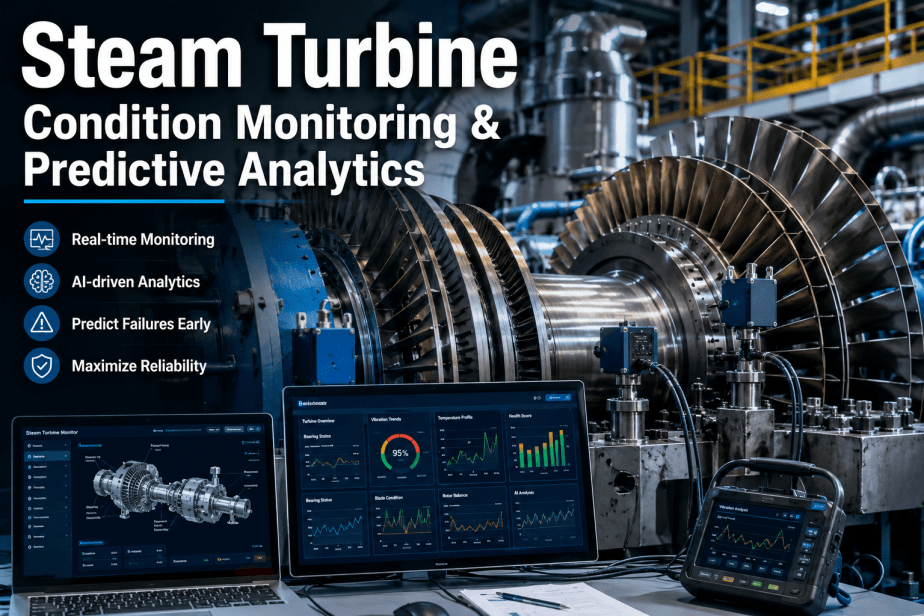
iFactory deploys a digital twin layer over the physical underground storage asset — ingesting real-time sensor data from wellheads, compressor stations, metering points, and pipeline interconnects to build a continuously updated model of both surface and subsurface facility state. The platform's AI models operate on this digital twin to generate predictions and optimization recommendations across three time horizons.
Real-Time Operational Optimization
Compressor set-point recommendations updated every 15 minutes based on current reservoir pressure, pipeline delivery nominations, and power cost. Wellhead anomaly alerts with severity scoring. Gas quality deviations flagged before they reach pipeline injection specifications. Operators receive actionable recommendations, not raw data.
Predictive Maintenance & Demand Forecasting
Equipment health scores updated daily for compressors, wellhead Christmas trees, dehydration units, and metering equipment — with remaining useful life estimates and recommended maintenance windows. Demand forecast models updated with latest weather, pipeline flow, and market data to guide injection/withdrawal planning.
Seasonal Storage Strategy Optimization
AI-generated injection season inventory targets, withdrawal rate ramp curves, and maintenance shutdown scheduling recommendations — calibrated to forecasted demand, market price curves, and facility deliverability constraints. Replaces static seasonal plans with dynamic, continuously revised operating strategies.
Traditional UGS Operations vs. AI-Optimized Operations — A Direct Comparison
Traditional Operations
- Injection schedules set seasonally, adjusted monthly at best — no response to intraday price or demand signals
- Compressor maintenance on fixed calendar intervals — no condition-based optimization
- Demand forecasts based on 5-year historical averages — high error rate in volatile weather years
- Wellbore integrity issues detected by manual log review — 7–21 day detection lag
- FERC/PHMSA compliance reports compiled manually — 20–40 hours per reporting cycle
- Reservoir state estimated from monthly pressure buildup tests — no continuous visibility
- Siloed data across SCADA, ERP, and pipeline management — no integrated analytics layer
iFactory AI-Optimized Operations
- Injection and withdrawal scheduling optimized every 15 minutes against real-time power cost, pressure, and demand forecast
- Compressor maintenance triggered by AI health score — 30–40% reduction in unplanned failures
- ML demand forecasts updated daily with weather, market, and pipeline nomination data — 20–35% lower forecast error
- Wellbore anomaly detection in real time — 7–21 day earlier warning on integrity issues
- Automated FERC and PHMSA report generation from operational data — 90% reduction in manual reporting time
- Continuous reservoir state estimation from wellhead sensor streams — live digital twin
- Unified iFactory data layer integrates SCADA, sensors, ERP, and pipeline data for cross-system analytics
iFactory AI Features Purpose-Built for Underground Gas Storage Facilities
iFactory's industrial AI platform is deployed on an NVIDIA-powered edge appliance at the facility — providing real-time AI inference without cloud latency dependencies. The following capabilities are available out-of-the-box for UGS operators and configurable to site-specific instrumentation, formation type, and regulatory environment.
Real-time wellhead & compressor sensor integration
Connects to existing wellhead pressure/temperature sensors, flow meters, and compressor telemetry via standard industrial protocols — no instrumentation replacement required for most facilities.
Underground Digital Twin AI
iFactory's Digital Twin AI module models reservoir pressure, deliverability curves, and subsurface fluid dynamics in real time — providing continuous visibility into storage state that static surveys cannot.
Predictive Maintenance for surface compression equipment
Anomaly detection models monitor centrifugal and reciprocating compressor health — vibration, temperature, lube oil pressure, and inter-stage differential — with failure prediction 7–21 days in advance.
AI demand forecasting engine
Multi-variable forecasting model integrates weather, historical demand, pipeline nominations, and market price signals — generating 7-day and 30-day demand scenarios to guide injection/withdrawal strategy.
Injection/withdrawal schedule optimizer
Solves the daily storage scheduling problem in real time — balancing reservoir deliverability, compressor energy cost, pipeline delivery commitments, and market pricing to generate optimal hourly operating plans.
Automated FERC and PHMSA compliance reporting
Generates FERC Form 2 storage data, PHMSA integrity management reports, and state emergency preparedness documentation automatically from operational sensor records — with full audit trail and version control.
See iFactory Running on a Live Underground Storage Facility Network
iFactory's AI platform is deployed on NVIDIA edge hardware at the facility — real-time inference with no cloud latency dependency. See the digital twin, demand forecasting, and predictive maintenance modules running on actual UGS sensor data.
What Underground Storage Operations Professionals Say About AI Optimization
I spent eleven years as a storage field engineer and then operations manager across two depleted reservoir facilities and one salt cavern complex in the Mid-Continent. The single most persistent frustration in that entire career was not equipment failures, which were manageable — it was the systematic inability to see across the facility's data in real time. At the salt cavern complex, we had 14 wells, three compressor stations, two dehydration trains, and a pipeline interconnect with four shipper contracts running simultaneously. Each system had its own historian. The operations room had five separate monitor screens from five separate vendors. A field engineer making an injection scheduling decision was mentally integrating data from memory and experience — not from a live, integrated view of the facility state. The compressor energy cost alone at that facility was $11 million a year. Our operating heuristics — built up over 20 years of field experience and passed down through shift briefings — were genuinely good. But they were static, and the facility wasn't. When we piloted an AI optimization layer on the injection scheduling, the system identified a recurrent operating pattern where we were running compressors at 85–90% load during late afternoon hours when pipeline delivery pressure dropped, when a staged partial-load schedule would have maintained the same daily injection volume at 22% lower energy cost. No one had seen this pattern because no one had the integrated pressure-and-power-cost data in a single analytical view. That $11 million annual energy line went to $8.4 million in the first full injection season with AI scheduling. The savings were not from new technology or new wells. They came from visibility that the facility had always needed and never had.
— Operations Manager, U.S. Salt Cavern and Depleted Reservoir Storage — 11 Years Underground Storage Engineering — Certified Energy Manager (CEM) — SPE MemberAI Gas Storage Optimization Underground — The Visibility Gap Is Now Closable
Underground natural gas storage has operated for decades as a passive seasonal buffer whose optimization was limited by what a human operator could integrate from multiple disconnected data systems during a shift. The AI platforms available to UGS operators in 2025 — with real-time digital twin modeling, machine learning demand forecasting, and continuous predictive maintenance — close that visibility gap entirely.
iFactory's AI platform deploys on NVIDIA edge hardware at the facility, integrates with existing SCADA and sensor infrastructure without replacement, and delivers measurable optimization results within the first injection or withdrawal season. Book a Demo to see iFactory's underground storage digital twin, demand forecasting, and predictive maintenance modules running on a live facility network configuration.
Common Questions About AI Gas Storage Optimization for Underground Facilities
Transform Your Underground Storage Facility from Passive Buffer to Optimized Asset
iFactory deploys on NVIDIA edge hardware at your facility — no cloud latency, no SCADA replacement, measurable ROI in the first storage season. Book a demo and see the platform configured for your formation type and operating environment.