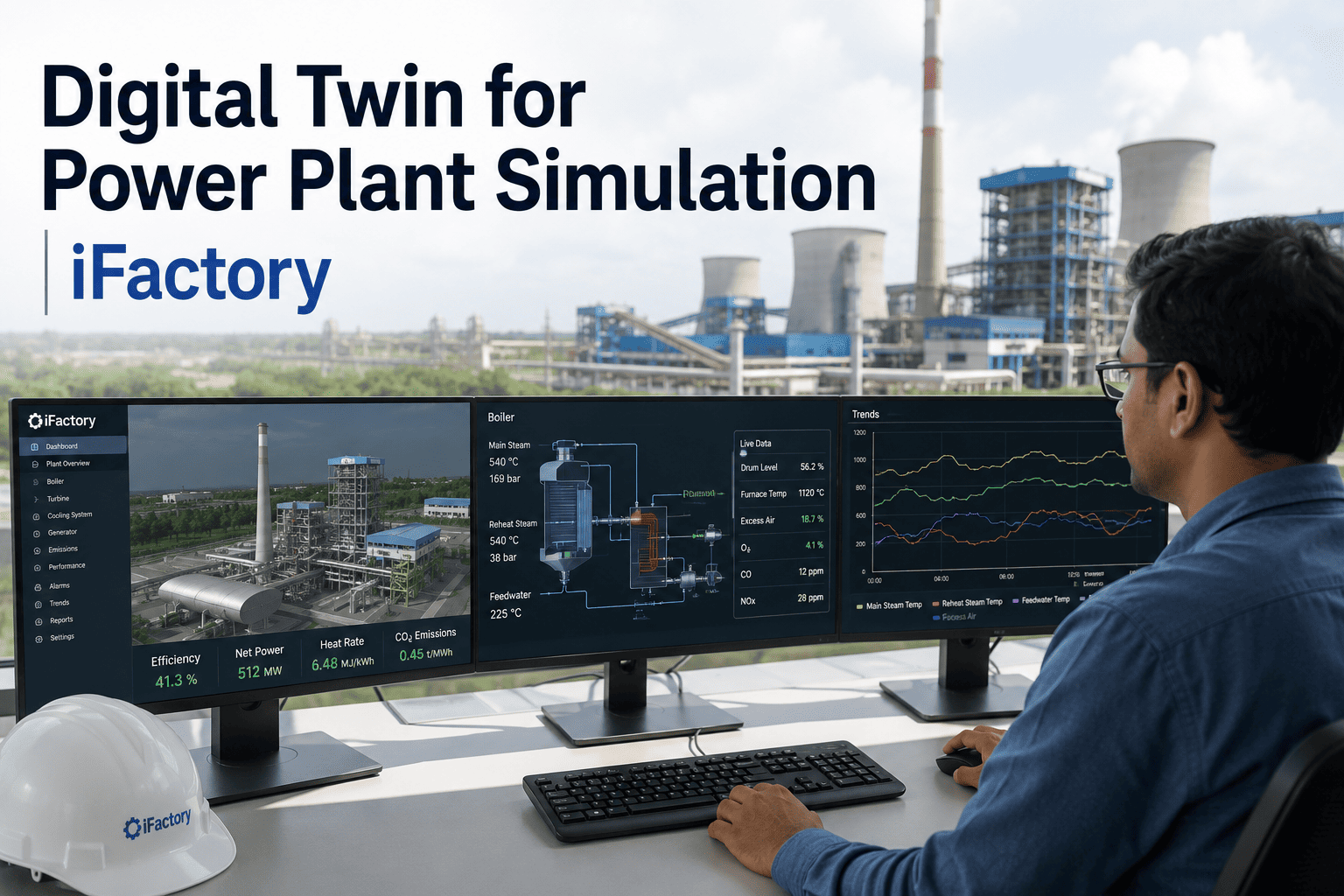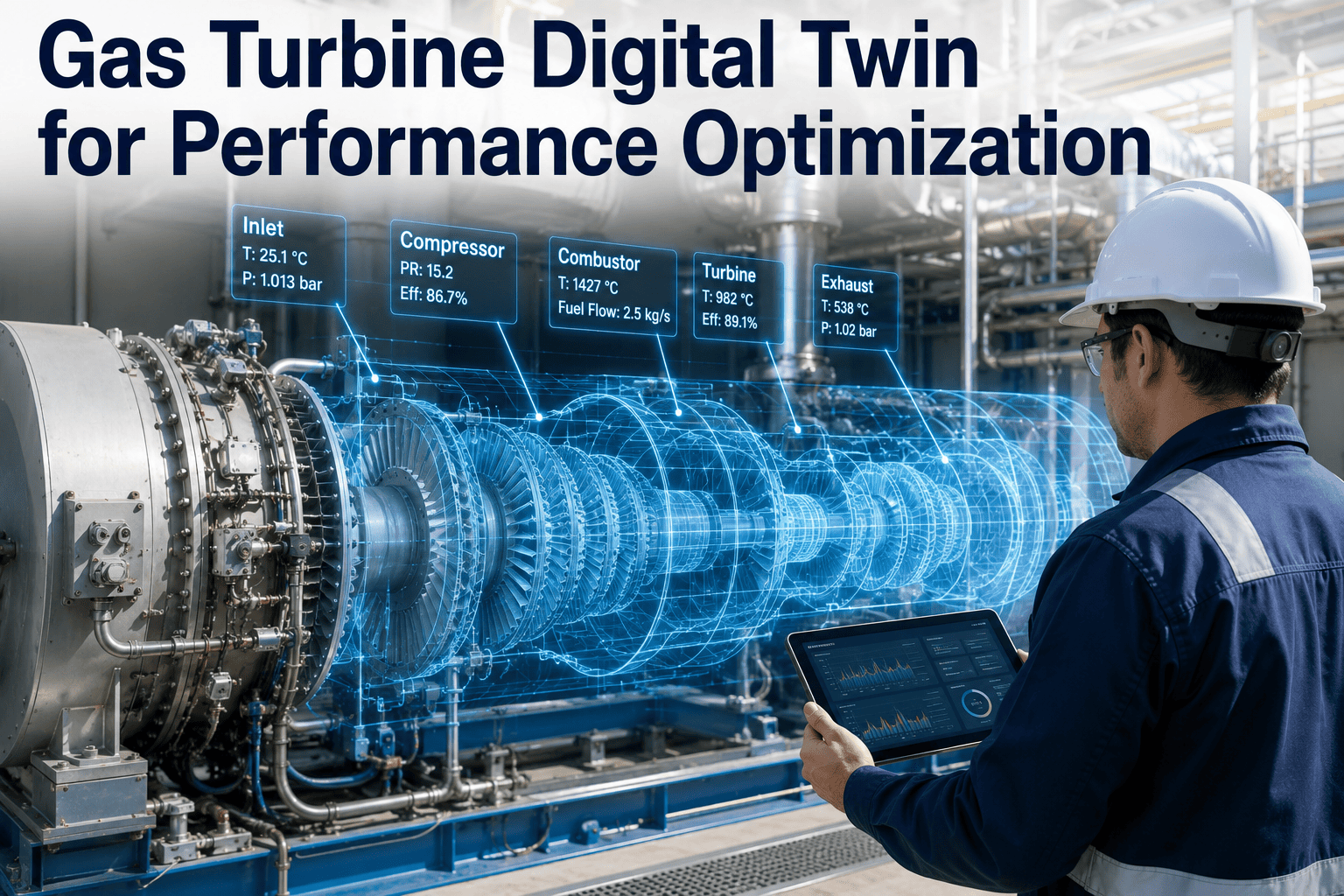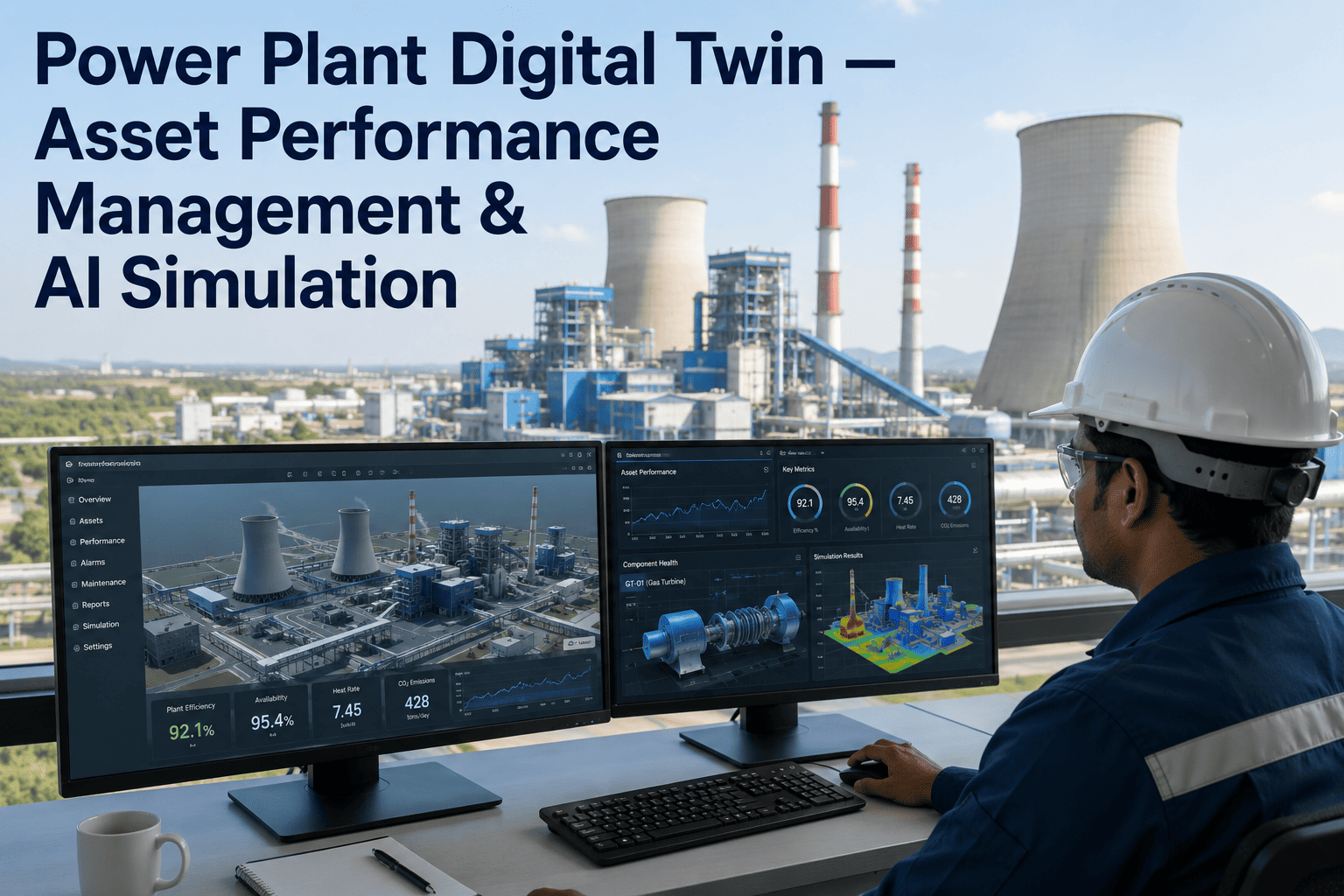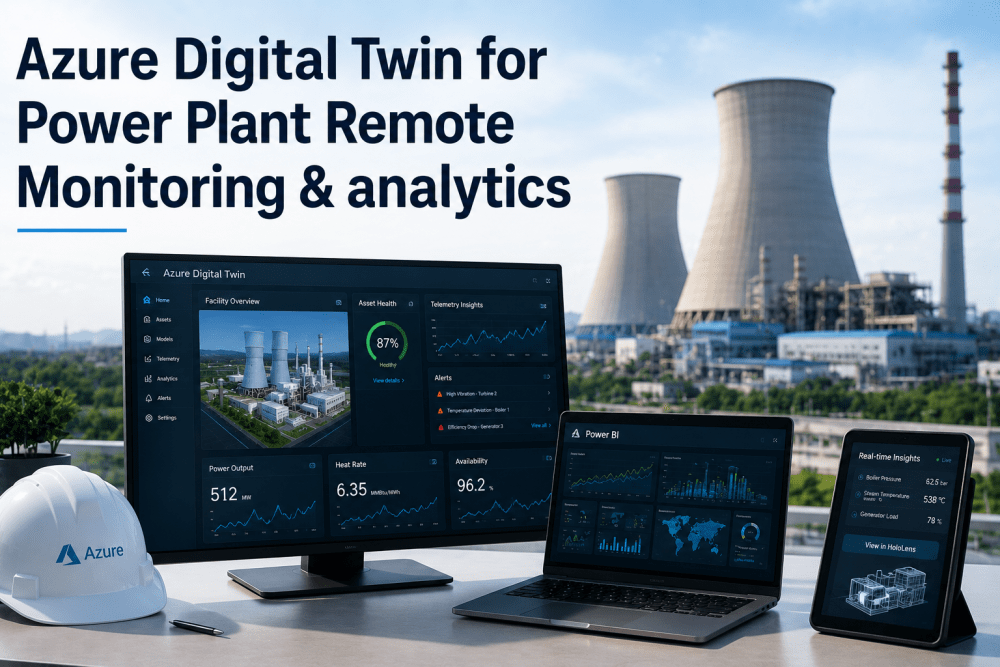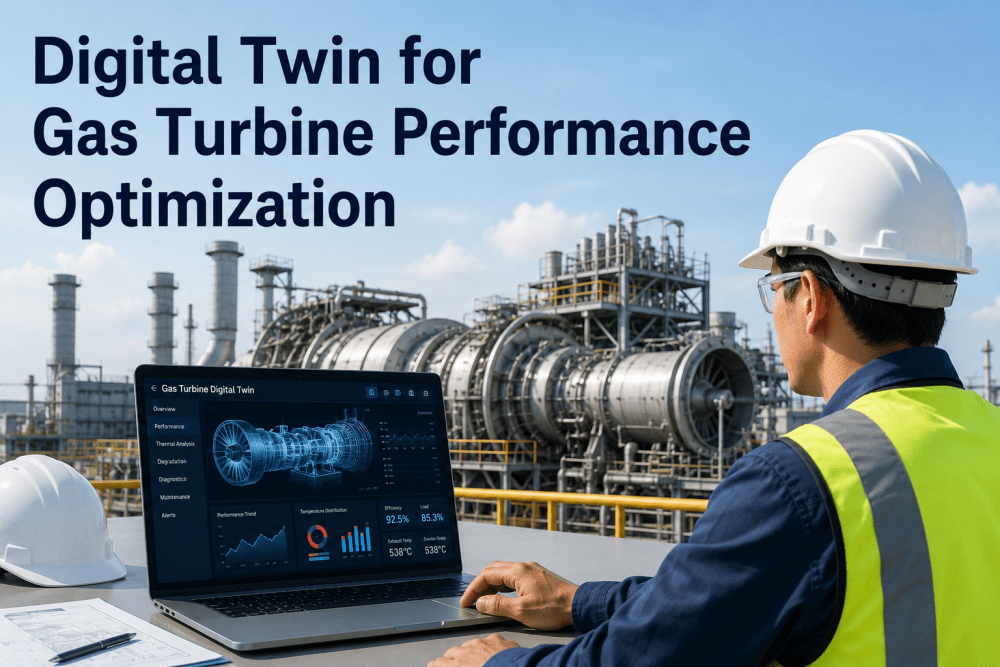
Gas turbine operators across the United States are managing a fundamental performance tension: turbines are cycling harder than ever — ramping up and down to balance renewable generation intermittency — while OEM maintenance intervals were designed for the baseload operating profiles of a different era. Hot section components accumulate thermal fatigue at a rate that fixed run-hour schedules cannot accurately track. The result is that gas turbine fleets operating on today's grid are consuming component life faster than their maintenance programs assume — and generating costly surprises at every planned inspection. Digital twin technology for gas turbine performance optimization closes that gap by creating a continuously updated physics-informed simulation of each turbine that tracks actual operating stress, models degradation trajectories in real time, and generates combustion optimization recommendations on every shift — not annually. iFactory AI's Digital Twin platform is purpose-built for gas turbine asset hierarchies, integrating directly with the plant's existing historian and DCS without modifying control infrastructure. Book a Demo to see how iFactory's gas turbine digital twin maps to your fleet configuration.
Is Your Gas Turbine Fleet Running on Real-Time Performance Intelligence?
iFactory AI's Digital Twin platform delivers continuous hot section remaining life modeling, compressor fouling tracking, combustion parameter optimization, and degradation prediction for gas turbine and combined cycle assets — connected to your existing DCS historian without control system modification.
The Lifecycle Cost Gap That OEM Maintenance Intervals and Annual Inspections Cannot Bridge
Gas turbine maintenance economics are dominated by hot section component replacement — turbine blades, vanes, transition pieces, combustion liners, and associated hardware that must be replaced on a schedule that balances component life consumption against the risk of in-service failure.
Cycling operation — the pattern of daily starts and stops that gas turbines now perform across much of the U.S. peaking and intermediate generation fleet — accumulates hot section fatigue at a rate that is 3 to 8 times higher per calendar hour than steady-state baseload operation. A turbine performing two starts per day accumulates equivalent hot section life consumption to approximately 150 to 200 fired hours of baseload operation per actual operating day. Without a digital twin tracking this actual life consumption, maintenance intervals calibrated for baseload assumptions leave operators choosing between over-maintenance that wastes component life and under-maintenance that exposes turbines to in-service failure. Book a Demo to see how iFactory's gas turbine digital twin tracks actual life consumption at your fleet's operating profile.
Hot Section Life Modeling
Physics-informed thermal fatigue models track actual blade, vane, and combustor liner life consumption from each start-stop cycle, peak load transient, and fuel quality event — replacing OEM interval assumptions with real-time remaining useful life estimates for every hot section component.
Compressor Fouling Analytics
Compressor fouling degrades turbine output and heat rate by 1 to 3 percent per month under cycling operating conditions. The digital twin tracks fouling rate continuously from inlet guide vane position, compressor pressure ratio, and efficiency deviation — optimizing online washing cycle frequency for heat rate recovery versus wash cost.
Combustion Optimization
AI combustion models continuously optimize fuel split ratios, pilot fuel percentages, and combustion reference temperatures to minimize NOx and CO emissions while maintaining combustion dynamics stability — reducing permit exceedance risk and fuel cost simultaneously across variable ambient and load conditions.
Start-Up Stress Modeling
Each gas turbine start subjects rotor components to thermal stress that is the single largest driver of low-cycle fatigue in cycling units. The digital twin models the thermal gradient across the rotor during each start sequence and accumulates cycle-by-cycle fatigue consumption to produce a rotor life expenditure account that reflects actual operating history.
OEM Interval Maintenance vs. Digital Twin-Driven Gas Turbine Operations: The Documented Performance Gap
The conventional gas turbine maintenance model relies on OEM-published fired starts and fired hours intervals, threshold-based condition alarms, and annual inspection teardowns that reveal the actual component condition — often with expensive surprises. In a cycling grid environment, this model generates two simultaneous failure modes: over-maintenance of components that still have significant remaining life, and under-maintenance of components that have consumed life faster than the interval assumes. The comparison below documents where digital twin operations diverge from interval-based operations at every measurable performance dimension. Book a Demo to benchmark your current turbine maintenance model against iFactory's digital twin platform outcomes.
| Performance Dimension | OEM Interval Operations | iFactory Digital Twin | Business Impact | Priority Level |
|---|---|---|---|---|
| Hot Section Component Life | OEM fired starts/hours — not adjusted for cycling stress | Actual fatigue accumulation modeled per start, transient, and load event | 20–35% reduction in unnecessary hot section teardowns | Critical |
| Compressor Fouling Management | Fixed wash schedule regardless of actual fouling rate | Fouling rate tracked continuously — wash scheduled at optimal cost-benefit point | 1.5–2.5% sustained heat rate improvement | Critical |
| Combustion Anomaly Detection | Alarm-threshold detection after flame instability develops | Dynamic pressure pattern AI detects combustion anomalies 7–14 days before alarm | 65–80% reduction in forced outages from combustion events | Critical |
| Inspection Scope Prediction | Work scope determined during teardown — surprise findings add days and cost | Component condition scores pre-define 85–92% of work scope before outage start | 15–25% reduction in planned outage duration | High |
| Emissions Compliance | Fixed combustion tune — permit exceedance risk during ambient changes | Continuous combustion optimization across ambient temperature and load | Near-elimination of NOx/CO permit exceedance events | High |
| Fuel Cost Per MWh | Annual efficiency testing — degradation invisible between tests | Heat rate monitored continuously — degradation corrected in near real-time | $300K–$900K annual fuel savings per 400 MW unit | Significant |
Digital Twin Coverage Across F-Class, H-Class, Aeroderivative, and Industrial Gas Turbines
Gas turbine digital twin models must reflect the specific thermodynamic, mechanical, and operating profile of each turbine technology class. iFactory AI's platform provides technology-specific digital twin modules configured for the four primary gas turbine classes operating in the U.S. power generation and industrial energy market.
F-class turbines dominate the U.S. cycling peaking fleet. Digital twin models track hot section fatigue from high-cycle start patterns, combustion dynamics stability during load following, and compressor fouling under variable ambient conditions. Hot section remaining life modeling typically extends time-on-wing by 15–25% at cycling units compared to OEM interval assumptions.
H-class turbines operate at higher firing temperatures and pressure ratios that narrow the margin between optimal performance and thermal stress limits. Digital twin monitoring provides continuous thermal margin surveillance and cooling flow effectiveness tracking — detecting early-stage hot section degradation before it affects output or efficiency at these tightly optimized machines.
Aeroderivative turbines perform faster starts and more frequent cycling than frame units — accumulating thermal fatigue at the highest rate per calendar hour in the gas turbine fleet. Digital twin rotor life accounting is especially high-value for aeroderivative operators, where the start-cycle cost dominates maintenance economics and OEM interval assumptions diverge most significantly from actual operating conditions.
4-Phase Digital Twin Deployment: From Historian Connection to Live Turbine Optimization
Deploying iFactory AI's gas turbine digital twin does not require DCS modification, new field instrumentation, or turbine outage access to initiate. The platform connects to the plant's existing historian — OSIsoft PI, GE Historian, Aveva System Platform, or equivalent — through read-only API interfaces, and the deployment sequence below has been validated across F-class, H-class, and aeroderivative gas turbine installations.
Phase 1 — Data Integration and Turbine Model Configuration (Weeks 1–6)
iFactory engineers connect the Digital Twin platform to the plant's historian through read-only API interfaces. Sensor data streams for the gas turbine — exhaust thermocouples, compressor inlet and discharge conditions, combustion dynamics sensors, fuel flow meters, and performance parameters — begin flowing to the Digital Twin engine. Physics-informed turbine models are configured with the OEM design parameters, turbine serial number operating history, and available maintenance records. For most DCS historian configurations, data integration to live ingestion completes in 3–5 weeks. Book a Demo to review your plant's specific data architecture with iFactory's turbine integration team.
Phase 2 — Baseline Establishment and Anomaly Model Calibration (Weeks 7–16)
The digital twin models train on historical operating data — minimum 90 days, ideally 12–24 months — to establish the turbine's individual performance baseline calibrated to its specific operating history, fuel type, inlet air treatment, and cycling profile. Hot section life consumption models are back-calculated from the turbine's start and hours log to establish current accumulated fatigue. Combustion anomaly detection models are validated against any historical trip or inspection event data available. Plant engineers review initial alert outputs to calibrate sensitivity to the specific turbine's normal operating characteristics.
Phase 3 — Live Monitoring, Combustion Optimization, and Work Order Integration (Weeks 17–28)
Digital twin health scoring and combustion optimization recommendations go live for the turbine. Combustion parameter recommendations are presented to operations staff through the dashboard for evaluation and implementation — with full operator override authority at all times. The platform integrates with the plant's CMMS or work order management system, automatically generating maintenance work orders with anomaly classification, priority level, and recommended inspection scope from validated digital twin alerts. Hot section remaining life dashboards are activated for maintenance planning review.
Phase 4 — Outage Planning Integration and Fleet Optimization (Week 28 Onward)
Pre-outage component condition assessments are generated from digital twin hot section life models 60–90 days before each planned inspection — defining component replacement requirements from actual condition data rather than OEM interval assumptions. For multi-unit fleets, the platform generates comparative health dashboards across all turbines, enabling maintenance planning to prioritize resources to units with the highest intervention urgency. Monthly KPI reports compare digital twin-optimized outcomes against pre-deployment baselines across forced outage rate, heat rate performance, maintenance cost per MWh, and emissions compliance events.
Deploy Real-Time Digital Twin Intelligence Across Your Gas Turbine Fleet
iFactory AI delivers continuous hot section remaining life modeling, compressor fouling analytics, combustion optimization, and start-up stress tracking — in one platform connected to your existing DCS historian without control system modification.
How iFactory's Gas Turbine Digital Twin Supports NERC, EPA Emissions, and OEM Warranty Compliance
Gas turbine operators must navigate NERC reliability standards, EPA Title V emissions permit requirements, and OEM warranty and service agreement obligations simultaneously. iFactory AI's digital twin is designed to generate the operational data and documentation that supports compliance at each of these levels — while optimizing turbine performance within the boundaries that each framework establishes.
Reliability Standards Support
Continuous unit availability monitoring supports GADS reporting accuracy. Forced outage causal factor documentation is pre-populated from digital twin anomaly classifications. Maintenance history and condition assessment records build the asset documentation trail for reliability compliance audits and FAC standard reviews.
Emissions Permit Compliance
Continuous combustion parameter monitoring supports Title V permit compliance documentation for NOx, CO, and VOC limits. Combustion optimization recommendations maintain emissions within permit boundaries while optimizing heat rate. Automated exceedance risk alerts generated before permit limit violation — not after the event is recorded in the CEM data.
Service Agreement Documentation
Digital twin fired starts, fired hours, and equivalent operating hours calculations are maintained with the granularity required for OEM long-term service agreement reporting and warranty event documentation.
What Digital Twin Technology Actually Changes in Gas Turbine Fleet Management
The operational shift that gas turbine digital twins enable is not about monitoring more data — most modern turbine DCS systems already collect more data than plant engineers can analyze. The shift is about converting that data into actionable intelligence that changes the decisions plant managers and maintenance teams make every day. The expert perspective below reflects direct operational experience with digital twin deployment at cycling gas turbine fleets.
Gas turbine maintenance economics in a cycling fleet are fundamentally different from baseload economics, and most of the maintenance programs running at peaking and intermediate units today were not designed for cycling operation. The OEM intervals are a reasonable starting point for a unit that runs at baseload with consistent fuel and one or two starts per week. They are not a good model for a unit that performs two starts every weekday in response to solar generation ramp patterns. The accumulated hot section fatigue at those cycling rates is dramatically higher per calendar period than the OEM interval model assumes — which means you are either pulling units down for inspection when they still have significant component life remaining, or running past the actual condition-based maintenance point because the calendar says you have hours left. Neither outcome is acceptable when a single hot section inspection costs $800,000 to $2 million and an in-service blade failure can cost ten times that in emergency repair, insurance exposure, and capacity contract penalty.
What the digital twin changes is that it gives you an actual life consumption account for every major hot section component — not an estimate based on OEM interval tables, but a physics-based calculation of the actual thermal fatigue each component has accumulated from the specific sequence of starts, load transients, and fuel quality events that your turbine has actually experienced.
Gas Turbine Digital Twins: From OEM Interval Assumptions to Actual Condition-Based Fleet Management
The operational case for gas turbine digital twin deployment is built on four measurable improvements: hot section teardown frequency reduced by 20–35% from actual remaining life modeling, forced outages from combustion events reduced by 65–80% from dynamic pressure pattern anomaly detection, sustained heat rate improved by 1.5–2.5% from continuous compressor fouling management and combustion optimization, and planned outage duration reduced by 15–25% from pre-outage component condition assessments that define work scope before the turbine is opened. The financial case follows at every turbine in the fleet — a single inspection where the digital twin changes the work scope by deferring one major component replacement generates $200,000 to $600,000 in savings against a platform cost that is recovered within the first operating year at most installations.
Factory AI's gas turbine digital twin platform deploys on the plant's existing DCS historian without control system modification, without new field instrumentation in most configurations, and within the operating framework of any plant currently running a process historian. The path from data connection to live digital twin monitoring is 3–5 weeks. Book a Demo with iFactory's gas turbine team to build a unit-specific deployment plan and quantify the optimization opportunity across your turbine fleet.
Gas Turbine Digital Twin — Frequently Asked Questions
No. iFactory's Digital Twin platform connects exclusively to the plant's existing historian or DCS through read-only API interfaces — there is no write access to control infrastructure at any stage, and no modification to the turbine control system, Mark VI, or equivalent OEM control platform is required. The platform ingests turbine operating data from the historian exactly as the historian is already recording it. For most modern gas turbine DCS configurations, the sensor coverage already collected — exhaust thermocouples, compressor parameters, fuel flow, dynamics sensors — is sufficient for full digital twin operation without adding new instrumentation. A data quality assessment during pre-deployment confirms coverage adequacy. Book a Demo to review your plant's specific integration architecture.
OEM equivalent operating hours calculations use a simplified multiplier system — a starts-to-hours equivalency factor that converts each fired start into a fixed number of equivalent running hours added to the interval counter. These multipliers are calibrated for a standard operating profile and do not account for the actual severity of each start: how fast the unit was brought up to temperature, the peak firing temperature reached, the load transients experienced during the run, or the fuel composition effects on hot section thermal loading. iFactory's physics-informed model calculates the actual thermal stress cycle experienced by each component from real operating data — producing a component-specific fatigue consumption figure that reflects what actually happened to the hardware, not what a standard multiplier assumes happened. For cycling units with variable start profiles, the difference between OEM equivalent hours and actual physics-based life consumption can range from 15 to 40 percent, which directly translates to over- or under-maintenance decisions at every inspection.
Yes. iFactory's combustion anomaly detection module processes combustion dynamics sensor data — dynamic pressure pulsations, flame detector signals, and exhaust thermocouple spread patterns — using pattern recognition models trained on historical combustion event data. The failure modes that generate detectable early-stage signatures include combustion dynamics instability (detectable 7–14 days before trip threshold from pulsation amplitude trend), combustion liner burnout precursors (detectable from thermocouple spread pattern deviation), transition piece degradation (detectable from local exhaust temperature elevation), and fuel nozzle plugging or erosion (detectable from fuel flow distribution imbalance and individual basket temperature trending). For DLN combustion systems, the platform additionally monitors flashback and lean blowout margin — the two failure modes most relevant to cycling units that operate frequently in the transition zone between combustion modes.
iFactory's digital twin maintains a granular record of fired starts, fired hours, peak firing temperatures, load transients, fuel quality events, and equivalent operating hours calculations for every operational period — the data that OEM LTSA terms typically require for reporting and for any interval modification discussions. For operators seeking to negotiate interval extensions based on demonstrated lower-stress operating profiles, the digital twin provides the documented evidence of actual operating stress history that OEM service teams require to evaluate extension requests. For warranty event documentation, the platform's timestamped anomaly record and component condition trending data provides the technical evidence base that insurance and OEM warranty claims require. The platform does not modify or override OEM LTSA terms — it generates the operational documentation that enables operators to engage those terms from a position of data-supported knowledge rather than OEM interval assumption.
Combustion anomaly detection value accrues continuously from platform activation — the first documented advance-warning detections typically occur within the first operating quarter. The largest single return event is typically at the first planned inspection after deployment, where component condition assessments from the digital twin change the replacement work scope — avoiding unnecessary replacements of components with remaining life, or advancing replacement of components that OEM intervals would have deferred but that actual life data shows are approaching end-of-life. This inspection-level work scope change typically generates $200,000 to $600,000 in net value per turbine per inspection cycle, and is usually sufficient to recover the full platform investment at a single unit within the first two inspection events. Book a Demo for an ROI projection specific to your fleet configuration.
Launch Digital Twin Intelligence Across Your Gas Turbine Assets with iFactory AI
Power generation operators trust iFactory AI to track hot section remaining life, optimize combustion parameters, manage compressor fouling, and support NERC and EPA compliance — from a single platform deployable in weeks without DCS modification.