Underground natural gas storage facilities quietly anchor the supply chain between production surges and demand spikes — yet most of them run on operational logic that was engineered before machine learning existed. A storage field manager in the Appalachian Basin overseeing 47 injection/withdrawal wells across six reservoir formations is still reviewing yesterday's pressure maps this morning, still calling the pipeline scheduler on a separate system, still making peak-season withdrawal commitments based on a demand forecast built in a spreadsheet the week before. Book a Demo to see iFactory's AI platform configured for your underground storage operations.
AI-Powered Underground Gas Storage Optimization — From Reservoir Pressure to Pipeline Scheduling
Storage field operators using AI-driven monitoring and forecasting report measurable gains in working gas deliverability, compressor uptime, and injection efficiency. iFactory's industrial AI platform makes those gains accessible at any facility scale — without replacing existing SCADA or historian infrastructure.
Why Underground Gas Storage Has an Optimization Gap — and Why It Costs Operators Real Money
Underground natural gas storage — depleted reservoirs, salt caverns, and aquifer formations — sits at the most operationally complex intersection in the midstream supply chain. Operators must balance reservoir deliverability against pipeline nominations, compressor capacity against injection targets, and regulatory base-gas requirements against commercial working-gas commitments, all under weather-driven demand swings that compress decision windows to hours. The optimization gap is not conceptual
Suboptimal Injection Scheduling
Without real-time reservoir simulation, operators set injection rates conservatively to avoid wellbore liquids loading or reservoir over-pressurization — typically leaving 8–14% of available injection capacity unutilized during summer fill cycles, directly reducing working gas inventory going into peak winter withdrawal season.
Reactive Compressor Maintenance
Reciprocating and centrifugal compressors at storage fields run under variable load profiles that are poorly suited to fixed-interval maintenance schedules. Unplanned compressor outages during high-demand withdrawal periods carry penalty costs of $50,000–$300,000 per day in lost deliverability and emergency capacity purchases.
Lagging Demand Forecasts
Most storage operators use regional weather correlation models for demand forecasting — models that were calibrated on historical normal weather and perform poorly during polar vortex events, unseasonable warm snaps, or sudden industrial demand spikes. Forecast error at the 72-hour horizon typically runs ±12–18%, generating either under-nomination penalties or costly spot market purchases to cover the gap.
Manual Compliance Tracking
FERC Order 809, PHMSA regulations, and state-level storage safety rules require continuous pressure monitoring, base-gas inventory verification, and incident reporting — functions that are largely manual at most facilities and create compliance exposure when operating data is not automatically reconciled against permit conditions in real time.
Invisible Cross-System Data
Reservoir pressure data lives in the SCADA historian. Pipeline nomination data lives in the gas control system. Compressor vibration data lives in the OEM monitoring unit. Demand forecast data lives in a spreadsheet. No single view connects these streams — so the optimization opportunity that exists across all four is invisible to the operator making decisions at 6 AM on a January morning.
Five Ways AI Transforms Underground Gas Storage Operations
The following five application areas represent the highest-ROI implementations of AI in underground storage, ranked by the speed and scale of measurable operational improvement. Each reflects a specific data-to-decision gap that AI closes — not with general-purpose analytics, but with models trained on the operating conditions of storage fields specifically.
Real-Time Reservoir Pressure Modeling and Injection Rate Optimization
AI models trained on well pressure history, gas composition, formation temperature, and injection volume data can predict reservoir behavior 24–72 hours ahead and recommend injection rates that maximize working gas inventory without risking wellbore integrity or exceeding permit pressure limits. Unlike static reservoir simulation, AI models update continuously as new sensor data arrives — adapting the injection schedule to actual formation response rather than a static geological model calibrated at commissioning.
Predictive Maintenance for Compressors, Valves, and Wellhead Equipment
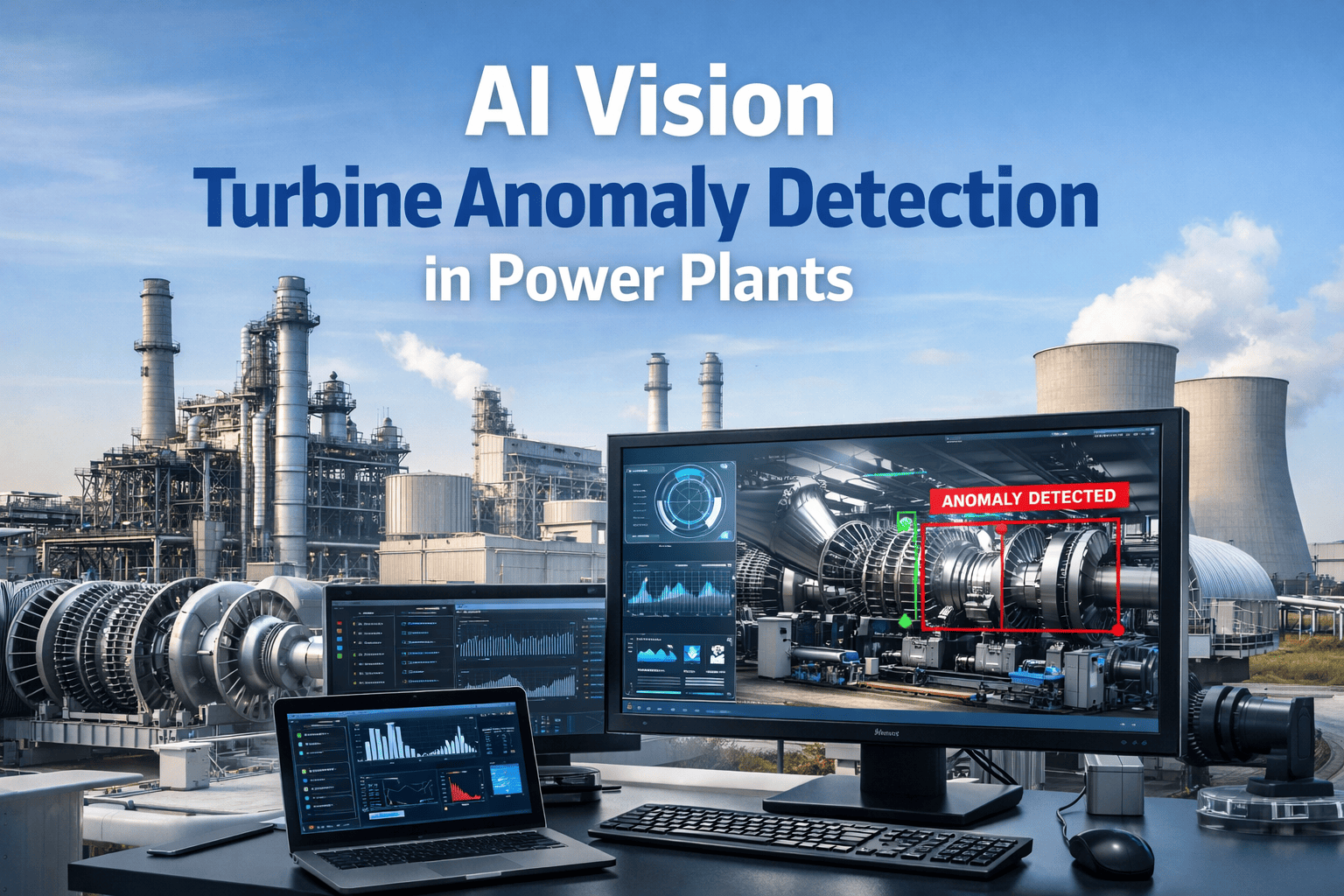
Compressors at storage facilities experience highly variable load profiles — idling during low-demand periods, running at maximum rated capacity during winter withdrawal peaks. This variability accelerates wear in ways that fixed-interval maintenance schedules miss. AI-driven predictive maintenance models ingest vibration, temperature, suction and discharge pressure, lube oil condition, and motor current draw data from each compressor unit — identifying developing faults 2–6 weeks before they cause failure.
AI Demand Forecasting for Withdrawal Scheduling and Pipeline Nominations
Natural gas demand at the storage field level is driven by weather, industrial load, power generation dispatch decisions, and pipeline system constraints — variables that interact in non-linear ways that traditional regression models cannot capture reliably. AI demand forecasting models that incorporate real-time weather data, power grid dispatch signals, industrial load indicators, and historical demand patterns produce 72-hour forecasts with ±2–4% accuracy versus ±12–18% for conventional approaches.
Digital Twin Integration for Scenario Planning and Risk Assessment
A digital twin of the storage field — combining the reservoir model, the surface facilities model, and the pipeline interconnect model — allows operators to run withdrawal scenarios before executing them. "What happens to reservoir pressure if we withdraw at maximum rate for 14 consecutive days?" becomes a simulatable question with a quantified answer rather than an engineering judgment call.
Automated Compliance Monitoring and FERC/PHMSA Reporting
Storage facilities operate under FERC Order 809, PHMSA integrity management rules, and state public utility commission requirements that mandate continuous pressure monitoring, incident reporting within defined time windows, and regular base-gas inventory certification.
AI vs. Conventional Optimization Methods — Underground Storage Performance Head-to-Head
The table below compares AI-driven optimization against the conventional approaches used at most underground gas storage facilities across eight critical performance dimensions. Values reflect reported operational results from midstream operators using AI-driven storage management versus industry benchmarks for conventional SCADA-and-spreadsheet operations.
| Performance Dimension | Conventional Approach | AI-Driven Approach | Improvement |
|---|---|---|---|
| Injection cycle fill efficiency | 68–78% of theoretical max | 82–92% of theoretical max | +12–18% |
| Demand forecast accuracy (72-hr) | ±12–18% error | ±2–4% error | 3–5x improvement |
| Unplanned compressor downtime | 4–8 events / withdrawal season | 1–3 events / withdrawal season | 30–45% reduction |
| Compressor maintenance cost | Fixed interval, 100% of schedule | Condition-based, 60–75% of schedule | 18–22% cost reduction |
| Nomination imbalance penalties | $80K–$250K/yr at mid-size field | $20K–$60K/yr with AI scheduling | 60–75% penalty reduction |
| Compliance documentation hours | 15–20 hrs/week manual effort | 2–4 hrs/week with automation | 80–85% time reduction |
| Withdrawal rate utilization | 72–82% of rated capacity | 88–96% of rated capacity | +10–16% |
| Peak inventory going into withdrawal | Misses target 30–45% of seasons | Meets or exceeds target 85–90% of seasons | 2x target attainment |
AI Applications by Underground Storage Formation Type
The optimization challenges and AI application priorities differ meaningfully across the three formation types used for underground gas storage in the U.S. Understanding which AI capabilities matter most for each formation type is the starting point for a deployment plan that delivers ROI at the specific facility, not at a generic average.
Depleted Oil and Gas Fields
The most common storage formation in the U.S., accounting for approximately 80% of total working gas capacity. AI priorities: reservoir pressure modeling to maximize injection rates without skin damage, wellbore liquid loading detection for individual wells, and multi-well interference analysis to optimize the injection/withdrawal sequence across the well network.
Salt Cavern Storage
High-deliverability, high-cycle facilities used primarily for peak shaving and power generation support. AI priorities: cavern pressure and volume management to prevent roof instability, brine handling optimization, and compressor scheduling to maximize injection and withdrawal rates during short-duration demand events.
Aquifer Storage
The least predictable storage formation type, where reservoir behavior is less well understood than in depleted fields with long production histories. AI priorities: water influx monitoring and prediction (aquifer water movement can constrain injection rates significantly), pressure maintenance above the bubble point to prevent gas from dissolving back into solution, and anomaly detection for formation behavior that deviates from geological model predictions.
What iFactory AI Delivers for Underground Storage Operators
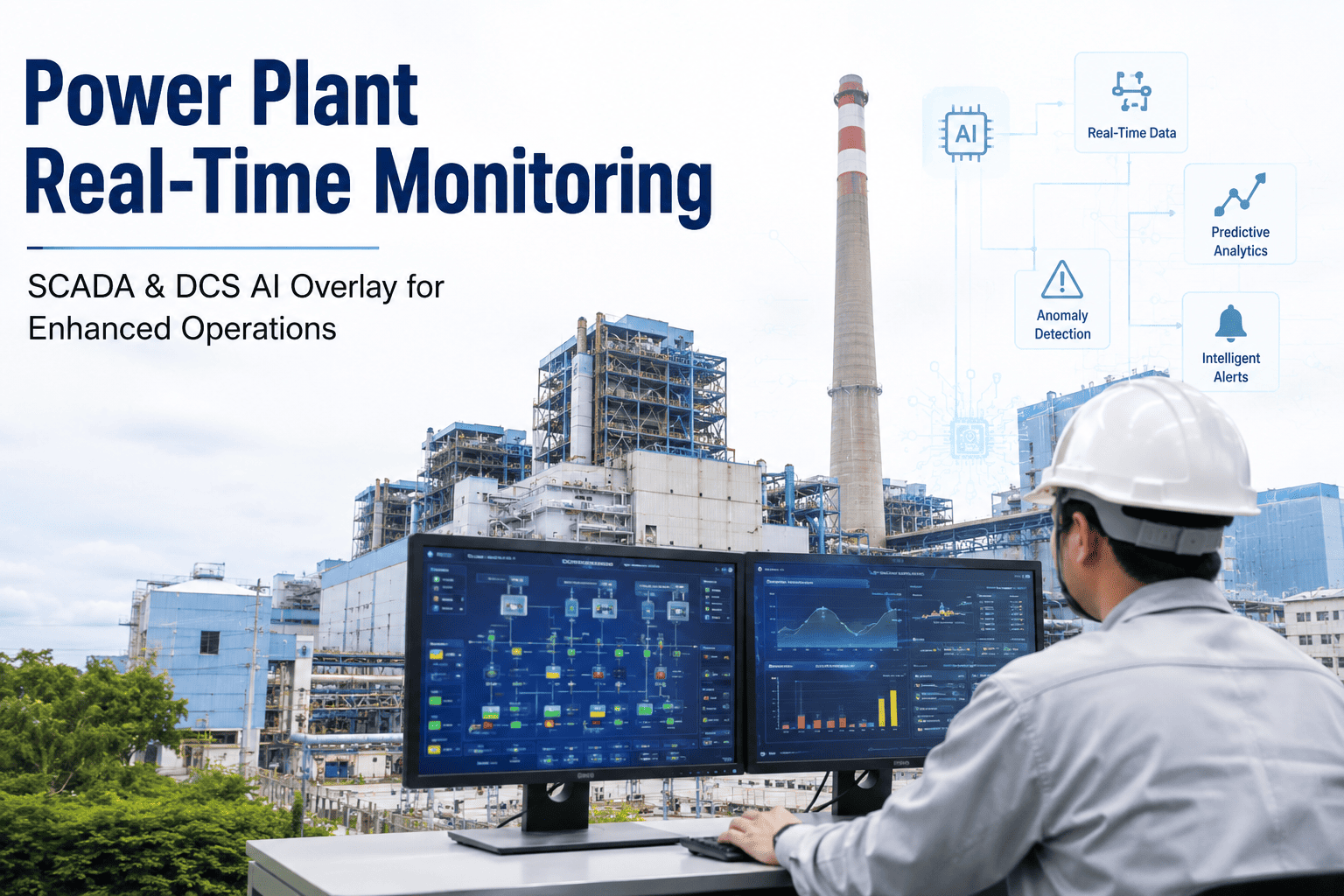
iFactory's industrial AI platform delivers the specific capabilities that underground storage operators need — predictive maintenance, digital twin simulation, real-time monitoring, and compliance automation — on the plant network via the iFactory NVIDIA appliance, without requiring cloud connectivity for real-time operations. The platform integrates with existing SCADA historians, DCS systems, and pipeline scheduling tools through standard OPC-UA and API connections.
Predictive Maintenance — Compressors and Wellhead Equipment
Vibration, temperature, pressure, and electrical signal analysis for every compressor unit and wellhead control valve — with fault detection 2–6 weeks before failure and maintenance work-order generation in iFactory's CMMS module.
Digital Twin AI — Reservoir and Surface Facility Modeling
Integrated digital twin combining reservoir model, compressor network, and pipeline interconnect — updated continuously from operational data and accessible for scenario planning, regulatory compliance modeling, and commercial planning.
Real-Time Production Monitoring — All Wells and Compressors
Live dashboard of injection/withdrawal rates, wellhead pressures, compressor discharge pressures, and inventory levels — with anomaly detection alerts that surface deviations from expected operating parameters within minutes rather than hours.
EHS and Compliance Management — FERC, PHMSA, State PUC
Automated pressure limit monitoring, incident detection and reporting, and regulatory documentation generation — replacing manual compliance tracking with automated monitoring that reduces compliance staff burden by 80% and eliminates the audit exposure created by manual data entry.
Analytics and Reporting — Operational KPIs and ESG Metrics
Automated generation of operational performance reports, injection/withdrawal efficiency metrics, compressor availability reports, and emissions-related data — aligned with FERC filing requirements and corporate ESG reporting frameworks including CDP and GRI.
SCADA and Historian Integration — No Rip-and-Replace Required
iFactory connects to existing OSIsoft PI, Ignition, GE iFIX, and Honeywell Experion historians via standard OPC-UA protocols — layering AI analytics on top of existing infrastructure without disrupting current operations or requiring replacement of operational technology that may have 10–15 years of remaining useful life.
See iFactory AI Running on an Underground Storage Network
Your compressors are telling you when they are going to fail. Your reservoir is telling you how much more injection it can take. Your demand forecast is wrong by 15%. The data is there — iFactory makes it actionable. Book a demo and see the system running on a storage facility network today.
Deploying AI at an Underground Storage Facility — A Phased Approach That Delivers ROI in 90 Days
Phase 1: Weeks 1–4
Historian and SCADA integration. Compressor sensor data ingestion. Predictive maintenance model training on historical failure data. First anomaly alerts live within 30 days.
Phase 2: Weeks 5–10
Reservoir pressure data integration. Injection rate optimization model deployment. Real-time wellhead monitoring dashboard live. First injection schedule recommendations generated.
Phase 3: Weeks 10–16
Demand forecasting model training on weather, pipeline, and industrial load data. Nomination scheduling tool integration. Digital twin model construction and validation begins.
Phase 4: Weeks 16–20
Compliance monitoring module activation. FERC/PHMSA reporting automation configured. EHS alert thresholds set. Full platform operational and integrated with regulatory reporting workflow.
Continuous Optimization
AI models retrain on new operational data each cycle season. Digital twin updated from current-season reservoir response data. Performance benchmarks reviewed quarterly with iFactory implementation team.
What Midstream Storage Operations Professionals Say About AI Optimization
I have worked underground gas storage operations for twenty-two years — depleted reservoir fields in the Gulf Coast and salt cavern facilities in the mid-continent — and the question I get most often from operators considering AI is some version of: "We already have SCADA. What does AI add that SCADA doesn't already do?" The answer is pattern recognition at a scale and speed that human operators and static alarm systems cannot replicate. SCADA tells you what is happening right now. AI tells you what is going to happen in the next 72 hours — and it tells you why. At one salt cavern facility where we implemented AI-driven compressor monitoring, the system identified a developing valve seat erosion pattern on a withdrawal compressor in late October — six weeks before our scheduled maintenance window, and well before any alarm threshold would have been triggered. The vibration signature was there in the data, but it was buried in the noise of normal operating variability at that load point. No operator looking at a SCADA trend screen would have seen it.
— Director of Storage Operations, U.S. Midstream Natural Gas — 22 Years Underground Storage Operations — Licensed Professional Engineer (PE), Petroleum Engineering — INGAA Foundation Storage Integrity Working Group MemberCommon Questions About AI Gas Storage Optimization in Underground Facilities
Underground Gas Storage Optimization Is a Data Problem — AI Solves It
The gap between what underground storage facilities are capable of delivering and what they actually deliver in practice is not an engineering limitation. The physics of injection and withdrawal are well understood. The geological characteristics of the formation are mapped. The compressors have the capacity.
AI does not change the reservoir. It does not change the compressor. It changes what the operator can see and how quickly they can act on what they see. The 12–18% improvement in injection fill efficiency, the 30–45% reduction in unplanned compressor downtime, the ±2–4% demand forecast accuracy — these results are not hypothetical. They are the operational outcomes that storage facilities achieve when they connect the data streams that are already there and apply AI models trained to find the patterns that human operators and static alarm systems miss. iFactory's platform delivers that capability on your plant network, integrated with your existing SCADA infrastructure, without requiring cloud dependency for real-time operations. Book a Demo to see how iFactory's AI platform manages predictive maintenance, injection optimization, digital twin simulation, and compliance automation for underground storage operations at your facility scale.
Your Storage Field's Data Already Contains the Optimization You Are Looking For
Every compressor vibration signature, every wellhead pressure trend, every nomination mismatch is data that AI can turn into a decision — before the failure, before the under-fill, before the penalty. See iFactory running on a storage network and build the ROI case for your facility today.