Operators managing a 50-Bcf depleted reservoir storage field deal with injection-withdrawal schedules that must balance seasonal demand forecasts, gas quality specifications, reservoir pressure windows, compressor capacity constraints, and regulatory nomination timelines simultaneously.s. The consequences of either failure cascade immediately into gas supply reliability, pipeline scheduling penalties, and in regulated utility markets, regulatory enforcement exposure. Artificial intelligence, applied through the right operational architecture, changes the calculus on each of these decision points. iFactory AI's Predictive Maintenance, Digital Twin AI, and Enterprise Asset Management modules deliver the operational intelligence layer that transforms underground gas storage management from a schedule-driven, manual balancing act into a condition-aware forecast-driven, continuously optimized system. Book a Demo to see how iFactory's AI platform is configured for your underground storage facility's operational profile and asset base.
AI-Powered Underground Gas Storage Optimization — From Manual Scheduling to Condition-Based Intelligence
iFactory AI delivers real-time reservoir monitoring, AI-driven injection-withdrawal forecasting, compressor predictive maintenance, and Digital Twin simulation for underground gas storage facilities.
The Operational Complexity of Underground Gas Storage — Why Conventional Management Falls Short
Underground gas storage facilities serve as the pressure relief valve of the natural gas grid—absorbing excess supply during low-demand periods and releasing it during peak demand windows when pipeline throughput alone cannot meet load. The U.S. EIA reports over 400 active underground storage facilities across the country, holding a combined working gas capacity exceeding 4.7 Tcf. The operational challenge is not storage capacity itself—it is the precision required to manage injection, withdrawal, and reservoir condition in real time across assets that are geologically complex, geographically dispersed, and subject to demand signals that can shift radically within 24 hours during weather-driven peak events.
Salt Cavern Storage
Highest deliverability-to-capacity ratio of any underground storage type. Rapid injection and withdrawal cycles (days, not weeks) make cavern storage the primary peaking supply asset. AI monitoring of cavern pressure envelope, brine interface integrity, and wellhead sensor trends is critical for operating safely within design cavern geometry limits.
Depleted Field Storage
Largest share of U.S. underground storage capacity. Seasonal injection-withdrawal cycles, reservoir pressure management, and wellfield performance monitoring are the primary operational challenges. AI reservoir simulation models continuously update pressure-volume-temperature relationships to optimize working gas inventory utilization.
Aquifer Storage
Most geologically complex storage type; reservoir characterization is inherently uncertain and requires continuous model refinement as injection-withdrawal history accumulates. AI-driven reservoir pressure analytics and well performance monitoring are essential for maintaining gas cap integrity and avoiding gas migration into non-target formations.
How AI Optimizes Underground Gas Storage Operations — Five Core Application Areas
Artificial intelligence applied to underground gas storage is not a single technology—it is a portfolio of analytical capabilities that address distinct operational challenges across the injection-withdrawal cycle. The five application areas below represent where AI delivers the most measurable operational impact, ranked by the combination of implementation maturity and return-on-investment evidence from active midstream deployments.
AI-Driven Demand Forecasting for Injection-Withdrawal Scheduling
Traditional storage scheduling relies on seasonal demand curves and historical weather patterns that cannot anticipate the volatility of natural gas demand in a grid increasingly integrated with intermittent renewable generation. AI demand forecasting models ingest weather ensemble forecasts, real-time grid generation mix data, pipeline nominations, and industrial load signals to produce 7-to-30-day injection-withdrawal schedules that proactively position working gas inventory ahead of demand events rather than reacting to them.
- Multi-variable forecast models combining weather, market, grid, and pipeline nomination data updated every 6 hours
- Probabilistic demand scenarios replace single-point forecasts; operators see P10/P50/P90 inventory requirement bands
- Automatic injection-withdrawal schedule recommendations generated from forecast output; operator approves or modifies
- iFactory AI stores forecast accuracy metrics over time; model performance tracked and re-trained on new data continuously
Real-Time Reservoir Pressure and Performance Analytics
Reservoir behavior in depleted field and aquifer storage facilities is governed by pressure-volume-temperature relationships that shift continuously as gas is injected and withdrawn. AI reservoir analytics models trained on well performance history, pressure transient data, and gas quality logs continuously update reservoir deliverability estimates and flag early indicators of well productivity decline, pressure anomalies, and gas-water contact movement before they constrain operational capacity.
- Real-time well performance deviation detection compares actual to modeled deliverability; anomalies flagged immediately
- Reservoir pressure mapping updated from bottom-hole pressure data and surface monitoring; overpressure risk alerts generated
- Gas-water contact movement tracking in aquifer fields provides early warning of cushion gas loss risk
- iFactory integrates reservoir analytics with compressor dispatch scheduling to match withdrawal rate to real-time deliverability
Compressor Station Predictive Maintenance and Reliability
Compressor stations are the operational heart of any underground storage facility—they govern injection rate, withdrawal support, and gas quality conditioning. A reciprocating compressor failure during peak withdrawal season is a supply reliability event with cascading consequences for downstream pipeline capacity and customer nominations. iFactory AI's Predictive Maintenance module monitors vibration signatures, valve temperature differentials, lube oil condition, and inter-stage pressures to detect failure precursors weeks before they manifest as unplanned outages.
Digital Twin Simulation for Storage Scenario Planning
iFactory AI's Digital Twin module creates a continuously updated virtual replica of the underground storage facility—integrating reservoir model, wellfield performance data, compressor station operating parameters, and surface facility equipment status into a single simulation environment. Operators can run "what-if" scenarios against the digital twin before committing to operating decisions: testing a proposed injection rate against current reservoir pressure limits, simulating a compressor outage impact on peak withdrawal capacity, or evaluating the effect of a new well addition on field deliverability.
- Digital twin reservoir model updated continuously from real production and injection data; divergence from model triggers alert
- Scenario simulation: test injection schedule changes, equipment outages, and demand event responses before execution
- Compressor dispatch optimization simulated against digital twin to identify minimum-fuel operating configurations
- iFactory Digital Twin generates visual facility status dashboard accessible to operations, engineering, and management teams
Working Gas Inventory Optimization and Market Positioning
Underground storage operators who manage storage assets in competitive markets face a dual optimization challenge: maximizing the value of working gas inventory through strategic injection and withdrawal timing while maintaining sufficient operational buffer to meet reliability obligations under peak demand conditions. AI inventory optimization models incorporate gas price forward curves, basis differentials, transport tariff structures, and demand forecast uncertainty to generate injection-withdrawal strategies that maximize storage spread capture while respecting reservoir operating constraints and regulatory minimum delivery requirements.
- Gas price forward curve integration enables AI to recommend injection timing that maximizes summer-winter price spread capture
- Basis differential tracking across interconnected pipelines identifies arbitrage-driven injection-withdrawal opportunities
- Regulatory minimum delivery buffer maintained automatically; compliance risk built into optimization constraint set
- iFactory analytics dashboard displays current inventory position against target inventory curve; variance flagged with recommended action
iFactory AI Platform Architecture for Underground Gas Storage — From Data Ingestion to Operational Decision
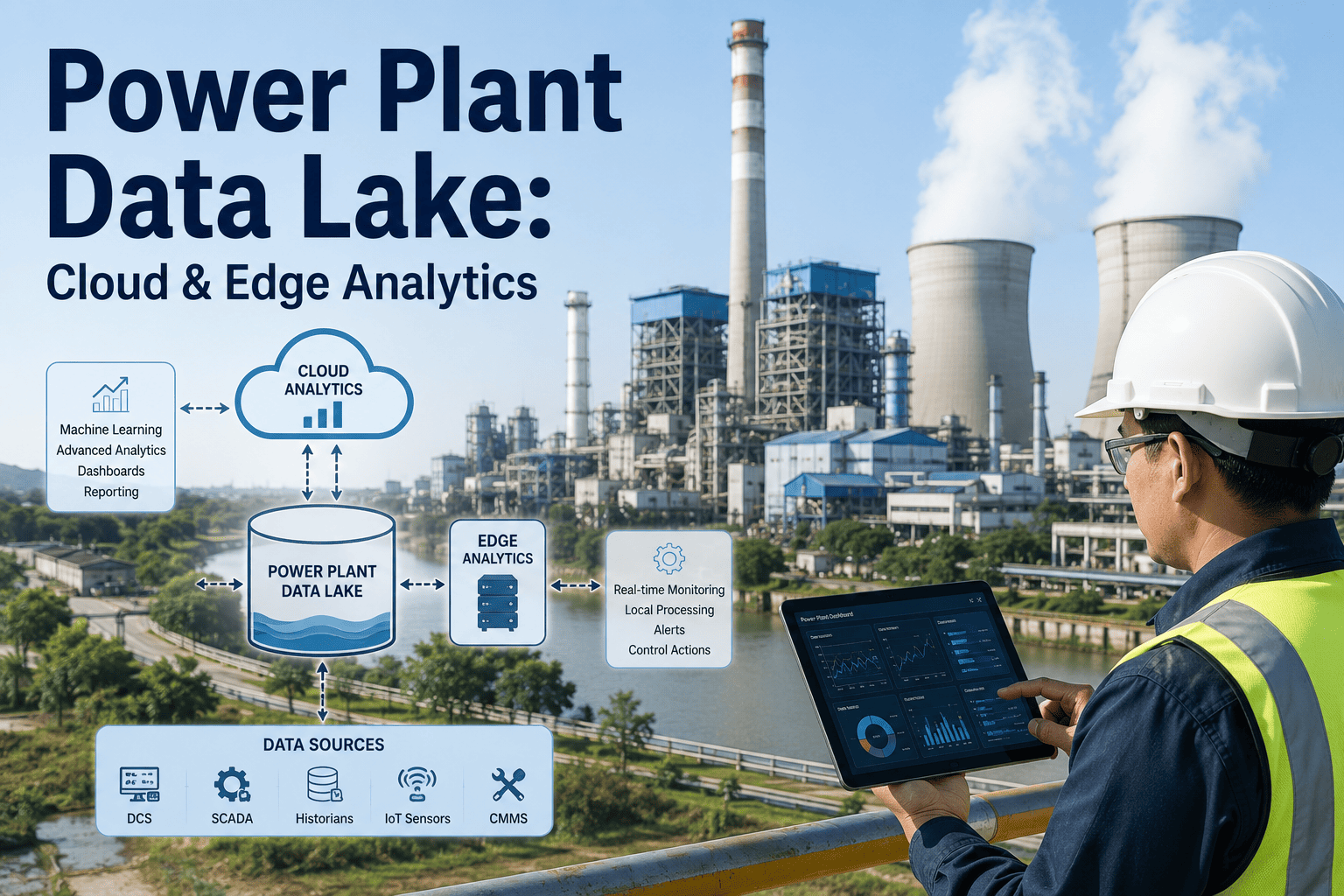
Deploying AI effectively in an underground gas storage environment requires an architecture that bridges the operational technology (OT) layer—SCADA systems, flow computers, wellhead RTUs, vibration sensors—and the information technology (IT) layer where AI models, digital twin simulations, and enterprise asset management functions run. iFactory AI is designed for this OT-IT integration challenge, with native connectivity to common midstream SCADA platforms, historian databases, and edge computing environments that cannot rely on continuous cloud connectivity.
Data Ingestion Layer
SCADA, DCS, historian, wellhead RTU, vibration sensor, and gas quality analyzer data streams aggregated into iFactory's unified data ingestion layer. Native connectors for OSIsoft PI, Wonderware, and common midstream SCADA platforms eliminate custom integration development. Edge processing nodes handle facilities with limited connectivity.
AI Analytics Engine
Machine learning models trained on facility-specific operating history generate demand forecasts, reservoir performance anomaly detection, compressor health indices, and inventory optimization recommendations. Models retrain automatically as new operating data accumulates; forecast accuracy metrics tracked and reported to operations team monthly.
Digital Twin Simulation
iFactory's Digital Twin module maintains a continuously synchronized virtual model of the facility integrating reservoir simulation, wellfield performance, and compressor station operating state. Scenario simulation runs against the digital twin before operational decisions are committed to physical equipment, reducing the risk of scheduling errors under dynamic demand conditions.
Operational Decision Layer
AI recommendations surface in iFactory's operations dashboard as actionable alerts, scheduled work orders, and injection-withdrawal schedule recommendations. Operator override and approval workflows maintained throughout; AI augments operator judgment rather than replacing it. All decisions and overrides logged for audit and regulatory documentation.
Compliance and Reporting
FERC Order 636, DOT Pipeline Safety regulations, and state public utility commission reporting requirements are met from iFactory's integrated compliance documentation layer. Injection-withdrawal records, compressor maintenance logs, reservoir safety monitoring data, and pipeline nomination documentation generated automatically from operational data stored in iFactory.
- Injection-withdrawal scheduling driven by historical seasonal curves; demand spike response is reactive
- Compressor maintenance on time-based intervals regardless of actual equipment condition
- Reservoir pressure monitoring from periodic well tests; continuous performance gaps between surveys
- Operating decisions made without ability to simulate consequences before execution
- Working gas inventory position tracked manually against static seasonal target curve
- Regulatory compliance documentation assembled manually from field records and SCADA exports
- AI demand forecast updated every 6 hours; injection-withdrawal schedule adjusted proactively to forecasted demand
- Compressor health index calculated continuously; maintenance triggered by condition indicators, not calendar
- Real-time reservoir analytics from continuous sensor data; anomalies detected between traditional survey intervals
- Digital Twin simulation tests operational scenarios before execution; risk visible before commitment
- Inventory optimization algorithm positions working gas against live price forward curve and forecast uncertainty bands
- FERC, DOT, and state regulatory reports auto-generated from iFactory operational data records
Measurable Outcomes from AI Deployment in Underground Gas Storage — A Benchmark Framework
Measuring the business impact of AI implementation in underground gas storage requires a set of KPIs that span operational efficiency, asset reliability, and commercial performance. The benchmark table below provides the performance metrics iFactory tracks for each application area, with representative before-and-after ranges from midstream deployments. These ranges reflect operational improvements; individual facility results depend on baseline operating maturity, storage type, and the completeness of data integration at deployment.
| Application Area | KPI Tracked | Baseline (Pre-AI) | With iFactory AI | Primary Value Driver |
|---|---|---|---|---|
| Demand Forecasting | Forecast error (MAPE, 7-day) | 15–22% | 3–6% | Reduced over-injection and under-withdrawal costs |
| Compressor Reliability | Unplanned outage events per year | 3–6 events | 0–1 events | Failure detection 4–8 weeks ahead of breakdown |
| Reservoir Management | Working gas utilization efficiency | 72–80% of rated capacity | 88–94% of rated capacity | Tighter operating envelope from real-time pressure model |
| Inventory Optimization | Storage spread capture ($/Dth) | Opportunistic; inconsistent | 15–25% improvement vs. baseline | AI-driven injection timing aligned to forward price curves |
| Compressor Fuel Efficiency | Fuel gas consumption per Dth injected | Baseline varied by unit loading | 12–20% reduction | Optimal compressor dispatch from digital twin model |
| Regulatory Compliance | Reporting preparation time (hours/month) | 40–80 hours/month manual | 4–8 hours/month automated | Auto-generated FERC and DOT reports from iFactory data |
What Underground Storage Operations Leaders Say About AI Implementation
The operations managers and reliability engineers who have moved from SCADA-only management to AI-augmented storage operations share a consistent experience: the first year of AI deployment surfaces operational inefficiencies that were invisible in the previous management framework, the compressor reliability improvements pay for the implementation in the first season, and the shift from reactive to predictive changes the operations team's decision-making confidence—especially during peak demand events where the consequences of a wrong call are measured in millions of dollars, not thousands.
We operate a 42 Bcf depleted reservoir storage field in the Midcontinent with four reciprocating compressor units ranging from 3,000 to 6,000 HP. Before iFactory, our maintenance program was a combination of OEM-recommended intervals and reactive repairs after symptoms appeared on the units. We had two compressor valve failures in back-to-back winters — one in late November and one in early February — each of which knocked a unit offline for 6 to 8 days during periods when we needed full withdrawal capacity to meet nominations. The financial exposure from those two events was approximately $3.1 million combined, between emergency repair cost, expedited parts logistics, and lost storage revenue from nominations we couldn't honor.
We deployed iFactory's Predictive Maintenance and Digital Twin modules in the spring before our third winter season. The system detected an inter-stage pressure anomaly on Unit 3 in September — a pattern it associated with valve seat wear based on compressor operating history. We booked a planned outage for mid-October, pulled the valves, and found that two suction valve assemblies were within 15% of failure threshold on the wear surfaces. Replaced them at a cost of $38,000 in parts and planned labor. If we hadn't caught that, Unit 3 would have failed sometime in late November or December based on where the wear was trending. The prevented failure alone justified the entire year one implementation cost.
See How iFactory AI Transforms Underground Gas Storage from Reactive Scheduling to AI-Driven Optimization
From depleted reservoir deliverability analytics to compressor predictive maintenance and inventory optimization—iFactory AI delivers the full operational intelligence stack for underground gas storage in one platform built for midstream reliability.
AI in Underground Gas Storage Is Not a Future Investment — It Is a Present Operational Necessity
The case for AI deployment in underground natural gas storage is no longer a theoretical cost-benefit analysis. The operational complexity of managing injection-withdrawal schedules against volatile demand signals, the compressor reliability exposure during peak season, the working gas utilization inefficiency from imprecise reservoir management, and the commercial value left uncaptured through unsophisticated inventory positioning are all measurable, recurring operational costs that AI-enabled platforms demonstrably reduce.
iFactory AI's Predictive Maintenance, Digital Twin, and Enterprise Asset Management modules deliver the integrated operational intelligence architecture that makes these outcomes achievable for underground storage operators without requiring a full data science organization to maintain the platform. The system connects to existing SCADA and historian infrastructure, trains on facility operating history, and begins delivering actionable intelligence within the first operating quarter of deployment. Book a Demo with iFactory's midstream team to build a site-specific AI deployment assessment for your underground storage facility.
Deploy AI-Powered Underground Gas Storage Optimization with iFactory AI
iFactory registers every storage asset, monitors reservoir and compressor health in real time, optimizes injection-withdrawal scheduling with AI demand forecasting, and generates audit-ready compliance documentation—in one platform built for midstream reliability.
AI Gas Storage Optimization — Frequently Asked Questions
How does AI demand forecasting improve injection-withdrawal scheduling for underground gas storage?
AI demand forecasting replaces static seasonal curves with dynamic multi-variable models that ingest weather ensemble forecasts, real-time renewable generation mix data, industrial load signals, and pipeline nominations. Updated every 6 hours, these models produce 7-to-30-day probabilistic demand scenarios (P10/P50/P90 bands) that allow storage operators to position working gas inventory ahead of demand events rather than reacting to them. The result is reduced over-injection cost during low-demand periods and elimination of the under-delivery risk that creates pipeline scheduling penalties during peak demand events. Forecast accuracy in AI-driven systems typically runs ±3–6% versus ±15–20% in manual schedule-based approaches.
What compressor failure modes does iFactory AI's Predictive Maintenance module detect in underground gas storage facilities?
iFactory's Predictive Maintenance module monitors the failure modes that account for the majority of unplanned reciprocating compressor outages in gas storage service: valve seat and disc wear (detected via inter-stage pressure and temperature differentials), bearing degradation (detected via vibration FFT analysis and lube oil temperature trending), piston rod and packing wear (detected via rod load monitoring and cylinder pressure waveform analysis), and lubrication system failures (detected via lube oil pressure, viscosity, and particulate content trending).
How does iFactory AI's Digital Twin work for underground reservoir simulation?
iFactory's Digital Twin for underground gas storage maintains a continuously updated virtual model of the reservoir and wellfield that integrates real-time injection-withdrawal data, wellhead pressure measurements, and bottom-hole pressure sensor readings into a dynamic reservoir performance model. As each injection and withdrawal cycle accumulates, the model refines its pressure-volume-temperature relationship estimates and updates deliverability forecasts for each well and the field aggregate. Operators use the digital twin to run scenario simulations—testing proposed injection rate changes, evaluating the impact of planned compressor outages on peak withdrawal capacity, or assessing the risk profile of operating near reservoir pressure limits—before committing those decisions to physical operations. The model also flags divergence between actual and modeled well performance, which is the earliest detectable indicator of wellbore damage or reservoir connectivity changes requiring workover evaluation.
Can iFactory AI integrate with existing SCADA and historian systems at an underground gas storage facility?
Yes. iFactory AI is designed for OT-IT integration in midstream environments where SCADA systems, data historians, flow computers, and edge RTUs are the primary operational data sources. The platform includes native connectors for OSIsoft PI, Wonderware/AVEVA, GE iFIX, Wonderware System Platform, and Modbus/OPC-UA protocol stacks common in gas storage SCADA environments. For facilities with intermittent connectivity or edge-only computing environments, iFactory supports local edge processing with periodic synchronization to the central analytics engine.
How does iFactory AI support FERC and DOT regulatory compliance for underground gas storage operators?
iFactory AI supports FERC Order 636 storage reporting, DOT Pipeline Safety (49 CFR Part 192) integrity management documentation, and state public utility commission operational reporting by auto-generating compliance reports from operational data stored in the iFactory platform. Injection-withdrawal transaction records, compressor maintenance logs, reservoir safety monitoring data, wellhead pressure records, and gas quality documentation are all maintained in iFactory's audit-ready records format with timestamps, operator IDs, and approval chain documentation. Regulatory report preparation time typically decreases from 40–80 hours per month of manual data compilation to 4–8 hours per month for review and submission of auto-generated reports. iFactory also maintains the equipment inspection and maintenance records required under DOT Pipeline Safety regulations for compressor station equipment, reducing compliance exposure during DOT audit events.