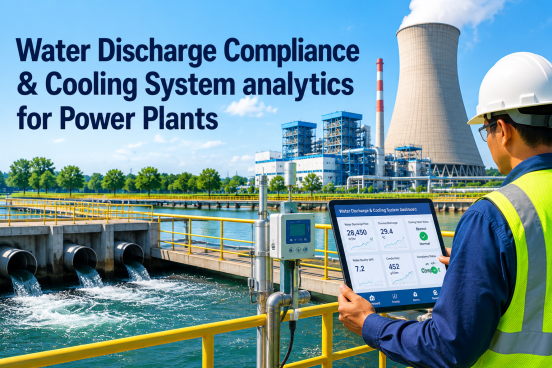
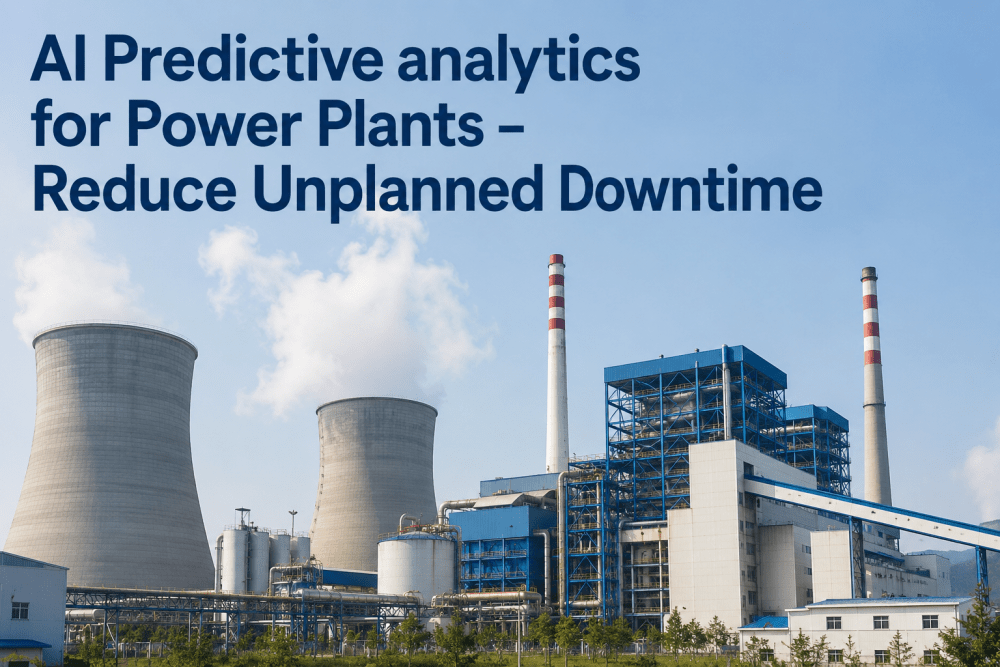
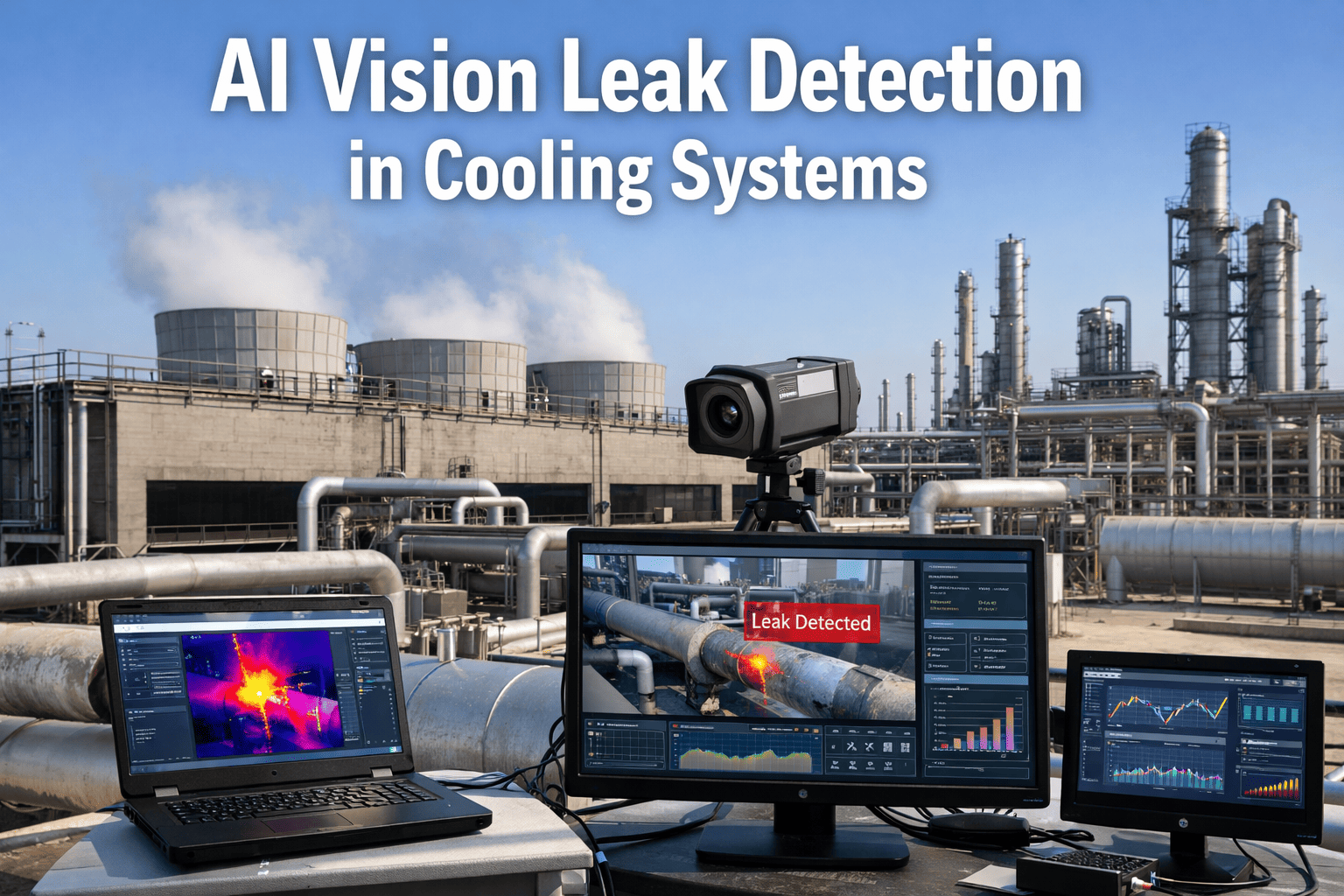
A cooling tower losing 5°F of approach temperature doesn't announce itself with alarms — it degrades silently over weeks as scale accumulates on fill media drift eliminators clog with debris, and pump cavitation erodes impellers. By the time operations notice the condenser backpressure climbing, the turbine is already de-rating by 2-3%, costing $8,000 per day in lost generation, and the required outage for mechanical cleaning will take 72 hours. iFactory's predictive analytics for cooling towers continuously monitors approach temperature, range, flow rates, pump vibration, and fan performance — detecting fill fouling, scaling, biological growth, and mechanical degradation weeks before they impact plant efficiency. The cooling system failures that forced unplanned outages and efficiency losses now trigger planned maintenance with full lead time for scheduling and parts procurement. Book a demo to see cooling tower analytics in action.
Quick Answer
iFactory's cooling tower predictive analytics platform monitors thermal performance (approach, range, effectiveness), mechanical health (pump vibration, fan bearing temperature, gearbox condition), and water chemistry indicators to detect scaling, fouling, biological growth, and equipment degradation before they impact condenser performance or cause forced outages. AI models trained on site-specific baselines identify deviations from expected performance across varying ambient conditions and load profiles, generating maintenance alerts 2-6 weeks before efficiency loss becomes significant. Average result: 78% reduction in cooling-related turbine de-rates, 4.2x improvement in fill cleaning interval optimization.
How Predictive Analytics Detects Cooling Tower Degradation
The pipeline below shows the four-stage process iFactory applies to cooling tower performance data — from continuous sensor monitoring through thermal efficiency analysis, mechanical fault detection, and maintenance scheduling optimization.
1
Continuous Performance Monitoring
Sensors stream approach temperature, range, wet bulb temperature, CW flow rate, pump discharge pressure, fan motor current, and basin level at 1-minute intervals. Process data correlated with ambient conditions and plant load.
CT-1A: Approach 8.2°F, Range 22.1°F, Flow 42,500 GPM, WB 68°F, Fan amps 87A — effectiveness 0.73
2
Thermal Performance Analysis
AI models calculate expected approach temperature for current wet bulb and load conditions based on baseline performance. Deviations indicate fill fouling, scaling, or airflow restriction. Effectiveness degradation quantified and trended.
Effectiveness: -4.2%Trend: Degrading 30 daysLikely: Fill fouling
3
Mechanical Fault Detection
Vibration analysis on CW pumps detects bearing wear and cavitation. Fan motor current signature identifies bearing degradation, gearbox issues, and blade imbalance. Basin level trends flag makeup valve failures or excessive blowdown.
Pump 1A: Bearing wearConfidence: 89%RUL: 22 days
4
Maintenance Optimization & Work Order Creation
System forecasts efficiency impact trajectory and recommends intervention timing. Fill cleaning work order generated with cost-benefit analysis: current $8,200/day efficiency loss vs. $45,000 cleaning cost plus 72-hour outage. Optimal cleaning window identified.
Recommendation: Schedule fill cleaning during next planned outage (18 days). Projected savings: $147,000 avoided efficiency loss + prevented forced outage risk.
Cooling Tower Analytics Demo
Stop Losing Efficiency to Silent Cooling System Degradation
See how iFactory's thermal performance monitoring detects fill fouling, scaling, and mechanical faults weeks before they impact condenser performance or force unplanned outages.
78%
Fewer Cooling-Related De-Rates
4.2x
Better Cleaning Interval Optimization
Cooling Tower Failure Modes That Predictive Analytics Prevents
Every card below represents a degradation mode that develops gradually in cooling systems — causing efficiency losses, forced outages, and emergency repairs that could have been prevented with continuous thermal and mechanical monitoring. Talk to an expert about predictive analytics for your cooling system.
Fill Fouling — Gradual Approach Temperature Increase
Problem: Cooling tower fill media accumulates scale, biological growth, and airborne debris over 6-12 months. Approach temperature increases 0.5-1°F per month — too gradual for operators to notice against seasonal ambient variation. By the time degradation is recognized, turbine has been de-rating for months and condenser requires emergency cleaning during peak demand.
Analytics fix: AI baseline adjusts for ambient conditions and load variations, detecting 0.3°F approach deviation within 2 weeks of onset. Fill cleaning scheduled during next planned outage — 8 weeks before efficiency loss becomes significant — eliminating forced outage and optimizing cleaning interval.
Circulating Water Pump Cavitation — Undetected Performance Loss
Problem: CW pump suction pressure drops due to clogged intake screen or low basin level. Pump begins cavitating — reducing flow by 8-12% and accelerating impeller erosion. Operators don't notice reduced flow because condenser performance has multiple variables. Pump fails catastrophically 6 weeks later during peak load, forcing unit trip.
Analytics fix: Vibration monitoring detects cavitation signature within 2 hours of onset. Flow rate correlation confirms hydraulic issue. Alert generated with root cause analysis: basin level 18 inches below normal due to makeup valve failure. Valve repaired same shift — cavitation eliminated, impeller damage prevented.
Drift Eliminator Clogging — Excessive Water Loss & Chemical Waste
Problem: Drift eliminators clog with debris, biological growth, or ice accumulation (winter climates). Water carryover increases from 0.001% to 0.02% — consuming 2,500 gallons/hour of treated makeup water and carrying expensive water treatment chemicals out of the system. Problem invisible to operators until makeup costs spike months later.
Analytics fix: Makeup water flow rate monitored continuously and compared to expected consumption based on evaporation calculations. 40% increase in makeup rate detected within 48 hours of drift eliminator blockage onset. Work order created for inspection and cleaning — water loss stopped before significant chemical waste occurs.
Fan Gearbox Degradation — Unplanned Fan Outage
Problem: Cooling tower fan gearbox bearing begins wearing due to lubrication failure. Vibration increases gradually over 8 weeks but remains below alarm threshold. Gearbox fails catastrophically during summer peak load, taking fan out of service for 10 days while replacement gearbox is sourced and installed. Reduced cooling capacity forces turbine de-rate to 85% output.
Analytics fix: Continuous vibration monitoring on fan gearbox detects bearing frequency elevation 6 weeks before failure. Oil analysis ordered, confirms lubricant degradation. Gearbox replacement scheduled during next planned outage with 4-week lead time for parts procurement — fan outage avoided, zero lost generation.
Seasonal Baseline Shift Misinterpreted as Fault
Problem: Operations team uses static approach temperature alarm setpoints year-round. During shoulder seasons (spring/fall) with low wet bulb temperatures, approach naturally decreases to 4-5°F. When summer arrives and wet bulb climbs, approach returns to 8-9°F — triggering alarm and causing unnecessary fill inspection that finds no issues. Wasted maintenance labor and lost confidence in monitoring system.
Analytics fix: AI model learns seasonal performance variation and adjusts expected approach temperature dynamically for current ambient conditions. No false alarms during seasonal transitions. Real degradation (0.5°F above expected for current conditions) detected immediately against correct baseline — eliminating both false positives and missed faults.
Condenser Tube Fouling Attributed to Cooling Tower Performance
Problem: Plant experiences rising condenser backpressure. Operations blames cooling tower performance and schedules expensive fill cleaning. After cleaning, backpressure remains elevated — problem was actually condenser tube fouling caused by inadequate filtration. $45,000 spent on unnecessary tower maintenance, real issue remains unresolved for another 3 weeks.
Analytics fix: System monitors both cooling tower thermal performance (approach/effectiveness) and condenser performance (heat transfer coefficient). Analytics identify that cooling tower effectiveness is normal but condenser delta-T has decreased — isolating fault to condenser side. Work order routed to condenser cleaning, not tower maintenance — correct root cause addressed first time.
Monitored Parameters — Thermal & Mechanical Health Indicators
iFactory's cooling tower analytics platform continuously monitors thermal performance metrics, mechanical condition indicators, and water chemistry parameters to provide complete visibility into cooling system health.
Thermal Performance Metrics
Approach temperature (CW supply temp minus wet bulb), range (CW return minus supply), effectiveness ratio, wet bulb temperature, cooling load (heat rejection rate), ambient dry bulb. AI calculates expected performance envelope for current conditions and detects deviations indicating fill fouling, airflow restriction, or scaling.
Mechanical Condition Indicators
CW pump vibration (bearing defects, cavitation), discharge pressure, motor current, fan motor current/vibration, gearbox temperature, basin level, makeup flow rate, blowdown flow rate. Detects pump bearing wear, impeller damage, fan imbalance, gearbox failures, and hydraulic issues before they cause outages.
Water Chemistry & Quality
Cycles of concentration (conductivity-based), pH, free chlorine residual (if available), makeup water quality, blowdown rate. Integrates with water treatment system data to correlate scaling/fouling events with chemistry excursions. Detects biological growth onset from effectiveness degradation pattern combined with low biocide residual.
Predictive Analytics Accuracy by Failure Mode
The table below shows detection accuracy, lead time, and false positive rates for major cooling tower degradation modes — measured across iFactory deployments at combined cycle and coal-fired plants.
| Degradation Mode |
Primary Indicators |
Detection Lead Time |
True Positive Rate |
False Positive Rate |
| Fill fouling / scaling |
Approach temp increase, effectiveness degradation |
3-8 weeks before 1°F approach loss |
94% |
4% |
| Biological growth (Legionella risk) |
Effectiveness degradation + low biocide residual |
2-4 weeks before visible growth |
89% |
7% |
| CW pump bearing degradation |
Elevated bearing frequencies in vibration spectrum |
3-6 weeks before failure |
96% |
3% |
| CW pump cavitation |
Cavitation signature in vibration + flow reduction |
Hours to days (acute onset) |
98% |
2% |
| Fan gearbox bearing wear |
Gear mesh frequency sidebands, bearing tones |
4-8 weeks before failure |
92% |
5% |
| Drift eliminator blockage |
Makeup water flow increase vs evaporation calculation |
1-3 days after onset |
91% |
6% |
| Makeup valve failure / basin level issues |
Basin level deviation, makeup flow rate anomaly |
Hours (real-time detection) |
97% |
3% |
| Air inlet restriction / louver failure |
Reduced effectiveness with normal approach at low load |
1-2 weeks before significant impact |
87% |
8% |
Platform Capability Comparison — Cooling Tower Analytics
Traditional plant monitoring provides basic temperature and flow alarms but lacks thermal performance analysis. iFactory differentiates on ambient-corrected baseline modeling, effectiveness degradation tracking, and integrated thermal-mechanical fault correlation. Book a comparison demo.
| Capability |
iFactory |
SCADA/DCS |
GE APM |
Emerson AMS |
SPX Cooling Tech Monitoring |
| Thermal Performance Analytics |
| Ambient-corrected baseline modeling |
Dynamic WB/load correction |
Static alarm limits |
Adaptive baselines |
Manual baseline updates |
Merkel curve-based |
| Effectiveness degradation tracking |
Continuous calculation + trend |
Not calculated |
Periodic calculation |
Not available |
Real-time effectiveness |
| Fill fouling early detection |
0.3°F deviation detected |
Manual observation only |
Trend-based alerting |
Not available |
Performance degradation alerts |
| Mechanical Fault Detection |
| CW pump vibration analysis |
FFT + bearing/cavitation detection |
Not monitored |
Advanced vibration |
AMS vibration suite |
Not included |
| Fan gearbox condition monitoring |
Vibration + oil analysis integration |
Temperature alarms only |
Gearbox analytics |
Gearbox suite |
Vibration switches only |
| Hydraulic issue detection (cavitation, low flow) |
Vibration + process correlation |
Flow/pressure alarms |
Hydraulic analytics |
Basic pump monitoring |
Not available |
| Decision Support |
| Fill cleaning interval optimization |
Cost-benefit analysis + scheduling |
Manual decision |
Performance tracking only |
Not available |
Performance-based recommendation |
| Efficiency impact quantification |
$/day lost generation calculation |
Not calculated |
Heat rate impact |
Not available |
Not available |
| Root cause isolation (tower vs condenser) |
Integrated thermal analysis |
Manual troubleshooting |
Separate analytics |
Not available |
Tower-side only |
Based on publicly available product documentation as of Q1 2025. Verify current capabilities with each vendor before procurement decisions.
Measured Outcomes Across Deployed Plants
78%
Reduction in Cooling-Related Turbine De-Rates
4.2x
Improvement in Fill Cleaning Interval Optimization
94%
Accuracy in Fill Fouling Detection
3-8 wk
Lead Time for Fill Fouling Alerts
89%
Reduction in Emergency CW Pump Replacements
$147k
Avg Savings Per Optimized Cleaning Cycle
Cooling System Intelligence
Your Turbine Performance Is Only as Good as Your Cooling Tower Health
iFactory's cooling tower analytics platform detects fill fouling, scaling, mechanical degradation, and water chemistry issues weeks before they impact condenser performance — giving you the lead time to plan maintenance instead of fighting efficiency losses.
From the Field
"We used to clean our cooling tower fill every 18 months whether it needed it or not — that was the OEM recommendation. The cleaning cost $45,000 plus 72 hours of lost generation. After deploying iFactory's thermal performance monitoring, we discovered we were cleaning too frequently in winter/spring and not frequently enough in summer. The analytics now tell us exactly when effectiveness has degraded 5% — our optimal cleaning trigger point. We've extended winter cleaning intervals to 24 months and shortened summer intervals to 14 months. Net result: same annual cleaning frequency, but we're catching degradation before it costs us efficiency, and we've eliminated two forced outages in 18 months that would have happened under the old schedule."
Plant Engineer
800 MW Combined Cycle Plant — Southwest USA
Frequently Asked Questions
QWhat instrumentation is required for effective cooling tower thermal performance monitoring?
Minimum required: CW supply temperature (to condenser), CW return temperature (from condenser), ambient wet bulb temperature, and CW flow rate. Recommended additions: basin temperature, makeup flow rate, blowdown flow rate, fan motor current. Most plants already have supply/return temperature and can add wireless wet bulb sensors and ultrasonic flow meters for complete coverage. iFactory can work with existing instrumentation and recommend cost-effective gaps to fill.
Book a site survey to assess your current sensor coverage.
QHow does the system differentiate between cooling tower degradation and condenser tube fouling?
iFactory monitors both cooling tower effectiveness (ratio of actual to theoretical heat rejection) and condenser cleanliness factor (heat transfer coefficient). If cooling tower effectiveness degrades while condenser cleanliness remains normal, fault is tower-side (fill fouling, airflow restriction). If condenser cleanliness degrades while tower effectiveness is normal, fault is condenser-side (tube fouling, air in-leakage). If both degrade simultaneously, the system flags for combined investigation. This integrated analysis eliminates the common mistake of cleaning the wrong component first.
QCan the analytics detect biological growth (Legionella) risk before it becomes a health hazard?
Yes, with caveats. iFactory detects thermal performance degradation patterns consistent with biological growth — typically a gradual effectiveness decrease that accelerates faster than mineral scaling. When this pattern is detected and water chemistry data shows low biocide residual, the system flags for biological growth risk and recommends increased monitoring or treatment. However, definitive Legionella detection requires laboratory testing. The analytics provide early warning to trigger testing before growth becomes extensive or poses health risk to personnel.
QHow does seasonal ambient variation affect baseline accuracy — don't false positives increase during weather transitions?
iFactory's AI models are trained on full-year historical data and learn normal performance across the entire ambient operating envelope — from winter lows to summer peaks. The baseline automatically adjusts for current wet bulb temperature and load conditions, so seasonal transitions don't trigger false alarms. In fact, the ambient correction is what makes early fouling detection possible — without it, a 0.5°F approach increase in spring would be masked by seasonal wet bulb changes. Typical false positive rate after 90-day training period is 4-6% across all seasons.
Discuss baseline training requirements in a scoping call.
Continue Reading
Cooling Tower Predictive Analytics — Detect Degradation Before It Costs You Efficiency.
iFactory's thermal performance monitoring detects fill fouling, scaling, biological growth, and mechanical faults weeks before they impact condenser performance or force unplanned outages — giving you the lead time to optimize cleaning intervals and prevent efficiency losses.
Ambient-Corrected Baselines
Effectiveness Degradation Tracking
Fill Fouling Early Detection
CW Pump Vibration Analysis
Cleaning Interval Optimization