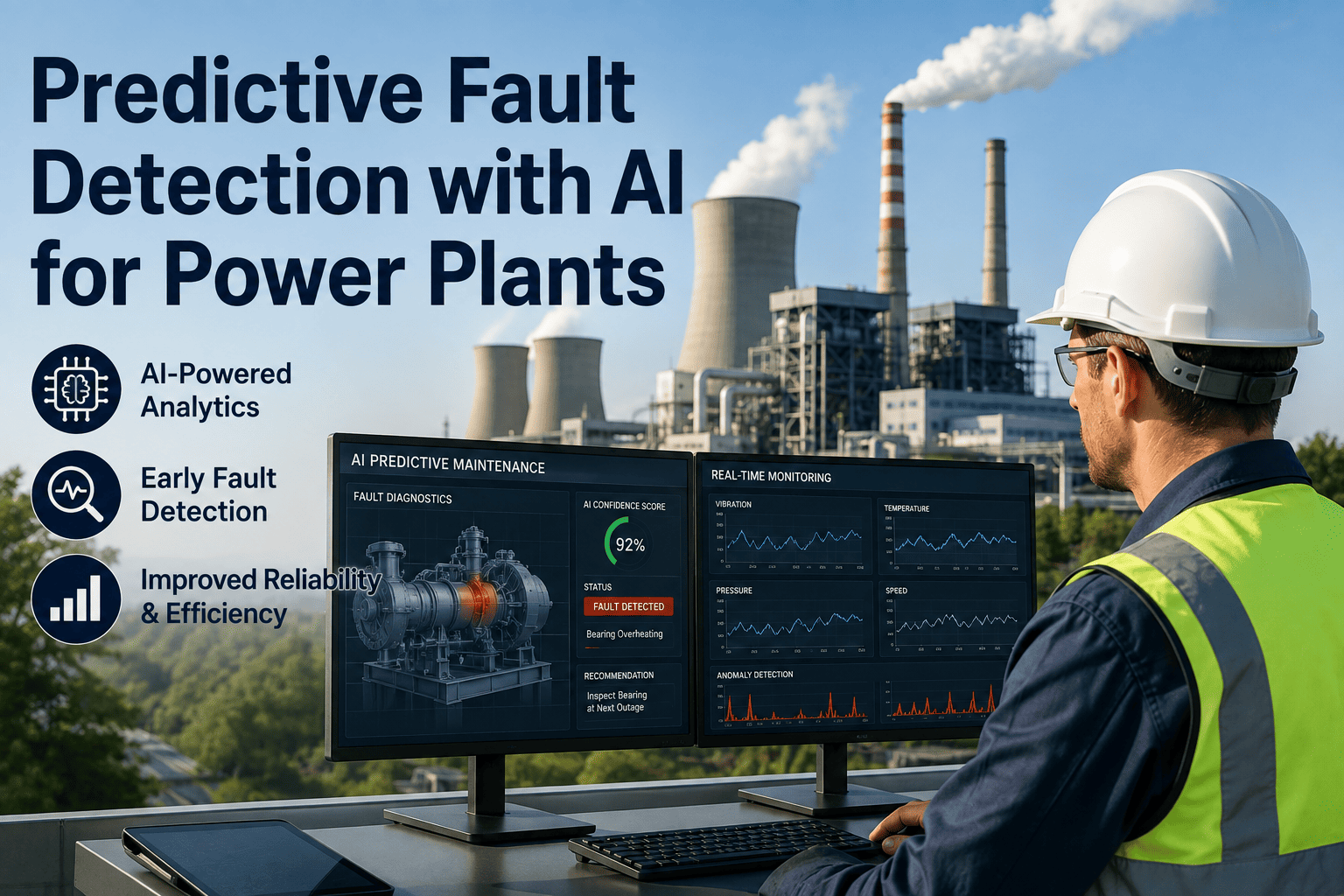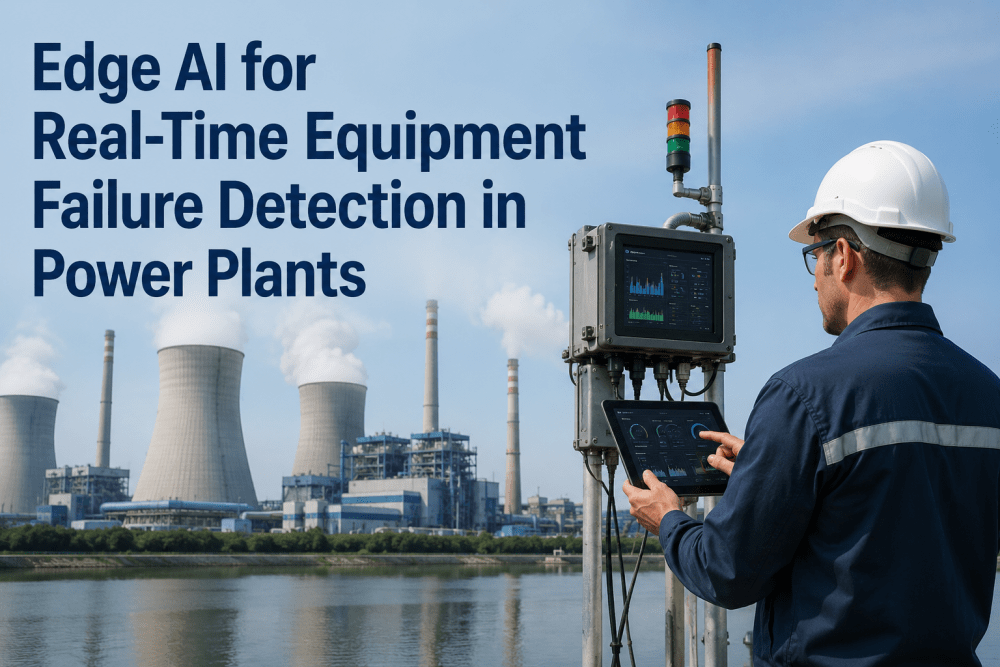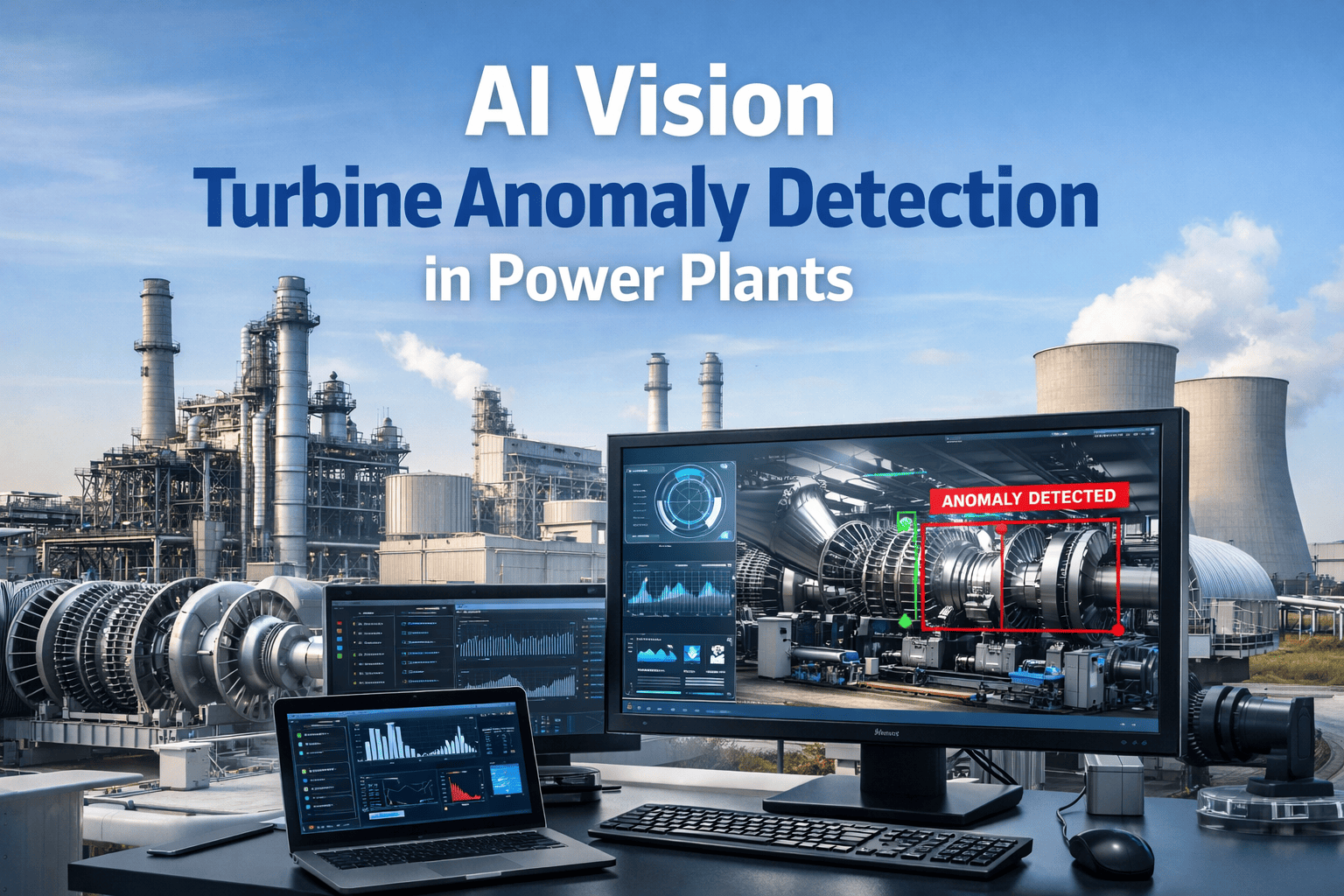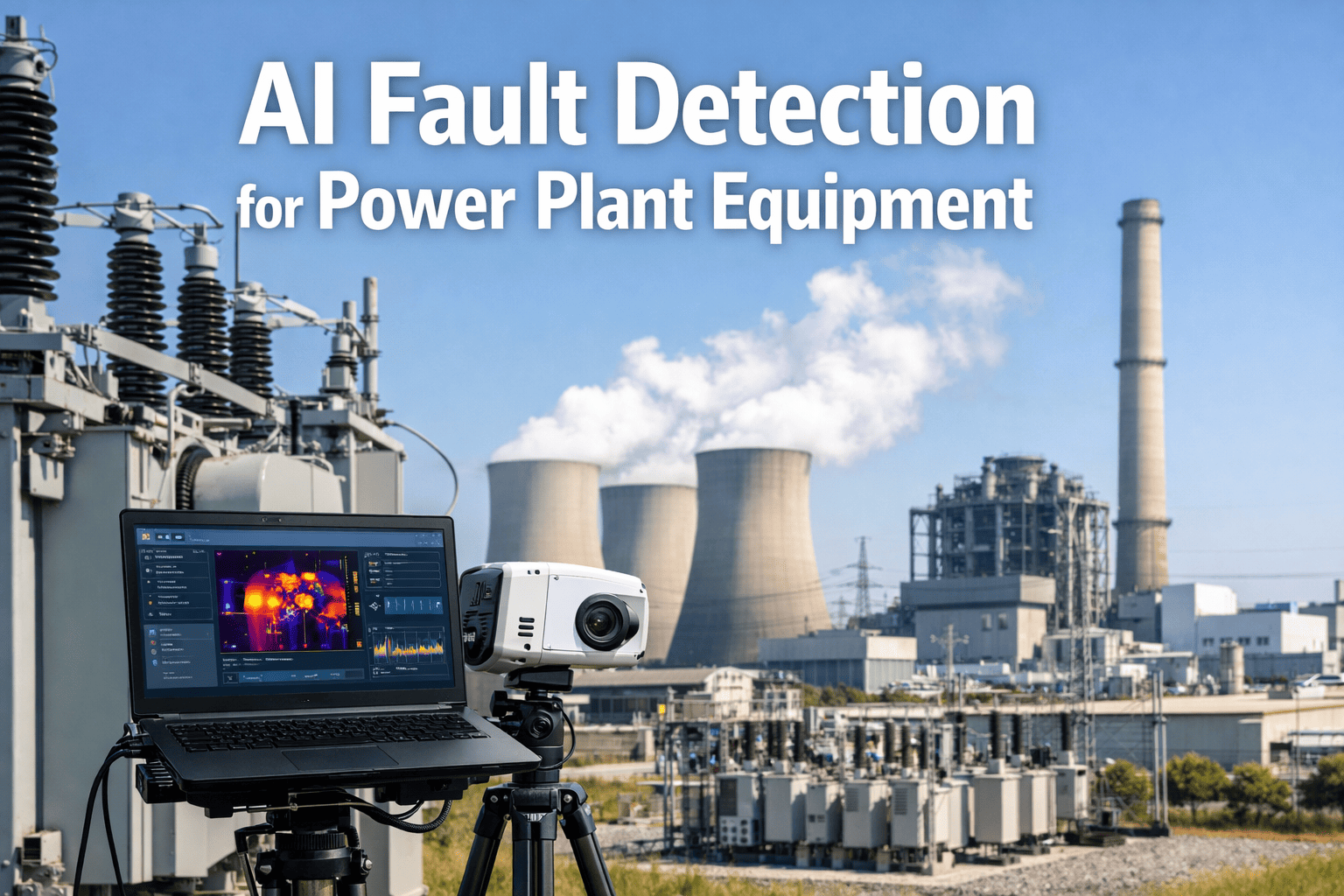
A threshold alarm tells you a measurement has already exceeded a limit. AI fault detection tells you the pattern of measurements leading to that limit — hours or days before any single reading crosses a boundary. The difference is not semantic: a turbine bearing alarm at 9mm/s overall velocity gives a maintenance team 4–6 hours to respond. An AI fault detection system that identified the BPFO frequency signature 84 hours earlier gives them a week to plan, procure, and execute. iFactory's AI fault detection platform processes 3,000+ sensor parameters per second across every major equipment class in your plant — turbines, generators, transformers, boilers, pumps, compressors, and electrical systems — running 60+ fault detection algorithms simultaneously to identify developing anomalies before your protection systems know anything is wrong. Book a free fault detection assessment.
iFactory's AI fault detection platform analyses 3,000+ parameters per second using machine learning algorithms trained on 60+ power generation failure modes — detecting equipment anomalies 48–96 hours before threshold alarms fire, with 93% accuracy and a false alarm rate below 2%, on NVIDIA edge servers inside your facility with zero cloud dependency.
How iFactory's AI Fault Detection Works — Across Every Equipment Class
Threshold alarms detect single-parameter exceedances. iFactory's AI detects multi-parameter patterns — the combination of a rising BPFO amplitude, a 2°C bearing temperature elevation, and a 0.3 bar lube oil pressure decline that individually look like noise but together constitute a confirmed developing bearing fault. Book a demo to see AI fault detection applied to your specific equipment classes.
iFactory connects to your existing DCS, historian, and sensors — reading the data your instruments already produce and finding the patterns your threshold alarms cannot see. No new control infrastructure required for most deployments.
Deployment Roadmap — AI Fault Detection Live in 4–6 Weeks
iFactory connects read-only to your existing DCS and historian. No new control infrastructure. AI baseline established in 2 weeks. First fault detections within 30 days. Book a demo for your plant-specific detection deployment plan.
Full asset registry built per equipment class — turbines, generators, transformers, pumps, boilers, switchgear. DCS, historian, and CEMS connected read-only via OPC-UA, Modbus, or PI API. Historical failure events and alarm logs imported for model training context. NVIDIA edge server commissioned per zone.
Machine learning models calibrated per asset class from your operational data — normal operating envelopes established at every load point and ambient condition. Bearing defect frequencies calculated from nameplate data. Thermal baselines established load-compensated. Process performance baselines set against design specifications.
Fault classification library configured per equipment class and failure mode. Work order templates built per fault type and severity. Escalation routing configured per shift structure. SAP PM, Maximo, or iFactory CMMS connected for automatic work order generation.
Full AI fault detection live across all instrumented assets. Anomaly scoring, fault classification, and work order generation active. First fault detections delivered to operations and maintenance. 90-day support included. Model accuracy improves continuously from work order outcome feedback.
Our Numbers — AI Fault Detection Performance Across Power Generation Deployments
Results measured across power generation plants that completed a minimum 12-month period on the full iFactory AI fault detection platform.
iFactory's pre-deployment assessment reviews your last 3 years of forced outage events and maps each one to the AI fault detection algorithm that would have flagged it — producing a specific, quantified case for AI detection at your plant.
iFactory vs Competitor AI Fault Detection Platforms
Aspentech Mtell, C3.ai Reliability, GE APM, and SparkCognition each offer machine learning fault detection. None combines multi-class equipment coverage, on-premise NERC CIP compliance, sub-10ms inference latency, and automatic fault diagnosis with CMMS work order generation in a single deployable system. Book a demo to see iFactory mapped against your current detection toolset.
| Capability | iFactory | Aspentech Mtell | C3.ai Reliability | GE APM | SparkCognition |
|---|---|---|---|---|---|
| Detection Performance | |||||
| 72+ hour advance fault warning | 93% accuracy | Hours — process focus | Generic ML models | GE turbines only | SparkPredict module |
| Multi-class equipment (turbine + generator + electrical) | All classes unified | Process assets focus | Generic industrial | GE assets primary | Generic industrial |
| Thermal + vibration + process fusion | All sensor types | Process only | Cloud-based fusion | GE sensor focus | Partial |
| False alarm rate | <2% fleet-wide | Higher — process noise | Higher — generic models | GE assets better | Reported higher |
| Diagnosis & Action | |||||
| Fault mode classification (60+ modes) | Specific diagnosis | Pattern anomaly only | Anomaly score only | GE failure library | Anomaly score only |
| Auto CMMS work order generation | SAP / Maximo / native | Manual trigger | API available | Manual trigger | Manual trigger |
| Infrastructure & Compliance | |||||
| On-premise / NERC CIP compliant | NVIDIA edge — full | Cloud only | Cloud only | Cloud primary | Cloud primary |
| AI inference latency | <10ms on-premise | Batch / cloud | Cloud — 200ms+ | 100ms–1s | Cloud — 200ms+ |
| Deployment timeline | 4–6 weeks | 6–12 months | 6–12 months | 12–18 months | 6–12 months |
Based on publicly available product documentation as of Q1 2025. Verify current capabilities with each vendor before procurement decisions.
Regional Compliance — AI Fault Detection Data Stays Inside Your Facility
iFactory processes all fault detection analytics on NVIDIA edge servers inside your facility perimeter — zero sensor data transmitted externally, satisfying OT cybersecurity and data sovereignty requirements across every major power generation regulatory framework. Book a demo to confirm compliance configuration for your region.
| Region | Key Frameworks | How iFactory Solves It |
|---|---|---|
| USA & Canada | NERC CIP-005–013, NIST 800-82, IEC 62443, OSHA 1910.269, FERC | All fault detection analytics inside Electronic Security Perimeter on NVIDIA edge — zero internet egress. CIP-005 through CIP-013 by architecture. Fault detection records and work order evidence satisfy OSHA 1910.269 maintenance documentation requirements continuously. |
| UK & EU | EU NIS2, IEC 62443, GDPR, ISO 55001, PSSR 2000, UK Grid Code | GDPR data sovereignty satisfied — all sensor streams and fault records on-premise. IEC 62443 OT security zones enforced. ISO 55001 Clause 6.2 decision evidence generated automatically from every AI fault detection and resulting work order. NIS2 OT incident reporting automated. |
| Australia | AEMO NEM, SOCI Act 2018, Safe Work Australia, ISO 55001, AS 61511 | SOCI critical infrastructure obligations met by on-premise fault detection processing. ISO 55001 audit trail continuous — every fault detection and maintenance decision linked. Safe Work machinery records auto-assembled. All data onshore. |
| Germany | BSI IT-Grundschutz, KRITIS, IEC 62443, VDI 2886, BetrSichV, ISO 55001 | KRITIS critical infrastructure met without cloud transfer. VDI 2886 condition monitoring records maintained continuously. BetrSichV operational safety records from every fault detection complete. ISO 55001 evidence assembled continuously. |
| Saudi Arabia | NCA ECC-1, IEC 62443, CITC, Saudi Aramco SAES, ISA-100 | NCA ECC-1 OT security and CITC data localisation met by on-premise NVIDIA architecture. SAES-compatible fault records maintained. ISA-100 sensor protocol compliance maintained. Arabic platform outputs supported. |
Every cloud-based fault detection platform transmits your operational sensor data externally — creating Electronic Security Perimeter compliance violations for BES facilities. iFactory processes everything inside your perimeter. CIP-005 through CIP-013 satisfied from day one.
What Our Clients Say
Frequently Asked Questions
Continue Reading
iFactory's AI fault detection connects to your existing DCS, historian, and CMMS. 60+ power generation failure modes. On-premise NVIDIA edge. NERC CIP compliant from day one. First fault detections within 30 days.