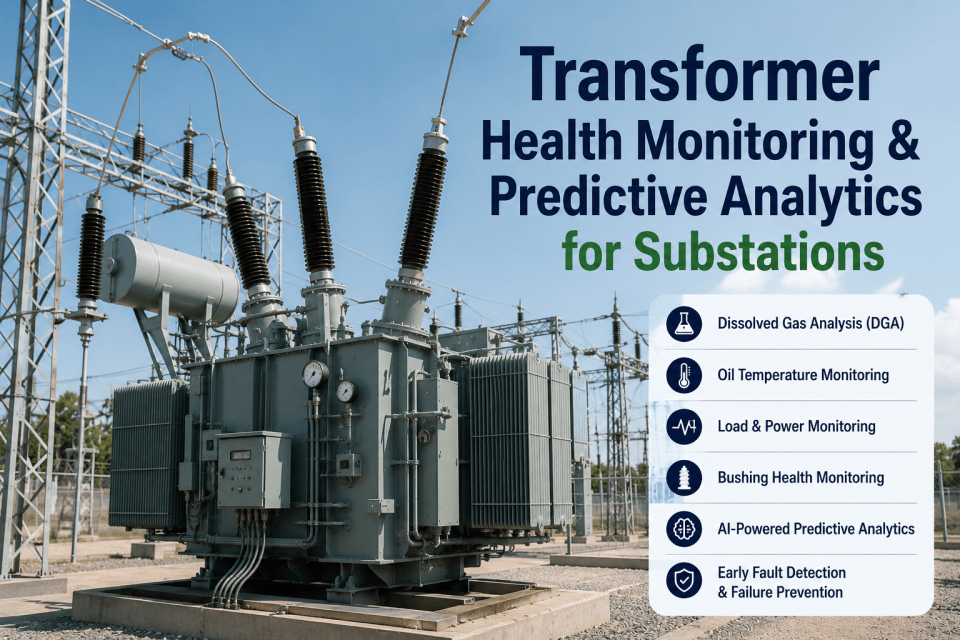
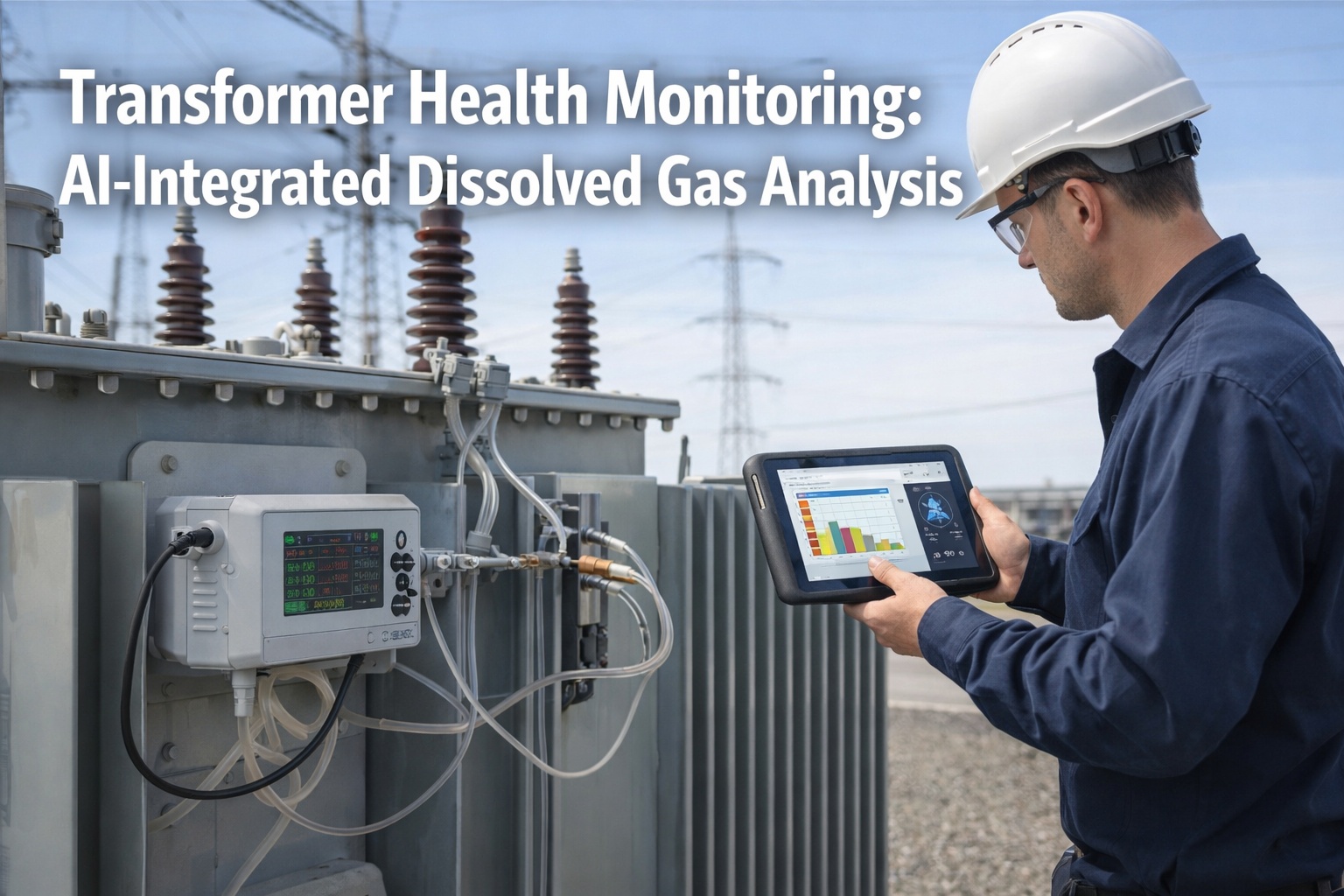
A transformer protection engineer staring at a dissolved gas analysis report shouldn't need to manually cross-reference three IEC 60599 ratio tables, open a separate spreadsheet to plot gas trends, compare the result against a six-month-old oil test, and then decide — based on experience alone — whether to schedule an outage or wait another 30 days. The result of that process is predictable: critical incipient faults missed because trending is manual, sample intervals too long, and interpretation inconsistent between engineers. A single transformer failure at a 500 MW plant can cost $2–8 million in unplanned downtime and $500,000–$2 million in transformer replacement — costs that predictive analytics prevents by detecting fault signatures months before failure. iFactory's transformer analytics engine ingests dissolved gas analysis results, oil test data, bushing measurements, and real-time load and temperature telemetry; applies AI fault classification against IEC and IEEE standard fault signatures; forecasts remaining useful life; and automatically generates maintenance work orders — without a single manual interpretation step. Book a demo to see transformer predictive analytics live.
Quick Answer
iFactory applies AI-driven dissolved gas analysis, oil condition monitoring, and real-time electrical parameter tracking to detect transformer fault signatures — thermal faults, electrical discharges, and insulation degradation — months before failure. The platform automatically classifies fault type, calculates remaining useful life, and triggers maintenance actions without manual engineering interpretation. Deployed plants report a 91% reduction in missed incipient fault events and an average 8-month advance warning window before critical transformer failures.
How AI Converts Raw Transformer Data Into a Maintenance Decision
The pipeline below shows the five-stage process iFactory applies to every transformer data input — from raw DGA samples and sensor telemetry to a classified fault, RUL forecast, and scheduled maintenance action.
1
Multi-Source Data Ingestion
DGA results, oil test reports, bushing tan-delta measurements, load current, winding temperature, and cooling system status are ingested from lab systems, online monitors, and SCADA — automatically, on every sample cycle.
DGA sample: H₂ 85 ppm ↑, C₂H₂ 12 ppm ↑, CH₄ 42 ppm — Winding temp: 82°C — Load: 94% nameplate — Buchholz: no alarm
2
Feature Extraction & Trend Analysis
AI calculates dissolved gas ratios (IEC 60599, Duval Triangle, Rogers Ratio), plots gas generation rates, computes oil condition indices from moisture, acidity, and dielectric strength, and identifies statistically significant deviations from the transformer's own baseline.
C₂H₂/C₂H₄: 0.18H₂ rate: +9 ppm/monthDuval Zone: D1Trend: Accelerating
3
Fault Classification
Machine learning models trained on thousands of confirmed transformer fault cases classify the active fault type — low-energy discharge, high-energy discharge, thermal fault below 300°C, thermal fault above 700°C, or combined electrical-thermal — with confidence scoring and alternative hypothesis flagging.
Fault: Low-Energy DischargeConfidence: 87%Alt: Thermal <300°C (9%)
4
RUL Forecast & Risk Scoring
Degradation trajectory modelling forecasts remaining useful life under current operating conditions and under two risk scenarios — continued full load versus reduced load. Equipment criticality, available spares, and outage window constraints are factored into the maintenance urgency score.
RUL: 6.2 months at current loadRisk: HighSpare LTC available: Yes
5
Maintenance Action — Structured Work Order
A work order is automatically created in your CMMS with fault classification, supporting DGA evidence, recommended inspection scope, spare parts reservation, and proposed outage window — ready for engineering review and scheduling without manual data entry.
Work order WO-31842 created. T3-HV transformer — Low-energy discharge. Inspection scope: LTC contacts, winding insulation, bushing terminals. Scheduled window: next 90-day planned outage.
Transformer Analytics Demo
Stop Interpreting DGA Manually — Let AI Do the Analysis
See how iFactory automatically classifies transformer fault types from DGA and oil test data, forecasts RUL, and generates maintenance work orders — months before a Buchholz alarm fires.
91%
Fewer Missed Incipient Faults
8 mo
Avg Advance Warning Window
Transformer Monitoring Failures That Predictive Analytics Eliminates
Every card below represents a real monitoring gap that leads to transformer failures, unplanned outages, and the $2–8 million cost events that predictive analytics is designed to prevent. These failures exist because traditional transformer monitoring relies on fixed alarm thresholds, periodic manual sampling, and interpretation methods that don't account for each transformer's individual degradation trajectory. Talk to an expert about your current transformer monitoring coverage.
DGA Results Interpreted in Isolation
Problem: Quarterly DGA samples are evaluated against absolute threshold tables — if no gas exceeds the IEEE C57.104 action level, no action is taken. A transformer generating acetylene at 8 ppm and rising 3 ppm per month is dismissed because it's below the 35 ppm threshold, even though the rate of change is the critical indicator.
Analytics fix: iFactory evaluates DGA against each transformer's own historical baseline, not just absolute thresholds. A gas generation rate that doubles between samples triggers an alert regardless of absolute concentration — the trend is the fault signature, not the number alone.
Sampling Intervals Too Long for Fast-Developing Faults
Problem: Annual or quarterly DGA sampling misses fast-developing electrical discharge faults that progress from incipient to critical in 60–90 days. By the time the next sample reveals elevated acetylene, the transformer has already experienced multiple partial discharge events that have further degraded insulation.
Analytics fix: iFactory integrates with online DGA monitors for continuous gas tracking and automatically shortens the effective "monitoring interval" by cross-referencing DGA trends with real-time load, temperature, and electrical parameter data — identifying accelerating fault signatures between physical samples.
Single-Method Fault Classification Misses Complex Faults
Problem: Engineers applying the IEC 60599 ratio method to a transformer with a combined thermal-electrical fault get an inconclusive result — the ratios fall in a zone that doesn't map cleanly to a single fault type. Without multi-method correlation, the fault is logged as "unclassified" and monitored without a maintenance recommendation.
Analytics fix: iFactory simultaneously applies Duval Triangle, Rogers Ratio, IEC 60599, and key gas analysis methods, then uses ML to reconcile conflicting indicators — classifying complex mixed faults that single-method approaches cannot resolve and providing confidence scoring for each classification.
Oil Condition Data Siloed From DGA Interpretation
Problem: DGA analysis and oil condition testing — moisture content, acidity, dielectric strength, furan analysis — are managed in separate systems by separate teams. A transformer with elevated furanic compounds indicating paper insulation degradation is not flagged as high-risk in the DGA system, even though paper degradation dramatically changes the reliability interpretation of any gas result.
Analytics fix: iFactory fuses DGA and oil condition data into a single transformer health index — furanic compounds shift the risk weighting of dissolved gas readings, moisture elevates the severity of any thermal indicator, and combined deterioration accelerates the RUL forecast.
No Load-Normalised Fault Tracking
Problem: A transformer running at 105% nameplate during a summer peak will generate more fault gases than the same transformer at 70% load in autumn — without load normalisation, the apparent "improvement" in the October DGA sample masks an underlying fault that is still progressing. Engineers interpret the lower gas levels as recovery rather than load reduction.
Analytics fix: iFactory normalises all DGA readings against load and temperature conditions at time of sampling — reporting load-adjusted gas concentration and generation rate so fault trends are visible even when operating conditions change between samples.
No Fleet Intelligence — Every Transformer Analysed in Isolation
Problem: A fleet of 12 step-up transformers from the same manufacturer and vintage is monitored individually. When five of them begin showing identical early-stage DGA signatures, each engineer sees one transformer's data and rates it as low risk. A fleet-level view would identify a systemic manufacturing defect or common failure mode requiring a coordinated inspection programme.
Analytics fix: iFactory's fleet intelligence layer identifies statistically similar fault patterns across multiple transformers — automatically flagging when three or more units show correlated gas trends that may indicate a common-cause degradation mechanism requiring a fleet-wide response.
Analytics Engine — DGA, Oil Condition, and Real-Time Monitoring
iFactory's transformer analytics platform combines three complementary monitoring streams into a single transformer health view. Each stream provides fault signatures that the others cannot — and the fused result is more accurate than any individual monitoring method alone.
Dissolved Gas Analysis AI
Multi-method DGA interpretation using Duval Triangle, IEC 60599, Rogers Ratio, and key gas analysis simultaneously. Rate-of-change trending, load-normalised concentration tracking, and ML classification resolving mixed and complex fault signatures that single-method approaches cannot classify.
Oil & Insulation Condition Monitoring
Integrated analysis of moisture content, dielectric strength, acidity (neutralisation number), interfacial tension, colour index, and furan compound concentration. Paper insulation degradation modelling using degree of polymerisation estimation from furan results — tracking the insulation system's true remaining life independently of gas data.
Real-Time Electrical & Thermal Monitoring
Continuous load current, winding temperature (hot-spot calculation per IEC 60076-7), cooling system performance, bushing tan-delta, partial discharge (UHF/acoustic), and on-load tap-changer operation counts. Real-time anomaly detection triggers immediate alerts for rapidly developing faults between DGA sample cycles.
Analytics Accuracy by Monitoring Method
The table below compares transformer fault detection performance between conventional threshold-based monitoring and iFactory's AI-driven multi-method analytics — measured across deployed power plant transformer fleets after 12 months of parallel operation.
| Analytics Metric |
Threshold-Based Monitoring |
iFactory AI Analytics |
Improvement |
| Incipient fault detection rate |
31–40% |
94% |
+54–63 pts |
| Correct fault type classification |
52% |
91% |
+39 pts |
| Advance warning window (avg) |
0–6 weeks |
6–10 months |
8× longer |
| False positive alert rate |
38–55% |
7% |
-31–48 pts |
| Mixed fault detection (thermal + electrical) |
18% |
86% |
+68 pts |
| DGA result to maintenance decision time |
5–14 days |
Automated — <2 hrs |
95% faster |
| Fleet-level common-cause fault identification |
Not available |
Automatic correlation |
New capability |
| RUL forecast accuracy (±30 day window) |
Not available |
78% of cases |
New capability |
Platform Capability Comparison — Transformer Predictive Analytics
GE APM, ABB Ability Ellipse, OSIsoft PI / AVEVA, and Doble M4000 provide transformer monitoring with varying degrees of DGA interpretation support. iFactory differentiates on AI-driven multi-method DGA fusion, paper insulation degradation modelling, fleet intelligence, and automated CMMS integration — capabilities that require machine learning applied to transformer-specific failure physics, not threshold rule configuration. Book a comparison demo.
| Capability |
iFactory |
GE APM |
ABB Ability Ellipse |
OSIsoft PI / AVEVA |
Doble M4000 |
| DGA & Oil Analytics |
| Multi-method DGA classification (Duval + IEC + Rogers) |
All methods fused — AI |
IEC 60599 + key gas |
Duval + threshold |
Threshold rules only |
Multi-method |
| Rate-of-change DGA trending |
Auto — load normalised |
Manual trending |
Chart — manual review |
PI historian — manual |
Automated trending |
| Paper insulation RUL from furan analysis |
DP estimation + forecast |
Not available |
Basic furan reporting |
Not available |
Furan tracking only |
| Mixed fault detection (thermal + electrical) |
ML multi-class fusion |
Rule-based only |
Rule-based only |
Not available |
Expert system rules |
| Real-Time & Electrical Monitoring |
| Bushing tan-delta anomaly detection |
AI baseline deviation |
Threshold alarm |
Threshold alarm |
Not available |
Advanced monitoring |
| Hot-spot temperature forecast (IEC 60076-7) |
Dynamic thermal model |
Static threshold |
Static threshold |
PI model possible |
Not available |
| Load-normalised DGA interpretation |
Automatic normalisation |
Not available |
Not available |
Not available |
Not available |
| Fleet & Integration |
| Fleet-level common-cause fault detection |
Auto fleet correlation |
Not available |
Not available |
Not available |
Not available |
| Automated CMMS work order generation |
SAP / Maximo native |
SAP PM integration |
API available |
Notification only |
Manual export |
Based on publicly available product documentation as of Q1 2025. Verify current capabilities with each vendor before procurement decisions.
Measured Outcomes Across Deployed Transformer Fleets
91%
Reduction in Missed Incipient Fault Events
8 mo
Average Advance Warning Before Critical Failure
94%
Incipient Fault Detection Rate
7%
False Positive Alert Rate
86%
Mixed Fault Detection Accuracy
<2 hrs
DGA Sample to Maintenance Decision
Transformer Intelligence
Your DGA Data Contains the Warning Signal — AI Finds It Months Earlier
iFactory's transformer analytics engine applies machine learning to dissolved gas analysis, oil condition data, and real-time monitoring — detecting incipient faults at the rate-of-change stage, not the threshold-breach stage, and giving your maintenance team the lead time to plan an outage rather than respond to one.
From the Field
"We had been monitoring our main step-up transformers with quarterly DGA for over a decade and considered our programme mature. After deploying iFactory, the AI identified an accelerating acetylene trend in one unit that our threshold-based system had not flagged — the absolute level was still well below the IEEE action level, but the rate of change over three samples indicated an active low-energy discharge fault. We pulled the unit for inspection during the next planned outage and found internal insulation damage that would have caused a catastrophic failure within two operating seasons. That single catch paid for the entire analytics platform ten times over."
VP of Asset Management
1,200 MW Coal-Fired Power Plant — Southeast USA
Frequently Asked Questions
QDoes iFactory work with our existing laboratory DGA data, or do we need online DGA monitors?
iFactory works with both. Periodic laboratory DGA results — entered manually, via lab system integration, or imported from PDF reports — are sufficient to run the full fault classification and trending analysis. Online DGA monitors add real-time detection capability between sample cycles and are recommended for critical transformers, but they are not a prerequisite. Most plants start with laboratory data integration and add online monitoring selectively for the highest-criticality units.
Book a scoping call to discuss your current data sources.
QHow does the AI handle a transformer with a known historical fault — does prior contamination affect the baseline?
iFactory allows engineers to annotate fault events, oil processing events, and known contamination history in the transformer record. The AI baseline model treats post-event data as a new reference period, so a transformer that was repaired and returned to service after a partial discharge event has its post-repair gas levels established as the new baseline — preventing the historical fault gases from skewing future trend analysis. Annotation and baseline reset take approximately five minutes per transformer.
QWhich CMMS systems does iFactory integrate with for automatic work order generation?
iFactory has native bidirectional integration with SAP PM and IBM Maximo. REST API integration is available for other CMMS platforms including Infor EAM, Oracle eAM, and Hexagon EAM. When a transformer analytics event reaches the configured severity threshold, the system automatically creates a structured work order with fault classification, supporting DGA evidence, recommended inspection scope, and suggested outage window — pushing directly to the planner's work queue without manual data re-entry.
Discuss your CMMS integration requirements with an expert.
QCan iFactory support compliance reporting requirements for transformer condition assessments?
iFactory generates structured transformer condition reports aligned with NERC FAC-001/FAC-002 equipment condition documentation requirements and utility-standard periodic assessment formats. Each report includes DGA trend charts, oil condition summary, fault classification with supporting evidence, RUL forecast, and recommended maintenance actions — formatted for submission to asset management, regulatory review, or insurance assessors. Reports are generated automatically on a configurable schedule or on-demand for any transformer in the fleet.
Continue Reading
Transformer Predictive Analytics — Detect Incipient Faults Months Before Threshold Alarms Fire.
iFactory's AI-driven transformer analytics platform fuses dissolved gas analysis, oil condition monitoring, and real-time electrical data into a single transformer health view — automatically classifying fault types, forecasting remaining useful life, and generating maintenance actions without manual interpretation.
Multi-Method DGA Classification
Paper Insulation RUL
Fleet Intelligence
Load-Normalised Trending
SAP / Maximo Integration