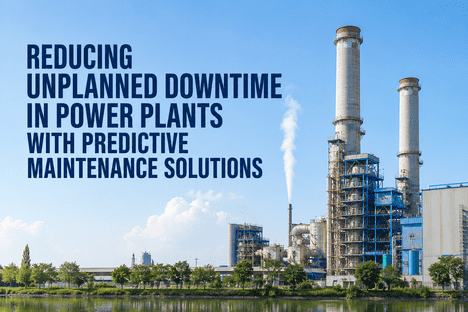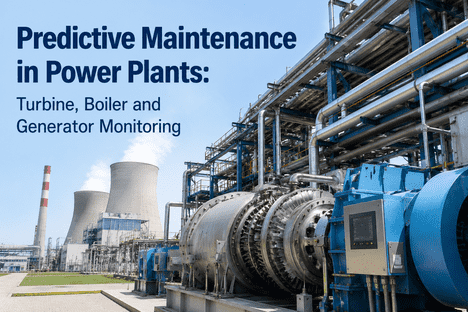
Power generation faces a persistent reliability challenge — forced outages on turbines, boilers, and generators remain the largest source of production loss, with unplanned downtime costing between $50,000 and $500,000 per hour in lost generation revenue, replacement power costs, and startup penalties. Traditional time-based maintenance approaches cannot address the variable operating conditions — load cycling, fuel quality shifts, ambient temperature swings, and steam chemistry variations — that accelerate component degradation in combined-cycle, coal, and gas turbine plants. AI-driven predictive maintenance powered by IoT sensor fusion closes this gap — ingesting vibration data, temperature trends, pressure differentials, partial discharge signatures, and fuel quality metrics into machine learning models that forecast turbine blade failure, boiler tube leaks, generator stator degradation, and balance-of-plant equipment breakdown 3–6 weeks in advance. iFactory's predictive maintenance platform provides this integration layer, connecting DCS historian data, vibration monitoring systems, thermography cameras, oil analysis labs, and operator shift observations into a unified intelligence system purpose-built for power generation fleet reliability. Book a Demo to see how iFactory turns your power plant data into a live predictive maintenance layer for every critical thermal and rotating asset.
Steam & gas turbine vibration forecasting · Boiler tube leak & slagging detection · Generator stator & rotor condition monitoring · Balance-of-plant heat exchanger, pump & fan surveillance · All unified in iFactory's power generation reliability platform.
Why Reactive Maintenance Fails in Modern Power Generation Environments
Power generation assets operate under conditions that accelerate wear beyond what scheduled maintenance intervals can predict. Steam turbines experience blade erosion from solid particle impact, thermal fatigue from cycling, and bearing degradation from lube oil contamination. Boilers face tube creep from localized overheating, slagging from fuel ash chemistry, and corrosion from combustion gas chemistry variations. Generators suffer stator insulation breakdown from thermal cycling, rotor winding fatigue from start-stop events, and hydrogen seal degradation from seal oil contamination. Fixed-interval maintenance replaces components based on calendar time or operating hours rather than actual condition — meaning critical components are either replaced too early, wasting service life, or too late, causing catastrophic unplanned outages. Smart predictive maintenance replaces the calendar with sensor-driven condition monitoring, detecting the earliest signatures of degradation — vibration harmonic shifts, temperature ramp rates, pressure drop trends, dissolved gas evolution, and partial discharge patterns — and converting them into scheduled, budgeted maintenance events that protect generation availability and dispatch reliability.
Three Power Plant Failure Categories AI Predictive Maintenance Addresses
How iFactory Turns Power Plant Telemetry Into Predictive Intelligence
iFactory is the AI software intelligence layer — not a sensor manufacturer or hardware vendor. The platform integrates with existing power plant instrumentation including DCS historians (Emerson Ovation, Siemens PCS 7, GE Mark VI, ABB Symphony), vibration monitoring systems (Bently Nevada, CSI, Vibro-Meter), thermography cameras, oil analysis labs, and IoT gateways already deployed across your turbine, boiler, generator, and balance-of-plant systems. The Shift Logbook captures operator shift reports, defect tags, chemistry log entries, and maintenance notes alongside the sensor stream, creating a unified data fabric for predictive model training across every critical asset in your power generation fleet.
Predictive Maintenance Use Cases for Power Generation Availability
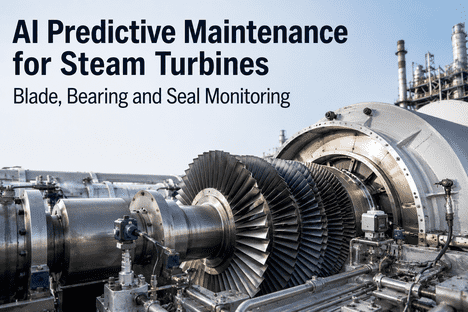
iFactory ingests casing vibration, bearing metal temperature, thrust bearing position, lube oil particle count, and valve stroke data from each steam turbine. ML models trained on historical blade fatigue and bearing failure patterns predict degradation 3–6 weeks in advance with a confidence score and recommended intervention window. Maintenance planners schedule diaphragm replacements and bearing inspections during planned outage windows, avoiding catastrophic blade liberation events that extend outages by 6–10 weeks. Every prediction event is logged in iFactory's Shift Logbook with full traceability to the sensor data that triggered the alert.
Boiler tube leaks — the leading cause of forced outages in coal and biomass units — typically develop over 2–6 weeks before rupture. iFactory monitors furnace exit gas temperature gradients, tube metal temperature arrays across all wall panels, steam drum level/flow mismatch, and flue gas composition to detect leakage and slagging precursors. The platform pinpoints the affected tube panel elevation and recommends intervention timing to coincide with the next planned outage. Alerts route directly to the maintenance shift in the Shift Logbook with location metadata, severity score, and recommended action — enabling targeted tube section replacement rather than blind panel replacement.
Generator stator and rotor windings face cumulative thermal and mechanical stress from load cycling and start-stop events that conventional periodic testing cannot capture. iFactory applies ensemble ML models to partial discharge trends, stator RTD temperature profiles, rotor winding impedance data, hydrogen gas purity and dew point, and excitation system performance. The platform's continuous learning loop improves prediction precision as more operating data accumulates. The Shift Logbook captures operator-reported anomalies — unusual vibration during synchronisation, seal oil leaks, brush gear sparking — alongside sensor data, creating a richer training corpus for steadily improving prediction accuracy on stator, rotor, and excitation system failures in both base-load and cycling generators.
Balance-of-plant equipment failures — feedwater heater tube leaks, condensate pump bearing failures, cooling tower fan degradation, and condenser tube fouling — cause forced derates of 5–15% that accumulate significant revenue loss over a year. iFactory monitors feedwater heater terminal temperature differential, condensate pump vibration and motor current, condenser backpressure trends, and cooling water chemistry. Predicted maintenance events are generated with recommended intervention windows aligned to planned refueling or maintenance outages, eliminating unplanned derates during peak demand periods when capacity payments are highest.
What iFactory Delivers for Power Generation Fleet Reliability
FAQ
AI-driven predictive maintenance platform connecting turbine, boiler, generator, and balance-of-plant telemetry into one unified intelligence layer — with ML-based failure prediction, Shift Logbook integration, CMMS workflow automation, and fleet-wide reliability analytics. Pre-built power generation templates deploy in weeks, not months. Protect your plant availability and dispatch reliability with condition-based maintenance intelligence.