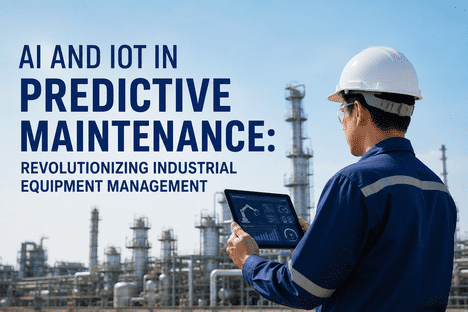
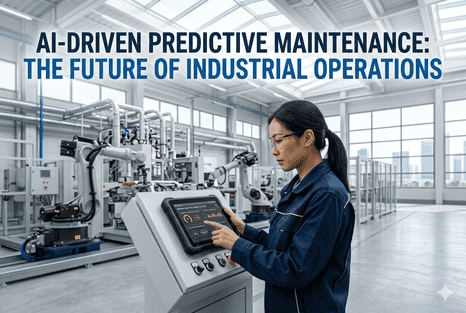
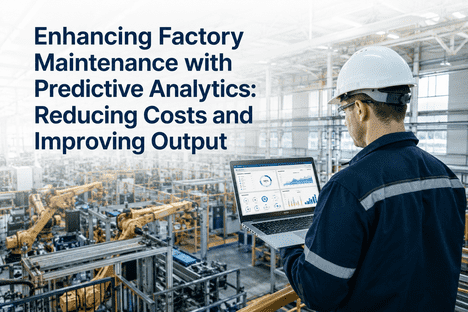
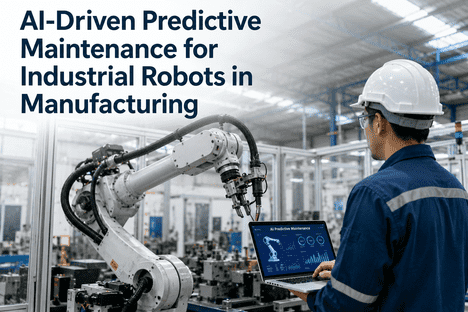
Smart factories represent the convergence of AI, IoT, cloud computing, and automation — but the gap between connected technology and reliable operations is bridged by one critical capability: predictive maintenance. The global predictive maintenance market reached $14.29 billion in 2025 and is projected to grow to $98.16 billion by 2033, with smart manufacturing accounting for the largest end-use segment. Yet despite 72% of manufacturers integrating Industry 4.0 technologies, fewer than one-third have deployed predictive maintenance at scale, and only 11% have operationalized it across their enterprise. AI-powered predictive maintenance closes this adoption gap by fusing real-time IoT sensor data, digital twin models, and machine learning to predict equipment failures before they occur — delivering 30–50% unplanned downtime reduction and 10:1 to 30:1 ROI within 12–18 months. Book a Demo to see how iFactory AI deploys across smart factory environments to unify predictive maintenance, quality optimization, and compliance automation.
Predictive Maintenance for Smart Factories: Revolutionizing Industrial Automation
AI-driven predictive maintenance reduces unplanned downtime by 30–50%, cuts maintenance costs by 18–25%, and extends equipment life by 20–40%. iFactory integrates with existing IIoT, SCADA, and MES systems to deliver real-time failure prediction, digital twin integration, and autonomous maintenance scheduling for Industry 4.0 environments.
Why Smart Factories Need Predictive Maintenance as the Core Reliability Layer
Smart factories generate enormous volumes of industrial data from IoT sensors, connected machinery, robotic systems, and production lines. Machines, assembly lines, smart sensors, and robots produce data that manufacturers are increasingly using to shape strategic decisions. However, raw data alone does not prevent equipment failures. The critical missing layer is an AI-powered analytics system that converts real-time telemetry into actionable maintenance intelligence before failure occurs.
Conventional preventive maintenance follows OEM-recommended intervals regardless of actual equipment condition — either replacing components with remaining useful life or leaving degradation undetected until catastrophic failure. For smart factories operating at 24/7 production cycles with hundreds of interconnected assets, this approach creates systemic reliability risk. iFactory AI predictive maintenance eliminates this tradeoff by correlating IIoT sensor streams (vibration, temperature, power draw, cycle count), digital twin simulation outputs, and historical failure data to compute actual failure probability for every monitored asset — continuously. The result is a factory where maintenance decisions are driven by real-time equipment condition rather than calendar schedules.
SCADA, MES, CMMS, and quality systems operate in silos. AI PdM unifies these data streams into a single equipment health view, eliminating the fragmentation that prevents real-time failure detection.
In a factory with 500+ assets, reactive maintenance creates cascading failures. One line stoppage delays downstream operations. AI PdM predicts and prevents failures before they disrupt production flow.
Fixed-interval PM replaces components with remaining life. Studies show 30–40% of preventive maintenance is unnecessary. Condition-based PdM eliminates this waste while improving reliability.
89% of manufacturing executives agree managing AI agents will become a critical workplace skill. iFactory bridges the gap by translating complex AI outputs into prioritized, actionable work orders that existing maintenance teams can execute.
The Smart Factory Predictive Maintenance Architecture
iFactory's predictive maintenance platform operates across five layers that together create a complete smart factory reliability system. This architecture works with existing IIoT, SCADA, and MES infrastructure without rip-and-replace deployment.
Function: Continuous ingestion of vibration, temperature, pressure, current draw, and cycle count data from factory-floor sensors, PLCs, and robotic systems. Edge processing reduces latency and bandwidth costs. Data normalized and streamed to AI analytics layer. iFactory integration: Support for Modbus, OPC-UA, MQTT, and proprietary protocols. 200+ OEM device models supported.
Function: High-fidelity digital twins of production lines update continuously with live field data. AI models simulate failure scenarios, remaining useful life trajectories, and the impact of maintenance decisions on production throughput. iFactory integration: Digital twin outputs feed directly into maintenance scheduling and production planning systems.
Function: Machine learning models trained on historical failure patterns and live sensor data compute real-time failure probability for every monitored asset. Anomaly detection identifies degradation patterns invisible to threshold-based SCADA alarms. Outcome: 94% failure prediction accuracy. False alarm rate reduced 60–80% vs fixed-threshold monitoring.
Function: Condition-based maintenance triggers auto-generated work orders with parts lists, technician assignments, and compliance documentation. Scheduling algorithm optimizes maintenance windows against production throughput targets. Outcome: Emergency maintenance reduced 60–75%. Planned maintenance costs 3–5x less than emergency rates.
Function: Predictive maintenance data flows bi-directionally with MES, quality management, and ERP systems. Equipment health status informs production scheduling. Quality deviations correlated with equipment condition history. Outcome: Unified data model across all factory systems. Compliance documentation auto-assembled per ISO 9001, IATF 16949, or FDA 21 CFR Part 11 requirements.
Real Smart Factory PdM Outcomes: Documented Results
Industry data across thousands of smart factory deployments reveals consistent outcomes when predictive maintenance is deployed as the core reliability layer.
Smart Factory PdM Deployment Timeline & Outcomes
Real deployment data from Industry 4.0 facilities following a structured predictive maintenance rollout.
Frequently Asked Questions About Smart Factory Predictive Maintenance
Build Your Smart Factory Reliability Foundation with iFactory AI
30–50% downtime reduction, 18–25% cost savings, 10:1–30:1 ROI. Full integration with existing IIoT, SCADA, and MES systems. Live within 8 weeks.