Predictive Maintenance Use Cases in Manufacturing and Industry
By Jackson T on March 7, 2026
Predictive maintenance isn't theoretical anymore — it's saving real factories real money, right now. Ford's commercial vehicle division predicted 22% of component failures 10 days in advance, saving 122,000 hours of downtime and $7 million. General Motors prevented 100 predicted robot failures across 7,500+ units, saving $20 million annually. Siemens cut maintenance costs by 30% and halved downtime across production lines. These aren't outliers — they're what happens when you connect sensors, AI, and a CMMS to the equipment that runs your operation. Here are the most impactful predictive maintenance use cases transforming manufacturing today, organized by the exact equipment and techniques that deliver results.
50%
Reduction in Unplanned Downtime
10–40%
Lower Maintenance Costs
20–40%
Extended Equipment Lifespan
6–12 mo
Typical Time to ROI
5 Core Techniques That Power Every Use Case
Before diving into specific applications, it helps to understand the five monitoring techniques that form the foundation of predictive maintenance. Each detects different types of degradation — and the most effective programs combine several for comprehensive coverage.
Vibration Analysis
Detects imbalance, misalignment, and bearing wear in rotating equipment through frequency pattern analysis
Motors, pumps, fans, gearboxes, compressors
Infrared Thermography
Identifies overheating components, electrical faults, and insulation failures using thermal cameras
Electrical panels, motors, bearings, switchgear
Oil & Fluid Analysis
Reveals internal wear particles, contamination, and lubricant degradation from fluid samples
Hydraulic systems, gearboxes, engines, turbines
Acoustic / Ultrasonic Monitoring
Captures high-frequency sounds from leaks, cracks, friction, and electrical discharge
Compressed air, steam traps, pipelines, valves
Motor Circuit Analysis (ESA)
Monitors electrical signals to identify rotor bar breaks, winding faults, and load imbalances
AC/DC motors, pumps, fans, conveyors
12 High-Impact Use Cases Across Manufacturing
These are the specific applications where predictive maintenance delivers the fastest ROI and the most measurable impact. Each use case describes the equipment, the monitoring approach, the failure mode being prevented, and the business outcome — so you can identify exactly where to start in your own facility.
Catastrophic motor burnout — the single most common cause of production line stops
A misaligned pump motor draws 10–15% more power before failure. Motor circuit analysis detects these faults in minutes and provides weeks of advance warning.
02
Pump Cavitation & Degradation Detection
Equipment
Centrifugal, positive displacement, and submersible pumps
Cavitation, impeller wear, bearing degradation, seal leaks, valve malfunction
Prevents
Throughput drops, contamination from seal failure, cascading damage to connected systems
Irregular flow rates and high-frequency vibration peaks signal impeller issues weeks before pump efficiency degrades to the point of production impact.
03
Compressor Performance Optimization
Equipment
Air compressors, refrigeration compressors, process gas compressors
Complete compressor seizure — repairs that cost $50K–$800K+ depending on system complexity
Vibration analysis caught shaft misalignment weeks before projected failure in documented case studies, preventing cascading damage worth hundreds of thousands.
04
Gearbox Wear & Oil Condition Tracking
Equipment
Industrial gearboxes, reducers, speed increasers across production lines
Monitors
Vibration amplitude, oil particle count, metal content analysis, temperature
Gearbox seizure that halts entire drive trains — replacement lead times can exceed 8 weeks
Combined vibration and oil analysis delivers the earliest possible warning — rising metal particle count plus vibration amplitude changes signal degradation months ahead.
Precision loss leading to scrap production, spindle crashes, quality deviations
In metal fabrication plants, vibration sensors on CNC machines detect spindle imbalance early — preventing costly breakdowns and production delays while maintaining machining tolerances.
06
Robotic Welding & Assembly Arm Monitoring
Equipment
Welding robots, pick-and-place systems, assembly line robotics
Monitors
Joint torque, servo motor current, cycle time deviation, vibration, acoustic signatures
Robot failure mid-production causing line stops across interconnected stations
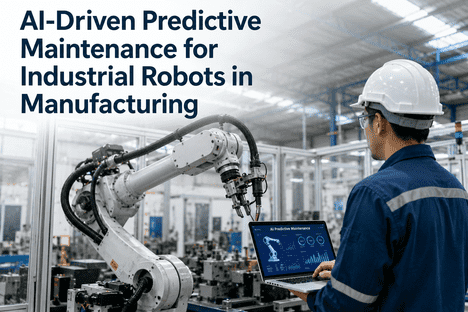
General Motors implemented vibration analysis across 7,500+ robots, prevented 100 predicted failures over two years, and saved $20 million annually in maintenance costs.
07
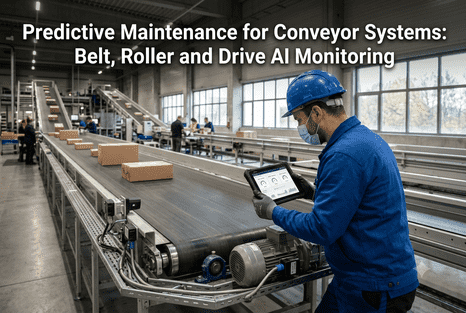
Conveyor Belt & Drive System Monitoring
Equipment
Belt conveyors, roller conveyors, chain drives, material handling systems
Monitors
Belt tension, drive motor vibration, roller bearing temperature, alignment tracking
Detects
Belt misalignment, roller bearing wear, drive chain elongation, motor strain
Prevents
Belt snaps, product damage, complete material handling shutdown
Vibration sensors detect misalignments that could damage products, while AI models analyze motor acoustic signatures to identify conveyor drive wear before breakdowns.
Fill accuracy, seal temperature, servo performance, cycle timing deviation
Detects
Nozzle wear, seal bar degradation, servo drift, mechanical linkage loosening
Prevents
Product giveaway from inaccurate fills, packaging defects causing recalls
Tetra Pak deployed predictive analytics for food packaging machinery and saved a client over 140 hours of potential downtime through preemptive fault detection.
Facility & Infrastructure
09
HVAC & Climate Control System Monitoring
Equipment
Air handlers, chillers, boilers, cooling towers, AHU fans
Monitors
Temperature, airflow, pressure, compressor vibration, refrigerant levels, energy draw
Detects
Filter clogs, compressor strain, refrigerant leaks, fan motor degradation
Prevents
Climate excursions that halt production in temperature-sensitive manufacturing
HVAC accounts for ~40% of building energy use. Algorithms identify when an air handler works harder than normal, flagging filter clogs or motor issues before total failure.
10
Electrical Distribution & Switchgear Monitoring
Equipment
Transformers, switchgear, circuit breakers, bus bars, PDUs
Monitors
Thermal imaging, dissolved gas analysis (transformers), partial discharge, load current
Detects
Hot spots from loose connections, insulation breakdown, oil degradation in transformers
Prevents
Electrical fires, total power loss to production areas, transformer explosions
Rising hydrogen or acetylene gas levels in transformer oil indicate thermal or electrical insulation degradation — detectable weeks before catastrophic failure.
11
Compressed Air & Steam System Leak Detection
Equipment
Air compressors, distribution piping, steam traps, pressure vessels
Air leaks, failed steam traps, pressure drops, pipe wall thinning
Prevents
Energy waste (leaks can account for 20–30% of compressor output), unsafe pressure losses
Ultrasonic leak detection identifies leaks invisible and inaudible to humans. A single undetected compressed air leak can waste thousands of dollars in energy per year.
Temperature differentials, pressure drop across surfaces, water chemistry, tube wall thickness
Detects
Fouling, scaling, tube blockage, corrosion, declining heat transfer efficiency
Prevents
Efficiency losses that increase energy costs 8–12%, tube ruptures, process temperature failures
Declining heat transfer efficiency or increasing pressure drop signals fouling — scheduling cleaning or chemical treatment restores performance before energy costs escalate.
Sensors and analytics identify problems. A CMMS solves them. Without a system that converts predictions into tracked, documented actions, even the best monitoring program stays stuck in dashboards. Here's how the loop closes.
Sensor Detects Anomaly
Vibration spike on motor #7, bearing frequency pattern identified
CMMS Creates Work Order
Auto-generated with asset context, failure history, priority level, and pre-staged parts list
Scheduled & Assigned
Repair slotted for next planned maintenance window, technician assigned, parts confirmed
Executed & Documented
Bearing replaced, sign-off recorded, outcome fed back into prediction model for continuous improvement
Your Equipment Is Already Telling You What's Wrong. Are You Listening?
iFactory's CMMS connects directly to your sensors and monitoring systems — transforming vibration data, thermal readings, oil analysis results, and acoustic alerts into automated work orders, predictive schedules, and compliance-ready documentation. Purpose-built for manufacturing operations where every hour of downtime costs thousands.
You don't need to monitor everything at once. The fastest ROI comes from targeting the right assets first. Use this framework to identify your highest-impact starting points.
Start Here
High Criticality + High Failure Cost
Critical rotating equipment (motors, pumps, compressors) where failure stops production immediately. These assets have well-understood failure modes with clear sensor signatures. ROI is fastest — typically 6–12 months. Begin with vibration analysis and connect to your CMMS for automated work orders.
Primary production line motors, process-critical pumps, air compressors feeding pneumatic systems
Expand Next
Medium Criticality + Quality Impact
Equipment where degradation affects product quality before causing outright failure. CNC machines, packaging systems, and precision assembly equipment fall here. Add tool wear monitoring, thermal imaging, and process parameter tracking. ROI comes from reduced scrap and quality rejections.
CNC spindles, welding robots, filling machines, precision assembly systems
Scale Broadly
Infrastructure + Energy Systems
HVAC, electrical distribution, compressed air, and steam systems that support production but aren't production equipment themselves. Monitor with thermal imaging, ultrasonic detection, and energy analysis. ROI comes from energy savings (15–20%), safety improvements, and prevented facility-wide outages.
Transformers, chillers, air compressors, steam boilers, electrical switchgear
Industry-Specific Applications
While the core monitoring techniques are universal, each manufacturing vertical has unique equipment, failure modes, and regulatory requirements that shape how predictive maintenance is applied.
Automotive
Welding robots, stamping presses, paint line conveyors, assembly robotics
Ford improved maintenance efficiency by 25% across assembly lines using IoT-based vibration and acoustic monitoring on conveyor motors
A medical device manufacturer achieved 25% reduction in maintenance costs while improving uptime for hospital equipment delivery
Start With One Asset. Scale to Every Line.
The most successful predictive maintenance programs begin with 3–5 critical assets and expand from proven results. iFactory's CMMS gives you the sensor integration, automated workflows, and analytics platform to start small and scale to plant-wide predictive operations — without changing platforms as you grow.
Predictive maintenance delivers the fastest ROI on critical rotating equipment — motors, pumps, compressors, fans, and gearboxes — because these assets produce clear, measurable sensor signatures (vibration, temperature, current draw) that degrade predictably before failure. Production line equipment like CNC machines, robotics, and conveyors are strong secondary candidates because degradation affects product quality before causing complete failure. Infrastructure systems including HVAC, electrical distribution, and compressed air round out a comprehensive program with energy savings and safety improvements.
Vibration analysis uses accelerometers and frequency analysis to detect mechanical faults in rotating equipment. Every fault produces a unique vibration signature: imbalance appears at the running speed frequency, misalignment shows at 2x and 3x that frequency, and bearing defects create specific patterns related to bearing geometry. This makes it the most mature and widely deployed predictive maintenance technique because it provides weeks of advance warning for mechanical failures, works while equipment is running, and applies to virtually every motor, pump, fan, and compressor in a facility. When connected to a CMMS, vibration threshold breaches automatically generate work orders with the suspected fault mode already identified.
Entry costs have dropped significantly. Basic oil analysis starts at $20–40 per sample. Ultrasonic leak detectors cost under $1,000. IoT vibration sensors for continuous monitoring are available at $50–100 per asset per month through pay-as-you-go models. A small-scale pilot covering 3–5 critical assets can start at $50,000–$200,000 including sensors, software, and implementation. Most organizations achieve positive ROI within 6–18 months, with critical-asset implementations often paying back within 6 months. The key is starting with your highest-cost-of-failure assets and expanding from proven results.
No. Predictive maintenance can be retrofitted onto virtually any equipment using external sensors — vibration sensors mounted on motor housings, thermal cameras for periodic inspections, clamp-on current meters for electrical monitoring, and ultrasonic detectors for leak surveys. Plug-and-play IoT devices can connect legacy machines to modern monitoring systems without any modification to the equipment itself. This makes predictive maintenance accessible to facilities with mixed-age equipment fleets, which is the reality for most manufacturers. The sensor data connects to your CMMS via gateway devices, giving even decades-old machines a digital health monitoring capability.
A modern CMMS connects to sensors and monitoring platforms through APIs, IoT gateways, or direct integration with sensor vendors. When sensor readings breach condition-based thresholds — or when AI models detect anomaly patterns — the CMMS automatically generates a prioritized work order with full asset context: equipment ID, failure history, suspected fault mode, required parts, and recommended repair procedure. The technician receives the work order on mobile, executes the repair, documents the outcome, and the CMMS feeds that result back into the prediction model to improve future accuracy. This closed-loop workflow is what transforms monitoring data into measurable maintenance improvements.