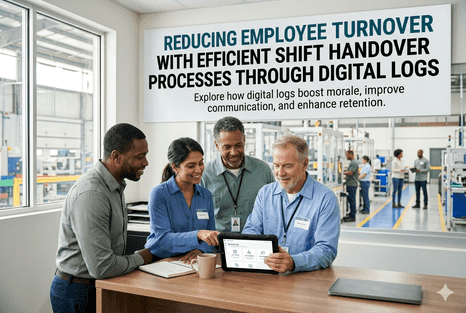
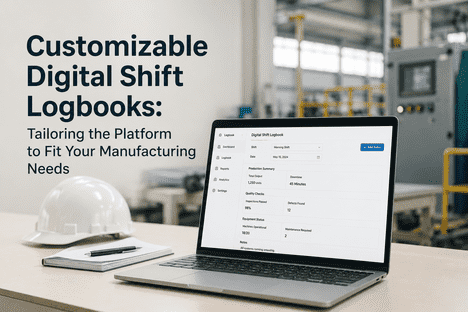
Manufacturing already runs one of the hardest retention battles in any industry — with annual turnover rates hitting 40% at some facilities and the cost of replacing a single frontline worker estimated at $11,500.But buried inside that turnover problem is a root cause most plant managers never trace back far enough: the shift handover. When operators walk into a new shift without clear context — not knowing what failed overnight what was left unfinished or what safety bypass is still active — they spend the first hour of every shift in recovery mode. They make mistakes. They get blamed for problems they inherited. They leave. iFactory's digital shift logbook directly addresses this cycle by replacing chaotic paper-based handovers with structured searchable and fully accountable digital transitions that give every operator exactly what they need to start each shift with confidence. Book a Demo to see how better shift handovers reduce turnover.
EMPLOYEE RETENTION · SHIFT INTELLIGENCE
Your Best Operators
Aren't Leaving
for More Money.
They're leaving because every shift starts with chaos — missing context, inherited problems, and zero accountability. iFactory's digital shift handover logbook fixes the operational friction that drives good people out.
Structured Handover Templates
AI Shift Summaries
Knowledge Preservation
Mobile-First
SHIFT HANDOVER — LINE 3 · 06:58 AM
Outgoing: J. Patel → Incoming: S. Torres · e-signed
Compressor C-2 vibration elevated
WO #5104 open · Maint. aware · Monitor every 30 min
Changeover SKU-441 pending approval
Supervisor sign-off needed before 08:00
Filter P-7 replaced — WO #5098 closed
14 min downtime · Back online 05:22
OEE: 86.4% · Target met
Production count: 4,820 units · 0 quality holds
✓
S. Torres acknowledged all 18 entries · 06:59 AM
The Hidden Link Between Shift Handovers and Employee Turnover
Most turnover analyses in manufacturing focus on compensation, scheduling flexibility, and benefits. These matter — but they miss a daily frustration that compounds across every single shift for every single operator: the feeling of walking into a situation you don't understand, being held accountable for problems you didn't cause, and having no reliable way to communicate what you observed to the next crew. Research shows that 81% of employees cite frequent miscommunication as a workplace pain point, and it hits frontline manufacturing workers hardest. The average frontline worker spends 32 minutes per shift just searching for information they should have received at handover. Digital shift logbooks don't just fix an operational problem — they fix a human one.
40%
Annual turnover rate at some manufacturing facilities
$11,500
Cost to replace a single frontline manufacturing worker
32 min
Lost per shift per worker searching for missing handover info
40–60%
Of actionable information missed in verbal-only handovers
Five Ways Poor Shift Handovers Drive Good Operators to Quit
Turnover doesn't happen in a single moment. It builds across hundreds of shifts where operators feel set up to fail. These are the five handover-specific friction points that accelerate the decision to leave — and what iFactory eliminates from each one.
01
Walking In Blind
Without iFactory
Incoming operators piece together what happened from a paper log, a verbal brief, and whatever they can observe on the floor. Critical events from overnight are routinely missed. The first hour of every shift is spent catching up instead of running production.
With iFactory
AI-generated shift summaries surface the top open issues, completed actions, and pending tasks before the operator even steps on the floor. Every incoming crew knows exactly what they're walking into — in under three minutes.
02
Being Blamed for Inherited Problems
Without iFactory
When a machine fails at 10:00 AM and the vibration alert was at 3:42 AM, there's no record connecting the two. The incoming shift takes the blame for a problem they couldn't have prevented. Resentment builds. Trust in management erodes.
With iFactory
Every event is timestamped, attributed, and searchable. Root cause investigations take minutes, not days. The record shows exactly when the anomaly started, who was on shift, and what response occurred — protecting operators from unfair accountability.
03
No Record That Work Was Done
Without iFactory
An operator fixes three problems, makes a complex process adjustment, and resolves a quality deviation during their shift. By the next shift, there's no structured record. Their effort is invisible. Recognition is impossible when there's nothing to recognize.
With iFactory
Every action is logged with the operator's name, timestamp, and resolution notes. Supervisors and managers can see exactly what each operator accomplished across any shift. Contribution becomes visible, and recognition becomes data-driven.
04
Tribal Knowledge Loss When Veterans Leave
Without iFactory
When an experienced operator leaves, their knowledge — the quirks of Line 4, the pressure reading that always drifts before a fault, the supplier whose material runs hot — leaves with them. New operators start from zero and take months to reach the same confidence level.
With iFactory
Every observation, resolution, and pattern is captured in a searchable, permanent logbook. A new operator can search "pressure pump P-7 fault" and immediately see the last twelve times it happened, what caused it, and how it was fixed. Onboarding time is cut in half.
05
Feeling Like Their Observations Don't Matter
Without iFactory
Operators notice early warning signs — a vibration, an unusual smell, a pattern in defect rates. They mention it at verbal handover. Nothing is done. It happens again. They stop reporting. When things break, they're asked why they didn't say something. Disengagement follows.
With iFactory
Operator observations are logged, timestamped, assigned priority, and tracked to closure. When an entry triggers a work order that prevents a failure, that connection is visible. Operators see that what they report matters — and that loop drives engagement and retention.
06
The Burden of a Broken Handover Process
Without iFactory
Filling out a paper logbook at the end of a physically demanding 12-hour shift — when the worker is tired, the handover window is tight, and there's no structured format — adds 15 to 30 minutes of administrative friction to every shift change. It burns people out.
With iFactory
Events are logged in real time throughout the shift — not reconstructed at the end. The structured digital summary is auto-generated. A standard handover review takes under five minutes. The administrative burden is removed, not redistributed.
Seeing turnover patterns across shifts or departments? Book a demo — we'll map iFactory's handover features to the specific friction points your operators face, and show you what a structured digital handover looks like for your plant type.
What iFactory's Digital Shift Handover Delivers for Your Workforce
iFactory is not a form that replaces a paper form. It is a continuous operational record that captures events as they happen, structures knowledge transfer at every shift change, and gives every operator — from floor technician to plant manager — the visibility they need to do their job well and feel supported doing it.
?
Structured Handover Templates
Configurable templates ensure every handover covers the same critical categories — equipment status, open work orders, quality holds, safety observations, and pending actions. Nothing gets skipped because a shift was busy or a supervisor was rushed.
Impact: Handover completeness from ~55% to 100%
?
AI-Generated Shift Summaries
iFactory's AI reads every event logged during a shift and generates a concise, structured summary for the incoming crew — highlighting critical open items, equipment conditions, and pending tasks. Incoming operators are briefed before the handover meeting starts.
Impact: Briefing time reduced from 20 min to under 3 min
✍️
Mandatory Digital Acknowledgment
Incoming supervisors and operators must digitally acknowledge all critical open items before their shift is formally accepted. Unacknowledged handovers escalate automatically. Acknowledgment rates — verified and auditable — average 96%+ across iFactory deployments.
Impact: 96%+ handover acknowledgment rate
?
Searchable Operational Memory
Every event ever logged is permanently searchable by asset, date, operator, event type, or keyword. A new technician can search the history of any machine and immediately access months of context — dramatically reducing the time to independent competency.
Impact: New operator onboarding time cut by 50%
?
Mobile-First, Works Offline
Log entries, capture photos, complete checklists, and e-sign handovers from a tablet, phone, or control room display — with or without Wi-Fi. Data syncs automatically when connectivity returns. The logbook works in every corner of every plant, not just at a desk.
Impact: 100% logging coverage, no location exceptions
?
CMMS & SCADA Integration
iFactory connects bi-directionally with SAP, Oracle, SCADA, DCS, and all major CMMS platforms. Sensor anomalies auto-log. Critical events auto-generate work orders. Operators are never asked to re-enter data that a connected system already captured.
Impact: Manual data entry eliminated from handover workflow
SEE THE DIFFERENCE
Watch a Digital Shift Handover Replace 20 Minutes of Chaos With a 3-Minute Briefing
A 15-minute walkthrough on your plant type. We'll show you the structured summary, the acknowledgment workflow, the searchable history — and how it changes the first 30 minutes of every shift for every operator.
The Retention Impact: Before and After iFactory
The relationship between handover quality and operator retention is direct — but rarely measured. iFactory makes it measurable. These are the outcomes plants see after moving from paper-based handovers to iFactory's structured digital logbook, tracked across the workforce-specific metrics that actually predict whether good operators stay or leave.
Running exit interviews that mention communication or shift chaos as a reason for leaving? Book a demo and we'll show you exactly how iFactory addresses the handover friction that shows up in those conversations — before your next round of departures.
The Handover Maturity Model: Where Does Your Plant Stand?
Most plants believe their shift handovers are more structured than they actually are. This maturity model maps four levels of handover practice — and the workforce impact each level produces. The jump from Level 2 to Level 4 is where retention outcomes measurably shift.
1
Verbal / Whiteboard
Shift change happens through a brief conversation and a whiteboard that gets wiped. High information loss, zero accountability, and no record if something goes wrong. Incoming operators start cold — every shift.
Retention risk: Very High · Info retention: ~15%
2
Paper Logbook / Email Report
Events are written down, but legibility, completeness, and delivery are inconsistent. End-of-shift logging under fatigue produces incomplete records. Incoming operators still spend significant time catching up. Paper does not protect operators when accountability is disputed.
Retention risk: High · Info retention: ~35%
3
Standalone Digital Log
Structured digital entries replace paper, but the logbook is disconnected from CMMS, SCADA, and quality systems. Operators still manually enter data that other systems already captured. Handover quality improves, but the workload does not decrease meaningfully.
Retention risk: Moderate · Info retention: ~65%
4
Connected Real-Time Logbook (iFactory)
Events auto-logged from SCADA and CMMS. Operator observations captured in real time throughout the shift. AI-generated summary delivered at handover. Mandatory digital acknowledgment confirmed. Every operator starts every shift with full context — and every contribution is permanently on record.
Retention risk: Low · Info retention: 100%
Frequently Asked Questions
How does a digital shift logbook directly reduce employee turnover?
Turnover in manufacturing is driven significantly by daily friction — the feeling of walking into shifts without context, being blamed for inherited problems, having contributions go unrecorded, and carrying the administrative burden of paper logging at the end of an exhausting shift. iFactory eliminates all of these. Operators receive structured briefings, are protected by timestamped records, have their work attributed and visible, and no longer face end-of-shift paperwork. Retention improves because the daily experience of work improves.
How does iFactory help preserve knowledge when experienced operators leave?
Every event, resolution, observation, and process note logged in iFactory is permanently stored in a searchable history. When a veteran operator leaves, their years of accumulated operational knowledge — the patterns they recognized, the fixes that worked, the asset behaviors they learned — remain in the system. New operators can search that history from day one, which research shows can cut new hire ramp time to full competency by 50%.
Will operators actually adopt it, or will it feel like more work?
iFactory is designed to reduce operator workload, not add to it. Events are auto-logged from connected systems throughout the shift — operators add observations as they happen rather than reconstructing everything at shift end. A standard handover entry takes under five minutes. The structured summary is auto-generated by AI. Most operators report that iFactory requires less time than their previous paper or spreadsheet process, while giving them far more protection and visibility in return.
How quickly can we go live?
Most facilities are live with iFactory's shift handover logbook within two to four weeks. The logbook goes live immediately with manual entries and pre-built handover templates while SCADA, CMMS, and system integrations are completed in the background. Plants don't need to wait for full integration to start improving handover quality and operator experience.
Can it work across multiple sites with different shift patterns?
Yes. iFactory supports multi-site deployment with site-specific handover templates, shift timing configurations, and reporting hierarchies. A two-shift and a three-shift facility run on the same platform simultaneously. Regional managers see unified handover compliance and workforce metrics across all sites without logging into each one separately.
REDUCE TURNOVER · IMPROVE HANDOVERS · RETAIN YOUR BEST OPERATORS
Stop Losing Good Operators to a Problem You Can Fix in Four Weeks
iFactory's digital shift handover logbook gives every operator the context, recognition, and accountability they need to stay. Most facilities go live in two to four weeks — and see measurable handover quality improvements from the first shift.