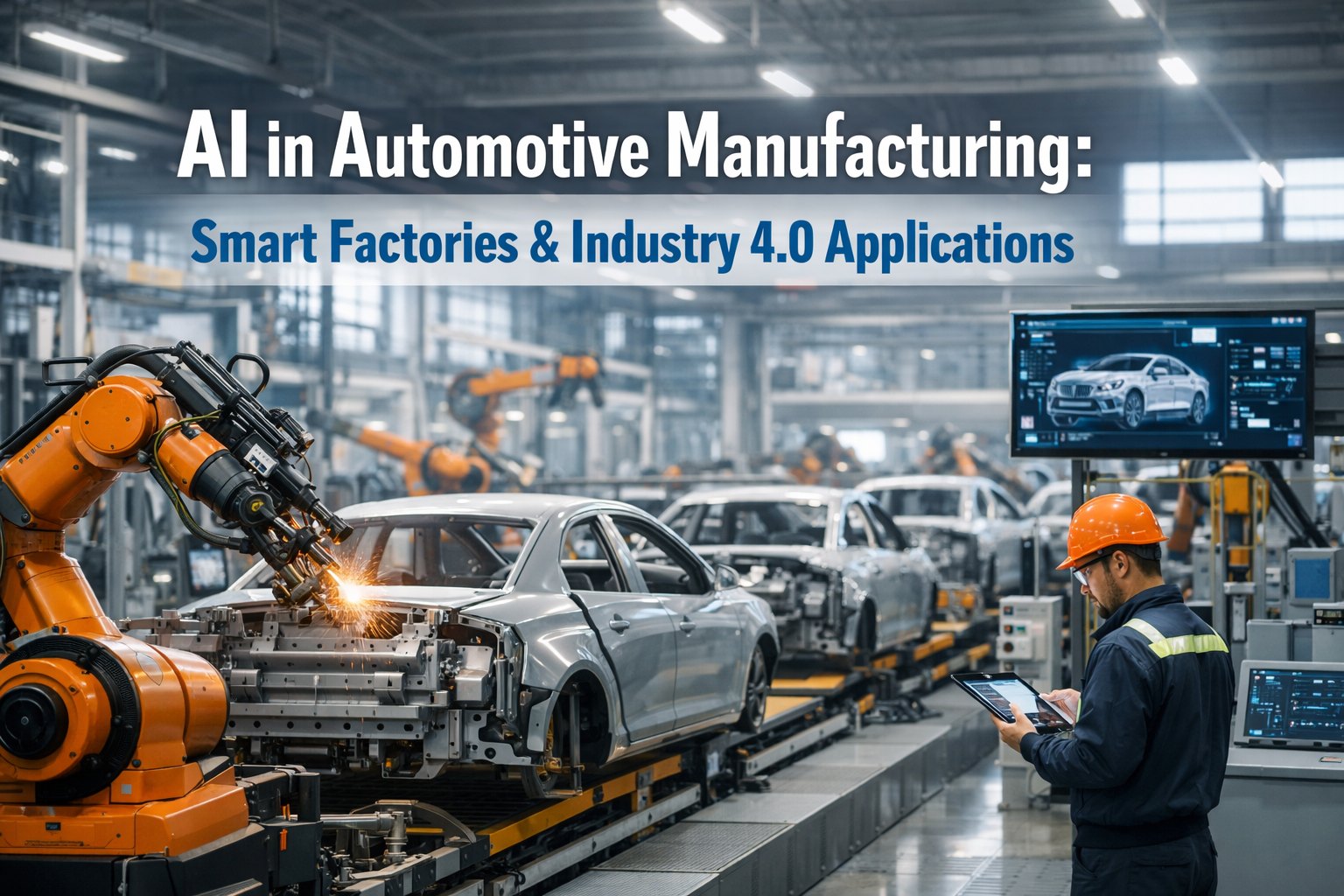
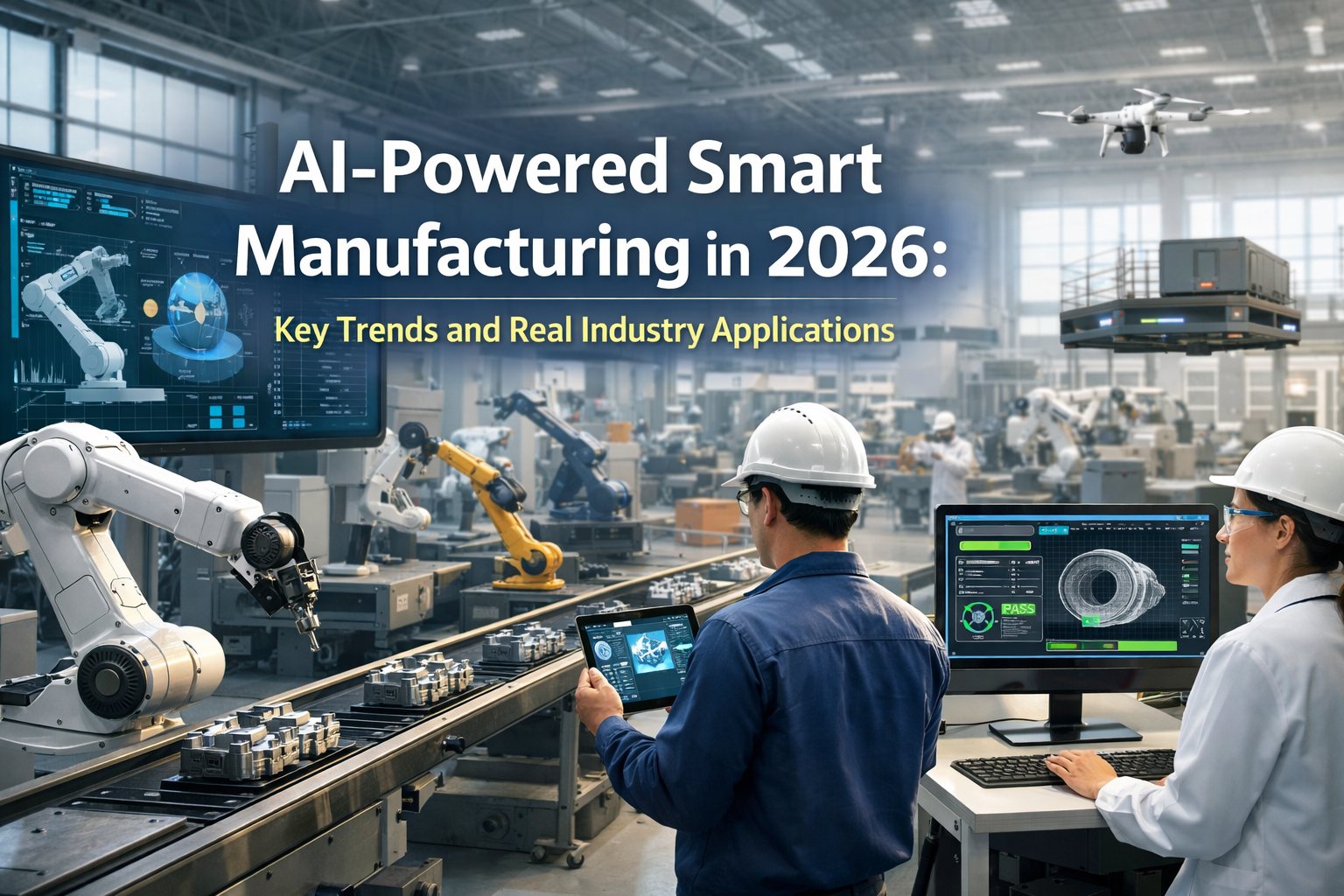
BMW produces one vehicle every 56 seconds — with 15 trillion possible configurations for MINI alone. Tesla's Fremont factory runs 1,000+ robots managed by a unified AI system, hitting 95% automation in body manufacturing. Volkswagen has embedded 1,200+ AI applications across its factories. This isn't a preview of the future. This is automotive manufacturing in 2026 — and AI is the engine driving it all.
5 Ways AI Is Transforming Automotive Plants
Predictive Maintenance
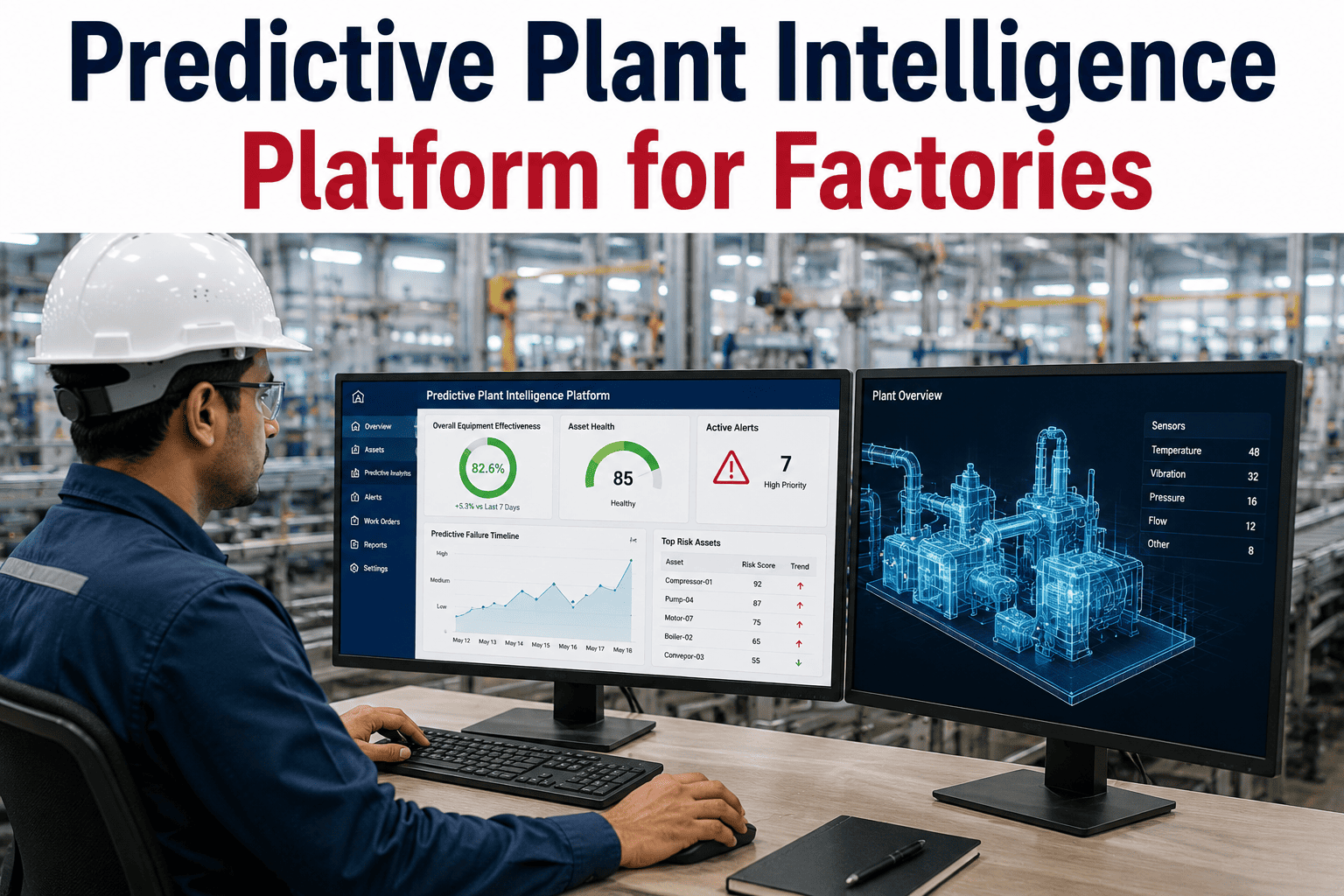
AI analyzes sensor data from motors and equipment to predict failures weeks in advance — not after the breakdown.
AI Vision Inspection
Computer vision detects microscopic defects in milliseconds — paint flaws, weld gaps, misalignments — with 99%+ accuracy.
Smart Robotics
AI-powered robots learn and adapt to new tasks. BMW's robots auto-correct misplaced studs in real time.
Digital Twins
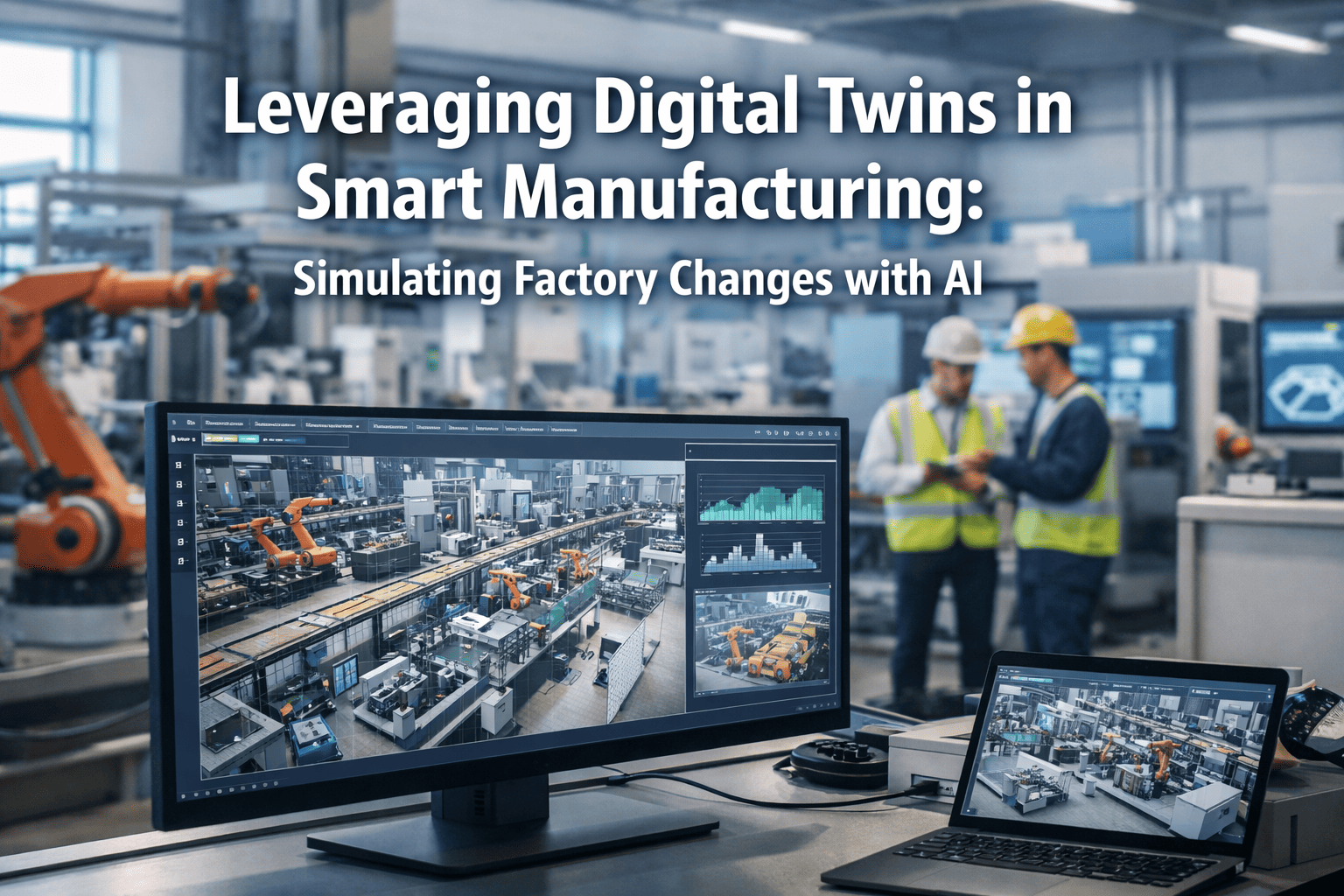
Virtual factory replicas simulate production lines — reducing development time by 30% and improving decisions by 75%.
Supply Chain AI
ML predicts demand, tracks suppliers, and adjusts to disruptions — preventing stockouts and overstocking.
Want to see how predictive maintenance works for your equipment? Schedule a personalized demo with our automotive specialists.
Real Results from Real Factories
AI-Powered Quality & Robotics
AIQX platform automates quality. Figure AI humanoids loaded 90,000+ parts over 11 months with 99%+ accuracy.
Hyperautomated Production
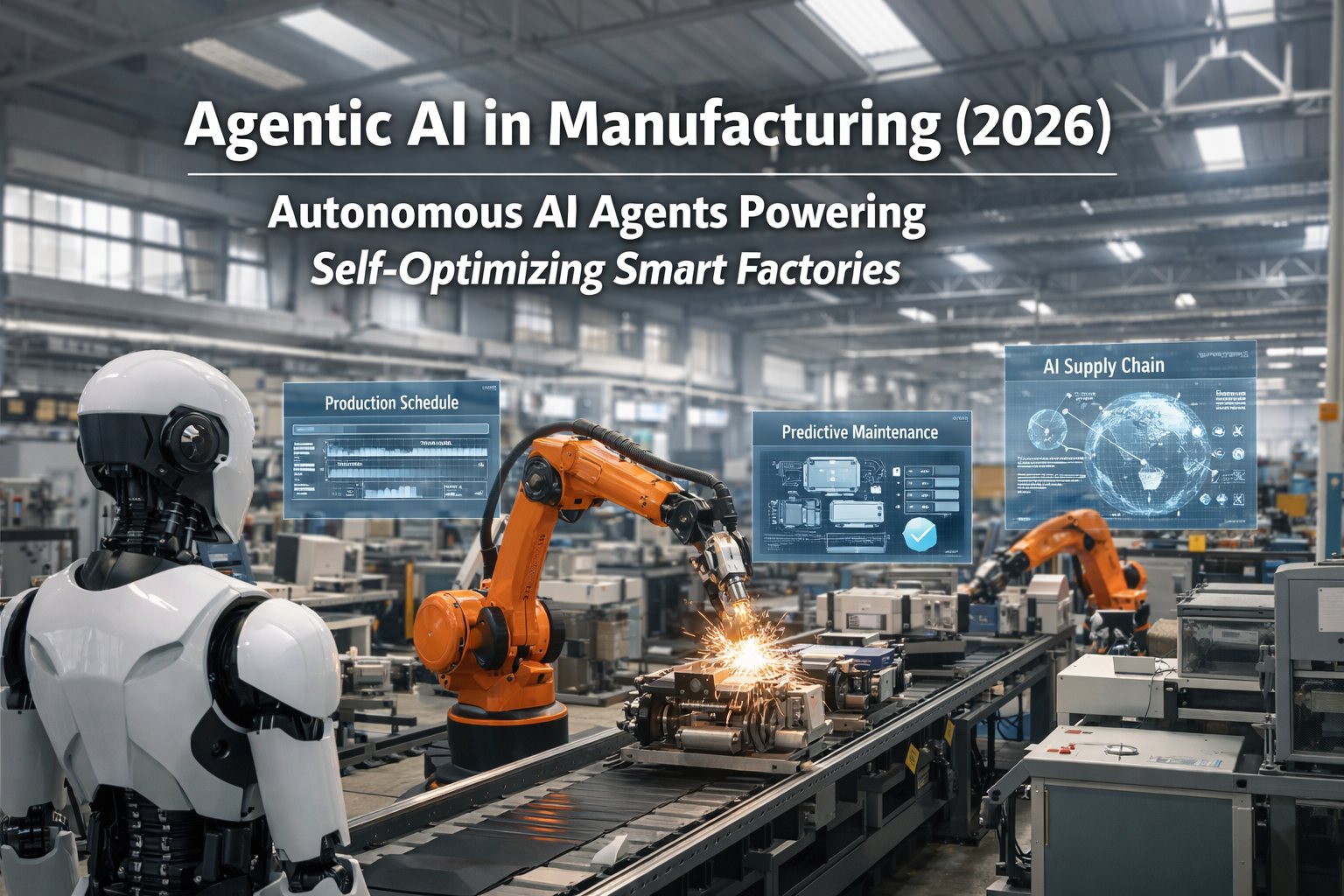
1,000+ robots under unified AI control. 150 AMRs handle logistics while AI monitors sensors per vehicle.
1,200+ AI Applications
AI embedded across factories for defect detection and process stability with real-time corrections.
Is Your Plant Ready for Industry 4.0?
iFactory's AI-powered CMMS connects equipment, tracks asset health, and delivers predictive insights — the foundation every smart factory needs.
The ROI of AI in Automotive Manufacturing
Curious about the ROI for your specific operation? Connect with our team for a custom assessment.
Why 2026 Is the Tipping Point
"AI is evolving from innovation pilots into essential infrastructure — much like electricity. The differentiator won't be who uses AI, but how seamlessly companies integrate it into daily operations."
Getting Started: 3-Phase Implementation
Pilot Project
Start with predictive maintenance for critical equipment or quality inspection. Target: 10% downtime reduction or 5% defect improvement.
Line-Wide Deployment
After proving ROI, deploy across full production line. Integrate with MES, ERP, and CMMS. Begin workforce training.
Enterprise Scale
Expand to multiple facilities. Connect data streams organization-wide. Build the factory that senses, decides, and acts.
Your Smart Factory Journey Starts Here
iFactory gives you the AI-powered CMMS foundation to capture equipment data, predict failures, and integrate with next-gen automation.
Conclusion
AI in automotive manufacturing has crossed from experimental to essential. BMW, Tesla, and Volkswagen aren't piloting AI — they're running production on it. With 50% downtime reductions, 99% defect detection, and ROI within 14 months, the business case is proven. The question isn't whether to adopt — it's how quickly you can build the infrastructure to capture its full value.
Schedule your iFactory demo or speak with our automotive specialists to start your smart factory journey.
Frequently Asked Questions
Predictive maintenance and quality inspection deliver the highest ROI. AI-based predictive maintenance reduces unplanned downtime by up to 50% and lowers costs by 25-40%. AI vision systems detect defects in milliseconds with 99%+ accuracy.
Costs vary by scope. IoT sensors now cost $0.10-$0.80 per unit. Leading manufacturers achieve complete ROI within 12-14 months. Quality control AI delivers 200-300% ROI through defect reduction alone.
BMW achieved 5x productivity gains with NVIDIA. Tesla runs 95% automated body manufacturing with 1,000+ robots. Volkswagen deployed 1,200+ AI applications. Mercedes-Benz is piloting humanoid robots for inspection.
Start with predictive maintenance for critical equipment that causes bottlenecks, or quality inspection for high-value components. Target 10% downtime reduction or 5% defect improvement to prove value.
Modern AI platforms integrate with MES, ERP, SCADA, and CMMS. Edge computing brings AI to the factory floor for real-time analysis. The key is a unified CMMS that can receive and act on AI insights.


.jpeg)
