The cement industry produces 4.1 billion tonnes annually — yet over 70% of plants still rely on paper logs, manual inspections, and reactive maintenance. Meanwhile, early adopters using AI and IoT are cutting downtime by 40%, saving 35% on energy, and achieving full ROI in under 18 months. The question is no longer whether to digitalize — it's how fast you can move before the gap becomes permanent. Book a Free Digital Readiness Assessment
Cement Industry Digitalization: From Manual Logs to AI-Driven Autonomous Plants
How leading cement manufacturers are replacing clipboards with AI — and why the next 3 years will separate the winners from the obsolete.
Why Cement Industry Digitalization Is Accelerating Now
Five converging forces are making digital transformation not just smart — but survival-critical.
Margin Pressure Is Relentless
Energy accounts for 30–40% of cement production costs. With fuel prices volatile and carbon taxes expanding globally, plants running on manual optimization are hemorrhaging money that AI could recover. McKinsey estimates digital operations can improve margins by 8–12% across the value chain.
The Workforce Is Changing
Experienced kiln operators are retiring, and the next generation expects digital tools. Plants that can't attract tech-savvy talent will face critical knowledge gaps. Digital systems capture institutional expertise so it doesn't walk out the door when a veteran retires.
Carbon Regulations Are Tightening
The cement industry generates 6–7% of global CO2 emissions. The EU's Carbon Border Adjustment Mechanism and similar policies worldwide are turning emissions into direct costs. AI-optimized kiln firing alone can reduce CO2 by 2–5% per tonne of clinker.
Competitors Are Moving Fast
Holcim has deployed AI across 45 plants and is scaling to 100. Conch Cement partnered with Huawei to build AI operating systems. CEMEX invested in AI startups. If you're still debating digitalization, your competitors are already reaping the returns.
Technology Is Finally Cement-Ready
Industrial IoT sensors now survive extreme dust, heat, and vibration (IP68-rated). Edge computing processes data locally without relying on spotty connectivity. Cloud AI platforms are pre-trained on cement-specific patterns. The technology barriers that existed five years ago have been solved.
Where Does Your Cement Plant Stand?
Most plants are stuck at Level 1 or 2. The leaders are already operating at Level 4. Find where you are — and where you need to be.
Manual & Reactive
Paper logbooks, clipboard inspections, calendar-based maintenance, lab tests every 2 hours, siloed data in spreadsheets.
~45% of plants globallyConnected & Monitored
SCADA dashboards, basic PLC automation, digital work orders, some sensor data collection, but analysis is still manual.
~30% of plants globallyPredictive & Integrated
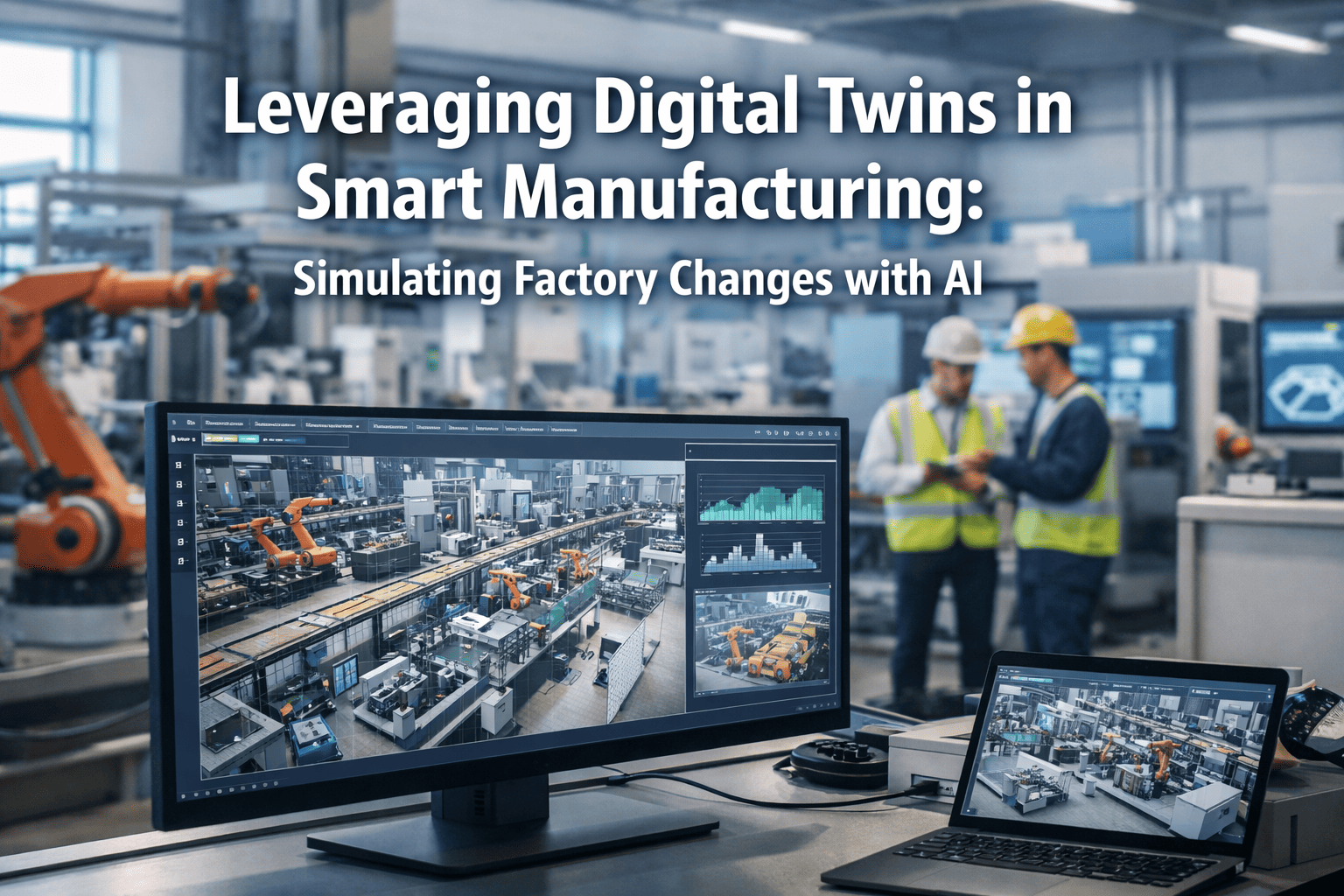
AI predictive maintenance, real-time quality monitoring, CMMS-ERP integration, digital twins for simulation, automated alerts.
~18% of plants globallyAutonomous & Self-Optimizing
AI controllers adjust kiln, mill, and cooler parameters autonomously. Digital twins run continuous optimization. Multi-plant benchmarking drives decisions.
~7% of plants globallyCore Technologies Powering Smart Cement Plants
Each technology is powerful alone — together, they create an intelligent system that sees, thinks, and acts.
Operational Use Cases Delivering Results Today
Not theory — these are actual digitalization wins being reported by cement manufacturers worldwide.
AI-Optimized Combustion
Self-adaptive AI analyzes gas composition, shell temperature, and feed rate to optimize firing in real time — without operator intervention.
Predictive Mill Maintenance
Vibration sensors on VRM rollers and ball mill bearings feed ML models that detect gearbox faults and roller wear 30 days in advance.
Real-Time Clinker Prediction
AI predicts free lime content using live kiln sensor data — eliminating the 40-minute lab wait. Operators correct parameters instantly.
Grinding Circuit Optimization
AI balances clinker hardness, mill speed, separator settings, and power draw to hit target fineness with minimum energy input.
Plants Using AI Predictive Maintenance Report ROI Within 3–6 Months — Often From a Single Prevented Emergency.
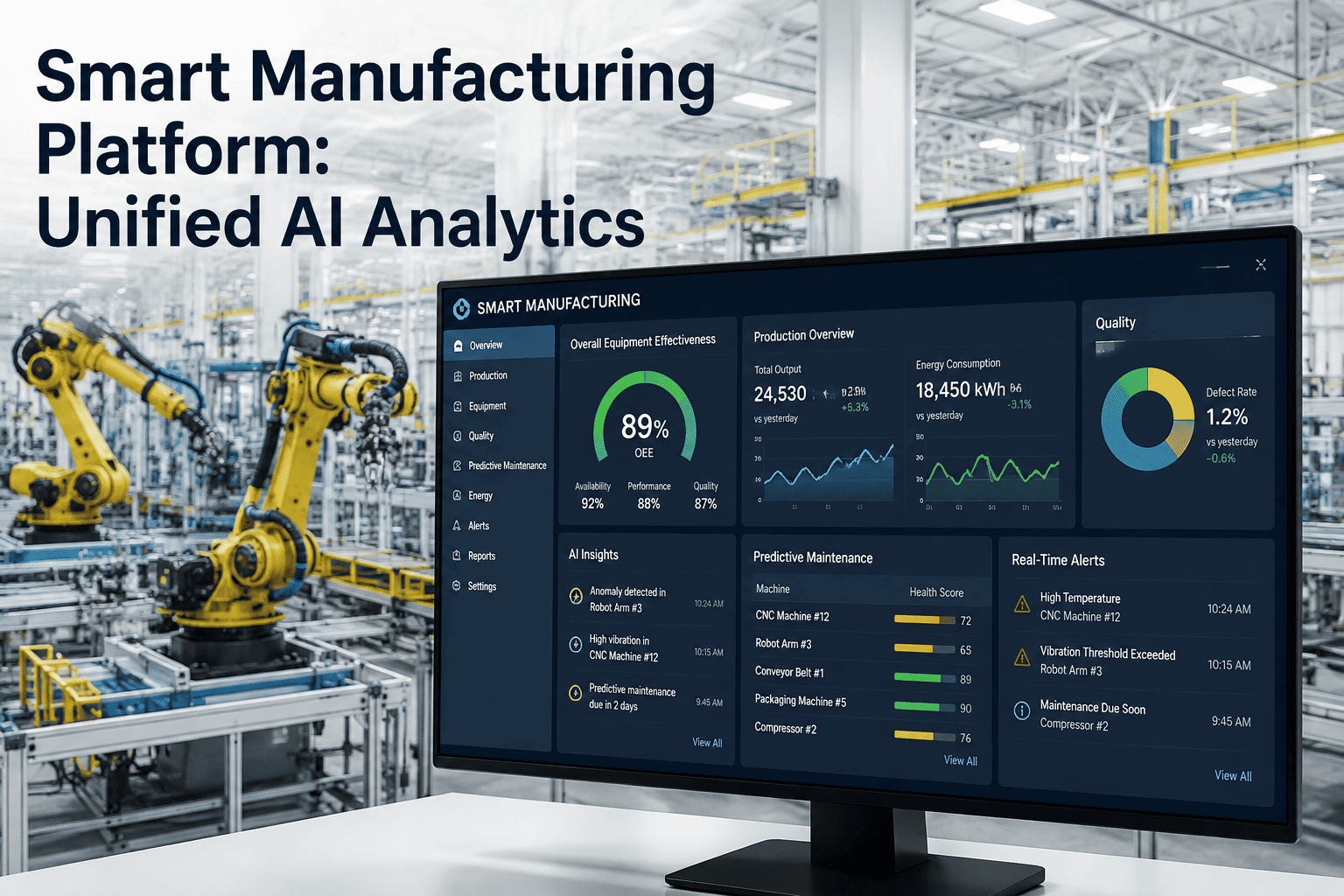
iFactory connects your existing SCADA, PLC, and DCS systems with AI analytics and IoT sensors — delivering real-time visibility and predictive intelligence without replacing your current infrastructure.
Step-by-Step Digital Transformation Roadmap
A phased approach that delivers measurable wins at every stage — no big bang required.
Assess & Connect
Audit your current automation maturity — PLC, SCADA, DCS. Deploy IoT sensors on the top 20% critical assets: kilns, primary mills, ID fans. Establish edge gateways and data pipelines. Build baseline health profiles for each asset.
Predict & Integrate
Train AI predictive maintenance models using baseline sensor data. Integrate CMMS with SCADA/DCS for unified monitoring. Connect to SAP/ERP for automated work orders and spare part procurement. Pilot digital twin on kiln operations.
Optimize & Scale
Expand sensor coverage to all critical and semi-critical assets. Deploy AI energy optimization across kiln, grinding, and cooler operations. Roll out MES integration for quarry-to-dispatch visibility. Launch quality prediction models.
Autonomous Operations
AI autonomously adjusts kiln firing, mill parameters, and cooler airflow. Digital twins drive scenario planning. Multi-plant analytics benchmark performance across sites. The system learns and improves continuously.
The ROI That Makes CFOs Pay Attention
These aren't projections — they're results reported by cement manufacturers who've already made the move.
Common Challenges & How to Overcome Them
Every cement plant faces these hurdles. Here's what the successful ones do differently.
"We can't rip out our existing PLC and SCADA systems."
You don't have to. Industry 4.0 layers on top. IoT sensors connect via OPC-UA, Modbus, and MQTT gateways. iFactory integrates through standard REST APIs — wrapping, not replacing, your current infrastructure.
"Our operators aren't tech-savvy."
Modern platforms show equipment health in simple green/yellow/red status. AI alerts arrive in plain language with recommended actions. Tablet-based training and peer mentoring programs bridge the gap — cement plants across India and Southeast Asia are doing this successfully today.
"The ROI timeline is too long for our budget cycle."
Start with a Phase 1 pilot on your kiln — the asset with the highest downtime cost (up to $300,000/day). Most plants see ROI from a single prevented emergency within 3–6 months, which funds subsequent phases.
"Cybersecurity with connected OT systems scares us."
Industrial cybersecurity is built into every layer: encrypted sensor communications, segmented OT/IT networks, role-based access, SOC 2 compliance, and data sovereignty controls. Your plant data stays in your chosen region.
What the Autonomous Cement Plant Looks Like
The plants being built today will define competitive advantage for the next decade.
Holcim is scaling AI to 100+ plants. Conch Cement is building AI operating systems with Huawei. CEMEX and Titan are investing in AI startups. The autonomous cement plant isn't science fiction — it's being built right now.
Frequently Asked Questions About Cement Digitalization
What exactly is cement industry digitalization?
Cement industry digitalization is the process of replacing manual, paper-based, and siloed plant operations with connected digital systems. This includes deploying IoT sensors for real-time equipment monitoring, using AI and machine learning for predictive maintenance and process optimization, implementing digital twins for simulation, and integrating CMMS with ERP systems for end-to-end operational visibility — from quarry to dispatch.
Do we need to replace our existing PLC, SCADA, and DCS systems?
No. Industry 4.0 solutions are designed to layer on top of your existing infrastructure. IoT sensors connect through OPC-UA, Modbus, and MQTT gateways. Platforms like iFactory CMMS integrate via standard REST APIs — wrapping your current systems with AI intelligence without requiring any rip-and-replace upgrades.
How long does it take to see ROI from cement plant digitalization?
Most cement plants see initial ROI within 3–6 months — often from a single prevented emergency on critical equipment like kilns or vertical roller mills. A phased approach delivers measurable results at each stage: real-time dashboards in weeks, predictive maintenance wins in months, and full plant-wide ROI within 12–18 months. Industry data shows 77% of digital projects in cement report positive returns within the first 18 months.
How does AI predictive maintenance work in a cement plant?
IoT sensors (vibration, thermal, acoustic, power) are deployed on critical assets like kilns, mills, crushers, and ID fans. These sensors stream data continuously to AI/ML models trained on historical failure patterns. The models detect subtle anomalies — bearing degradation, gearbox faults, refractory wear — and generate alerts 3–6 weeks before failure occurs, giving maintenance teams time to plan repairs during scheduled stops instead of reacting to emergencies.
What about cybersecurity when connecting OT systems to the cloud?
Industrial cybersecurity is built into every layer of a properly designed system: encrypted sensor communication, segmented OT/IT networks, role-based access controls, and continuous anomaly monitoring. Cloud platforms use enterprise-grade security with SOC 2 compliance, and data sovereignty controls ensure your plant data stays within your chosen geographic region.
Our plant operators aren't IT experts — can they use these systems?
Absolutely. Modern Industry 4.0 platforms are designed for plant operators, not IT teams. Equipment health is displayed in simple green/yellow/red status indicators. AI alerts are delivered in plain language with specific recommended actions. Training typically uses tablet-based modules and on-floor peer mentoring — cement plants across India, Southeast Asia, and Europe are already using these systems successfully with non-technical staff.
Which assets should we digitalize first for maximum impact?
Start with assets that carry the highest downtime cost: rotary kilns (up to $300,000/day in lost production), followed by vertical roller mills, coal mills, and ID fans. These are also the assets where AI predictive maintenance delivers the fastest ROI. Once you've proven value on the top 20% of critical assets, expand to semi-critical equipment and eventually plant-wide coverage.
What role does iFactory play in cement industry digitalization?
iFactory CMMS serves as the intelligent hub that connects IoT sensor data, AI predictive analytics, digital twin insights, and enterprise systems (SAP, ERP, MES) into one unified platform. It automatically converts anomaly detections into maintenance work orders, tracks spare part inventory, generates compliance reports, and provides multi-plant performance benchmarking — all purpose-built for cement manufacturing operations.
Your Cement Plant's Digital Future Starts With One Conversation
See how iFactory connects IoT sensors, AI analytics, and your existing systems into one intelligent platform — purpose-built for cement manufacturing. No rip-and-replace. No disruption. Just smarter operations from day one.