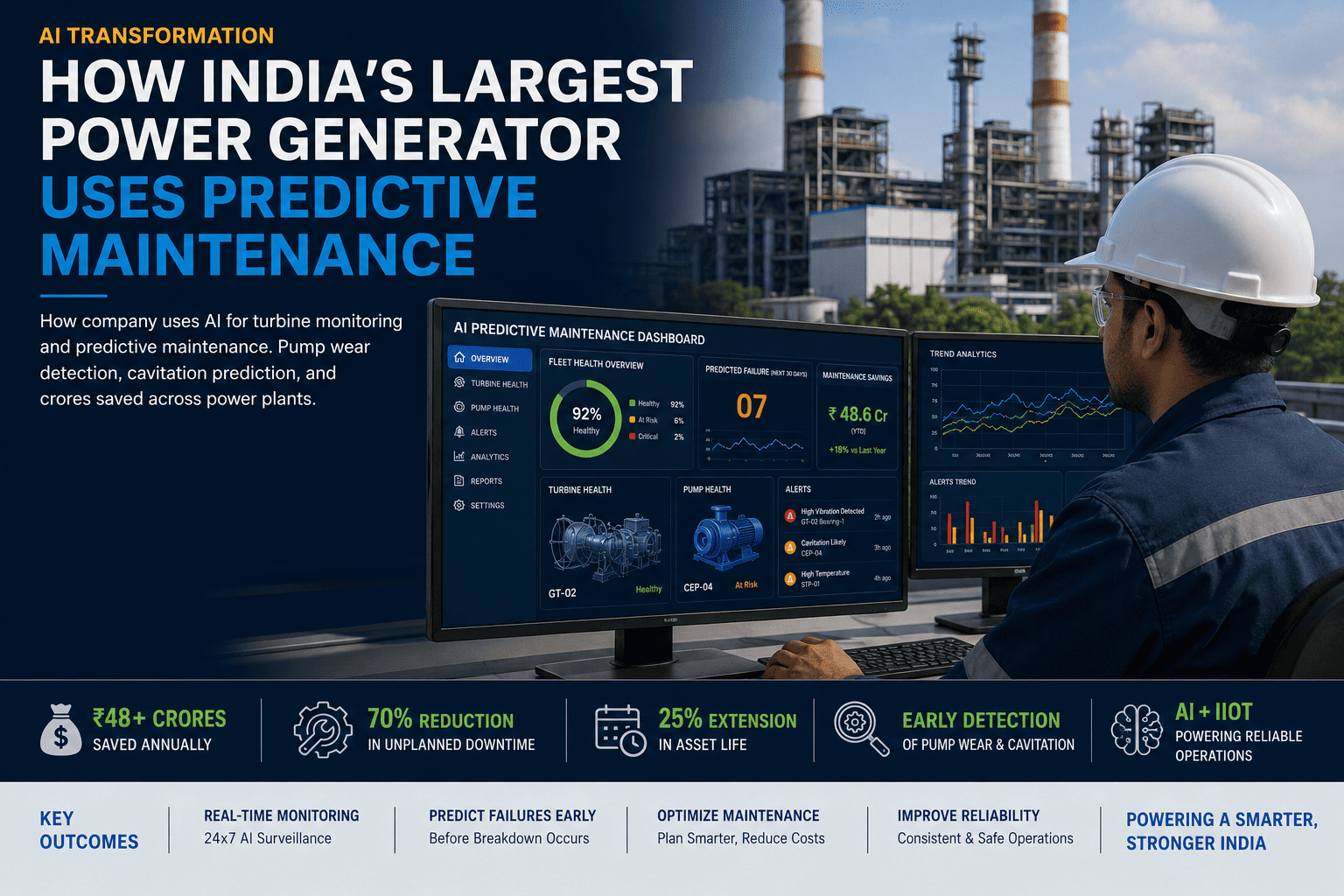
A single operator is misjudgment during a load ramp can cascade into a $2 million forced outage in under four hours. With power plants now cycling 50+ times per year instead of the 3-6 starts, they were designed for the margin for human error during load changes are has never been thinner. Smart monitoring and AI-assisted decision support now catch the subtle anomalies that human operators consistently miss during high stress ramping events. Book a free consultation to explore real-time load monitoring for your plant.
Operator Decision Errors During Load Changes in Power Plants
How Smart Monitoring Prevents the Human Errors That Cause Forced Outages, Equipment Damage & Grid Instability
Why Load Change Errors Are Escalating
Power plants designed for baseload are now forced into aggressive cycling—and operators are paying the price.
From 6 Starts to 50+ Per Year
Renewable integration has forced coal and gas plants into load-following roles they weren't designed for. Each cycle stresses turbines, boilers, and control systems—amplifying the risk of operator error during every ramp.
Shrinking Decision Windows
During rapid load ramps, operators must interpret dozens of parameters simultaneously. A 2–3 second delay in recognizing a boiler tube anomaly during ramping can escalate into an 8-hour forced outage.
Younger, Less Experienced Crews
Early retirement programs and industry competition have drained the experienced operator pool. Newer operators lack the pattern recognition that comes from decades of managing load transitions under pressure.
Alarm Fatigue is Real
Modern control rooms generate hundreds of alarms during load transitions. When everything is flagged as critical, operators lose the ability to prioritize—and miss the one alert that actually matters.
The 5 Most Dangerous Operator Errors During Load Changes
Research shows these errors account for the majority of load-change incidents across thermal, gas, and nuclear plants.
Exceeding Ramp Rate Limits
Operators push turbines beyond design ramp rates (typically 2–5% per minute) to meet dispatch demands. This causes thermal stress on rotor components, creep damage accumulation, and dramatically shortens component life—turning years of remaining service into months.
Incorrect Fuel-Air Ratio Adjustment
During load transitions in gas and coal plants, operators must precisely balance fuel input with air supply. Too rich causes unburned fuel accumulation (explosion risk); too lean causes flame instability and potential flameout—both triggering emergency shutdowns.
Misreading Temperature & Pressure Trends
Operators misinterpret gradual temperature drift as normal during ramps, missing the early signatures of boiler tube leaks or bearing degradation. By the time the anomaly becomes obvious, the failure cascade is already underway.
Delayed Response to BMS Warnings
Battery and boiler management systems flag early warnings that operators dismiss as nuisance alarms. Studies show 51% of human errors in power plants stem from insufficient maintenance response—and delayed reaction to monitoring system alerts is the leading trigger.
Improper Cooldown Sequencing
Rushing the cooldown process during load reduction creates severe thermal gradients in thick-walled components. Operators who skip proper cooldown hold points cause fatigue cracking that may not manifest for months—until a catastrophic failure during the next ramp cycle.
Where Errors Happen: The Load Change Risk Curve
Mapping operator decision points against equipment stress levels during a typical ramp cycle.
Cold Start (0–30%)
Procedures are well-defined and sequential. Error risk is lower but improper preheating causes thermal shock to thick-walled components.
Lower RiskRamp Up (30–80%)
Multiple systems must be coordinated simultaneously. This is where operators most often exceed ramp rate limits and miss temperature anomalies.
High RiskTransition (80–100%)
The most dangerous phase. Fuel-air ratio adjustments, steam pressure balancing, and generator synchronization all demand split-second decisions.
Critical RiskRamp Down (100–30%)
Often rushed due to economic pressure. Improper cooldown sequencing creates hidden fatigue damage that compounds over multiple cycles.
High RiskStop Guessing During Load Changes
AI-powered monitoring detects the subtle equipment anomalies that operators miss under pressure—before they cascade into forced outages.
What Operator Errors Actually Cost
Per Forced Outage
The average unplanned outage on an industrial-critical asset lasts 4 hours and costs $2 million in lost generation, penalties, and emergency repairs.
Coal Plant EFOR
Coal plants average a 10% effective forced outage rate—meaning they're unexpectedly offline one out of every ten operating hours, largely due to cycling stress.
Regulatory Fines
Grid reliability violations from forced outages during peak demand can trigger SAIFI penalties ranging from $100,000 to $1,000,000 per incident.
Accelerated Component Failure
Plants cycling at 50+ starts/year that were designed for 3–6 can see critical component failures within 2–6 years instead of their full design life.
How Smart Monitoring Eliminates Load Change Errors
A layered digital approach that augments operator judgment at every phase of the load cycle.
Predictive Anomaly Detection
AI models trained on historical ramp data detect subtle operating state changes that precede failures. In real-world deployments, these systems have identified boiler tube leak onset 8 hours before traditional monitoring systems—while the plant was still ramping.
Real-Time Ramp Rate Guidance
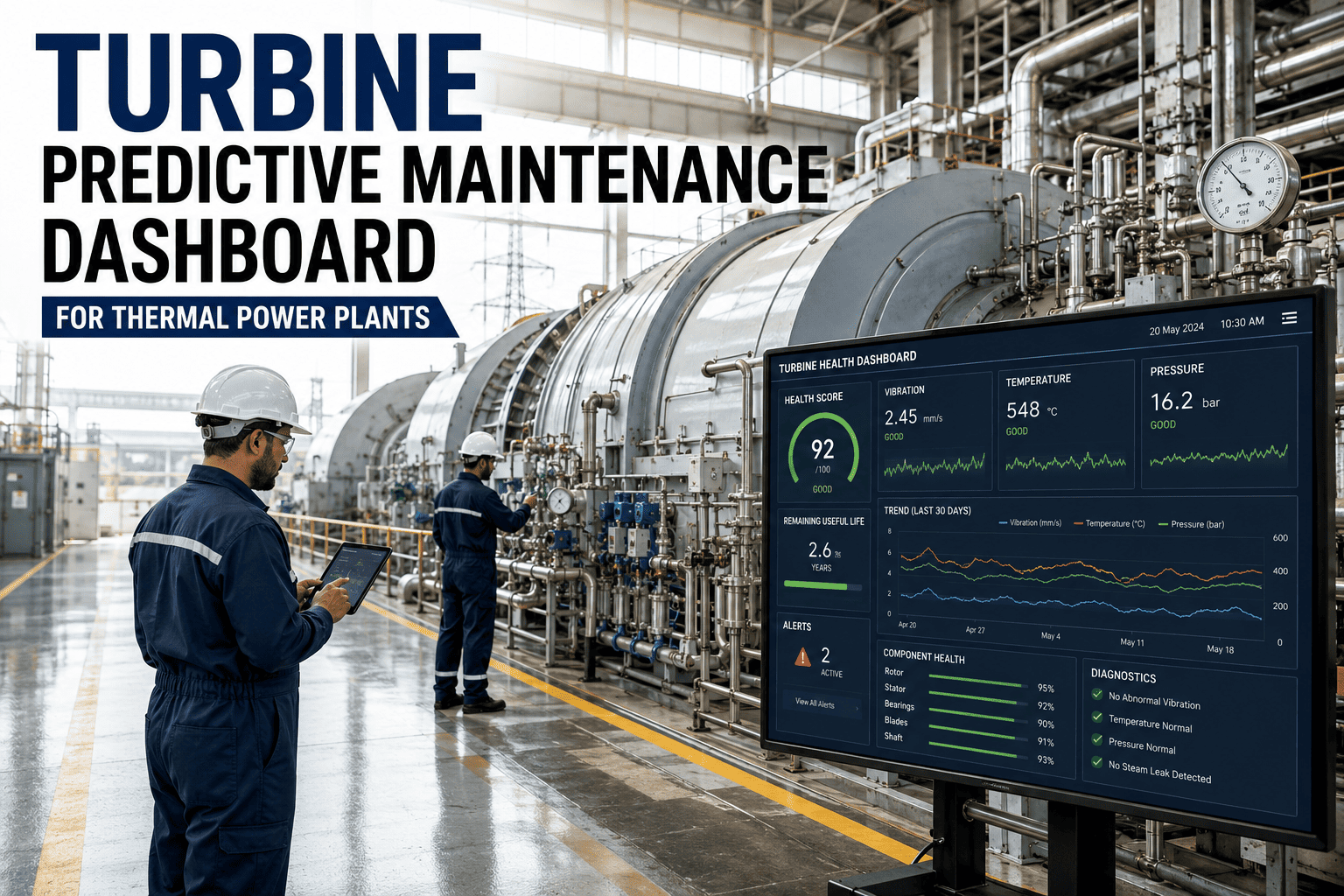
Smart dashboards overlay safe operating envelopes on live ramp data, giving operators clear visual boundaries. When the ramp rate approaches design limits, automated alerts trigger before the operator can overshoot—preventing thermal stress accumulation.
Intelligent Alarm Prioritization
ML-based alarm management filters nuisance alerts and surfaces only actionable warnings during load transitions. This cuts alarm volume by up to 80%, letting operators focus on the signals that actually indicate developing faults.
Digital Checklists & Procedure Enforcement
CMMS-integrated digital workflows ensure every load change follows approved procedures. Cooldown hold points, fuel-air ratio verifications, and system checks are enforced digitally—eliminating the procedural shortcuts that cause 29% of operator errors.
Transform Your Power Plant Operations Before the Next Load Change Goes Wrong
See how iFactory's smart monitoring platform combines AI-powered anomaly detection, CMMS integration, and digital procedure enforcement to prevent the operator errors that cause costly forced outages.
Digital Transformation Roadmap for Power Plants
Step-by-step roadmap to digitally transform power plant operations safely and effectively.
Foundation: Sensor Infrastructure & Data Capture
Deploy IoT sensors on critical rotating equipment, boiler systems, and control valves. Establish baseline performance data during normal load cycles. Connect existing SCADA and DCS outputs to a centralized data platform.
Intelligence: CMMS Integration & Predictive Models
Integrate sensor data with your CMMS to auto-generate work orders from anomaly detection. Train AI models on your plant's specific load cycling patterns to predict equipment stress and remaining useful life.
Optimization: Operator Decision Support & Digital Workflows
Deploy real-time ramp rate guidance dashboards. Implement intelligent alarm management to reduce fatigue. Digitize load change procedures with enforced checklists and approval gates in the CMMS.
Scale: Digital Twin, Continuous Improvement & Compliance
Build a digital twin of your plant's thermal and mechanical systems. Run simulated load change scenarios for operator training. Automate compliance documentation and regulatory reporting from live operational data.
The ROI of Preventing Operator Errors
What plants achieve when they move from reactive to predictive operations.
Predictive maintenance combined with operator decision support dramatically reduces unplanned shutdowns caused by human error during load transitions.
Intelligent alarm management cuts nuisance alerts by up to 80%, allowing operators to focus on the warnings that actually indicate developing failures.
Catching cycling damage early and enforcing proper ramp procedures extends component life and reduces emergency repair spend significantly.
With forced outages averaging $2M each, preventing even one or two unplanned events per year delivers ROI within the first year of deployment.
In a real-world deployment at a fossil power plant, an AI monitoring system detected the onset of a boiler tube leak during load ramping—8 hours before any traditional monitoring system flagged the issue. The early detection allowed a controlled shutdown instead of a catastrophic forced outage.
Based on industrial predictive maintenance case studies, Power Magazine 2025Frequently Asked Questions
Common questions about operator errors during load changes and smart monitoring solutions.
Why are operator errors increasing during load changes
Plants designed for baseload operation are now cycling 50+ times per year due to renewable integration. This exposes operators to more decision-critical transitions with shrinking time windows, while experienced personnel are retiring faster than they can be replaced.
What is the most common type of operator error during ramping
Research shows the most common errors are omissions (forgetting a procedural step) and delayed operations (slow response to developing anomalies). Both are amplified by alarm fatigue and the cognitive overload of managing multiple systems during rapid load transitions.
How does CMMS integration help prevent load change errors
A CMMS integrated with IoT sensors and AI analytics automates work order generation from anomaly detection, enforces digital procedure checklists during load changes, and provides complete audit trails for compliance—removing the reliance on manual decision-making.
What does a digital transformation roadmap look like for a power plant
A typical 12-month roadmap progresses through four phases: sensor infrastructure deployment, CMMS integration with predictive models, operator decision support dashboards, and finally digital twin simulation and automated compliance reporting.
How quickly can smart monitoring deliver ROI
With a single forced outage costing an average of $2 million, most plants achieve full ROI within 12 months. The combined savings from reduced outages, lower maintenance costs, and extended component life typically exceed $1.3M per monitored line annually.
Can AI really detect failures before operators do
Yes. AI models analyze thousands of parameters simultaneously and detect pattern deviations invisible to human operators. Documented cases show AI identifying tube leak onset, bearing fatigue, and sensor calibration drift hours to weeks before traditional systems or human observation.
Start Your Digital Transformation Journey Today
From sensor deployment to AI-powered decision support—iFactory helps power plants reduce operator errors, prevent forced outages, and extend equipment life with a proven 12-month roadmap.