Best CMMS Software for Food Processing Plants in the USA (2026 Guide)
By Riley Quinn on February 16, 2026
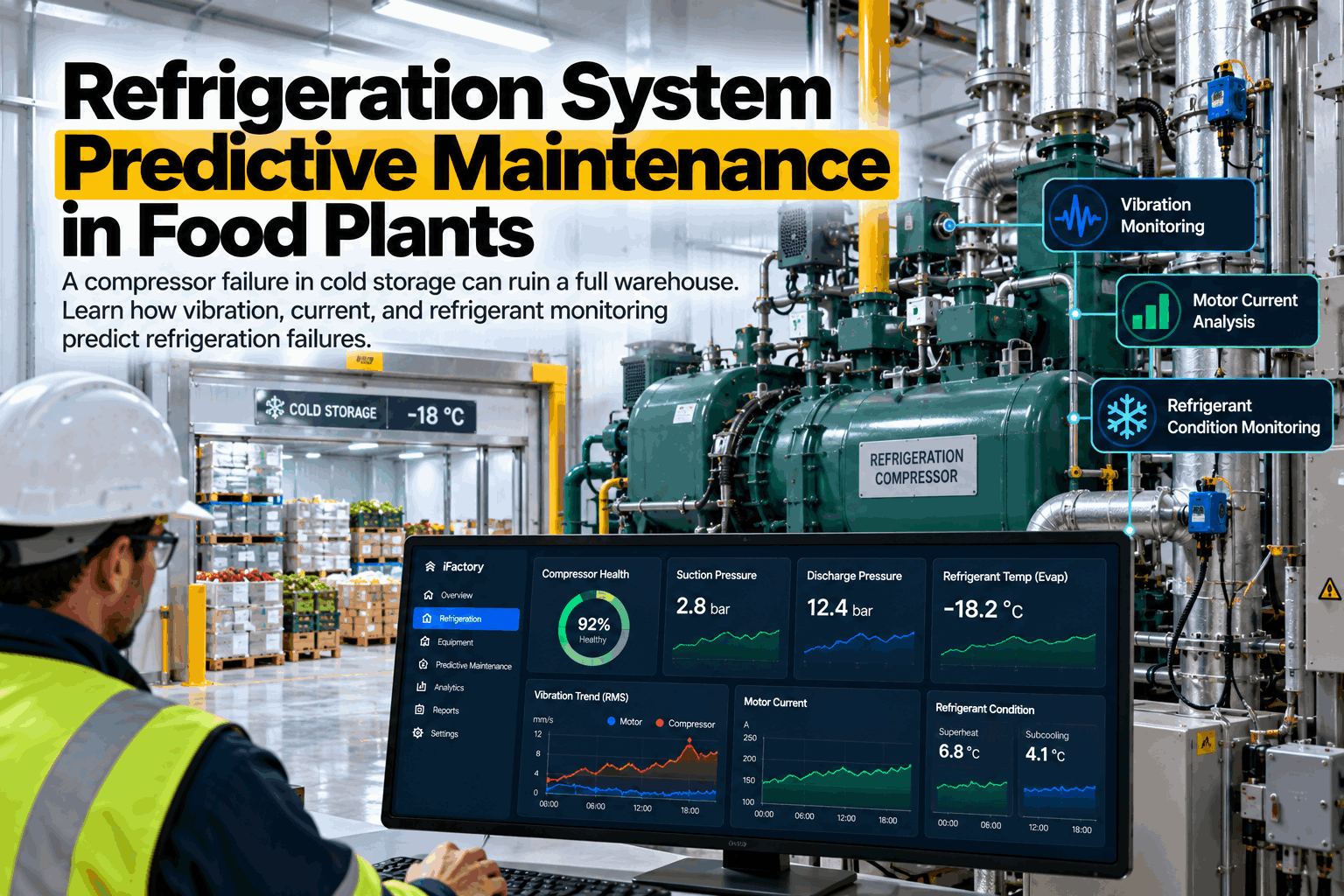
A freezer compressor fails at 2 AM. By the time the morning shift arrives, 40,000 pounds of product sits at 28°F instead of -10°F. Total loss: $180,000—plus the FDA audit that follows. In food processing, maintenance isn't just about uptime. It's about product safety, regulatory compliance, and protecting your brand from a single equipment failure that becomes a recall. That is why food plants across the USA are turning to CMMS software built for their unique challenges.
FDA + FSMA
Compliance Required
$371B
Cold Chain Market 2025
13%
Food Lost Annually to Spoilage
Why Food Plants Need Specialized CMMS
Standard maintenance software treats your bakery line like a warehouse conveyor. It doesn't understand HACCP critical control points, sanitation cycles, or why a bearing that leaks grease into product is worse than a bearing that simply fails. Food processing has unique challenges that require purpose-built solutions.
Regulatory Compliance
FDA, FSMA, HACCP, SQF, USDA—your maintenance logs aren't just internal records. They're legal documents auditors will scrutinize.
Risk: Violations, fines, facility shutdown
Temperature Critical Assets
Freezers, chillers, pasteurizers, ovens—if temperature drifts outside spec, product safety is compromised in hours or minutes.
Risk: Product loss, contamination, recalls
Sanitation Requirements
Clean-in-Place (CIP), allergen changeovers, and washdown cycles must be tracked with the same rigor as maintenance work orders.
Risk: Cross-contamination, allergen issues
Perishable Timelines
Unlike automotive, you can't pause production and wait for parts. Product is moving—and spoiling—every minute equipment is down.
Risk: Spoilage costs, missed shipments
Struggling with any of these challenges? Book a free consultation with our food industry specialists.
What Food-Grade CMMS Actually Delivers
The right CMMS transforms maintenance from a cost center into a compliance shield and productivity driver. Here's what matters most for food processing plants:
01
Audit-Ready Documentation
FDA Compliant
Every work order, inspection, and calibration creates an unalterable, timestamped digital record. When the FDA auditor asks for maintenance history on the pasteurizer from 3 months ago, you pull it in seconds—not hours of digging through binders.
Digital signaturesComplete audit trailsInstant report export
02
Temperature Monitoring Integration
IoT Connected
Connect sensors on critical cold chain equipment. When a freezer temperature rises 2°F above threshold, the system automatically triggers a work order—before you lose product. Real-time alerts mean real-time response.
Auto work ordersThreshold alertsTemperature logging
03
Sanitation Scheduling
HACCP Ready
Manage CIP cycles, allergen changeovers, and cleaning procedures with the same rigor as equipment maintenance. Track completion, verify with e-signatures, and ensure nothing gets missed between production runs.
Schedule PM tasks based on runtime hours, production cycles, or calendar intervals. The system sends alerts before deadlines, tracks completion rates, and identifies equipment that's overdue—so nothing slips through the cracks.
Auto schedulingCompliance trackingOverdue alerts
05
Mobile-First for Plant Floor
IP69K Ready
Technicians access work orders, log completion, and attach photos from ruggedized tablets—even in wet, cold, or washdown environments. No more walking back to the office. No more paper forms that get wet and illegible.
Offline capablePhoto attachmentsQR code scanning
Want to see these features in action? Talk to our team about a personalized demo.
Built for Food Safety, Not Just Uptime
iFactory CMMS combines maintenance management with food safety compliance—so you're always audit-ready and never caught off guard by equipment failures.
Catch temperature excursions before they become spoilage events. One prevented freezer failure can pay for years of CMMS.
$180K+saved per prevented spoilage event
Audit Confidence
Walk into FDA, SQF, or BRC audits knowing every record is complete, accessible, and defensible. No scrambling for missing paperwork.
80%reduction in audit prep time
Reduce Downtime
Preventive maintenance catches problems before they become breakdowns. Keep lines running when product is moving.
30-40%reduction in unplanned downtime
Technician Efficiency
Mobile access, digital SOPs, and automated scheduling mean technicians spend time fixing—not searching for information.
25%more wrench time per technician
Expert Perspective
"Under HACCP and FSMA, your maintenance logs aren't just for internal tracking—they're legal documents. A time-based PM schedule that says 'lubricate bearing every 500 hours' is a good start, but it doesn't prove the bearing is actually healthy. Modern CMMS provides the objective, auditable evidence that regulators increasingly demand."
— Factory AI, Predictive Maintenance in Food Manufacturing
iFactory CMMS gives food processing plants the documentation, compliance tracking, and preventive maintenance tools they need to pass audits and prevent costly failures.
What makes CMMS for food processing different from general maintenance software?
Food-specific CMMS includes built-in compliance templates for FDA, HACCP, SQF, and USDA; sanitation scheduling with verification workflows; temperature monitoring integration; allergen changeover tracking; and audit trail documentation designed for regulatory inspections. General CMMS treats all equipment the same—food CMMS understands that a contamination event is worse than a breakdown.
How does CMMS help with FDA and FSMA compliance?
CMMS creates unalterable, timestamped digital records of every maintenance activity, calibration, and inspection. This provides the "preventive controls" documentation that FSMA requires. When auditors ask for records, you can filter and export complete maintenance history in seconds—with digital signatures proving who did what and when.
Can CMMS integrate with our temperature monitoring systems?
Yes. Modern CMMS platforms integrate with IoT sensors via SCADA, direct API connections, or middleware. When a freezer temperature exceeds threshold, the system can automatically create a prioritized work order. Look for IP69K-rated sensors designed for food processing environments that handle high-pressure washdowns.
How much does CMMS cost for a food processing plant?
CMMS software typically costs $25-150 per user per month for licensing. Small facilities might invest $50,000-150,000 total including implementation, while larger operations could spend $200,000-500,000+ for comprehensive deployments. The ROI often comes from a single prevented spoilage event or passed audit that would otherwise require costly remediation.
How long does implementation take?
Modern cloud-based CMMS can be deployed in 2-8 weeks for mid-sized facilities. Most plants start with critical equipment (refrigeration, pasteurizers, CIP systems) and expand from there. The key is getting basic PM scheduling and documentation running quickly, then adding advanced features like predictive maintenance and IoT integration over time.