A single unscheduled aircraft grounding costs airlines between $10,000 and $260,000 per hour. Multiply that across an aging global fleet where 55% of commercial aircraft are over 10 years old, and you begin to understand why aviation management is being rewritten by AI, digital twins, and predictive maintenance. The $88 billion MRO industry is shifting from paper checklists to sensor-driven intelligence — and the operators who move first are seeing 15% less downtime and 20% higher labor productivity. Here is your complete guide to navigating it. Book a free demo to see how iFactory CMMS transforms aviation maintenance operations.
Aviation Management 2026: Airport Operations, Safety, MRO & Digital Transformation Guide
From Hangar Floor to Flight Deck — How AI, Digital Twins, and Smart CMMS Are Redefining Aviation Operations
The Four Pillars of Modern Aviation Management
Aviation management in 2026 sits at the intersection of safety, operations, technology, and compliance. Each pillar depends on accurate, real-time data.
Airport Operations
Ground handling, turnaround management, gate assignments, runway scheduling, and terminal infrastructure — all must work in concert to maintain on-time performance and throughput efficiency across thousands of daily movements.
Safety & Compliance
ICAO standards, FAA regulations, EASA directives, and Safety Management Systems (SMS) demand continuous monitoring, incident tracking, risk assessment, and audit-ready documentation across every operational layer.
MRO & Maintenance
Engine overhauls, airframe checks, line maintenance, and component repair form the backbone of airworthiness. With 60% of airlines now investing in predictive maintenance, the shift from scheduled to condition-based care is accelerating.
Digital Transformation
AI-driven analytics, digital twins, IoT sensor networks, cloud-based CMMS, and agentic AI are transitioning aviation from reactive paper-based workflows to intelligent, data-driven ecosystems that predict and prevent.
Aviation MRO: Where the Money Is — and Where It Is Lost
Understanding MRO spend allocation reveals exactly where predictive maintenance and CMMS integration deliver the highest return.
of MRO activities are outsourced to third-party providers
of narrow-body fleet drives the majority of MRO demand
projected CAGR for MRO market through 2036
From Reactive to Predictive: The Aviation Maintenance Evolution
Aviation maintenance is undergoing a generational transformation. Here is how each approach compares across the metrics that matter.
| Metric | Reactive | Preventive | Predictive (AI) |
|---|---|---|---|
| When Maintenance Happens | After failure | Fixed calendar intervals | When data says it is needed |
| Downtime Impact | Catastrophic — grounded aircraft | Moderate — some over-servicing | Minimal — planned windows |
| Cost Efficiency | 3–5x emergency repair premium | 30–40% parts replaced early | Up to 30% cost reduction |
| Safety Risk | High — undetected failures | Managed — scheduled checks | Lowest — continuous monitoring |
| Data Required | None — wait and fix | Historical service intervals | Real-time sensor + AI models |
| Compliance Readiness | Audit risk — gaps in records | Baseline — standard logs | Audit-ready — digital trail |
Your Fleet Deserves Maintenance Intelligence, Not Guesswork
iFactory CMMS integrates with your MRO workflows — automating work orders, enforcing compliance documentation, tracking asset health, and connecting maintenance to real-time operational data.
The 2026 Aviation Digital Transformation Stack
Five technologies converging to reshape every layer of aviation operations.
Digital Twins
Live virtual replicas of aircraft, engines, and airport infrastructure. Rolls-Royce, GE, and Lufthansa Technik use digital twins to predict engine wear, optimize overhaul timing, and simulate maintenance scenarios before touching the real asset.
AI-Driven Predictive Maintenance
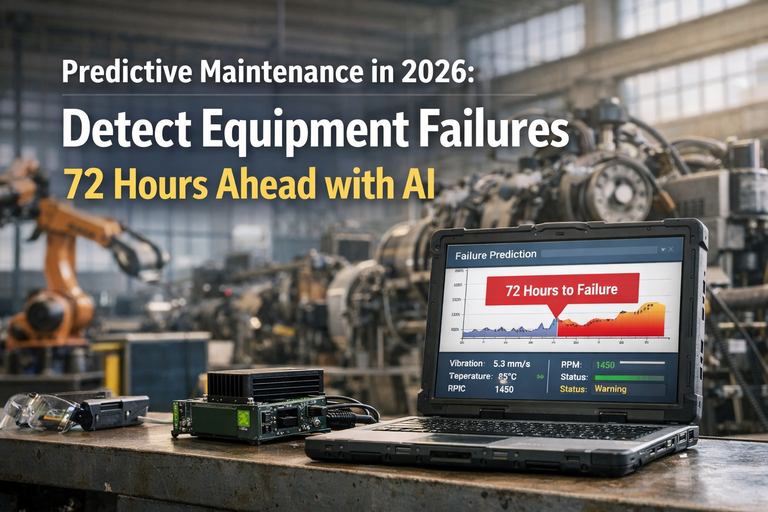
Machine learning models analyze vibration, thermal, and electrical signatures to forecast component failure weeks in advance. Over 35% of aircraft operators already incorporate some form of predictive maintenance. The result: 15% less downtime and 20% higher labor productivity.
IoT Sensor Networks
Embedded sensors across engines, landing gear, avionics, and airframes stream real-time health data to cloud-based analytics platforms. Temperature, vibration, pressure, and wear data enable condition-based maintenance at a granularity impossible with manual inspections.
Cloud-Based CMMS
Computerized Maintenance Management Systems are replacing paper-based tracking with digital work orders, automated compliance logs, parts inventory management, and maintenance history that is audit-ready from day one. Mobile-first hangar workflows are the new standard.
Agentic AI & Automation
Beyond chatbots — agentic AI systems autonomously manage scheduling, crew coordination, supply chain decisions, and compliance monitoring. These systems act as digital operations managers, executing tasks without human prompting.
Aviation Safety Management: The Non-Negotiable Foundation
Every technology investment must serve the ultimate priority — safety and regulatory compliance.
Safety Management Systems
ICAO requires all aviation organizations to implement SMS frameworks that identify hazards, assess risk, and track corrective actions systematically.
Automates incident logging, links corrective work orders to hazard reports, and generates audit-ready compliance documentation in real time.
Regulatory Compliance
FAA Part 121/145, EASA Part-M/Part-145, and ICAO Annex 6 define maintenance intervals, documentation requirements, and airworthiness directives that must be tracked without exception.
Enforces compliance calendars, auto-flags overdue inspections, maintains digital maintenance records, and creates traceability from work order to regulatory directive.
Audit Readiness
Paper-based maintenance records create gaps, version conflicts, and retrieval delays that put operators at risk during FAA or EASA audits — with penalties ranging from fines to operational suspension.
Every maintenance action is timestamped, linked to the technician, tied to the specific asset, and stored in a searchable digital archive with full change history.
What Data-Driven Aviation Management Delivers
When operations, maintenance, and compliance share a single data platform, the results compound.
Predictive maintenance programs reduce unscheduled aircraft ground time by detecting component degradation before it reaches failure thresholds.
Digital workflows, automated scheduling, and AI-assisted diagnostics free maintenance technicians from paperwork and let them focus on high-value technical work.
Condition-based maintenance replaces parts at end-of-life rather than on fixed schedules — eliminating premature replacements and reducing inventory waste.
Digital MRO solutions with integrated parts tracking, automated work sequencing, and real-time progress monitoring dramatically cut aircraft turnaround times.
Aviation Operations Maturity Audit
Where does your organization stand? Each "No" represents risk, cost, or compliance exposure.
Frequently Asked Questions
How does a CMMS support aviation regulatory compliance?
A CMMS like iFactory enforces maintenance schedules tied to airworthiness directives, auto-logs every action with timestamps and technician IDs, tracks parts traceability, and generates compliance reports on demand — making your organization audit-ready at all times.
What is the ROI of predictive maintenance in aviation?
Industry data shows predictive maintenance delivers a 15% reduction in downtime, 20% improvement in labor productivity, and up to 30% lower maintenance costs. For a typical fleet, this translates to millions in annual savings from avoided unscheduled groundings alone.
Can iFactory CMMS integrate with existing MRO software?
Yes. iFactory is designed to integrate with existing MES, ERP, and MRO platforms — unifying maintenance data, parts inventory, work orders, and compliance tracking into a single source of truth rather than replacing your entire ecosystem.
How are digital twins used in aviation MRO?
Digital twins create live virtual models of aircraft engines and systems. They simulate wear patterns, predict maintenance needs, and allow MRO teams to test repair strategies virtually before executing them — reducing risk and optimizing overhaul scheduling.
Aviation Maintenance Is No Longer a Cost Center. It Is a Competitive Advantage.
iFactory CMMS gives your aviation operations the digital backbone for predictive maintenance, automated compliance, integrated work orders, and fleet-wide asset intelligence.