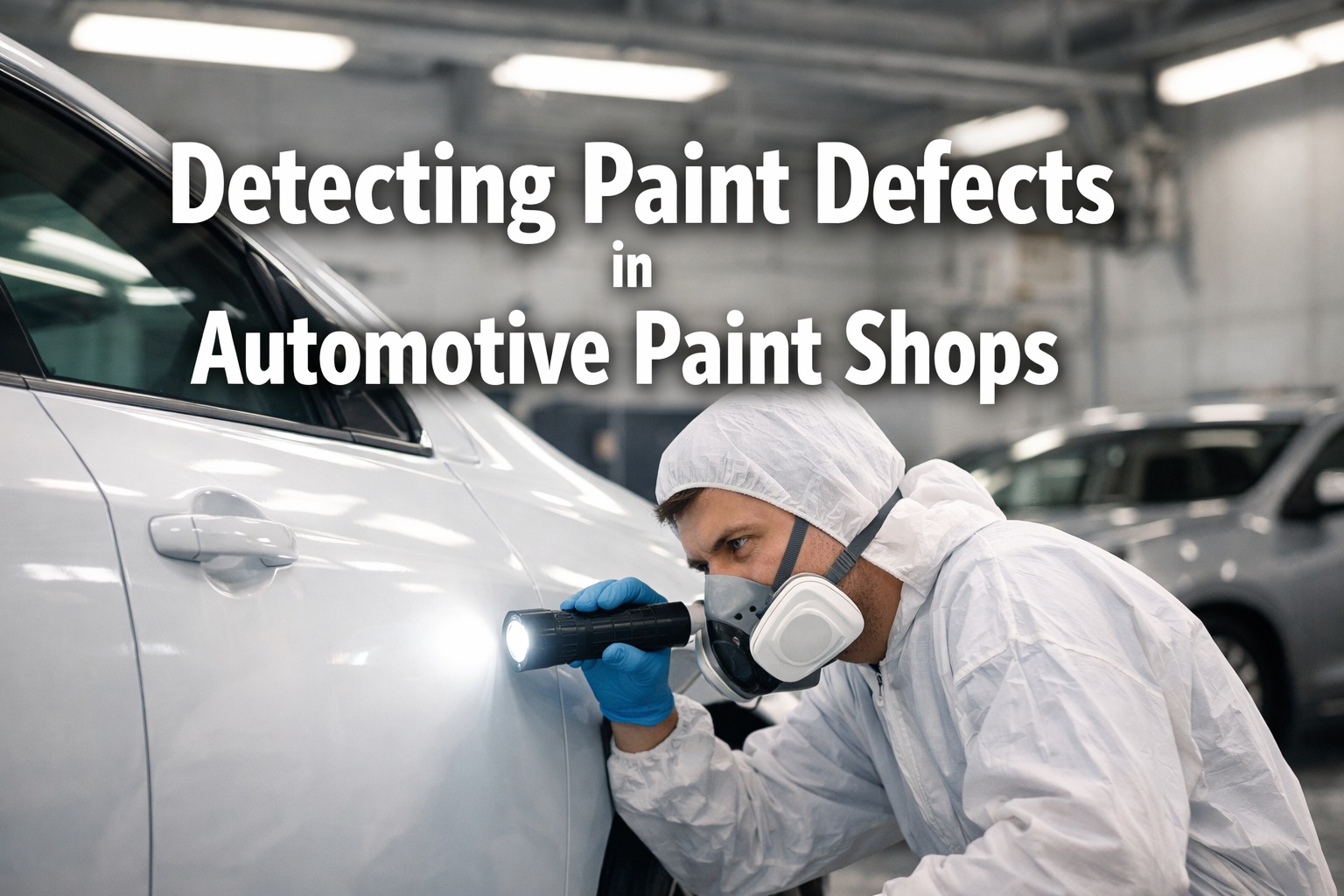
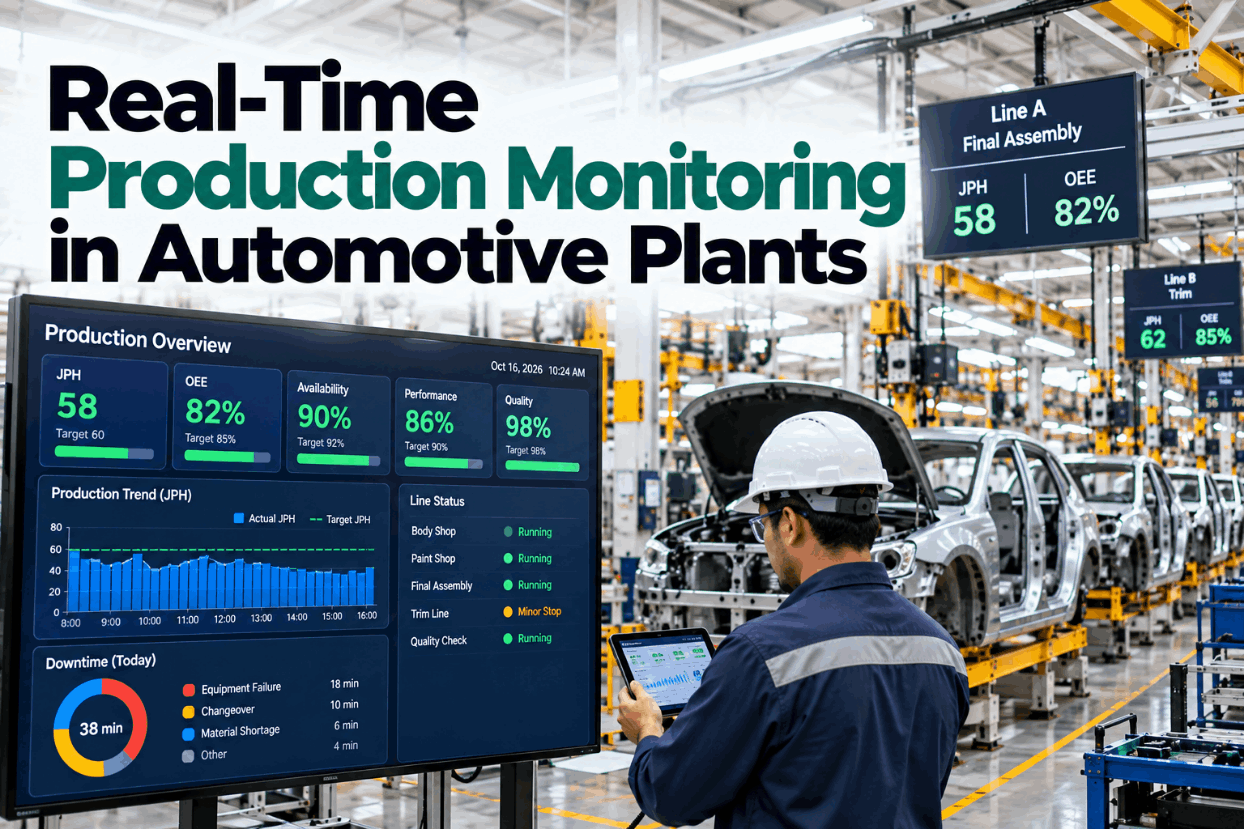
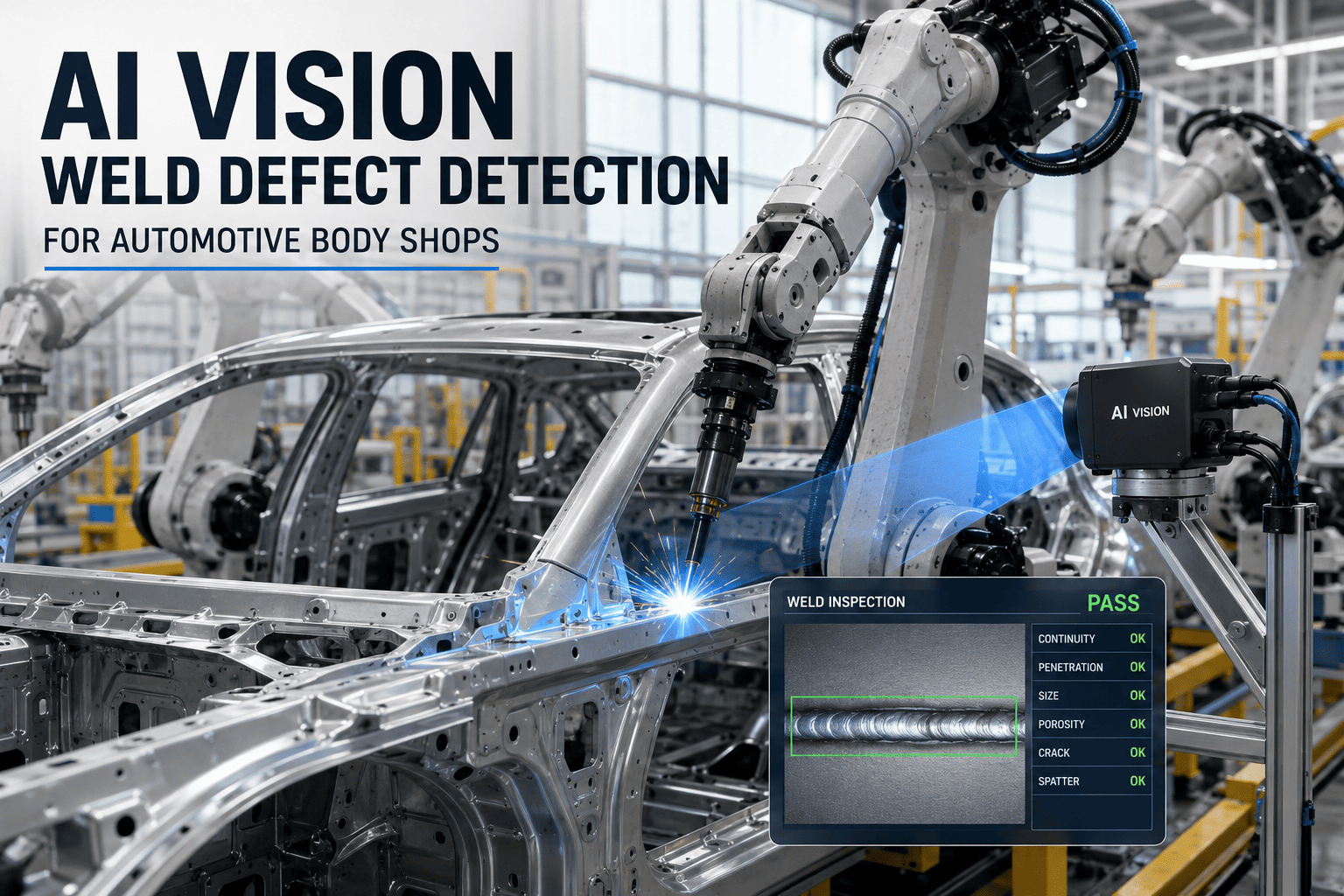
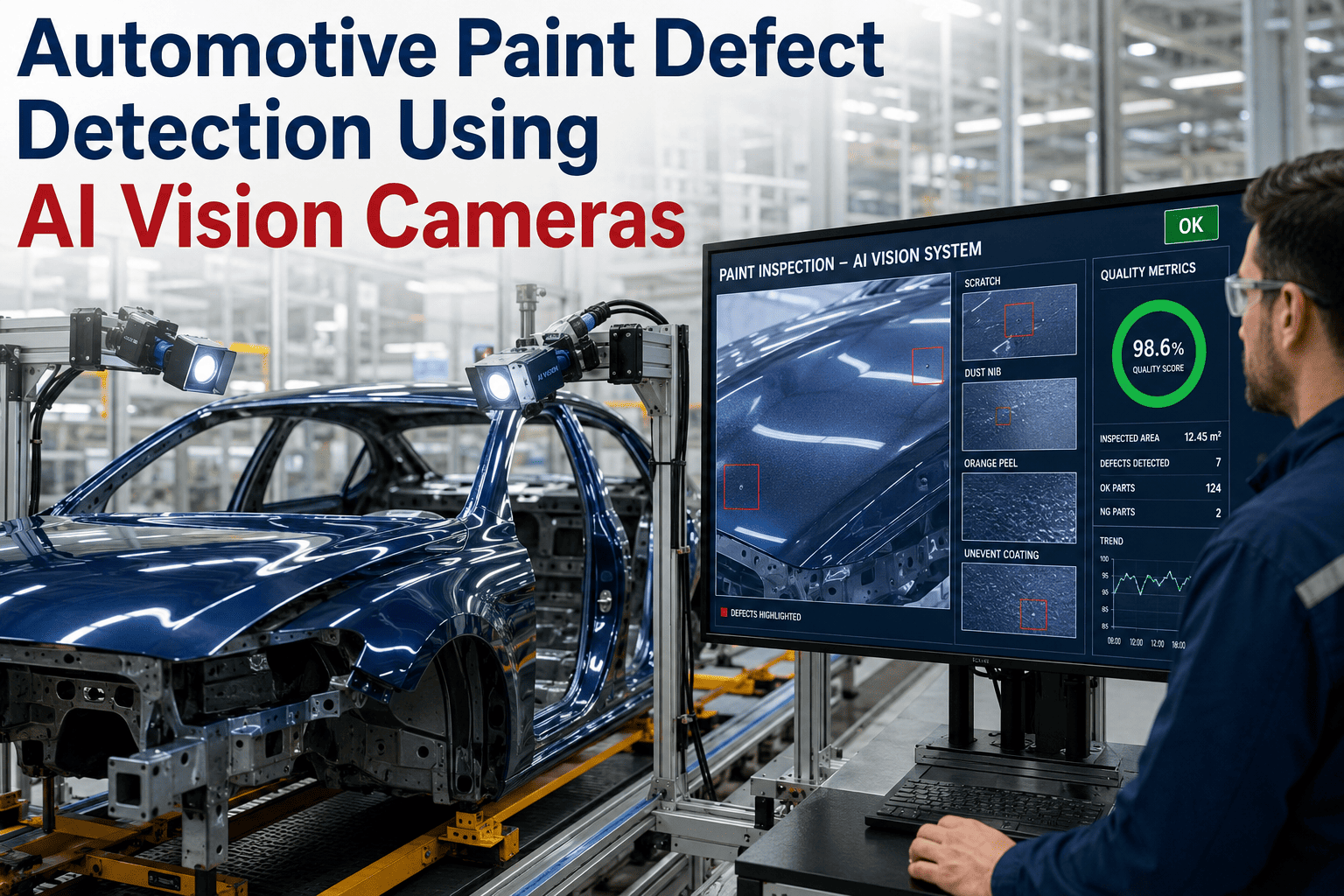
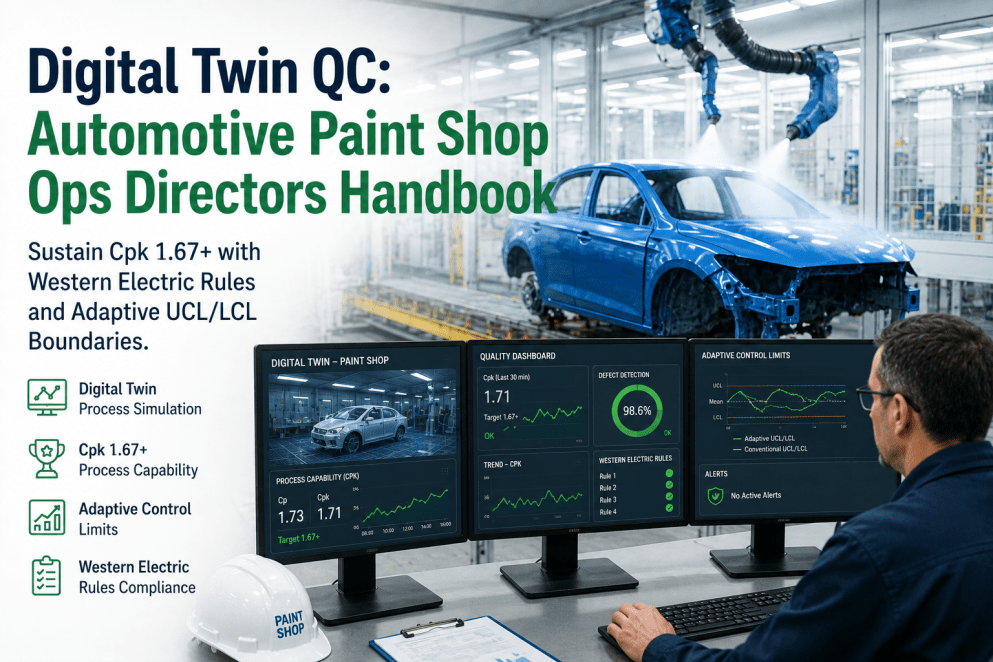
The paint shop is the most expensive single operation in an automotive plant—and the most unforgiving. A flawless topcoat requires 100+ process parameters held within tolerance across E-coat, primer, basecoat, and clearcoatall while vehicles move through at 50-60 jobs per hour. Yet 5-15% of vehicles still leave the paint booth with defects that need rework. At up to $1,000 per vehicle in materials and labor to fixa plant producing 1,000 cars per day can burn through $50,000-$150,000 daily in paint rework alone. BMW became the first automaker to deploy AI-powered automated optical inspection (AOI) in series production in 2023. Porsche followed at Leipzig. Nissan's AUTIS system scans for submillimeter flaws across 500,000+ vehicles. The signal is clear: human inspectors working in tunnels under fluorescent lights can no longer keep pace with the speed, complexityand quality expectations of modern paint shops.
5-15%Defect Rate
of vehicles manufactured require paint rework
— Eines Vision Systems, Automotive Paint Defects Study
$1,000
average rework cost per vehicle including materials and labor
99%
surface coverage with AI-powered robotic inspection systems
30%
of customers report dissatisfaction from paint quality issues
Manufacturers integrating AI paint inspection with create a closed-loop system where every defect is detected, classified, mapped to 3D coordinates, linked to the vehicle identity, and traced back to the specific process parameters that caused it—transforming paint quality from subjective human judgment into data-driven process control.
The 8 Paint Defects Costing Your Shop Millions
Each defect type has distinct root causes, detection methods, and severity levels. AI inspection systems are trained to classify all of them—something human inspectors do inconsistently, especially across shifts.
01
Dirt & Particle Inclusions
Dust / Fiber
Booth air filtration failure, clothing contamination
Paint Slag
Dried paint from bell cups, hoses, or overspray buildup
Metallic Flake
Sanding residue, body shop debris not fully cleaned
#1 Most Common Defect — Dirt accounts for the majority of all paint defects regardless of plant cleanliness. Deflectometry catches particles down to 40-50 microns.
02
Orange Peel
The textured, bumpy surface that resembles citrus skin. It's caused by improper atomization, incorrect flow rates, or wrong booth temperature/humidity. Severity ranges from barely visible to customer-rejectable.
SmoothClass A Surface
Mild PeelBuffable / Fixable
Severe PeelRepaint Required
03
Runs & Sags
Gravity pulls excess paint downward before it cures, creating visible streaks or curtain-like drips. Caused by over-application, slow flash time, or incorrect viscosity.
Over-applicationHigh film buildSlow flash-offLow viscosity
04
Craters & Fisheyes
Small circular depressions where paint pulls away from the surface. Caused by silicone contamination, oil residue, or incompatible surface agents.
Silicone contaminationOil / greaseWax residue
05
Solvent Pops & Pinholes
Tiny holes created when trapped solvents escape through the film during curing. The surface skins over before solvents fully evaporate, leaving craters when gas breaks through.
Oven too hotFilm too thickInsufficient flash
06
Color Mismatch
Visible difference between body panels, bumpers, and add-on parts. Metallic and tri-coat colors are especially prone. Multi-angle spectrophotometry detects shifts invisible to the eye.
Paint peels or flakes from the substrate. Caused by contaminated surfaces, inadequate pretreatment, or coat-to-coat incompatibility. Often appears weeks post-production.
Warranty claim trigger
Full repaint required
08
Crazing & Checking
Network of fine cracks in the clear coat caused by thermal expansion mismatch between coating layers. Often triggered by rapid oven temperature changes.
iFactory's MES platform integrates with AI paint inspection systems to connect every defect to its root cause—turning paint quality data into process improvement action across E-coat, primer, basecoat, and topcoat.
Projects structured light patterns onto painted surfaces and analyzes distortions in reflections to detect micron-level surface deviations.
Resolution — Detects defects down to 40-50 microns
Coverage — Full vehicle in under 50 seconds
Best for — Topcoat, clearcoat, Class A surfaces
Used by BMW, Porsche, and major OEMs in series production
AI Deep Learning
Classification Engine
Neural networks trained on thousands of defect images classify each detection by type, severity, and repairability—matching or exceeding expert human judgment.
Accuracy — 90-99.5% depending on defect type
Adapts — Auto-adjusts to color and model changes
Best for — Classification, severity grading, trend analysis
Nissan's AUTIS achieved 7% detection boost across 500K+ vehicles
3D Mapping + MES
Closed-Loop Control
Every defect gets 3D coordinates on the vehicle body, linked to the VIN, paint batch, booth parameters, and robot programs in the MES.
Rework guidance — Laser-marks or screen-displays exact locations
Root cause — Correlates defects to process parameter drift
Best for — Traceability, SPC, continuous improvement
Enables robotic auto-repair and data-driven booth optimization
The ROI of Catching Defects Before Curing
Cost of Late Detection (Post-Cure)
Sand, reprime, recoat per defect$200 - $500
Full repaint (severe defects)$800 - $1,200
Line stoppage for investigation$5,000 - $50,000/hr
Warranty claims from escapes$1,500 - $3,000/vehicle
Daily Cost (1,000 car plant)$50,000 - $150,000
VS
Cost With AI Inline Detection
Spot repair before cure$20 - $60
Process correction from data$0 (proactive)
Prevented warranty claims$0 (escapes eliminated)
Defect rate reductionUp to 70%
Typical Payback12-18 Months
Potential Annual Savings (1,000 JPH Plant)
$12M - $36M+
Catching one defect before cure costs $20-$60. Catching it after cure costs $200-$1,200. Finding it at the dealer costs $1,500-$3,000.
"The automatic defect detection system helps our employees detect even the smallest irregularities on the paint surface. This objective assessment improves efficiency, reduces ergonomic strain, and enables cost-effective work processes. With the help of the continuous digital recording of defect characteristics by AOI, we derive trends and compile statistics that enable production to react more quickly to anomalies in the paintshop processes."
— Henning Steinborn, Head of Paint Shop, Porsche Leipzig— Automotive Manufacturing Solutions, 2025
Want to learn how leading OEMs implement paint shop monitoring? Connect with our team.
Make Every Paint Job First-Time-Right
iFactory connects AI paint inspection data to your MES—linking every defect to its process root cause, automating rework routing, and driving continuous improvement across every coat and every booth.
What are the most common paint defects in automotive manufacturing?
The most common defects in automotive paint shops are dirt and particle inclusions (the single largest category regardless of plant cleanliness), orange peel (textured surface from improper atomization), runs and sags (excess paint flowing before cure), craters and fisheyes (surface contamination), solvent pops and pinholes (trapped gas escaping during cure), color mismatch (variation between panels), adhesion failure (peeling or flaking), and crazing (fine crack networks in clearcoat). Dirt alone can account for the majority of all rework events, which is why booth air filtration monitoring is one of the highest-impact process controls available.
How accurate are AI paint inspection systems?
Modern AI-powered automated optical inspection (AOI) systems achieve 90-99.5% defect detection accuracy with coverage of 99%+ of the vehicle surface. Deflectometry-based systems detect surface deviations down to 40-50 microns—invisible to the human eye. Nissan's AUTIS system demonstrated a 7% improvement in detection rate across 500,000+ vehicles. ISRA Vision's systems inspect full vehicles in under 50 seconds at robot speeds up to 1,200 mm/s. By comparison, human inspectors typically cover only 60-70% of the surface area and miss 15-30% of defects that AI catches consistently.
What does paint shop rework actually cost?
Paint rework costs $200-$1,200 per vehicle depending on severity—from spot repair and wet sanding to full sand-and-repaint. At the plant level, 5-15% defect rates on 1,000+ vehicles per day translate to $50,000-$150,000 in daily rework costs. Defects that escape to the customer trigger warranty claims of $1,500-$3,000+ per vehicle, plus immeasurable brand damage. Studies show that implementing structured quality control tools can reduce paint defect rates by up to 70%, and catching defects before cure reduces per-defect repair cost by 80-95% compared to post-cure correction.
How does deflectometry work for paint inspection?
Deflectometry projects structured light patterns (typically sinusoidal stripes) onto painted surfaces that act as mirrors. High-resolution cameras capture how the patterns reflect and distort across the curved body panels. AI algorithms analyze these distortions to detect micron-level surface deviations—bumps, dips, inclusions, pinholes, and texture irregularities that would be invisible under normal lighting. The technology works on all paint colors including metallics and tri-coats, and automatically adapts when switching between vehicle models. Robot-guided sensors ensure consistent positioning and complete surface coverage.
Can AI paint inspection integrate with our existing MES?
Yes—and this integration is where the real value lies. When AI inspection data connects to your MES, every defect is linked to the specific vehicle VIN, paint batch number, booth parameters (temperature, humidity, flow rates), robot program version, and cure oven profile. This creates the digital thread needed for statistical process control (SPC), automated root-cause analysis, and defect trending across shifts and lines. iFactory's MES platform is designed for this exact integration—connecting inspection results to production execution data so your quality and process engineering teams can act on real data, not assumptions.