It's 2:47 AM at your plant. A robotic welder on Line 3 starts running 8% slower than normal. The operator glances at it—looks fine. By 6:15 AM, the bearing seizes completely. The line stops. 847 workers stand idle. Your phone buzzes with a message from the OEM: "Where are our parts?" At $600 per second, you've already lost $1.4 million before your first coffee. This isn't a nightmare scenario. It's a normal Tuesday at plants without integrated MES+CMMS systems.
Automotive Downtime Cost
$600
per second
1 minute
$36,000
1 hour
$2.3 Million
1 shift
$18.4 Million
Source: Siemens True Cost of Downtime 2024
The First 60 Minutes of a Breakdown
Here's what happens when a critical asset fails—and why every minute matters exponentially more in automotive than any other industry:
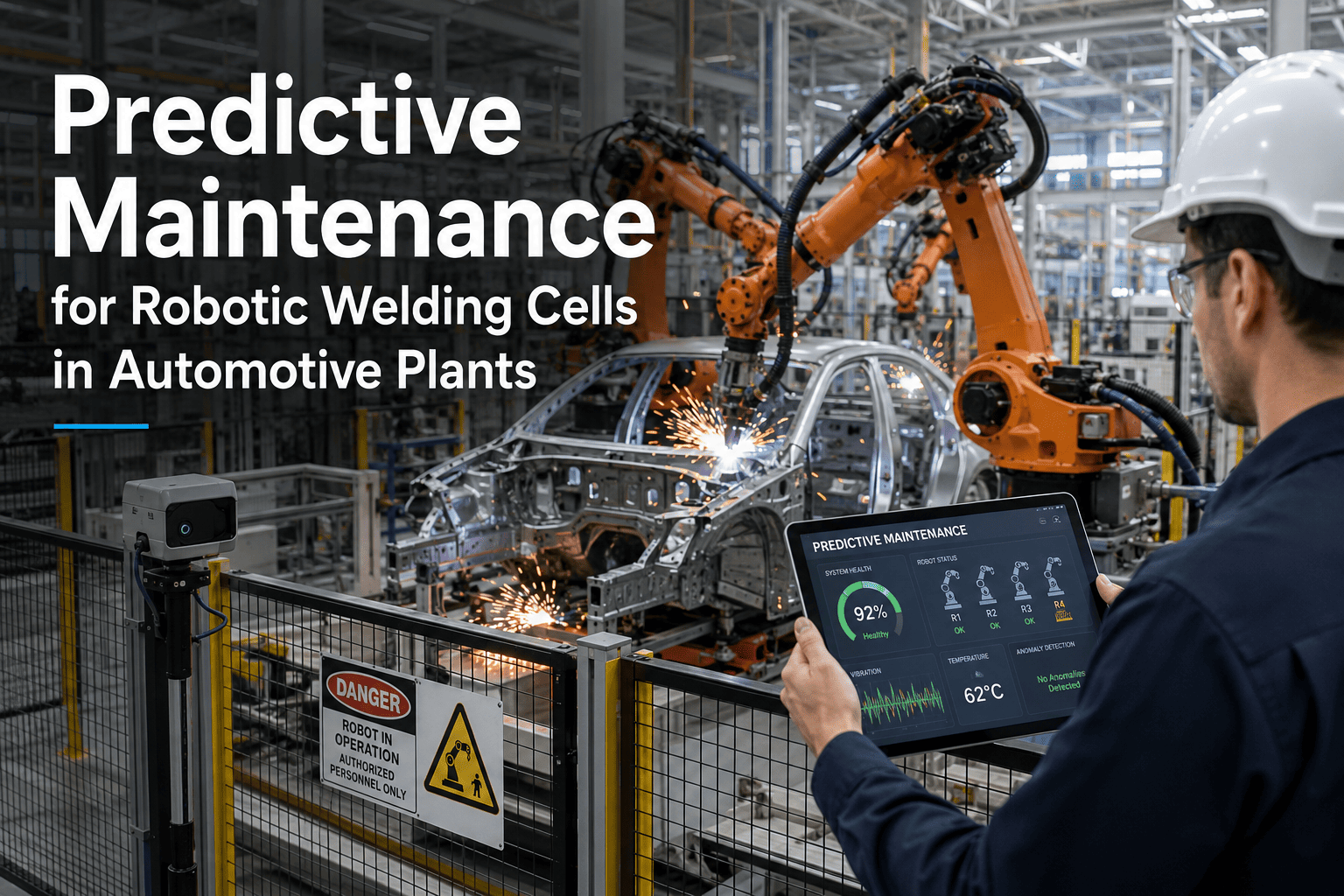
Robotic welder seizes. All 12 downstream stations halt within 90 seconds due to empty buffers.
$0
847 employees standing, fully paid. Supervisor radios maintenance. Technician dispatched.
-$180,000
JIT suppliers notified to hold shipments. 14 Tier-2 suppliers begin halting their production.
-$540,000
Technician identifies failed bearing. Checks inventory—part not in stock. Emergency order placed.
-$1.08M
Still waiting for emergency parts delivery. OEM customer notified of potential contract penalty.
-$2.3M
The Hidden Truth
That bearing showed warning signs for 3 days. Cycle time crept up 8%. Vibration patterns changed. Temperature rose 12°F. But nobody was watching—because production data and maintenance data lived in separate systems.
Sound familiar? Book a free assessment to see where your plant's blind spots are.
What Changes with MES + CMMS Integration
The same scenario. The same bearing. Completely different outcome.
Without Integration
Result
2-4 hours downtime
$4.6 - $9.2 Million lost
VS
With MES + CMMS
AI detects anomaly
3 days before failure
Auto work order
Parts pre-ordered
Scheduled repair
During changeover
Back online
Zero disruption
Result
0 unplanned downtime
$0 lost
The Numbers Don't Lie
Downtime Reduction
Average reduction in unplanned downtime with integrated MES+CMMS
Fewer Breakdowns
Reduction in equipment failures with predictive maintenance
Parts Cost Savings
Lower spare parts spend through condition-based replacement
Output Increase
Higher production from the same equipment
Want to calculate your potential savings? Talk to our team for a customized ROI analysis.
See What 30% Less Downtime Looks Like
iFactory's integrated MES+CMMS platform was built specifically for automotive manufacturing. Real-time OEE monitoring, predictive maintenance and mobile work orders—all working together.
5 Capabilities That Make the Difference
01
AI continuously analyzes vibration signatures, temperature trends, and cycle time patterns. When something starts drifting toward failure, you know days in advance—not minutes after it breaks.
02
When OEE drops below your threshold, the system automatically creates a prioritized work order. No waiting for shift reports. No phone calls. The right technician gets notified instantly.
03
MES shares your production schedule with CMMS in real-time. Maintenance windows automatically align with changeovers and low-demand periods—not arbitrary calendar dates that ignore what's actually happening on the floor.
04
When defect rates start climbing, the system immediately checks equipment health data to identify root causes. Quality issues become maintenance triggers—before they become customer complaints or recalls.
05
Technicians receive alerts, pull up equipment history, review procedures, and complete work orders—all from the shop floor. No walking back to the office. No paper shuffling. No delays.
Which capabilities would have the biggest impact on your plant? Schedule a consultation to find out.
Where Does Your Plant Stand?
OEE (Overall Equipment Effectiveness)
Typical: 60-68%
World-Class: 85%+
Planned vs Unplanned Maintenance
Typical: 25-50%
World-Class: 90%+
Mean Time to Repair (MTTR)
World-Class: <2h
Typical: 4-8h
What the Experts Say
"Predictive maintenance is a cornerstone of smart automotive manufacturing—not just for minimizing downtime, but for delivering consistent quality, meeting sustainability targets, and improving overall equipment effectiveness. As automotive production continues to evolve with new propulsion systems and more flexible production lines, the ability to keep assets running at peak performance will be essential."
— Siemens Automotive Manufacturing Research, 2025
Ready to Stop Losing $600 Every Second?
Join automotive plants that have reduced unplanned downtime by 30% or more. See exactly how iFactory's integrated platform can transform your maintenance operations.
Frequently Asked Questions
How does MES+CMMS integration reduce downtime by 30%?
Integration creates a closed feedback loop between production and maintenance. When MES detects performance anomalies (OEE decline, slow cycles, quality drift), it automatically triggers CMMS work orders. More importantly, AI analyzes historical patterns to predict failures 3-14 days in advance—so repairs happen during scheduled changeovers, not during peak production.
Why is automotive downtime more expensive than other industries?
Three factors compound the cost: (1) Just-in-time production means zero inventory buffer—when one station stops, everything halts within 90 seconds. (2) Complex supply chains mean your downtime cascades to dozens of suppliers who also stop production. (3) OEM contracts include severe financial penalties for missed delivery windows.
How long does implementation take?
Modern cloud-based platforms can be implemented in 2-8 weeks for mid-sized facilities. Most automotive plants start with critical assets (robotic welders, paint systems, stamping presses) and expand from there. Measurable improvements typically appear within 60-90 days of deployment.
Do we need to replace our existing systems?
No. Modern MES+CMMS platforms integrate with your existing ERP, SCADA, and PLCs through standard APIs. Your current sensors, historians, and data sources become inputs to the unified system. The goal is to connect and correlate what you already have—not replace it.
What ROI can we realistically expect?
For an automotive plant losing $2.3M per hour of downtime, even a 10% reduction translates to millions in annual savings. Most plants also achieve 40% lower parts costs through condition-based replacement, 20-25% extended equipment lifespan, and 22%+ higher output from existing assets. Typical payback period is 3-6 months.