Unplanned downtime costs the world's 500 largest manufacturers $1.4 trillion annually—11% of total revenues. A single idle production line it can be cost $2.3 million per hour. For enterprises is also the managing 5, 10 or 50+ manufacturing plants the challenge is not just implementing the predictive maintenance—it's scaling it consistently across every facility while dealing with different equipment generations data silo sand local operating practices. Book a consultation to see how unified predictive maintenance transforms multi-plant operations.
How to Scale Predictive Maintenance Across Multi-Plant Operations
Unified AI-Driven Maintenance Strategy for Enterprise Manufacturing
Why Multi-Plant Predictive Maintenance Is Different
Single-plant success doesn't automatically scale. Here's what makes enterprise deployment complex.
Data Fragmentation
Each plant runs different MES, SCADA, and ERP systems. Machine naming conventions vary wildly—"Motor_A1" in Plant 1 is "Pump_Assembly_Motor" in Plant 2. Without unified namespaces, you're analyzing islands, not ecosystems.
Equipment Diversity
Your German plant has 2025 Industry 4.0-ready machines. Your legacy facility in Mexico runs equipment from 2005. Some plants have IoT sensors everywhere; others still use manual inspections and paper checklists.
Tribal Knowledge Silos
Plant A's maintenance team knows exactly when "that bearing noise" means trouble. Plant B has no visibility into Plant A's decades of learned patterns. Best practices stay local instead of going global.
Inconsistent Processes
One site uses time-based preventive maintenance. Another uses run-to-failure. A third has basic condition monitoring. Without standardization, enterprise-wide optimization is impossible.
5 Pillars of Successful Multi-Plant Predictive Maintenance
How leading manufacturers achieve 95% positive ROI within 12 months across their entire network.
Unified Data Architecture
The Foundation: Create a standardized namespace that maps every plant's unique equipment naming into one corporate-standard data dictionary. AI-powered tools can automatically reconcile "Motor_Pump_3A" in Plant 1 with "Hydraulic_Motor_03" in Plant 2.
Result: 70-80% reduction in data collection time for engineers
Sensor Standardization & Retrofitting
The Bridge: You can't wait for a full equipment refresh. Deploy retrofit IoT sensor packages to legacy machines—vibration, temperature, acoustic, and current monitoring—that work across equipment generations.
Result: Real-time anomaly detection achievable within seconds vs. hours
Centralized AI Model Training
The Brain: Train machine learning models on data from ALL plants, not just one. When Plant A's motor fails in a specific vibration pattern, every other plant automatically learns to watch for that signature.
Result: 10x more training data = 90% prediction accuracy vs. 65% single-plant
Standardized Maintenance Workflows
The Execution: Create enterprise-wide Standard Operating Procedures (SOPs) that automatically trigger based on AI predictions. Work orders, parts ordering, and technician scheduling happen uniformly across all sites.
Result: 44% reduction in rush freight fees, 55% fewer parts stockouts
Cross-Plant Performance Benchmarking
The Optimization: Compare maintenance KPIs across plants in real time. Identify why Plant C has 30% better OEE than Plant D despite similar equipment, then replicate the winning strategy enterprise-wide.
Result: Best practices spread globally instead of staying in tribal knowledge silos
See How 5-Plant Operations Cut Downtime by 83%
From fragmented maintenance to unified predictive intelligence—watch the transformation in action.
The Tech Behind Enterprise Predictive Maintenance in 2026
How AI, edge computing, and 5G connectivity make multi-plant PdM possible at scale.
Data Collection Layer
IoT Sensors
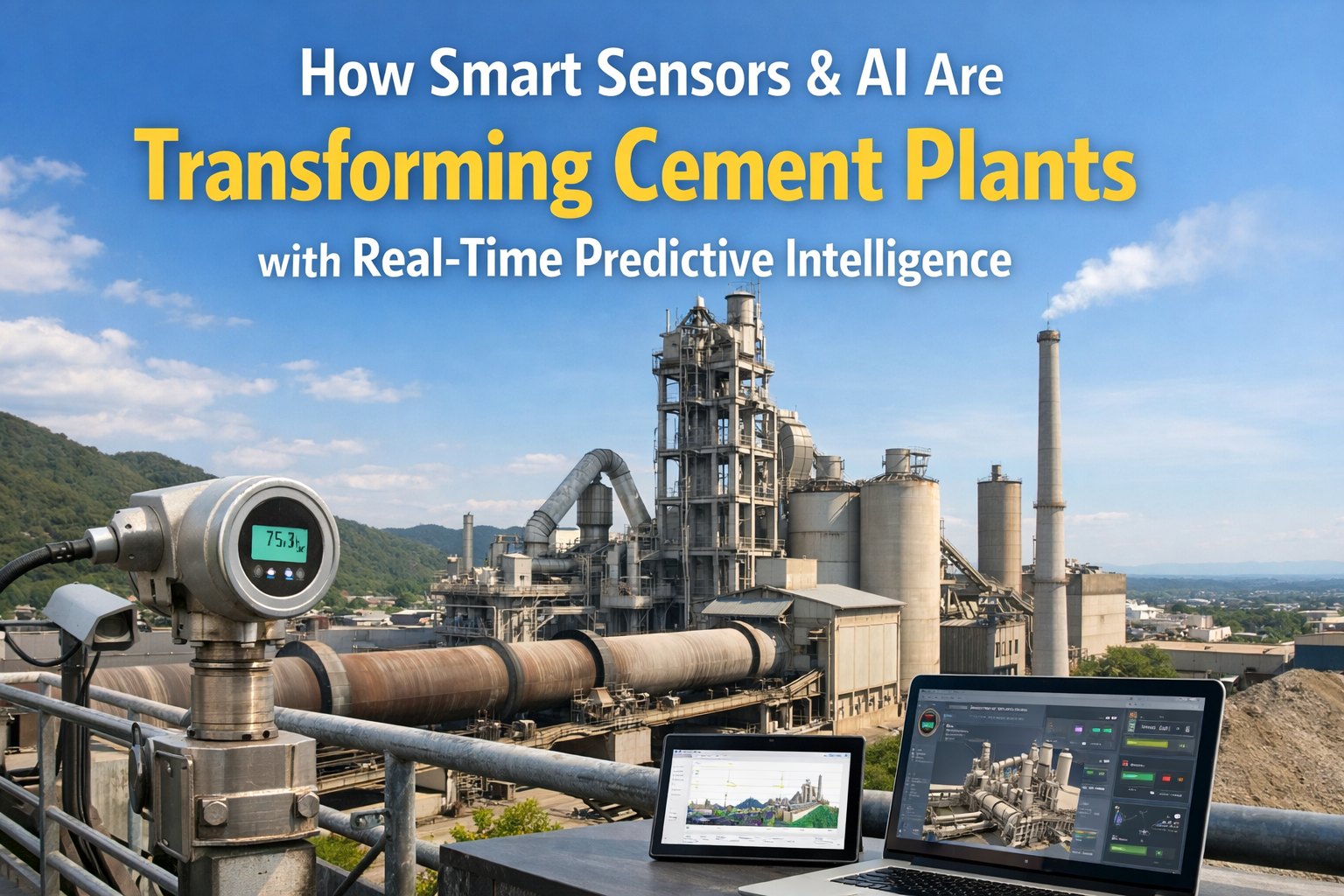
Wireless vibration, temperature, acoustic, and current sensors on critical equipment. Battery life: 5+ years.
Edge Gateways
Local processing reduces latency from 500ms to <10ms for real-time shutdown decisions.
5G Connectivity
Ultra-low latency enables instant data transmission for time-critical maintenance alerts.
AI & Analytics Layer
Machine Learning Models
Anomaly detection, remaining useful life (RUL) prediction, and failure mode classification trained on multi-plant data.
Generative AI
Creates synthetic failure datasets for rare events—improving prediction even when historical data is sparse.
Digital Twins
Virtual replicas of physical assets simulate failure scenarios without risking actual production equipment.
Integration & Action Layer
CMMS/EAM Integration
Auto-generate work orders, schedule technicians, and order parts when AI predicts failures.
Inventory Optimization
Dynamic safety stocks based on predictive demand signals—18% inventory reduction on average.
Enterprise Dashboards
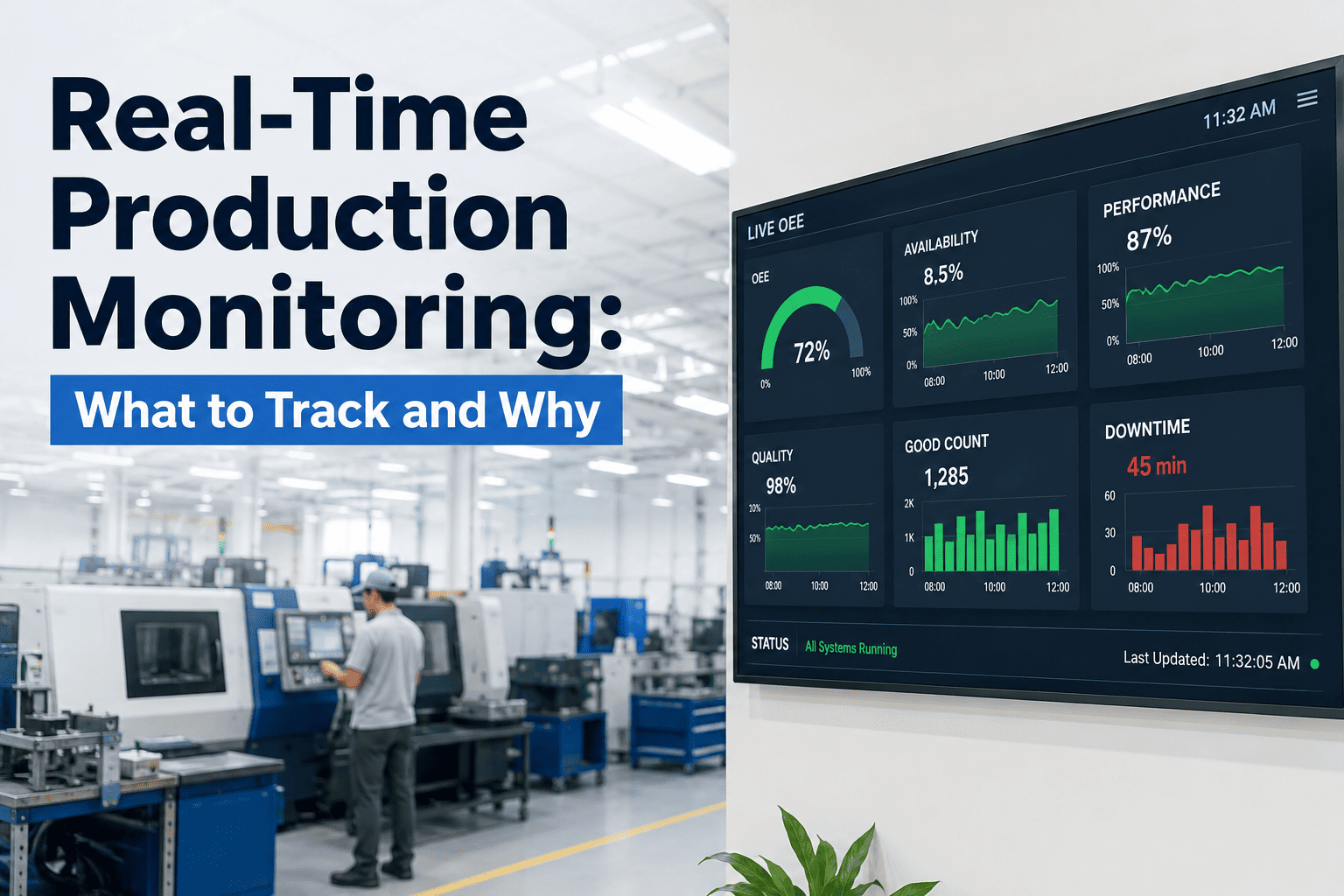
Real-time OEE, MTBF, and MTTR metrics across all plants in one unified view.
What Leading Manufacturers Achieved with Multi-Plant PdM
Actual performance improvements from enterprises that unified their maintenance strategy.
From 4.7 Hours Weekly Downtime to 0.8 Hours
Deployed vibration sensors on 3,500+ robotic welding arms across seven assembly plants. Centralized AI detected micro-vibrations indicating bearing wear 2-3 weeks before failure. Maintenance went from reactive firefighting to scheduled interventions during planned shutdowns.
Engineers Spent 70-80% of Time on Data Collection. Now It's Automated.
Unified data platform eliminated manual data gathering across three refineries. AI monitors pump vibrations, turbine temperatures, and compressor acoustics 24/7. Detected motor anomaly prevented a 2-day shutdown worth $500,000 in lost production.
Mechanical Downtime Cut in Half Through Standardized Workflows
Implemented standardized maintenance SOPs across all 12 plants. Predictive analytics automatically trigger work orders and parts procurement. Cross-plant benchmarking identified best practices at top-performing sites and replicated them enterprise-wide.
Your 90-Day Roadmap to Multi-Plant Predictive Maintenance
Phase 1: Assessment & Pilot
- Audit existing maintenance practices across all plants
- Identify critical equipment with highest downtime costs
- Select pilot plant with best data infrastructure
- Install IoT sensors on 5-10 critical assets
- Establish baseline KPIs (OEE, MTBF, MTTR, maintenance costs)
Phase 2: Data Unification & AI Training
- Map equipment naming conventions into unified namespace
- Integrate pilot plant data with cloud analytics platform
- Train initial ML models on historical failure data
- Deploy edge AI for real-time anomaly detection
- Connect predictive alerts to CMMS work order system
Phase 3: Scale & Standardize
- Roll out sensor packages to Plants 2 & 3
- Create enterprise-wide maintenance SOPs
- Train maintenance teams on new predictive workflows
- Launch cross-plant performance dashboard
- Measure ROI and plan full enterprise deployment
Expected Outcomes After 90 Days:
3-5 prevented failures caught in pilot phase
15-25% reduction in unplanned downtime
Clear ROI projection for full rollout
Standardized data framework ready to scale
The Financial Case for Multi-Plant Predictive Maintenance
Why 95% of adopters report positive ROI—with 27% achieving payback within 12 months.
Cost Avoidance
Operational Efficiency
Asset Lifespan
Typical Annual ROI Per Plant
Based on industry averages from automotive, food processing, and heavy manufacturing sectors with 5+ plants.
Common Questions About Multi-Plant Predictive Maintenance
Answers to what enterprise teams ask most.
Can predictive maintenance work across plants with completely different equipment
Yes. Modern AI models learn failure patterns at the component level (bearings, motors, pumps) rather than machine-specific signatures. A bearing failure pattern in a 2005 CNC machine shares vibration characteristics with bearing failures in 2025 robotic arms. Unified data architectures map diverse equipment into standard taxonomies, enabling cross-plant learning even with heterogeneous machinery.
How do you handle plants with no existing IoT sensors or smart equipment
Retrofit solutions are highly cost-effective. Wireless sensor packages (vibration, temperature, acoustic) can be installed on legacy equipment in hours, not days. These battery-powered sensors (5+ year life) connect via 5G or LoRaWAN to edge gateways. Even a 30-year-old machine can become "smart" for under $2,000 in sensor hardware—versus millions to replace the equipment.
What's the typical ROI timeline for enterprise predictive maintenance
95% of adopters report positive ROI, with 27% achieving full payback within 12 months. Pilot phases (90 days, 1-2 plants) typically prevent 3-5 failures, demonstrating value immediately. Full enterprise rollout ROI depends on plant count and equipment criticality, but the average annual return per plant is $1.3M through combined downtime reduction, maintenance cost savings, and inventory optimization.
How do you standardize maintenance processes when each plant has unique operating cultures
Start with data-driven SOPs that respect local knowledge while enforcing enterprise standards. Use digital work instruction platforms that guide technicians step-by-step through predictive maintenance tasks. Mobile-first interfaces make adoption easier than paper-based systems. Cross-plant performance benchmarking shows teams WHY standardization matters—when Plant A reduces downtime 50% using standard workflows, Plant B wants in.
What happens if my plants use different CMMS or ERP systems
Modern predictive maintenance platforms integrate with any CMMS/EAM (IBM Maximo, SAP PM, Oracle EAM, Infor EAM, etc.) via REST APIs. The PdM platform becomes the "brain" that analyzes sensor data and predicts failures; it then sends work order triggers to whichever local CMMS each plant uses. You don't need to standardize enterprise software—just the data layer and prediction engine.
How accurate are AI failure predictions in real-world multi-plant environments
Leading implementations achieve 90% prediction accuracy when trained on multi-plant datasets (vs. 65% for single-plant models). The key is volume and diversity of training data. When your AI learns from 10 plants instead of 1, it sees 10x more failure modes and edge cases. Generative AI also creates synthetic failure scenarios for rare events, improving prediction even when historical data is limited.
Transform Your Multi-Plant Operations with Unified Predictive Maintenance
See how iFactory's AI-powered platform unifies maintenance across your entire manufacturing network—from data collection to predictive analytics to automated work orders.