Manufacturing Digital Transformation Business Case
By Julian Frost on February 9, 2026
Here's the paradox: 98% of manufacturers are have started their digital transformation journey, yet only 35% of those initiatives areactually achieve their stated objectives. The global manufacturing digital transformation market stands at $440 billion in 2025 and will nearly double to $847 billion by 2030—but the majority of that spend will underperform unless the business case is built on operational reality, not vendor promises. The manufacturers who succeed aren't spending more—they're building smarter business cases that connect specific plant-floor problems to measurable financial outcomes with clear payback timelines. A good business case doesn't justify the spend; it makes the ROI undeniable before the first purchase order is signed.
$440B
Manufacturing DX Market (2025)
35%
Of DX Initiatives Hit Objectives
10.3x
ROI With Strong System Integration
6-18mo
Typical Payback Period
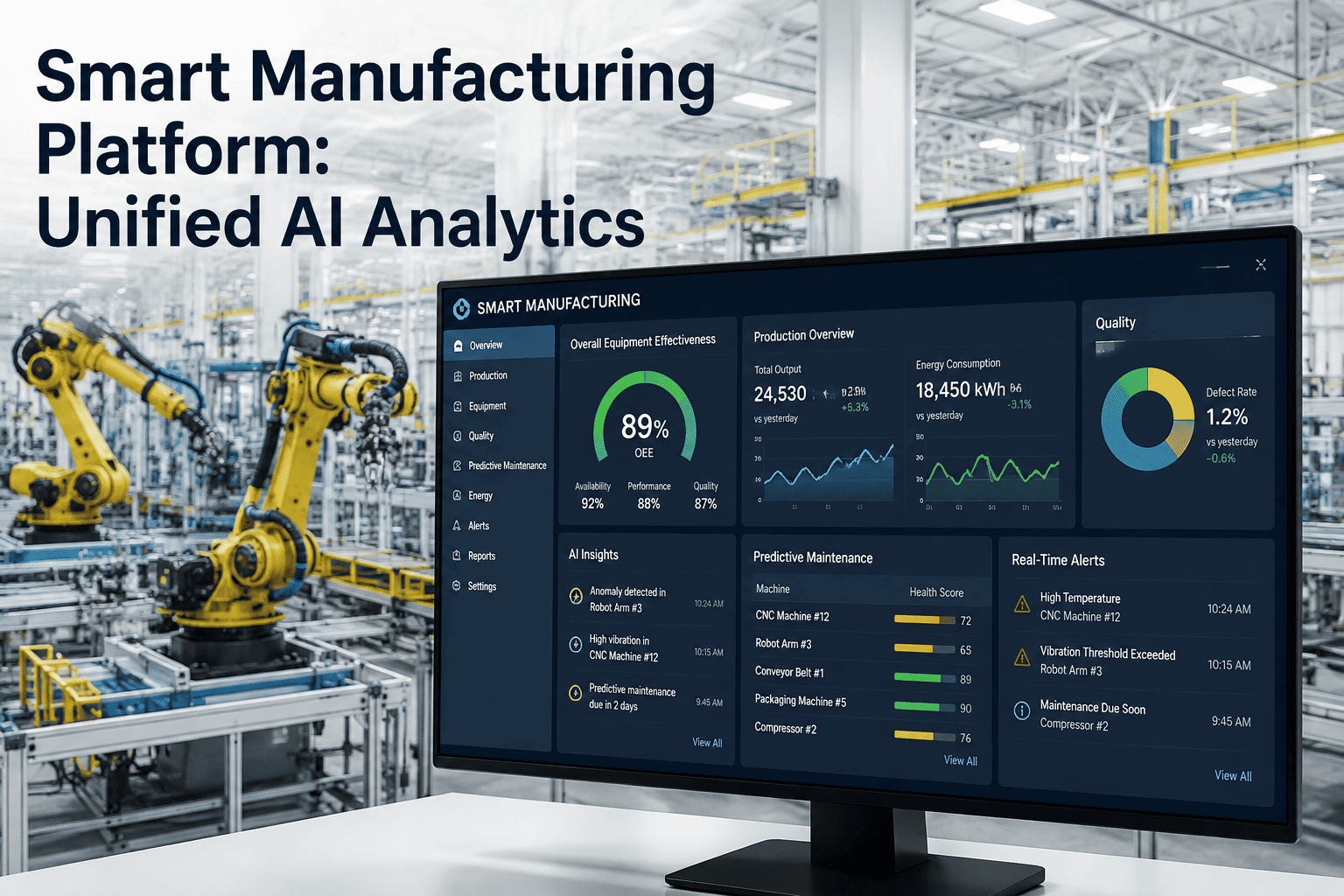
The difference between the 35% that succeed and the 65% that don't comes down to one thing: specificity. Winning business cases quantify the cost of the current state, define exactly what changes, project financial outcomes by quarter, and tie everything to an implementation timeline with milestones is built for this kind of phased, ROI-driven rollout—connecting shop-floor data, quality systems, and maintenance workflows into one platform that delivers measurable value from week one, not year two.
Why 65% of Manufacturing DX Initiatives Underperform
Before building a winning business case, understand the five root causes that sink most digital transformation projects. Every failed initiative traces back to at least one.
70%
No Clear Problem Statement
"We need to digitally transform" isn't a business case. Winning proposals quantify a specific operational pain: $2.1M/year in unplanned downtime, 6% scrap rate, 23-day quality investigation cycle.
85%
Data Project Failures
Of big data projects fail (Gartner). Large-scale projects fail 50% more than incremental approaches. Start with one line, one problem, one measurable outcome.
75%
Underestimated Complexity
Of companies struggle with high upfront costs, long timelines, and skills gaps. 70% of projects exceed timelines by an average of 45%. Phased rollouts reduce this risk dramatically.
29%
System Integration Gap
Only 29% of enterprise apps are integrated. Companies with strong integration achieve 10.3x ROI vs. 3.7x with poor connectivity. Siloed tools create siloed value.
65%
No Executive Alignment
Digital transformation fails when IT drives the initiative alone. 78% of successful AI projects are part of an overall company strategy with cross-functional sponsorship.
Every successful manufacturing digital transformation business case follows this structure. Miss any quadrant and the proposal loses credibility with decision-makers.
1
Cost of Current State
What's the problem costing you today?
Unplanned downtime$___ /year
Scrap & rework$___ /year
Quality investigation time___ days avg
Manual data collection labor___ FTE hours
Tip: Use last 12 months of actuals. CFOs trust historical data, not projections.
2
Target Outcomes
What specific improvements will you measure?
Downtime reduction25-45%
OEE improvement10-20 pts
Scrap reduction30-42%
Investigation timeDays → Hours
Tip: Use conservative range (25th-75th percentile from industry benchmarks).
3
Investment & Timeline
What does it cost and when does value start?
Phase 1 (Visibility)4-6 weeks
Phase 2 (Analytics)6-12 weeks
Phase 3 (Optimization)3-6 months
Full payback6-18 months
Tip: SaaS/cloud MES = 40% lower TCO and 90-day deployment vs. on-premise.
4
Risk Mitigation
What happens if you don't act?
Competitive gap widens92% say DX is critical
Compliance risk growsEU Digital Passport
Talent attritionWorkers leave legacy plants
Cost of delay$___ /month
Tip: "Cost of doing nothing" is the most powerful slide in any business case.
ROI By Use Case: Where the Money Actually Is
Not all digital investments are created equal. These are the five highest-ROI use cases in manufacturing digital transformation, ranked by payback speed and proven results.
Predictive Maintenance
Sensor data → AI failure prediction → auto work orders
25-40%maintenance cost reduction
Real-Time OEE & Production Tracking
Live dashboards → automated alerts → dynamic scheduling
Per-machine tracking → AI optimization → ESG reporting
12%energy savings avg
Build Your Business Case With Real Numbers
iFactory's MES platform delivers measurable value from Phase 1—real-time OEE, automated quality alerts, and maintenance integration that hits the ROI metrics your CFO needs to approve the project.
The Phased Rollout: How Smart Manufacturers Reduce Risk
The 85% failure rate for large-scale data projects drops dramatically with incremental implementation. Here's the proven three-phase approach that delivers value at each stage.
The manufacturing digital transformation market is projected to grow from $440 billion in 2025 to $847 billion by 2030 at 13.83% CAGR. 98% of manufacturers have started digital initiatives, yet Deloitte's 2025 outlook shows that leading companies are shifting from "broad digitalization" to "targeted, high-ROI use cases"—prioritizing MES, predictive maintenance, and real-time analytics over moonshot projects. The manufacturers winning this race aren't spending more; they're spending on the use cases with the fastest provable payback.
$847B
Manufacturing DX Market by 2030
13.83%
Annual Growth Rate (CAGR)
98%
Of Manufacturers Have Started DX
Need help building a board-ready business case? Book a consultation to get a customized ROI model for your specific plant operations.
Make Your Business Case Undeniable
iFactory helps manufacturers build ROI-proven digital transformation roadmaps—connecting real-time production data, quality systems, and maintenance workflows into one MES platform that delivers measurable results from Phase 1.
What is a manufacturing digital transformation business case?
A manufacturing digital transformation business case is a structured financial and operational argument for investing in digital technologies—like MES, IoT sensors, AI analytics, and cloud platforms—to improve plant performance. It typically includes four components: the quantified cost of the current state (downtime, scrap, manual processes), targeted outcomes with industry benchmarks, a phased investment and timeline with payback projections, and risk analysis including the cost of inaction. The strongest business cases connect specific plant-floor problems to measurable financial outcomes rather than making broad claims about "digital transformation."
What ROI can manufacturers expect from digital transformation?
Documented results show 25-40% reduction in maintenance costs through predictive maintenance, 10-22% improvement in production throughput via real-time OEE monitoring, and 30-42% reduction in defects through automated quality systems. Companies with strong system integration achieve 10.3x ROI from digital initiatives versus 3.7x for those with poor connectivity. Most well-structured MES implementations achieve payback within 6-18 months. Across the broader market, successful transformations deliver 5-15% revenue increases and 10-25% cost reductions, with significant value capture beginning in year two.
Why do most manufacturing digital transformation projects fail?
Research shows only 35% of digital transformation initiatives achieve their stated objectives. The primary failure modes are attempting too much at once (85% of large-scale data projects fail), unclear problem definition (starting with technology instead of business problems), poor system integration (only 29% of enterprise applications are integrated), lack of cross-functional ownership (IT-led without operations involvement), and unrealistic timelines (70% of projects exceed timelines by 45%). The manufacturers who succeed use phased approaches, starting with one line and one problem, proving value quickly, then scaling what works.
How should manufacturers phase their digital transformation?
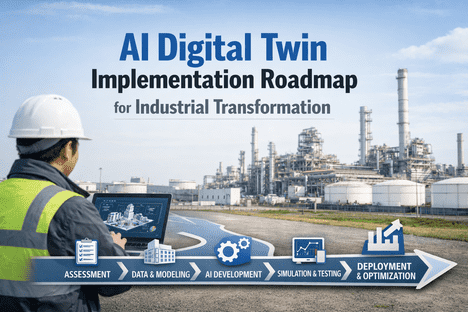
The proven three-phase approach starts with Visibility (weeks 1-6): connect machines, deploy live OEE dashboards, and digitize downtime tracking. This alone typically delivers 10-15% OEE improvement. Phase 2 adds Intelligence (weeks 7-16): integrate SPC, predictive maintenance, and automated alerts. This is where hard-dollar savings—25-40% maintenance cost reduction—begin. Phase 3 scales Optimization (month 4+): AI-driven scheduling, digital twins, and multi-site rollout for compounding returns. Cloud-based MES platforms like iFactory enable 90-day deployment timelines at 40% lower total cost of ownership versus on-premise solutions.
How do you convince leadership to approve a digital transformation investment?
The most effective approach is building the business case around the "cost of doing nothing." Quantify your current losses—unplanned downtime costs, scrap rates, manual labor hours, quality investigation time—using 12 months of actual data. Then present industry benchmarks showing what similar plants achieve with digital tools (25-40% maintenance reduction, 10-20 point OEE improvement). Propose a phased approach with specific milestones and kill criteria at each stage. Show that 92% of manufacturers now consider smart manufacturing essential for competitiveness, and that the gap between digitally mature and lagging plants is widening by 1.75x in production efficiency.