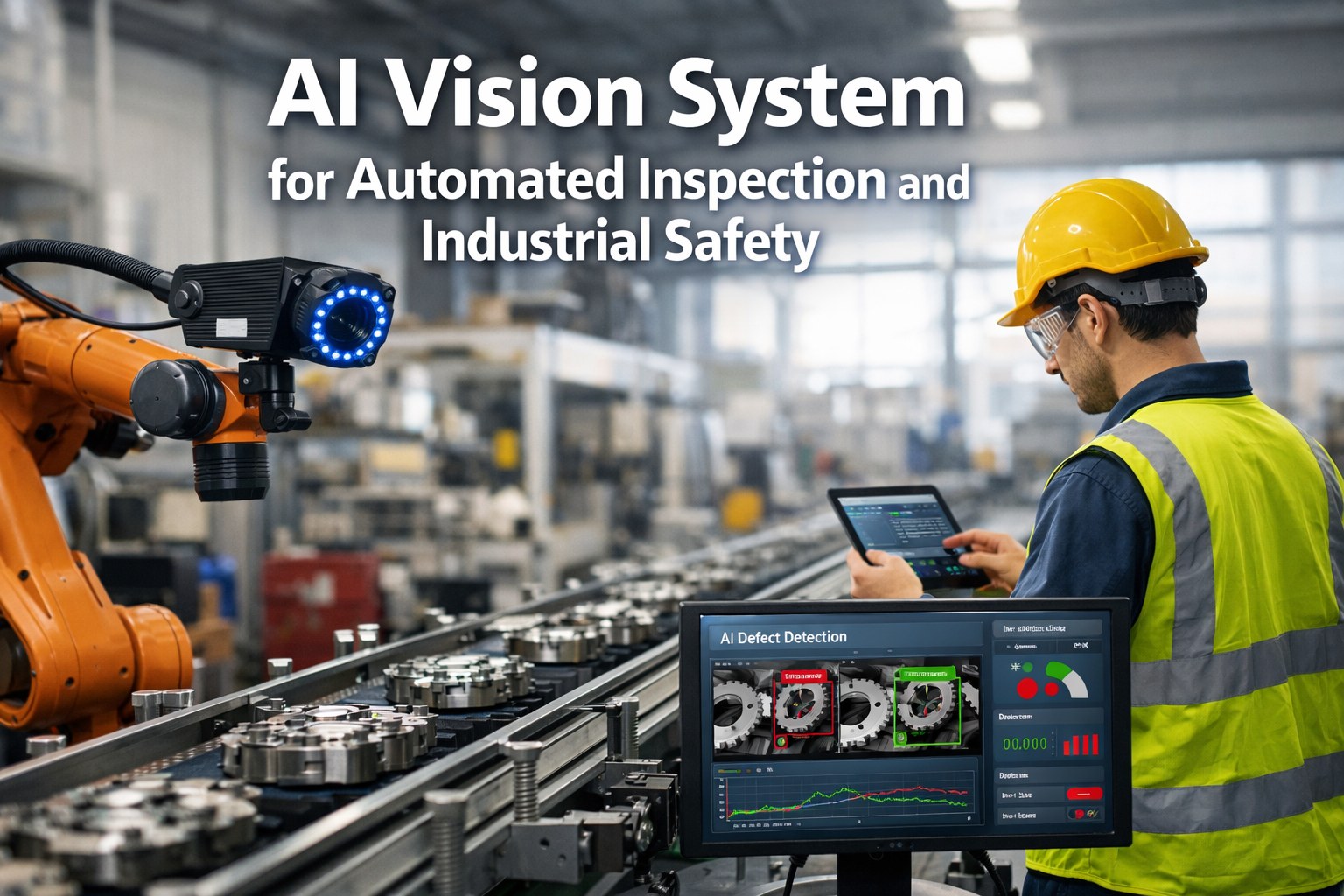
Every year 220,000 manufacturing injuries are reported across the United States — and 35% happen during a worker's first year on the job. In automotive plants running 500+ robots alongside hundreds of human operators a single missed restricted zone breach or PPE violation can mean an amputation, a hospitalization, or worse. Traditional safety monitoring relies on human supervisors who can't be everywhere, and safety light curtains that can't think. AI-powered robotic safety observers change the equation — watching every zone, every shift, every second. Book a free consultation to see how iFactory monitors line safety for your plant.
Monitoring Line Safety Using Robotic Observers
Detect Unsafe Behaviors, Restricted Zone Breaches & PPE Violations in Real Time Across Your Entire Production Floor
What Happens When Safety Monitoring Can't Keep Up
Automotive plants run faster, with more robots, and fewer eyes watching. Here's what falls through the cracks.
Restricted Zone Breaches
Workers enter active robot cells during operation — the leading cause of fatal robot-related injuries. OSHA identified 77 severe robot-related accidents from 2015–2022, with most involving unauthorized entry into robot work envelopes.
PPE Non-Compliance
Manual monitoring catches a fraction of violations. One study showed plants running below 25% PPE compliance on shipping docks before AI monitoring. After AI deployment, compliance jumped to over 90%.
Unsafe Behaviors Go Unseen
Improper lifting, working under suspended loads, bypassing lockout/tagout — behaviors that cause 18,000 amputations and crush injuries per year across manufacturing. Supervisors can't watch everything, every shift.
First-Year Worker Vulnerability
35% of all manufacturing injuries happen to first-year employees who don't yet know the danger zones. New hires need more than training — they need real-time protection from systems that never blink.
The AI Safety Observer Pipeline
From camera feed to corrective action — in under 2 seconds.
See
AI vision cameras and sensors continuously scan every zone — restricted areas, robot cells, pedestrian paths, and high-risk stations.
Detect
Deep learning models identify zone breaches, missing PPE, unsafe postures, human-robot proximity violations, and LOTO bypass — in real time.
Alert
Instant multi-channel alerts — audible alarms, flashing lights, mobile push notifications, and supervisor dashboard flags — before contact occurs.
Act
Auto-slow or stop robotic arms when workers breach safety perimeters. Log every event with timestamped video evidence for OSHA compliance.
Your Safety Supervisors Can't Be Everywhere. AI Can.
iFactory's robotic safety monitoring covers every zone, every shift — detecting breaches and PPE violations before they become injuries.
6 Safety Threats iFactory Detects Automatically
Every detection is logged, timestamped, and linked to your CMMS for immediate action and long-term compliance.
Restricted Zone Intrusion
Virtual safety fences around robot cells, hazardous machinery, and active conveyors. Any human breach triggers instant alerts and can auto-stop equipment.
PPE Compliance Monitoring
Detects missing hard hats, safety glasses, gloves, high-vis vests, and hearing protection using computer vision — across all workers simultaneously.
Human-Robot Proximity
Speed and separation monitoring ensures collaborative robots slow down or stop as workers approach — replacing static light curtains with dynamic AI-driven safeguards.
Unsafe Posture & Ergonomics
Pose estimation detects improper lifting, overreaching, and awkward body positions — the root cause of 39% of all manufacturing injuries (sprains and strains).
Lockout/Tagout Verification
Confirms LOTO procedures are completed before maintenance begins. Machine guarding is OSHA's most frequently cited violation — AI verification closes the gap.
Fatigue & Alertness Monitoring
Detects signs of worker fatigue — drowsiness, reduced reaction time, erratic movement — especially critical on night shifts where injury risk peaks.
Traditional Safety vs. AI-Powered Robotic Observers
What AI Safety Monitoring Delivers
Real results from manufacturers who replaced manual monitoring with AI-powered systems.
Manufacturing facilities using AI-driven PPE monitoring reduced safety violations by 87% within six months of deployment.
A major global retailer saw an 80% drop in workplace incidents after implementing AI video analytics for safety monitoring.
PPE compliance rates jumped from below 25% to over 90% with continuous AI monitoring — replacing sporadic manual checks.
One industrial manufacturer cut workers' compensation claims by 40% using AI to track compliance and identify hazards proactively.
Manufacturing accounts for 15% of all workplace injuries despite employing only 8% of workers. This disproportionate risk exists because of heavy machinery, repetitive motions, and production pressures that create hazardous conditions when not properly monitored. AI safety observers are the missing layer of protection.
Based on OSHA Industry Injury Data, 2024Safety Standards iFactory Helps You Meet
Every OSHA inspection, every audit, every incident report — backed by digital evidence.
Machine guarding is among OSHA's top 10 most cited violations. AI zone monitoring provides the continuous surveillance that static guards and light curtains can't deliver — with evidence logs for every event.
The latest robot safety standard replaces static barriers with "safeguarded spaces" including dynamic sensor-based protections. AI vision monitoring is the natural technology to meet this new requirement.
Collaborative robot safety specification requiring speed and separation monitoring (SSM) and power and force limiting (PFL). AI proximity detection delivers both — with real-time response and logged evidence.
All safety events are automatically recorded, classified, and ready for OSHA Form 300/300A submission. Digital logs replace paper records, eliminating gaps that trigger enforcement inspections.
Common Questions About Robotic Safety Monitoring
Can this work with our existing camera infrastructure?
Yes. iFactory's AI safety monitoring integrates with any existing IP camera system through standard RTSP streams. You don't need to replace your cameras — we add the intelligence layer on top of what you already have.
How fast are the alerts when a breach is detected?
Edge AI processing delivers detection in under 100 milliseconds. Alerts are triggered within 1–2 seconds through multiple channels — audible alarms, visual indicators, mobile notifications, and dashboard flags — before a worker reaches the danger point.
Can the system actually stop a robot when a worker enters a zone?
Yes. iFactory can integrate with machine interlocks and PLCs to automatically slow or stop robotic arms and conveyors when a restricted zone breach is confirmed. This goes beyond alerting to active prevention.
What about worker privacy?
Safety monitoring uses anonymized detection — the system identifies PPE presence and zone positions, not individual identities. Advanced systems use privacy-first architectures with edge computing, so video data doesn't leave your facility.
How does this integrate with our CMMS and safety management system?
Every safety event detected by iFactory is automatically logged in the CMMS with timestamps, video evidence, zone ID, and severity classification — ready for OSHA reporting, incident investigation, and trend analysis.
What's the ROI timeline for AI safety monitoring?
Most facilities see ROI within 12–18 months through reduced injury costs, lower workers' comp premiums, and avoided OSHA fines. Given that the average serious injury causes 67 lost workdays and costs $50,000–$75,000 in productivity losses alone, preventing even one incident delivers significant payback. Schedule a demo to model your ROI.
Stop Investigating Injuries. Start Preventing Them.
iFactory's AI-powered robotic observers monitor every zone, detect every breach, and log every event — giving your safety team the visibility they need to achieve zero harm.


.png)