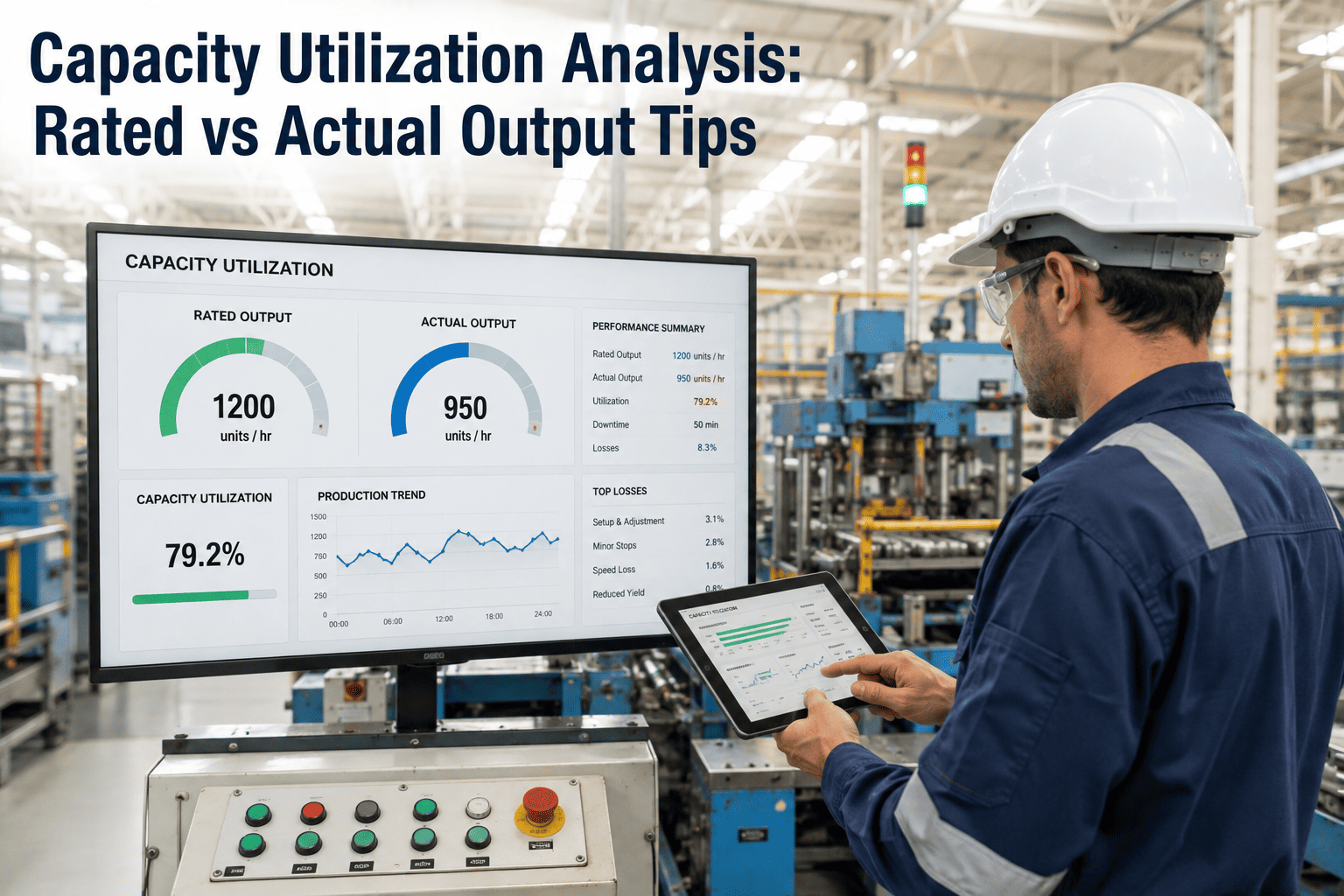
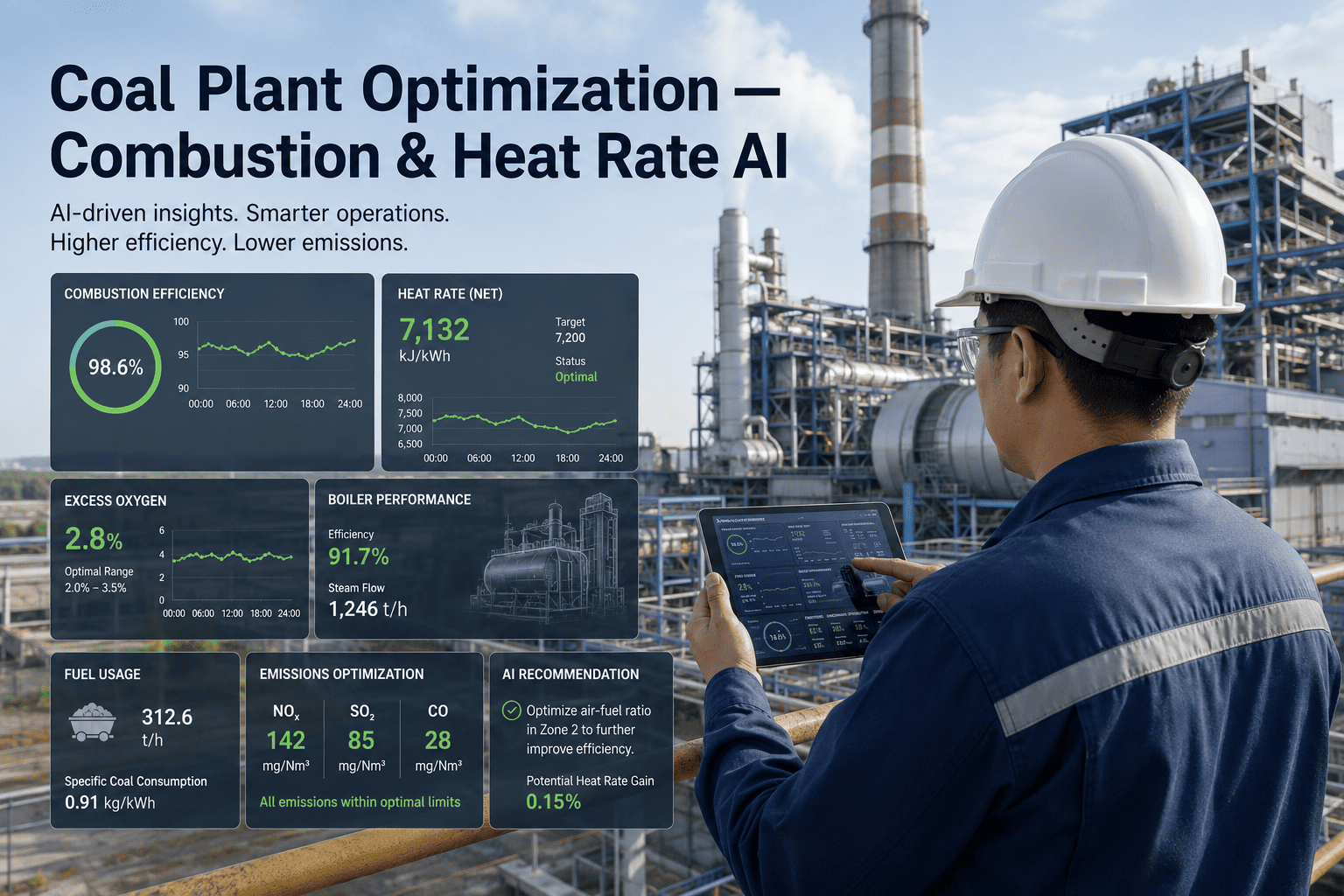
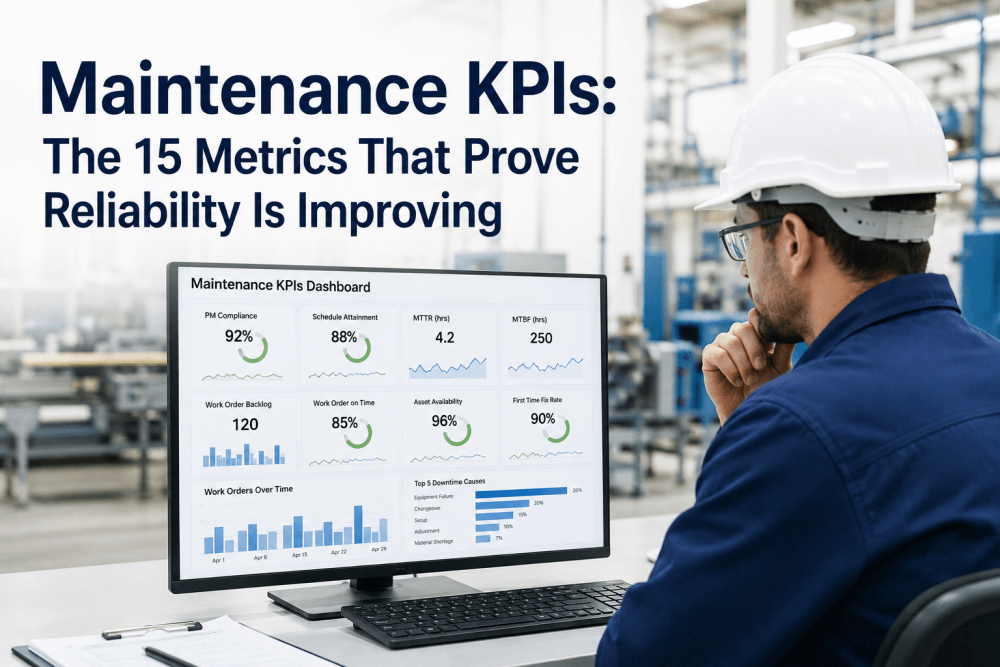
Is your power plant running at 82% availability and calling it "acceptable" The difference between average and top-quartile plant performance can mean millions in lost generation revenue per year. This benchmark guide reveals where industry standards actually standso you can pinpoint your biggest efficiency gaps. Book a free plant assessment to see how your facility compares.
Power Plant Performance Benchmarks: Availability, Heat Rate & Reliability
Industry-Standard KPIs for Thermal, Gas, and Nuclear Generation Facilities
5 KPIs That Define Power Plant Performance
These metrics separate top-performing plants from underperformers—and directly impact your bottom line.
Availability Factor
AF = (Available Hours ÷ Period Hours) × 100Measures the percentage of time your plant is available to generate, regardless of whether it's dispatched. World-class thermal plants target 90%+ availability. Every 1% gain can unlock significant annual revenue.
Capacity Factor
CF = Actual MWh ÷ (Capacity MW × Hours)The ratio of actual output to maximum possible output. Nuclear plants lead at 90–95%. Gas combined-cycle plants average 55–60%, while coal plants range from 40–60% depending on dispatch patterns and market conditions.
Heat Rate
HR = Energy Input (BTU) ÷ Net Output (kWh)Lower is better. Measures how efficiently your plant converts fuel into electricity. A 1% heat rate improvement at a 500 MW coal plant can save $360,000+ in annual fuel costs. Modern gas plants target under 7,000 BTU/kWh.
Forced Outage Rate (FOR)
FOR = Forced Outage Hours ÷ (FOH + Service Hours)Tracks unplanned downtime that directly kills revenue. Best-in-class gas plants maintain FOR below 2–3%. A high FOR signals equipment reliability issues needing immediate attention.
Performance Benchmarks by Plant Type
How does your facility compare against industry standards?
Heat Rate Benchmarks: Fuel Efficiency by Technology
Every BTU saved translates directly to lower operating costs and higher margins.
Industry average sits around 10,300 BTU/kWh. Supercritical units achieve 9,000 BTU/kWh. Aging fleet and environmental retrofits have gradually degraded average performance.
Most efficient thermal technology available. Best-in-class combined cycle plants achieve below 7,000 BTU/kWh, approaching 50% thermal efficiency. A 1% improvement saves $580K/year at a 500 MW plant.
Though heat rate is comparable to coal, nuclear excels with 90%+ capacity factors and near-zero fuel cost variability, making it the most reliable baseload generation source.
How Much Is Your Plant Leaving on the Table?
A 2% availability improvement on a 500 MW plant can recover over $2M in annual generation revenue. Get your custom benchmark report.
Power Plant Benchmark Cheat Sheet
Pin this to your control room wall.
| KPI | Average | Good | Top Quartile |
|---|---|---|---|
| Availability Factor | 80–84% | 88–90% | 92%+ |
| Capacity Factor (Gas CC) | 50–55% | 58–62% | 65%+ |
| Capacity Factor (Nuclear) | 88–90% | 92–94% | 95%+ |
| Heat Rate – Coal (BTU/kWh) | 10,300 | 9,500 | <9,000 |
| Heat Rate – Gas CC (BTU/kWh) | 7,500 | 7,100 | <7,000 |
| Forced Outage Rate | 6–10% | 3–5% | <2% |
| Unplanned Downtime | 10–15% | 5–8% | <5% |
| Maintenance Cost ($/kW) | $35–50 | $25–35 | <$25 |
Strategies to Improve Plant Performance
Proven approaches ranked by impact and implementation speed.
Predictive Maintenance with IoT Sensors
Deploy vibration, temperature, and oil-analysis sensors on critical turbines, generators, and auxiliary equipment. Reduces forced outage rates by 25–30% within 12 months. Catches bearing failures, seal degradation, and combustion anomalies before they cause shutdowns.
Heat Rate Optimization Program
Systematic monitoring of boiler efficiency, condenser vacuum, feed water temperatures, and air in-leakage. A structured program combining combustion tuning, soot blowing optimization, and condenser cleaning can deliver 2–4% heat rate gains worth hundreds of thousands annually.
Digital Downtime Tracking
Replace manual outage logs with automated root cause classification. Pareto analysis on downtime events reveals the 20% of failure modes causing 80% of lost generation. Most plants discover 15–20% more unplanned stops than manual logs captured.
Reliability-Centered Maintenance (RCM)
Shift from time-based to condition-based maintenance strategies. Analyze failure modes for each critical asset and assign the optimal maintenance approach. Plants adopting RCM consistently reduce maintenance costs by 15–25% while improving availability.
How to Benchmark Your Plant in 4 Steps
Establish Your Baseline
Collect 12 months of operating data: availability factor, capacity factor, heat rate, and forced outage hours. Automated digital tracking eliminates the gaps and inconsistencies in manual logs.
Categorize Your Losses
Break down every lost MWh: planned maintenance, forced outages, deratings, and external constraints. Pareto analysis reveals which loss category delivers the biggest bang for your improvement dollar.
Compare Against Peers
Benchmark against the same fuel type, unit size, and vintage. A 30-year-old coal unit and a new gas combined-cycle plant have fundamentally different performance ceilings. Apples-to-apples comparison is critical.
Set Targeted Improvement Goals
Focus on closing the gap on your single largest loss category. Target a 2–3% availability improvement and 1–2% heat rate gain per year. Quick wins build momentum for larger system-level changes.
Not Sure Where Your Plant Stands?
Our team will benchmark your facility against industry leaders and deliver a custom performance gap report—completely free.
Tools That Top-Performing Plants Use
Manual spreadsheets can't keep pace with the complexity of modern power generation.
Real-Time Performance Dashboards
Live visibility into availability, heat rate, load profile, and auxiliary consumption at unit and plant level. Shift engineers see current performance; management sees trends, comparisons, and forecasts.
AI-Powered Anomaly Detection
Machine learning models trained on historical operating data identify developing equipment issues 2–4 weeks before failure. Reduces forced outages by flagging bearing vibration changes, temperature drifts, and efficiency drops early.
Digital Work Order Management
Integrated CMMS ties maintenance activities directly to equipment performance data. Tracks corrective, preventive, and predictive tasks with full cost and resource visibility for every asset in your fleet.
Automated Compliance Reporting
Generate NERC GADS reports, environmental compliance documentation, and regulatory filings automatically from operational data—eliminating manual data entry and the errors that come with it.
The ROI of Closing the Performance Gap
What real power plants gain by moving from average to top-quartile.
Why Digital Transformation Pays Off
Plants implementing real-time performance monitoring and predictive maintenance consistently report 20–30% reductions in forced outage rates within the first year. Combining heat rate optimization with reliability-centered maintenance delivers compound gains: lower fuel costs, fewer unplanned stops, and extended equipment life. The average ROI on digital CMMS implementation in power generation is 250–400% over three years.
Frequently Asked Questions
Common questions about power plant benchmarking and performance optimization.
What is a good availability factor for a power plant?
Top-quartile thermal plants achieve 90%+ availability. The industry average for coal-fired units sits around 80–84%, while modern gas combined-cycle plants typically reach 88–92%. Nuclear plants average 90–92% availability.
What heat rate should my plant target?
Gas combined-cycle plants should target below 7,000 BTU/kWh (50%+ efficiency). Coal plants should aim for 9,000–9,500 BTU/kWh for supercritical units. Every 100 BTU/kWh improvement delivers measurable fuel savings at scale.
What's an acceptable forced outage rate?
Below 5% is considered good for most thermal plants. Nuclear plants achieve 1–3%, gas turbines target below 2–3%, and coal plants average 5–10%. Anything consistently above 10% signals serious reliability issues requiring immediate attention.
How fast can digital tools improve performance?
Plants implementing automated performance tracking and predictive maintenance report 2–5 point availability gains and 20–30% forced outage reductions within 6–12 months. ROI typically reaches 250–400% within three years of CMMS implementation.
Why do coal plant benchmarks differ from gas plants?
Coal plants face structural challenges including fuel quality variability, more complex emissions control systems, longer startup times, and aging fleet issues. A well-run coal plant at 85% availability may represent stronger execution than a gas plant at 88%.
How do I calculate heat rate for my plant?
Divide the total fuel energy input (in BTU) by net electrical output (in kWh). Net output accounts for station service loads—the electricity your plant consumes internally. To convert to efficiency: divide 3,412 by your heat rate.
Benchmark Your Power Plant Against Industry Leaders Today
See exactly where your plant stands, identify your biggest performance gaps, and get a clear roadmap to top-quartile operations with iFactory's digital maintenance platform.