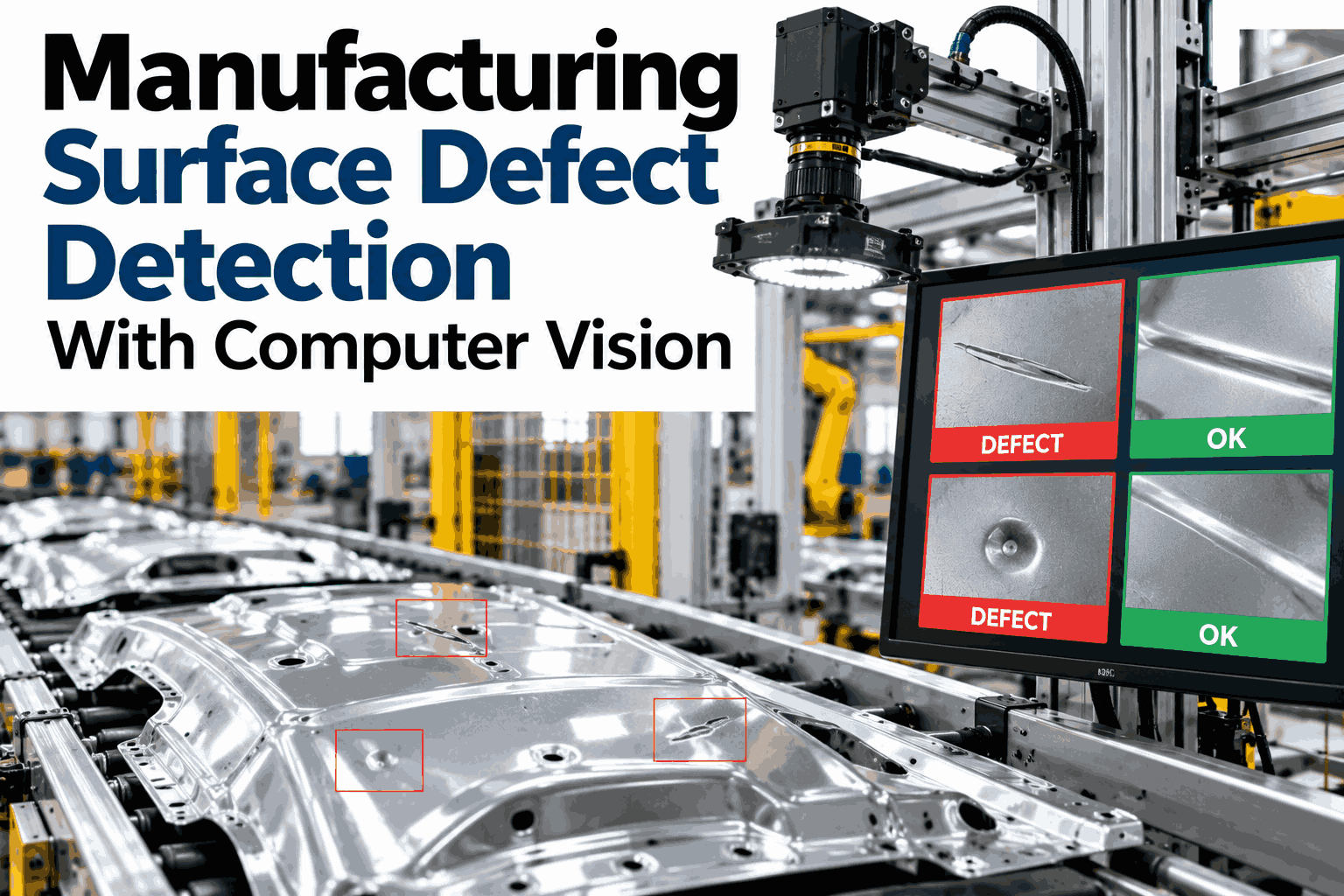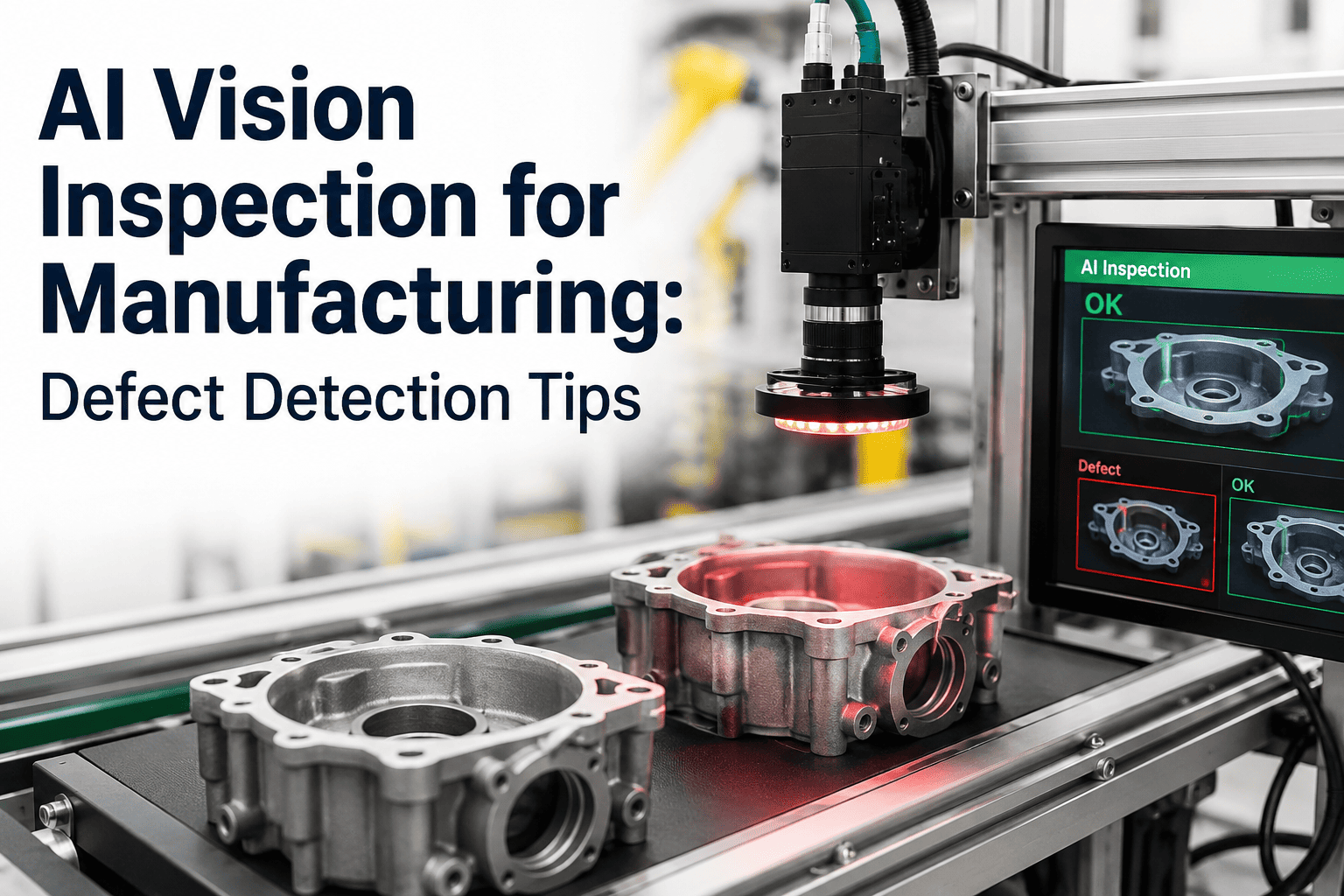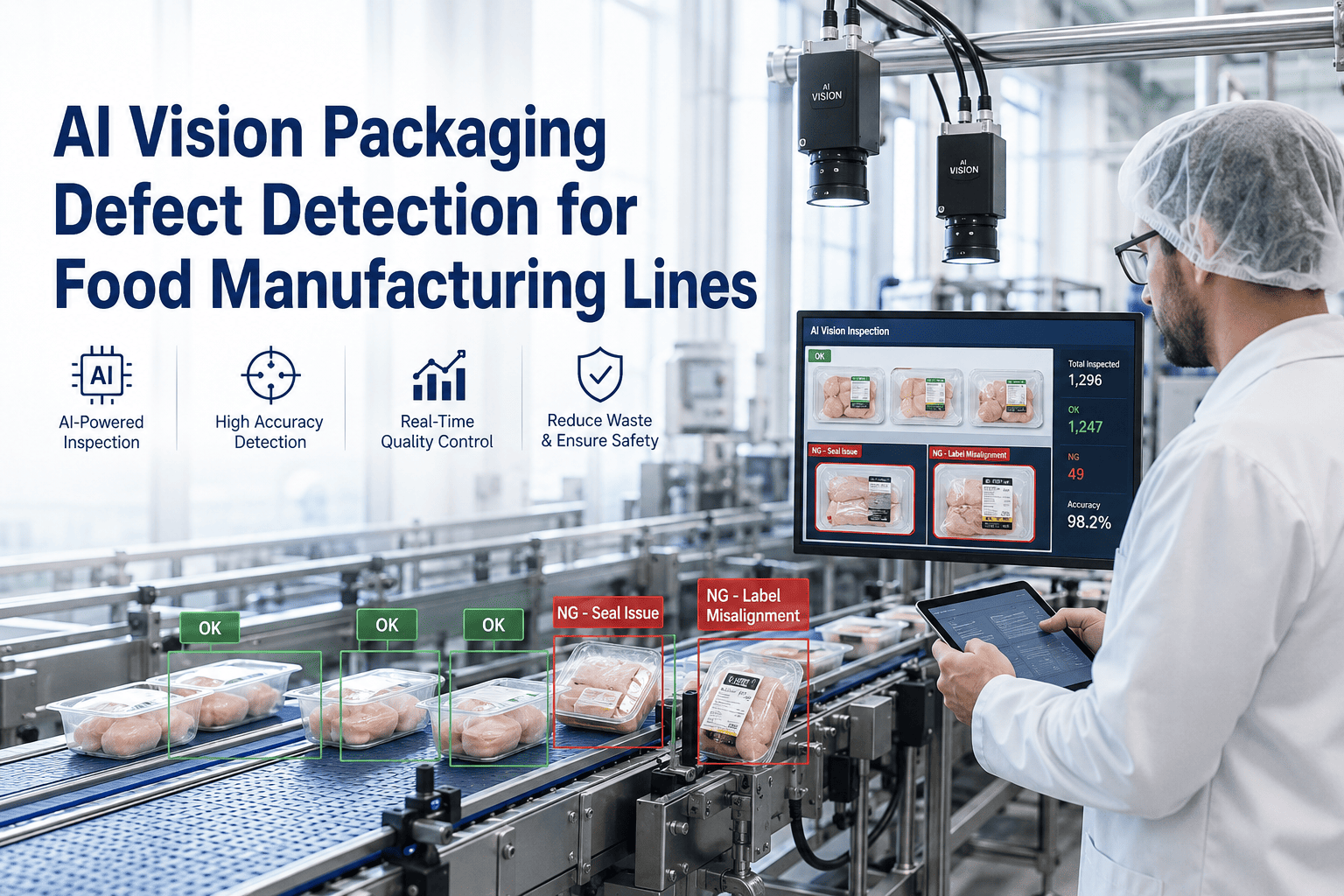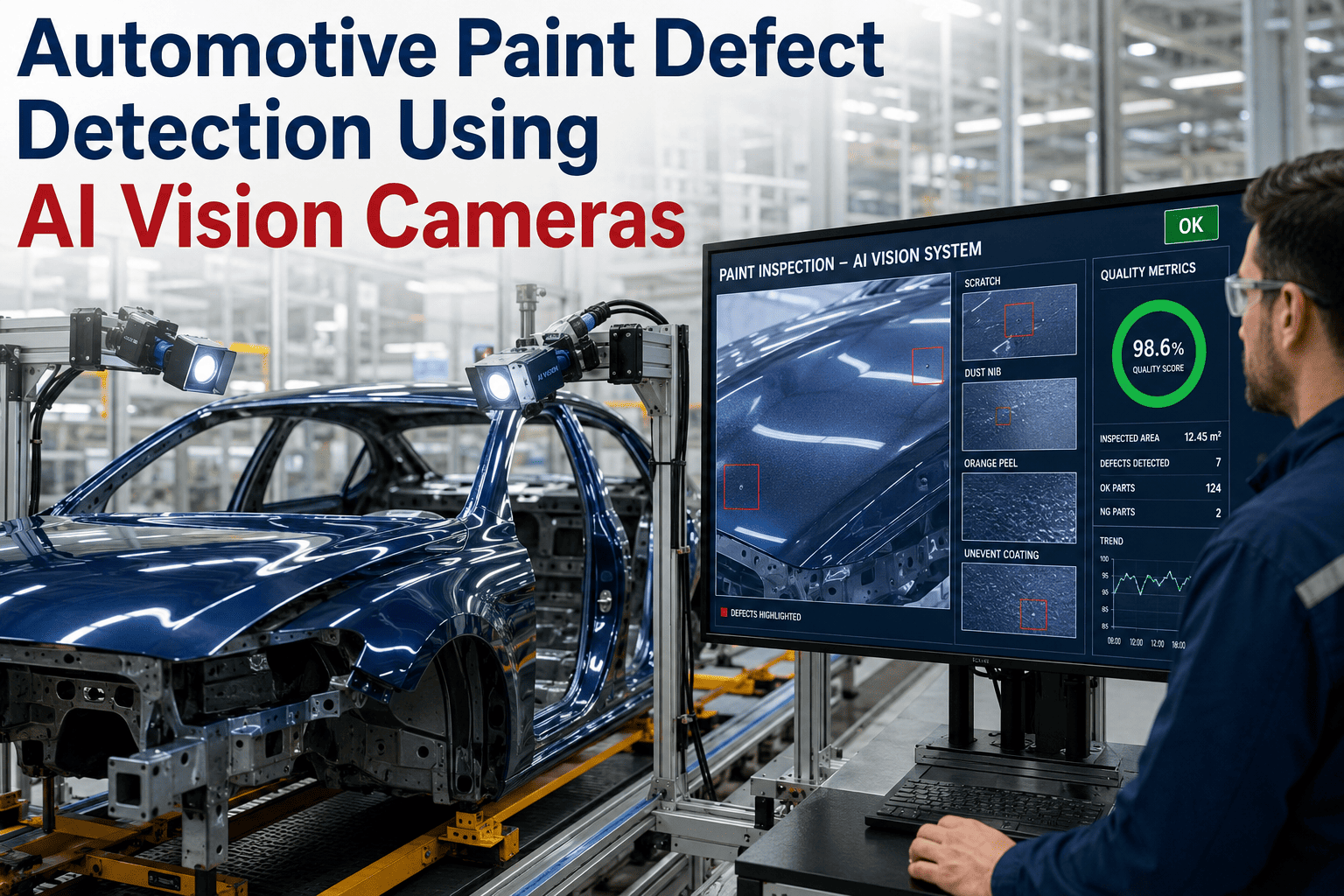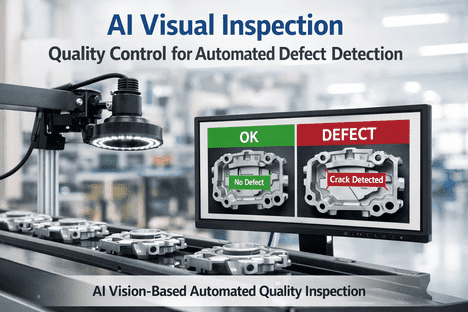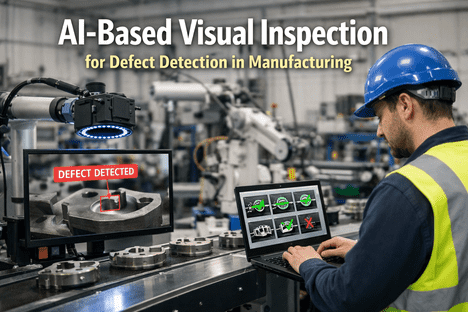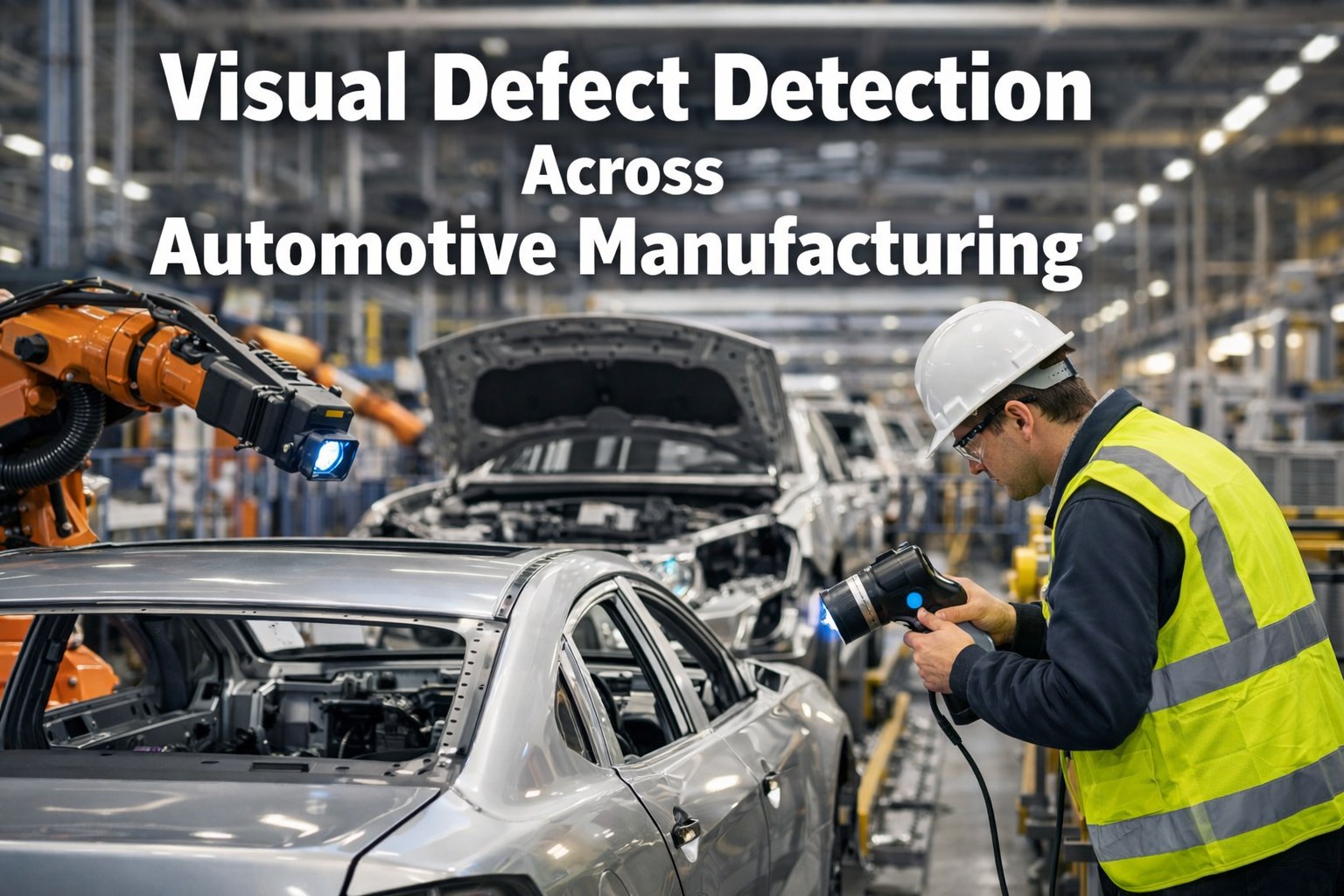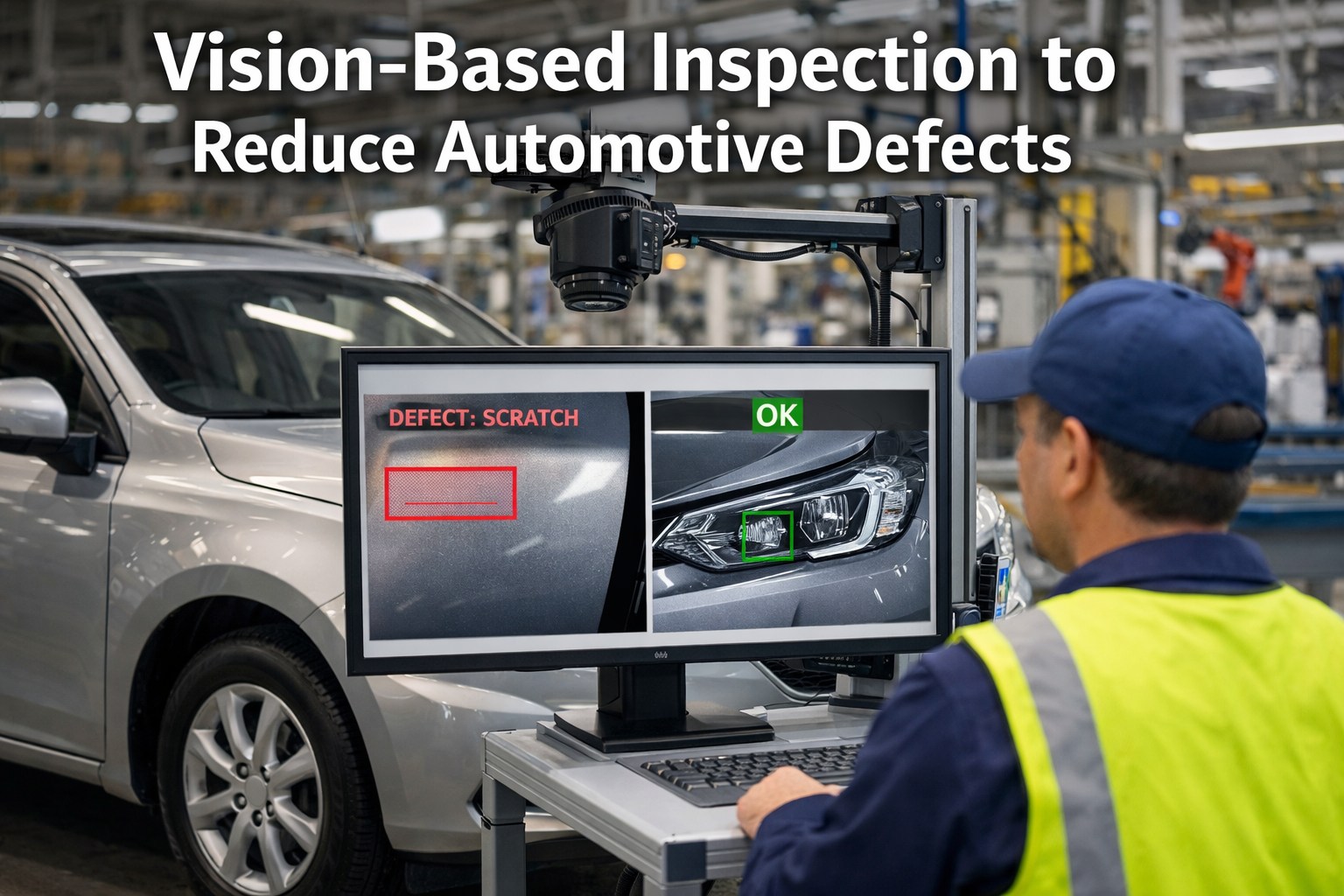
Every modern vehicle contains over 30,000 individual parts — and a single missed defect on any one of them can trigger a recall costing millions. Human inspectors, no matter how skilled, miss 20–30% of defects due to fatigue, inconsistent lighting, and the sheer speed of production lines. Vision-based inspection systems powered by AI and deep learning now detect surface flaws as small as 0.1mm with 99.8% accuracy — at full line speed, 24/7 and without a single blink. Book a free consultation to explore vision inspection integration for your plant.
Vision-Based Inspection to Reduce Automotive Defects
Identify Missing Parts, Assembly Errors, and Cosmetic Defects Before They Leave Your Line
Why Human Eyes Can't Keep Up
The biological limits of human inspection vs. the relentless precision of machine vision.
Human Inspection
The Weak LinkAI Vision Inspection
The UpgradeSources: Sandia National Laboratories, ASQ 2024 Study, Deloitte Manufacturing Analysis
6 Defect Categories Vision Systems Catch
From invisible scratches to missing bolts — nothing escapes the camera.
Missing Components
Bolts, clips, seals, and fasteners — vision systems verify every part is present before the station advances.
Assembly Errors
Reversed connectors, wrong orientation, incorrect mating — verified by comparing live images against digital reference models.
Surface & Paint Defects
Scratches, dents, orange peel, runs, and color mismatch — detected at sub-millimeter resolution under controlled lighting.
Dimensional Deviations
Gap and flush measurements, panel alignment, trim fitment — 3D vision systems measure to micron-level tolerances.
Weld & Joint Defects
Porosity, incomplete fusion, spatter, and seam misalignment — optical seam inspection catches flaws invisible to the naked eye.
Label & Code Errors
Barcode readability, VIN accuracy, warning label presence, and regulatory marking compliance — OCR verified in milliseconds.
The Vision Inspection Pipeline
From camera capture to quality decision — in under 200 milliseconds.
Image Capture
High-resolution cameras with structured lighting capture multi-angle images of every part at full line speed.
AI Analysis
Deep learning CNNs compare captured images against trained defect models — detecting anomalies human eyes cannot see.
Classification
Each defect is classified by type, severity, and location — critical, major, or minor — with confidence scoring.
Action & Trace
Pass/fail decision triggers automatic rejection or rework routing. Every inspection image is logged for full traceability.
Still Relying on Human Eyes for Quality?
iFactory integrates vision inspection data with maintenance workflows, traceability, and real-time quality dashboards — giving your plant a unified quality brain.
The Business Case for Vision Inspection
Measurable returns that justify the investment within 12–18 months.
Based on industry case studies from automotive component plants deploying AI vision inspection over 2-year periods.
Where Vision Inspection Makes the Biggest Impact
Critical inspection stations across the automotive production line.
Weld Seam Verification
Robot-mounted cameras inspect every weld joint on the body structure for porosity, spatter, and incomplete fusion — before paint shop entry.
Surface Finish Inspection
Multi-angle camera arrays under controlled LED lighting detect orange peel, dust inclusions, runs, and color deviation across entire vehicle bodies.
Part Presence Verification
Every clip, bolt, seal, and connector is verified as present and correctly oriented before the station releases the vehicle to the next step.
Machined Surface Measurement
3D vision systems measure cylinder bores, crankshaft journals, and valve seat dimensions to micron-level tolerances in-line.
Gap & Flush Measurement
Laser-based 3D scanners measure panel alignment, door gaps, and trim fitment to ensure consistent build quality before delivery.
Cell & Module Verification
Vision systems verify electrode alignment, welding integrity, and thermal paste application on every battery module — critical for safety.
The Technology Stack Powering Modern Vision Inspection
Hardware, software, and AI working together at production speed.
2D + 3D Cameras
High-res area scan and line scan cameras capture detailed images. 3D structured light and laser triangulation measure depth and geometry.
Deep Learning CNNs
Convolutional neural networks trained on millions of defect images. Models improve continuously with every production cycle.
Edge Computing
GPU-powered edge devices process images locally in under 200ms — no cloud latency. Results stream to iFactory for traceability.
Structured Lighting
Specialized LED arrays, diffused backlights, and dome illumination eliminate shadows and reflections for consistent imaging.
PLC & MES Integration
Pass/fail signals feed directly to PLCs for line control. Inspection metadata syncs to MES for production traceability.
Image Archiving
Every inspection image is stored with timestamp, VIN, and result — enabling root cause analysis months or years later.
How Top Automakers Use Vision Inspection
The world's largest automotive manufacturers are proving the ROI of AI-powered quality.
BMW Group
400+ AI Solutions in ProductionBMW's AIQX platform processes 1.3 million images daily across 16 production sites. AI-driven CNN models inspect painted surfaces in real time, reducing flaws by nearly 40% and cutting compute costs 63% using optimized GPU processing.
1.3M images/day across 16 plantsToyota
AI/Deep Learning VisionToyota's vision systems perform over 60 inspection points per vehicle using a dozen high-speed cameras. Deep learning models handle everything from paint quality to component verification at full line speed.
60+ inspection points per vehicleGeneral Motors
UVeye PartnershipGM partnered with Israeli startup UVeye to deploy AI-powered vehicle scanning across its dealer network. The system performs comprehensive defect identification during both manufacturing and post-production stages.
AI inspection across dealer networkTesla
Vision-Based RobotsTesla deploys vision-based inspection robots to catch paint imperfections and panel alignment issues on the Gigafactory floor — using the same computer vision DNA that powers its autonomous driving systems.
Automated paint & panel inspectionBMW Processes 1.3 Million Images Daily. What's Your Plant Doing?
iFactory connects vision inspection outputs to your CMMS — auto-generating work orders when defect trends indicate equipment drift, tooling wear, or process anomalies.
Frequently Asked Questions
How accurate are AI vision inspection systems?
State-of-the-art systems achieve 99.5–99.8% detection accuracy on surface defects as small as 0.1mm — significantly surpassing human inspector capabilities of 70–80%.
What's the typical ROI timeline?
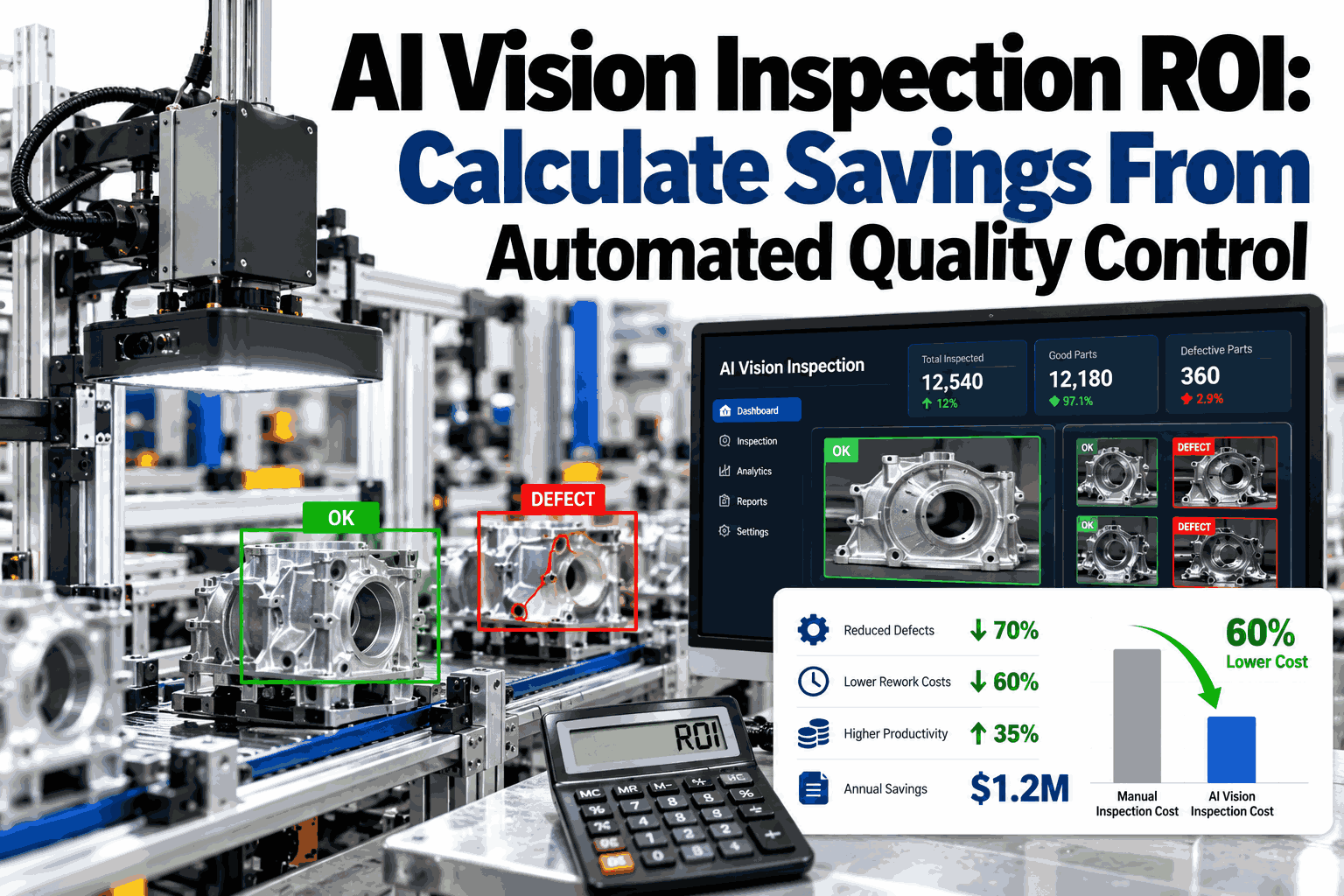
Most automotive plants see ROI within 12–18 months through reduced warranty costs (20%), fewer defect escapes (83% reduction), and improved OEE (22% increase).
Can vision systems work alongside human inspectors?
Absolutely. Many plants deploy AI as a "second set of eyes" alongside human inspectors — the AI handles high-speed detection while humans make judgment calls on borderline cases.
How does iFactory connect to vision inspection?
iFactory CMMS ingests vision inspection data to auto-generate maintenance work orders when defect patterns indicate equipment issues — bridging quality and maintenance operations.
What camera systems are typically used?
Systems range from $15K basic 2D setups to $250K+ multi-camera 3D arrays. Most automotive applications use area scan cameras with structured LED lighting and edge GPU processing.
Do AI systems improve over time?
Yes. Deep learning models continuously retrain on new production data, improving their accuracy and adapting to new product designs and defect variants without system replacement.
Stop Shipping Defects. Start Seeing Everything.
See how iFactory connects AI vision inspection with predictive maintenance, traceability, and quality analytics — giving your automotive plant zero-escape confidence.