A single blast furnace campaign costs $50–100 million. An unplanned rolling mill shutdown drains $100,000+ per hour. A slab with an undetected internal defect can cascade into rejected coils, wasted energy, and scrapped product worth six figures. The global digital twin market is projected to grow from $24 billion in 2025 to over $384 billion by 2034 — and steel manufacturing is where this technology delivers its most dramatic ROI. By creating real-time virtual replicas of furnaces, casters, and rolling mills, steel producers are now predicting failures before they happen, optimizing every pass in real time, and turning reactive maintenance into a competitive advantage.
What Is a Digital Twin in Steel Manufacturing?
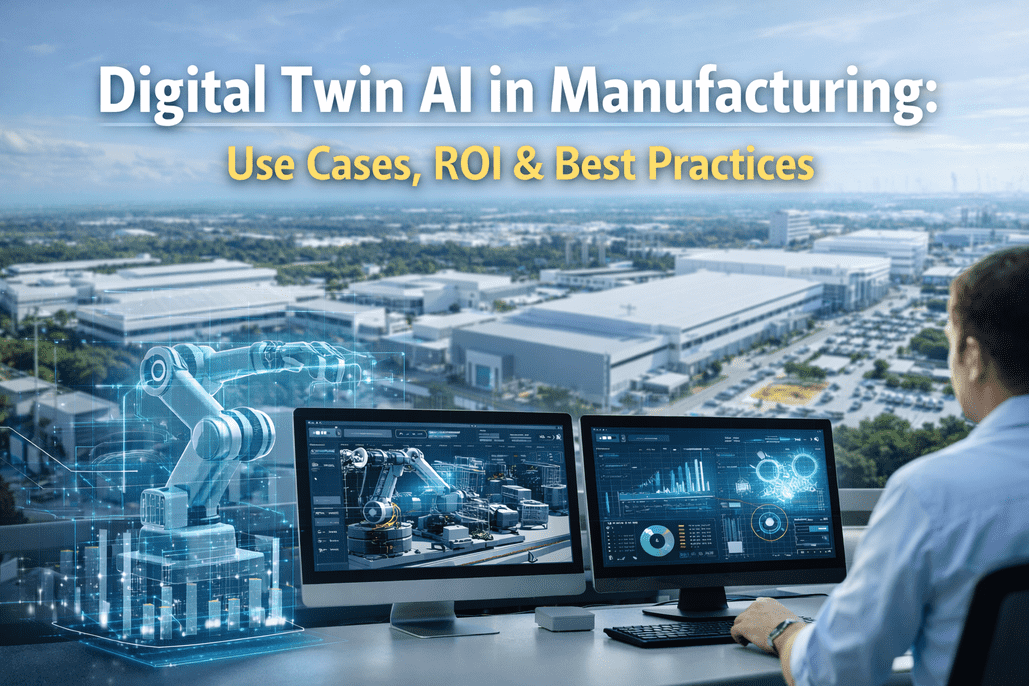
A digital twin is a real-time virtual replica of a physical steel plant asset — a blast furnace, continuous caster, rolling mill, or entire production line — mirrored in software with live data flowing from sensors, PLCs, SCADA systems, and maintenance records. It's not a static 3D model. It's a living simulation that reflects what's happening right now, predicts what will happen next, and recommends what to do about it.
The Steel Production Line: Where Digital Twins Deliver Impact
Steel production involves a chain of extreme-condition processes — each with unique monitoring, simulation, and maintenance requirements. Here's where digital twins are deployed across the production flow and what they track at each stage.
Your CMMS Already Contains the Foundation of Your Digital Twin
Asset hierarchies, maintenance histories, failure patterns, inspection records, and performance baselines — iFactory turns the data you already have into a living digital twin that drives predictive maintenance, optimizes scheduling, and documents every action across your steel plant.
The Measurable Impact: What Digital Twins Deliver
The ROI of digital twins in steel is not theoretical — it's documented across predictive maintenance, quality optimization, energy reduction, and asset life extension. Here are the metrics that leading steel producers are reporting.
Building Your Steel Plant Digital Twin: The 4-Phase Approach
You don't need a $10 million IoT project to start. The most effective digital twin implementations begin with the data you already have — and build upward in phases.
Your Digital Twin Starts With Your Maintenance Data
iFactory gives your steel plant the CMMS foundation that digital twins require — complete asset hierarchies, connected maintenance histories, condition monitoring integration, and automated work order generation. Whether you're building a twin for a single rolling mill or an entire integrated plant, it starts here.
Frequently Asked Questions
A digital twin is a real-time virtual replica of a physical steel plant asset or process — a furnace, caster, rolling mill, or entire production line — mirrored in software with live data from sensors, PLCs, and maintenance systems. It simulates current behavior, predicts future performance, and recommends optimal actions. Unlike a static model, it continuously learns from operational data and improves its predictions over time.
Digital twins continuously monitor asset health parameters — vibration, temperature, energy consumption, wear indicators — and compare them against baseline models. When a parameter deviates from normal, the system predicts the likely failure mode and timeline, enabling maintenance teams to intervene during planned windows rather than reacting to emergency breakdowns. Research shows this approach reduces unplanned downtime by 30–50% in capital-intensive process industries.
No. The most effective digital twin implementations start with the data you already have — asset hierarchies, maintenance histories, failure records, and inspection data in your CMMS. Existing SCADA, PLC, and sensor data provides the real-time feed. Additional sensors can be added incrementally to fill specific gaps. The key is structuring your existing data properly before investing in new hardware.
A CMMS like iFactory provides the foundational data layer for any digital twin — asset registries, maintenance histories, failure patterns, spare parts data, and work order records. When the digital twin predicts a failure, the CMMS automatically generates a prioritized work order, assigns it to the right team, and documents the resolution. Without a CMMS, the digital twin can predict problems but has no mechanism to ensure they're acted upon and documented.
Industry data shows digital twin investments typically yield positive ROI within 12–36 months, with some manufacturing deployments seeing initial results in 3–6 months. In steel specifically, preventing even one unplanned rolling mill shutdown ($100K+/hour) can offset months of implementation cost. Over five years, studies document ROI of 233% in metalworking deployments, with maintenance cost reductions of 25–55% and rejection rate improvements of up to 40%.