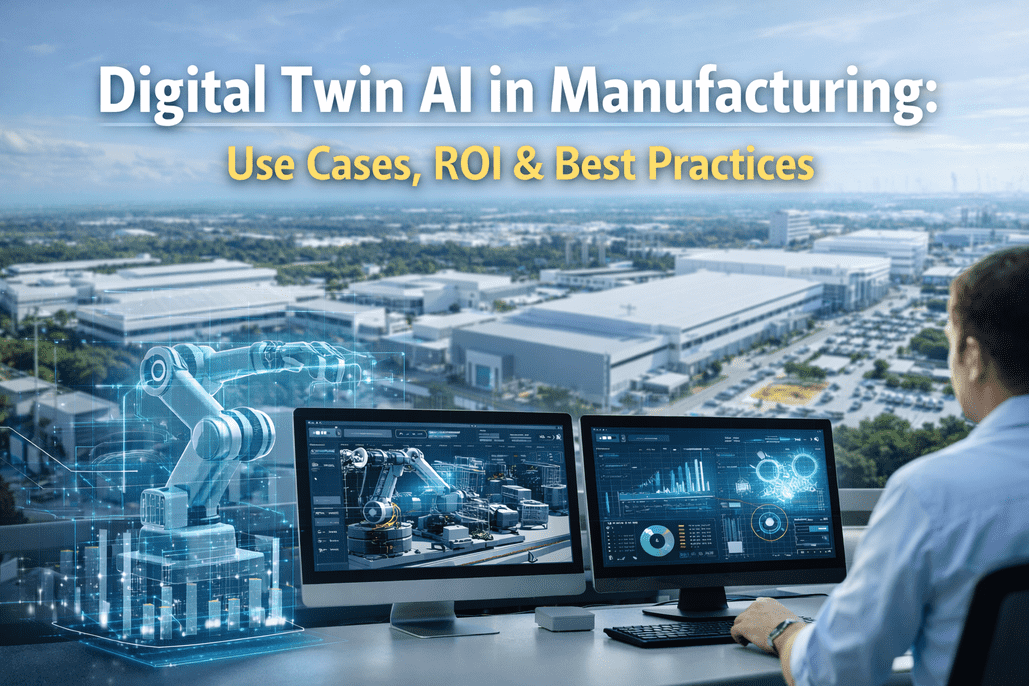
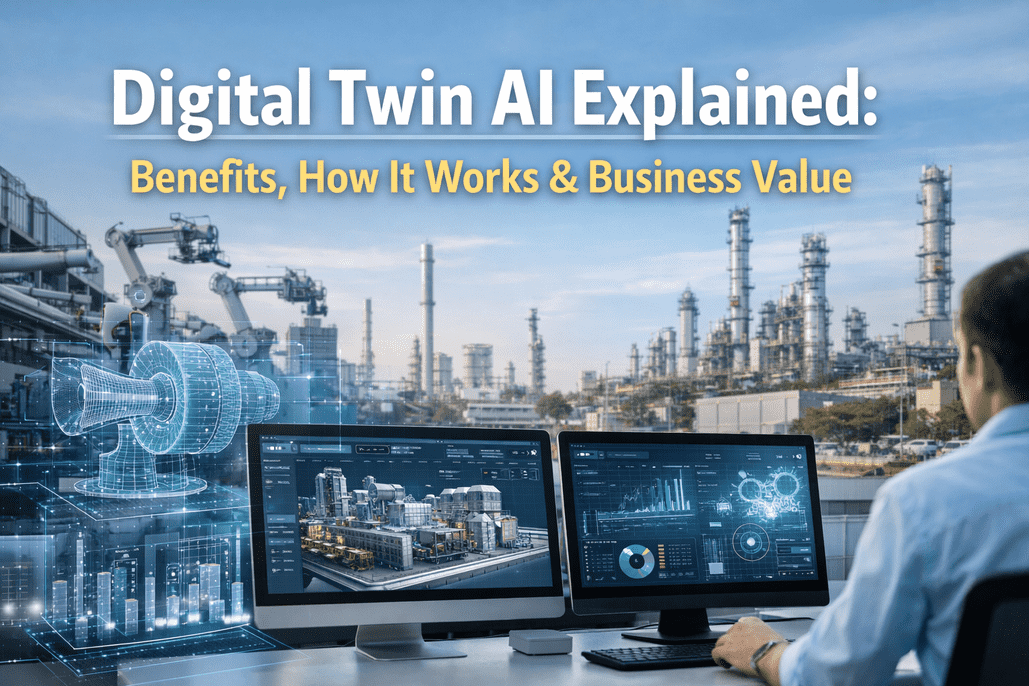
BMW built a complete digital twin of its Debrecen electric vehicle plant before a single physical brick was laid. Every robot, every conveyor, every weld station existed first as a virtual replica running on NVIDIA Omniverse — tested, optimised, and debugged in simulation before the factory floor even existed. The result: commissioning time cut by 30%, production errors caught months before they could cost real money, and an assembly line that hit target throughput in its first week of operation rather than the typical 8-12 week ramp-up. Samsung followed suit with "Megafactory" digital twins. Unilever linked twin models to live energy monitoring on detergent production lines. Across manufacturing, the pattern is the same — organisations that build the virtual version of their operations before touching the physical one are outperforming competitors who still rely on trial-and-error in production. The digital twin market is growing at 48% CAGR for a reason. It works.
iFactory Digital Twin Intelligence
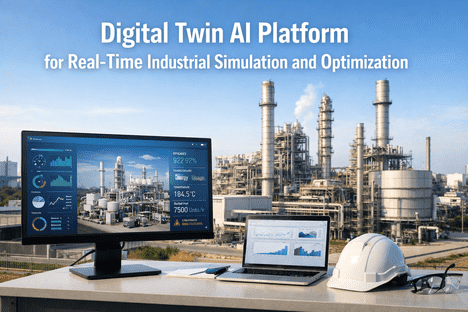
Digital Twin AI Platform for Real-Time Industrial Simulation and Optimization
How AI-powered digital twins are letting manufacturers test every decision in simulation before committing to production — cutting commissioning time, predicting failures, and optimising operations continuously
$150B
Projected digital twin market by 2030
48%
CAGR — fastest growth in industrial tech
72%
Of manufacturers planning twin deployment by 2026
75%
Report lower maintenance costs after adoption
What a Digital Twin Actually Is — and What It Is Not
A digital twin is not a 3D model. It is not a dashboard. It is not a simulation that runs once and sits on a shelf. A digital twin is a living, continuously updated virtual replica of a physical asset, process, or entire facility — fed by real-time sensor data, enriched by AI analytics, and capable of predicting what will happen next before it happens in the real world.
Machines vibrate, heat up, degrade
Operators make decisions under pressure
Failures happen without warning
Testing changes risks production
Knowledge walks out the door at retirement
Virtual replicas mirror real-time behaviour
AI simulates outcomes before decisions are made
Failures predicted 14-21 days in advance
Changes tested risk-free in simulation
Institutional knowledge captured in models permanently
Five Industrial Applications Where Digital Twins Deliver Immediate Value
Digital twins are not a future technology. They are delivering measurable returns today across five core industrial applications — each building on the same foundation of real-time data, physics-based models, and AI analytics.
01
Virtual Commissioning
Test new equipment, line configurations, and control logic in simulation before physical installation. Engineers identify integration bugs and inefficiencies without risking production. Commissioning time reduces by up to 40% with generative AI capabilities. 75% of companies using twins during commissioning report lower subsequent maintenance costs.
02
Predictive Maintenance
Digital twins calibrated with live sensor data detect equipment anomalies 14-21 days before failure with greater than 94% accuracy. The twin models the degradation curve for each asset individually, accounting for actual operating conditions rather than generic manufacturer schedules. Unplanned downtime drops 30-50%.
03
Process Optimisation
Run what-if scenarios on production parameters — line speeds, temperature profiles, batch sequences — without touching the physical process. AI identifies the optimal operating envelope for each product and condition combination. Manufacturers report 5-15 point OEE improvements from twin-guided optimisation.
04
Energy and Sustainability
Digital twins track energy consumption at the individual asset level in real time, correlating usage with production output, ambient conditions, and equipment health. Degraded equipment consuming 10-30% excess energy gets flagged automatically. Digital twins can reduce building carbon emissions by up to 50%.
05
Workforce Training and Knowledge Capture
New technicians train on the digital twin before touching real equipment — practising fault diagnosis, procedure execution, and emergency responses in simulation. As 40% of the manufacturing workforce approaches retirement by 2030, twins capture institutional knowledge in physics-based models that persist permanently.
Want to see which digital twin applications would deliver the fastest ROI for your operations? Book a free digital twin readiness assessment.
The Technology Stack Behind Industrial Digital Twins
A production-grade digital twin is not a single software product. It is an integrated stack of technologies — each layer enabling the one above it. Understanding the stack helps you assess which components you already have and what gaps need filling.
Intelligence Layer
AI and Machine Learning
Predictive analytics, anomaly detection, prescriptive optimisation, generative AI assistants for natural language queries, and automated decision support. This is where data becomes actionable intelligence.
Simulation Layer
Physics-Based Models and Simulation Engines
Thermodynamic, mechanical, and fluid dynamics models that replicate asset behaviour mathematically. Combined with discrete event simulation for process flows and Monte Carlo methods for uncertainty quantification.
Integration Layer
Data Pipelines and Edge Computing
OPC-UA, MQTT, and REST API connectors link sensors to the twin platform. Edge computing processes time-critical signals in sub-millisecond response times. Data historians provide temporal context for trend analysis.
Data Layer
IoT Sensors and SCADA Systems
Vibration, temperature, pressure, current, flow, and acoustic sensors create the real-time data foundation. With 21 billion connected IoT devices globally and industrial sensors costing $50-100 each, comprehensive instrumentation is now accessible to mid-market manufacturers.
The Market Is Moving Fast — Here Is Where It Stands
Digital twin technology has crossed the adoption chasm. The numbers tell a story of a market accelerating faster than almost any other industrial technology category, driven by converging forces that are making twin adoption not just advantageous but competitively necessary.
Market Size (2024)
$14.5B
Projected Size (2030)
$150B
Manufacturing Adoption (2024)
48%
Planning Deployment by 2026
72%
Patent Filing Growth (2017-2025)
600%
Real Results from Real Deployments
The ROI from digital twin deployments is documented across industries and scales. These are not projections — they are measured outcomes from manufacturers who have integrated twins into production operations.
Predictive Maintenance Programs
Initial investment of $200K-600K. ROI within 18-36 months. Twin-based programs detect anomalies 14-21 days before failure with 94%+ accuracy.
Energy Optimisation
Twin models correlate energy consumption with asset health and production variables. Degraded equipment consuming excess energy gets flagged before waste compounds.
Virtual Commissioning
Integration bugs identified in simulation. Ramp-up to target throughput in days rather than weeks. 75% of adopters report lower subsequent maintenance costs.
Sustainability Impact
Up to 50%
carbon reduction
Asset-level emissions tracking feeds directly into CSRD and ESG reporting. IBM's Sund and Baelt deployment extended bridge lifespan by 100 years while negating 750,000 tons of CO2.
Want to see what a digital twin deployment would deliver for your facility? Get a customised ROI projection from our engineers.
Frequently Asked Questions
How much does it cost to deploy a digital twin for an industrial facility?
Costs vary significantly by scope. A twin for a single critical asset or production line typically starts at $200K-600K including sensors, software, and integration. Facility-wide twins for large plants range from $1-5M. The key metric is ROI timeline — most deployments achieve payback within 18-36 months, with twin-based predictive maintenance programs generating $1.2-3.5M in annual savings.
Do we need to instrument every asset with sensors before building a twin?
No. Most deployments start with 10-20 critical assets where failure impact is highest. Even without comprehensive sensors, twins can start with existing SCADA data, maintenance histories, and operational logs. Accuracy improves as sensor coverage expands. The platform is designed to scale incrementally — you add instrumentation as value is demonstrated.
How does a digital twin differ from a 3D model or simulation?
A 3D model is static — a visual representation created once. A simulation runs specific scenarios but is not connected to live data. A digital twin is dynamic, continuously updated with real-time sensor feeds, and capable of predicting future behaviour based on current conditions. The twin evolves with the physical asset, learning from every operating cycle and becoming more accurate over time.
Can digital twins integrate with our existing ERP, CMMS, and SCADA systems?
Yes. Industrial digital twin platforms connect via standard protocols including OPC-UA, MQTT, Modbus, and REST APIs. Data flows bi-directionally — sensor data and historian feeds come in, while predictions, alerts, and optimisation recommendations feed out to existing work order and planning systems. Most integrations complete within 4-8 weeks.
How does a digital twin handle assets we do not have detailed engineering models for?
Not every twin requires a full physics-based model. Data-driven twins use machine learning to build behavioural models directly from operational data — learning what normal looks like and detecting deviations without needing first-principles engineering equations. Hybrid approaches combine simplified physics models with ML for assets where some engineering knowledge exists but full models would be impractical.
Simulate. Predict. Optimise.
Build the Virtual Version of Your Operations. Then Make the Physical One Better.
iFactory's AI-powered digital twin platform creates living replicas of your assets and processes — continuously updated with real-time data, capable of predicting failures, simulating changes, and optimising operations without ever risking production.
94%+
Failure prediction accuracy
$3.5M
Annual savings potential