AI Energy Management for New Greenfield Plants: 20–40% Savings | iFactory
By Riley Quinn on April 16, 2026
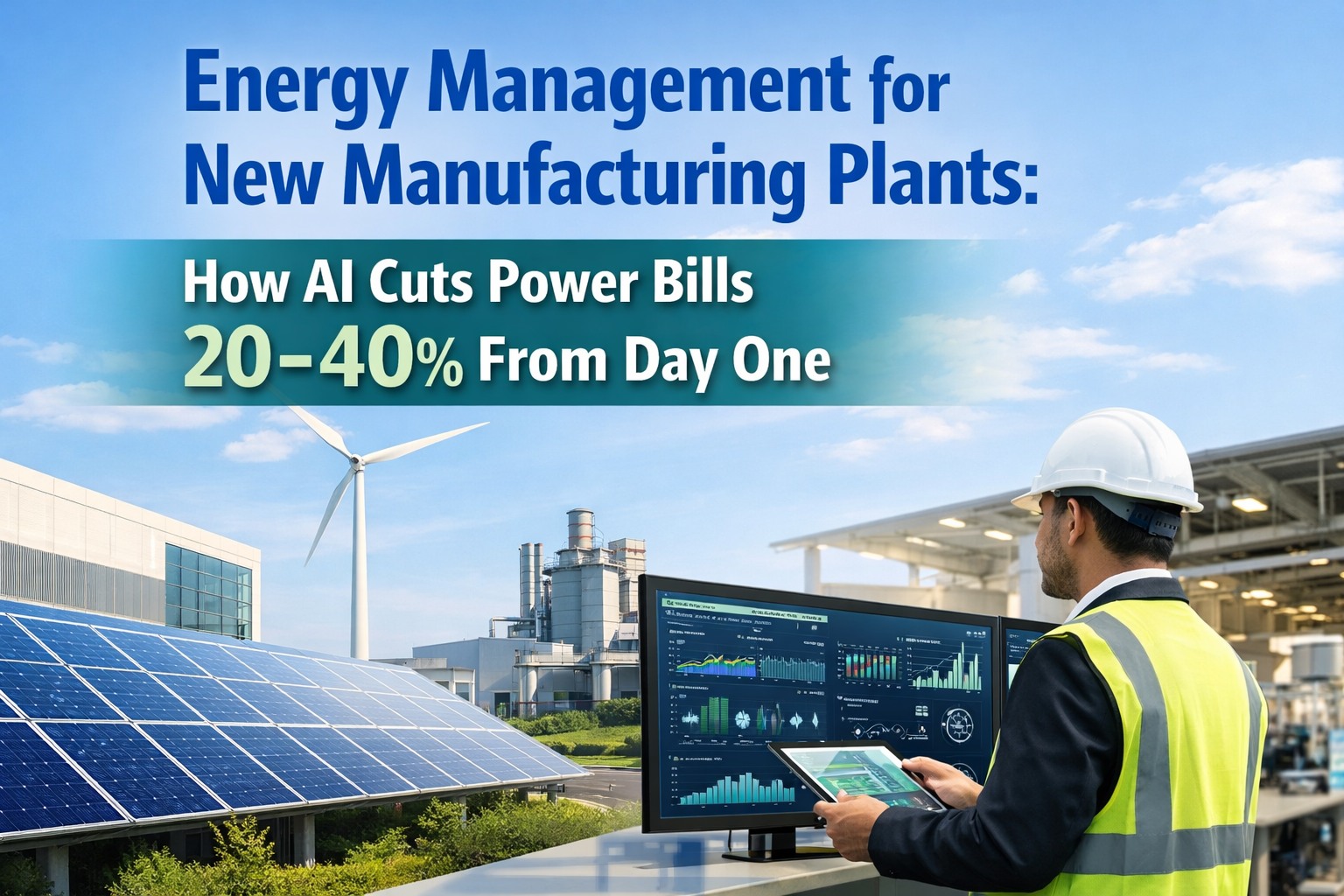
Energy costs drain 15–30% of operating budgets from manufacturing plants—yet most facilities still rely on manual audits, static schedules, and monthly utility bills to manage consumption. The opportunity cost is staggering: factories without smart energy monitoring waste $60,000–$150,000 annually on preventable costs. For greenfield plants, this isn't a legacy problem to inherit. AI-driven energy management systems are now delivering 20–40% cost reductions from day one—by building intelligence into your plant design before the first machine powers on.
AI-Powered Energy Management
The Smart Factory Energy Advantage
Build energy intelligence into your greenfield plant—and start saving from day one
Before you can optimize energy consumption, you need to understand where it's being consumed. In a typical manufacturing facility, production equipment accounts for 60–80% of energy use—but the remaining 20–40% hides in compressed air, HVAC, lighting, and auxiliary systems that often run inefficiently around the clock.
Typical Factory Energy Distribution
Production Equipment
60-80%
HVAC Systems
15-20%
Compressed Air
10-15%
Lighting
5-10%
Only 5% of mid-size factories have HVAC energy management systems. Just 1% have lighting controls.
How AI Energy Management Actually Works
Traditional energy management treats your factory as a collection of independent systems. AI changes this completely—it sees your entire operation as one interconnected energy ecosystem and optimizes across all domains simultaneously.
1
Continuous Monitoring
IoT sensors capture real-time data from every major load—machines, compressors, HVAC, lighting—at 15-minute intervals or less.
2
Digital Twin Simulation
AI creates a virtual model of your energy systems, simulating optimization decisions before implementing them in real-time.
3
Predictive Optimization
Machine learning predicts demand patterns, weather impacts, and production schedules to pre-position energy resources.
4
Automated Control
Systems automatically adjust setpoints, shift loads, and coordinate equipment startup to minimize peak demand charges.
Ready to see AI energy optimization in action? Book a demo to explore how iFactory builds energy intelligence into your greenfield plant.
The Real Savings: Industry Results
These aren't theoretical projections. Multiple deployments across different manufacturing sectors have validated these savings with documented results.
Automotive Suppliers
22-28% savings
Stamping and welding operations with highly variable energy profiles see the largest gains through AI load smoothing.
Consumer Goods
20-22% savings
Frequent changeovers and variable schedules benefit from coordinating production with energy-intensive support systems.
Medical Devices
15-18% savings
Infrastructure-level optimization delivers savings while maintaining full regulatory compliance on validated processes.
Office HVAC Systems
Up to 37% savings
AI models for HVAC control deliver dramatic savings depending on baseline system maturity.
Build Energy Intelligence Into Your Greenfield Plant
iFactory's energy digital twin simulates your entire facility's energy ecosystem—testing optimization strategies before commissioning and delivering 20-40% savings from day one.
Most plant managers focus on kilowatt-hour consumption and completely ignore demand charges—which can represent 30–50% of your total energy bill. Smart monitoring eliminates the expensive demand spikes that occur when multiple pieces of equipment start simultaneously.
Peak Demand: Before vs. After AI Optimization
Without AI
Uncontrolled spikes = high demand charges
With AI
Smoothed load = 30-50% lower demand charges
Want to understand your demand charge exposure? Book a demo to see how iFactory identifies peak demand reduction opportunities.
Expert Perspective
"Traditional approaches might save 5% on compressed air or 8% on HVAC individually. An AI system that coordinates all systems together consistently achieves 15–25% total energy cost reduction because it eliminates the inefficiencies that emerge at the boundaries between systems."
— Industrial Energy Management Research, 2025
$60B
Global EMS Market 2025
12.7%
Annual Market Growth
70%
Industrial Segment Share
Greenfield Energy Optimization Checklist
Building energy intelligence into a new facility is dramatically more cost-effective than retrofitting. Use this checklist during your greenfield planning phase.
Design Phase
Establish energy baseline and consumption targets
Specify IoT-ready equipment with energy monitoring
Design electrical infrastructure for submetering
Plan CMMS integration for energy KPI tracking
Procurement Phase
Select AI-capable energy management platform
Specify variable frequency drives on major motors
Evaluate utility rate structures and demand charges
Plan for renewable energy integration capability
Commissioning Phase
Deploy power monitoring on all major loads
Configure AI optimization algorithms
Establish automated demand response protocols
Set up real-time energy dashboards and alerts
Need help planning your greenfield energy strategy? Book a demo to explore iFactory's energy optimization capabilities.
Conclusion
The math is simple: energy costs represent 15–30% of manufacturing operating budgets, and AI-driven systems consistently deliver 20–40% reductions. For a greenfield plant, that's not optimization—it's competitive advantage built into your foundation. The global energy management market is growing at 12.7% annually because manufacturers are discovering that smart energy isn't optional anymore. It's the difference between plants that struggle with utility bills and plants that turn energy into a strategic asset.
Start Saving 20–40% on Energy From Day One
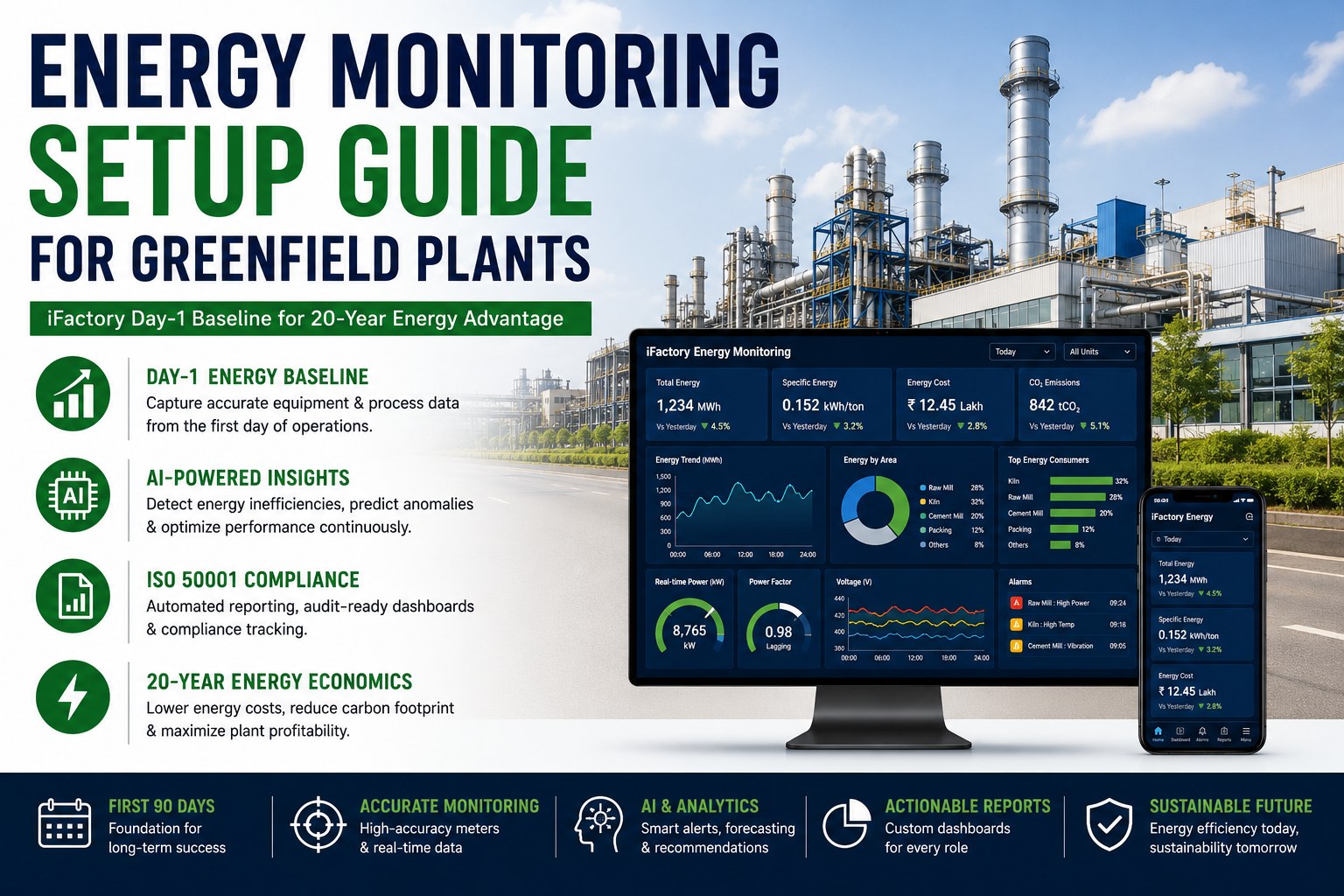
iFactory's AI-powered energy management integrates with your CMMS to deliver real-time optimization, predictive demand management, and measurable cost reduction from the moment your greenfield plant goes live.
Documented deployments show 20–40% energy cost reductions across manufacturing sectors. Automotive suppliers see 22–28% savings, consumer goods plants achieve 20–22%, and even highly regulated medical device facilities save 15–18% through infrastructure-level optimization.
What are demand charges and why do they matter?
Demand charges are based on your maximum power draw during any 15-minute period in a billing cycle. They can represent 30–50% of your total energy bill. AI systems prevent simultaneous equipment startup and smooth load profiles to dramatically reduce these charges.
Why is greenfield the best time to implement energy management?
Building energy intelligence into a new facility costs a fraction of retrofitting. You can specify IoT-ready equipment, design for submetering, and configure AI optimization before commissioning—delivering savings from day one instead of years of wasted energy.
How does AI energy management integrate with CMMS?
Modern platforms like iFactory integrate energy data directly into your CMMS, enabling energy KPI tracking alongside maintenance metrics, automated alerts for energy anomalies, and correlation between equipment health and energy consumption.
What's the ROI timeline for AI energy management?
Independent studies show up to 155% ROI over three years for comprehensive energy management platforms. Facilities paying high demand charges often see the fastest payback—sometimes within 12–18 months.