Factory Commissioning Plan: 90-Day Checklist for Day-1 Production
By Riley Quinn on April 1, 2026
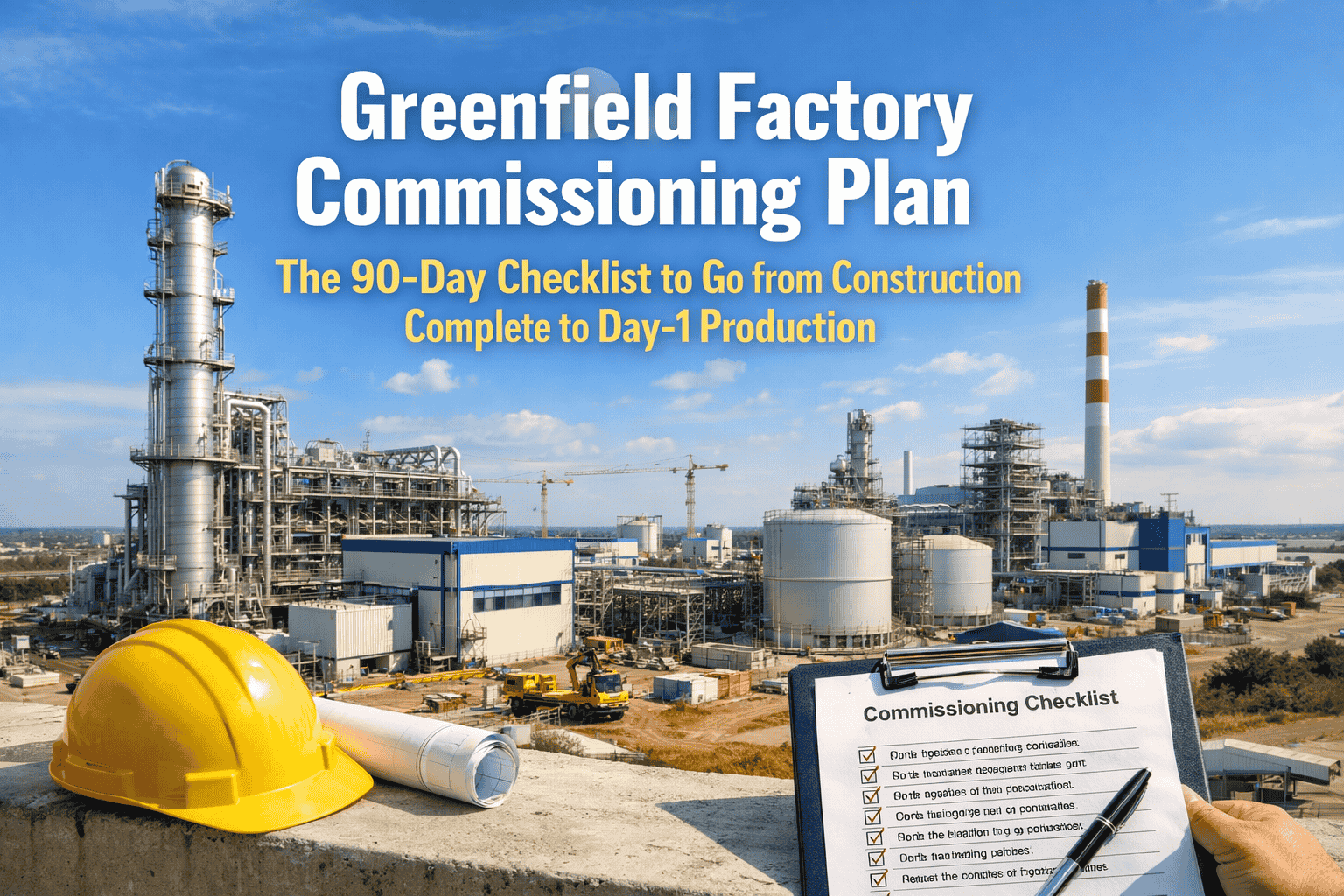
The average large manufacturing plant loses $129 million per year to downtime—and a significant portion of that loss traces back to poor commissioning. When facilities rush from construction to production without structured testing, the result is predictable: equipment failures, safety incidents, and startup delays that can cost weeks of lost revenue. A 90-day commissioning plan isn't bureaucracy—it's the difference between Day-1 production success and months of firefighting. Here's the exact roadmap industrial teams use to bring new factories online safely and on schedule.
90-Day Roadmap
Factory Commissioning Plan
From mechanical completion to Day-1 production
Days 1–30
Pre-Commissioning
Inspections, verification, system readiness
Days 31–60
Testing & Validation
Equipment testing, safety checks, calibration
Days 61–90
Startup & Production
Trial runs, optimization, full production
$129M
avg. annual downtime cost per large plant
20
monthly downtime incidents (industry avg.)
2–3x
higher cost for reactive vs. planned fixes
What Is a Factory Commissioning Plan?
A factory commissioning plan is the structured process that bridges construction completion and full production. It ensures every system, piece of equipment, and process is inspected, tested, and validated before the facility goes live. Without it, you're essentially flying blind—hoping that what was built actually works as designed.
Commissioning covers the critical handoff:
Construction CompletePre-CommissioningTesting & ValidationDay-1 Production
Typical Duration
60–90 Days
depending on plant complexity
Phase 1: Pre-Commissioning (Days 1–30)
Pre-commissioning starts when facility systems achieve mechanical completion. This phase verifies that everything is installed correctly before any equipment is energized or process fluids are introduced. It's your last chance to catch installation errors cheaply.
Phase 1
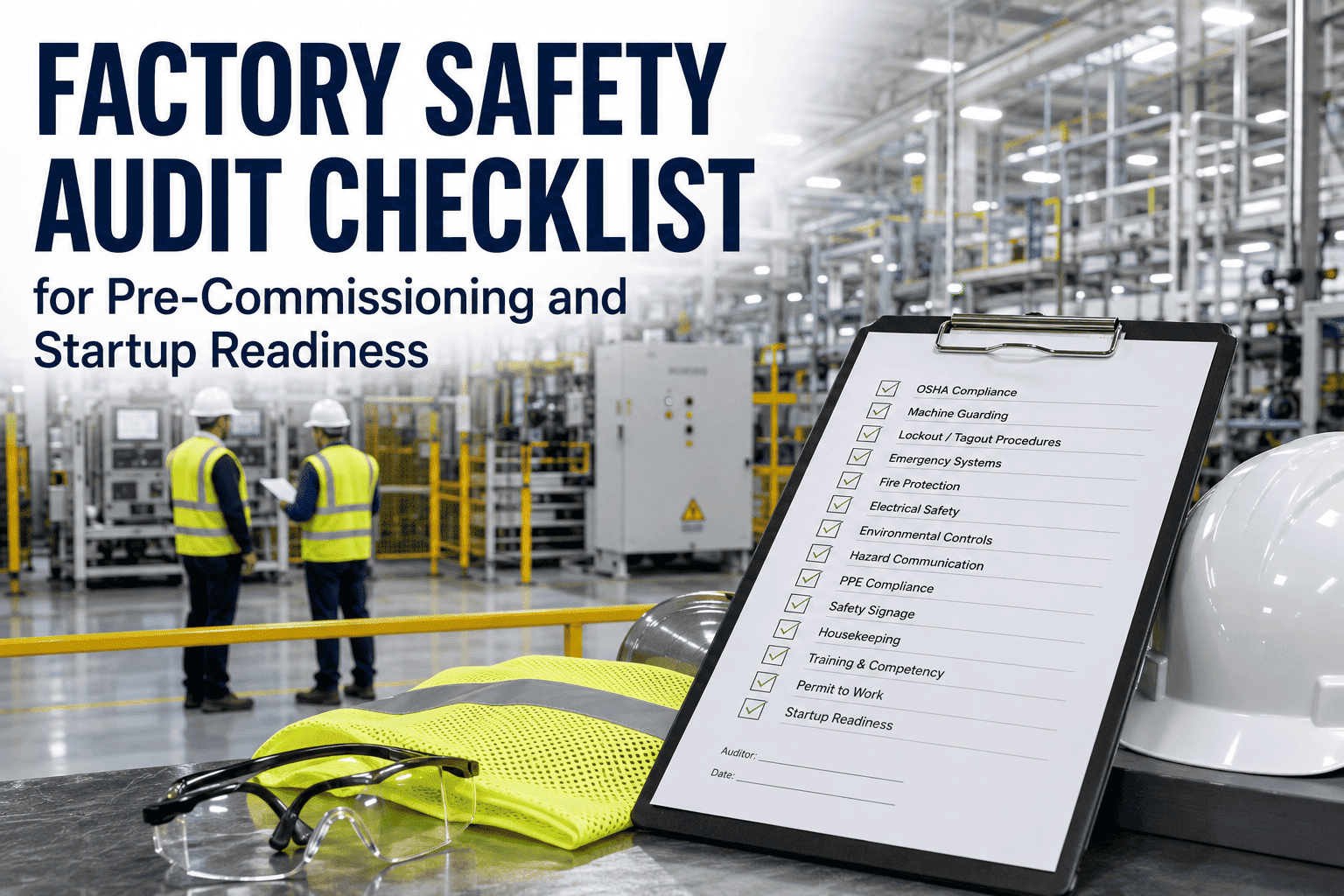
Pre-Commissioning Checklist
Days 1–30
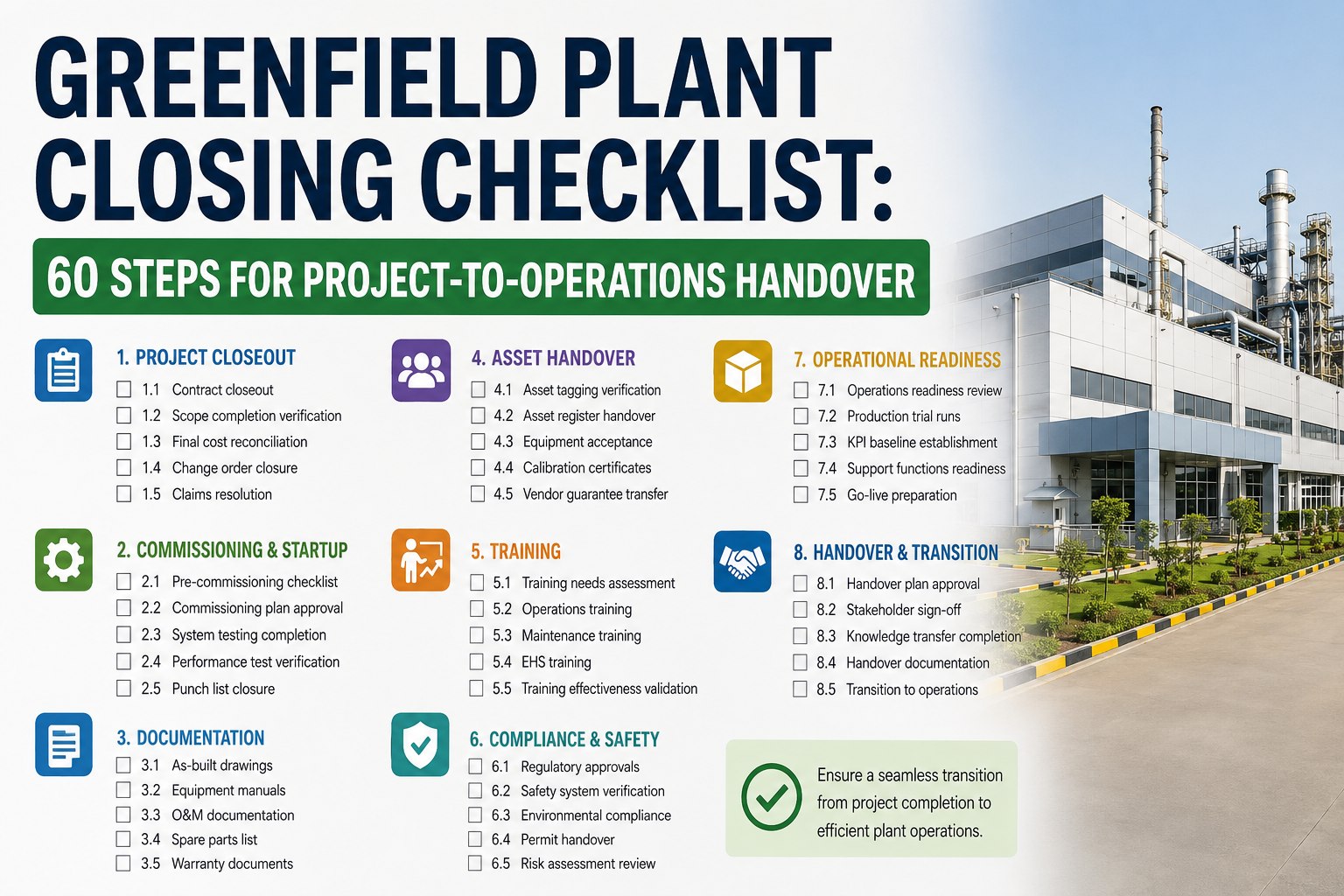
Documentation & Handover
Verify mechanical completion certificates
Collect as-built drawings and red-line markups
Confirm equipment manuals and vendor documentation
Physical Inspection
Walk every line—physically sight everything
Verify valve types, tag numbers, and positions
Check flange bolts, blind flanges, and ratings
System Integrity
Complete pressure testing of piping systems
Perform cleaning and flushing procedures
Verify electrical insulation and continuity tests
Milestone: Systems ready for energization and testing
Once pre-commissioning is complete, responsibility transfers to the commissioning team. Equipment is energized, systems are tested under load, and safety interlocks are validated. This is where you discover whether what was built actually works as designed.
Phase 2
Testing & Validation Checklist
Days 31–60
Equipment Testing
Energize electrical systems and verify circuits
Run motors without loads (dry running trials)
Verify motor rotation direction and vibration
Instrumentation & Controls
Complete instrument loop checks
Test control system logic and interlocks
Calibrate sensors and verify signal transmission
Safety Systems
Test emergency shutdown systems (ESD)
Verify fire detection and suppression
Validate lock-out/tag-out procedures
Milestone: All systems tested and validated for process introduction
Industry Best Practice
For most plants, 2–3 weeks is sufficient for operational testing after mechanical dry running. Air and water tests should run continuously for several days, giving all shifts the opportunity to conduct the same tests and practice startup/shutdown sequences.
Phase 3: Startup & Production (Days 61–90)
The final phase transitions from testing to actual production. Process fluids are introduced, trial runs validate output quality, and the facility ramps up to full capacity. This is where commissioning success is ultimately measured.
Rushing to energize equipment without completing verification leads to failures that cost 2–3x more to fix reactively.
02
No Clear Systemization
Block-based turnovers delay commissioning. System-based turnovers let you start testing before the entire plant is complete.
03
Poor Documentation
If something goes wrong later, you need detailed records to verify everything was done correctly. Paper trails matter.
04
Late Operator Training
Operators should be involved during commissioning—not handed keys on Day 1. This is the best opportunity to learn the equipment.
Expert Perspective
A detailed, systematic commissioning plan can reduce the overall time between completion of construction and the start of facility operations, and verify that the equipment and systems installed meet the design intent. There is no clear definition as to when construction ends and commissioning begins—but the teams who plan early consistently achieve the best outcomes.
— IndustryWeek Plant Commissioning Guide
Key Commissioning KPIs
Zero days delay
in commissioning activities for systems handed over
100% complete
data and documentation at system handover
100% available
spare parts and tools at system handover
Digitize Your Commissioning Process
Replace spreadsheets with real-time commissioning tracking. Assign tasks, monitor progress, and ensure nothing is missed before Day-1 production.
Planning your commissioning timeline? Book a planning session with our commissioning experts.
Start Your Commissioning Right
Whether you're 6 months from mechanical completion or already in pre-commissioning, our team can help you build a structured plan that gets you to Day-1 production on time and on budget.
A factory commissioning plan is a structured process used to ensure all systems, equipment, and processes are inspected, tested, and validated before starting full production. It bridges the gap between construction completion and Day-1 operations, covering pre-commissioning verification, equipment testing, safety validation, and trial production runs.
How long does factory commissioning typically take?
Most factory commissioning takes 60–90 days depending on plant complexity, equipment count, and operational requirements. Simple facilities may complete in 45–60 days, while complex chemical or pharmaceutical plants may require 90–120 days. The key is planning early—ideally starting commissioning preparation during the FEL 2 or FEL 3 phase of the project.
What are the main phases of industrial commissioning?
Industrial commissioning typically has three main phases: pre-commissioning (verification, inspections, integrity testing before energization), commissioning/testing (equipment testing, loop checks, safety system validation), and startup (utility commissioning, trial runs, performance acceptance testing). Each phase has specific milestones that must be achieved before proceeding.
Yes, digital commissioning systems replace manual spreadsheets with real-time task tracking, automated progress reporting, and centralized documentation. Digital tools help teams assign responsibilities, monitor milestones, flag delays, and ensure nothing is missed before production starts. This reduces commissioning time, improves safety compliance, and creates better audit trails for future reference.