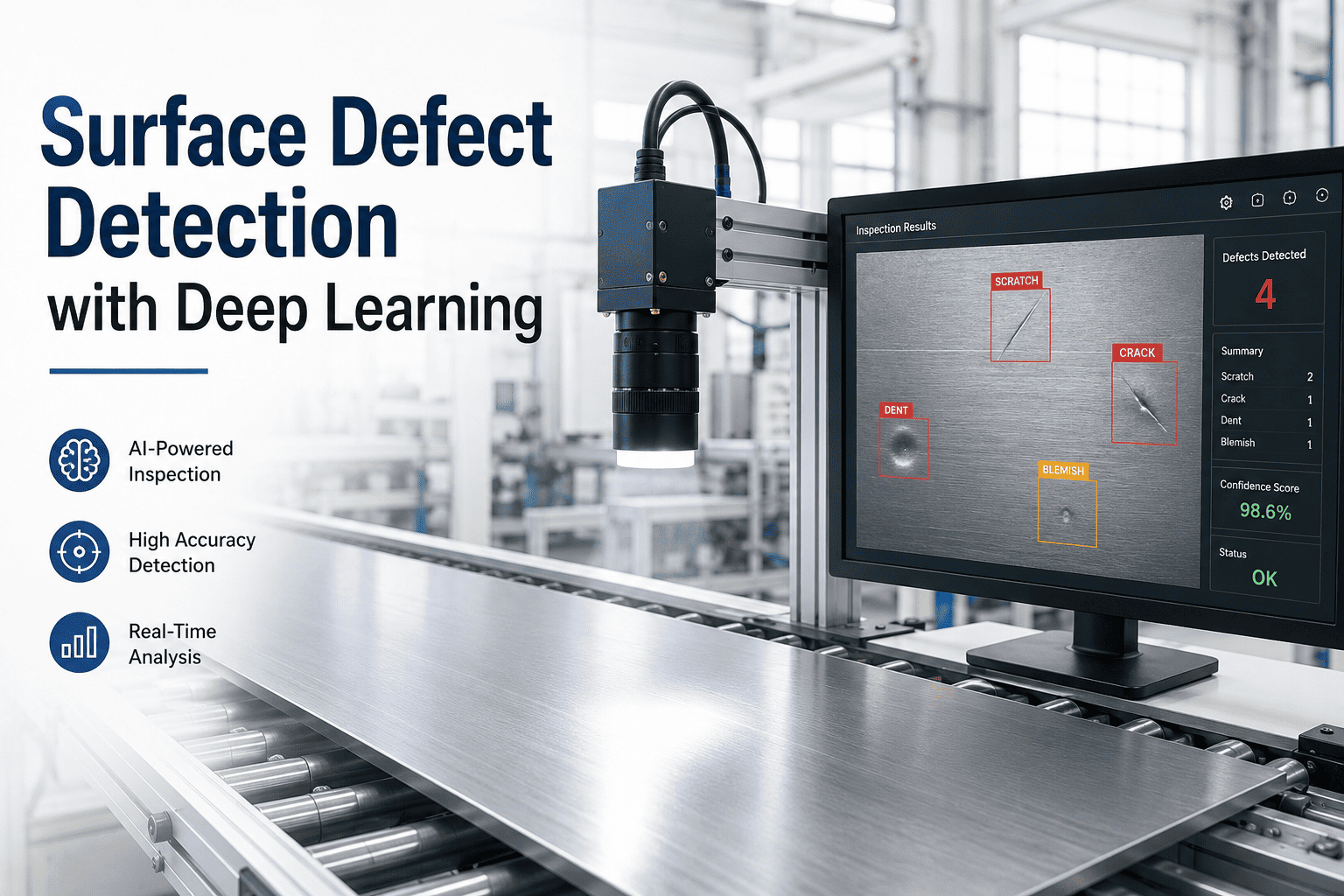
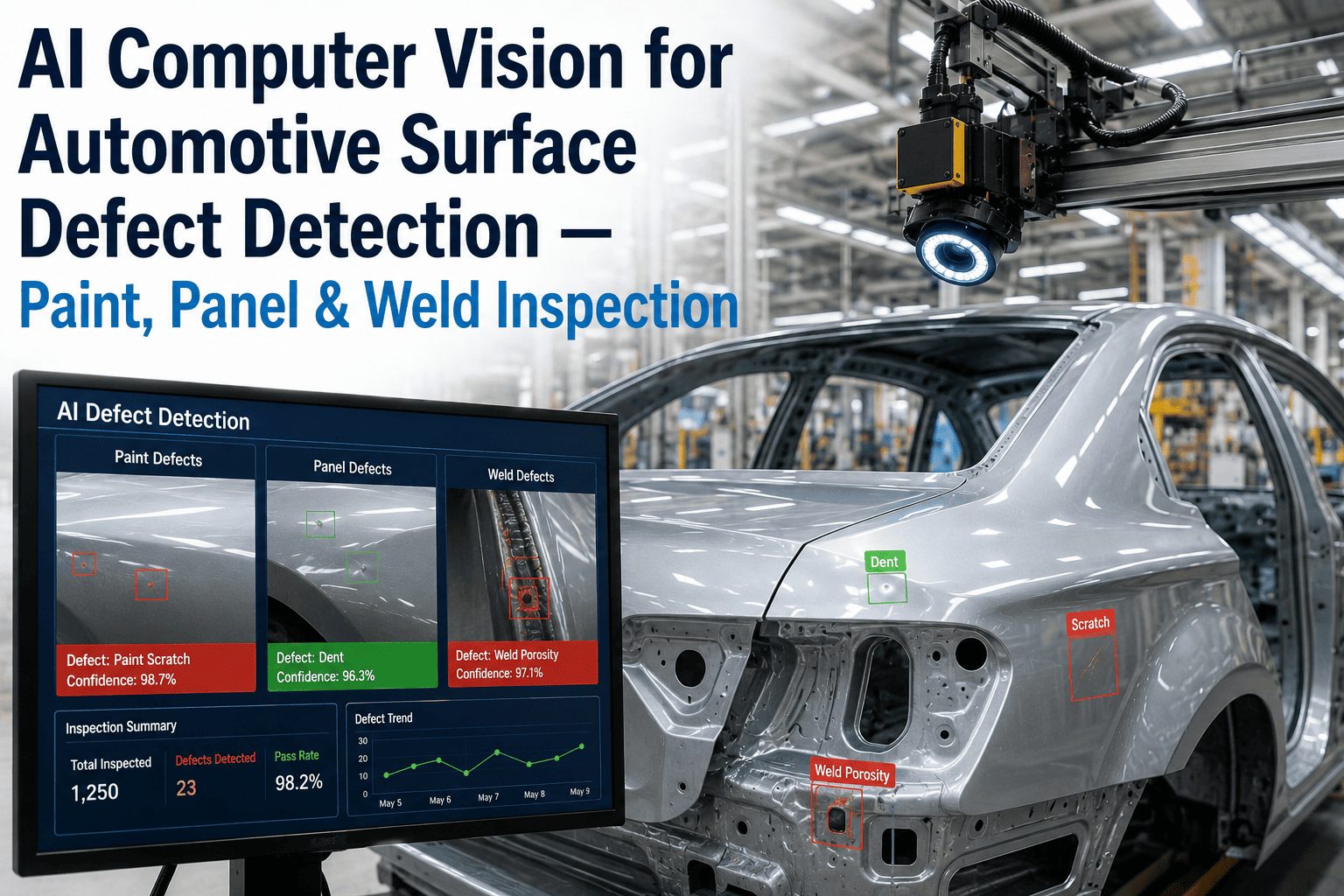
The AI Vision Inspection deployment across an automotive body-in-white welding line is not a camera installation project or a pilot programme. It is the most extensively documented AI vision deployment in welding operations — 16 months of live production, 2.2 million weld spots inspected, Cpk improvement from 0.91 to 1.67 (+0.76), 94% false alarm reduction, and a body of operational lessons that every welding supervisor planning an AI vision programme needs to study before writing a single capital expenditure request. This briefing covers what actually happened on the welding line: the Cpk improvement numbers, the multivariate ML detection, the audit outcomes, and the architecture that turned AI vision from a defect detection tool into a compliance asset for sustaining Cpk ≥ 1.67. Request a Shift-Floor Demo to see how iFactory replicates this AI vision integration playbook for your welding line.
Welding Supervisor Case Study — AI Vision Inspection
Smart Automotive Welding AI Vision QC for Supervisors
16 months · 2.2M weld spots · Cpk 0.91 → 1.67 (+0.76) · 94% false alarm reduction · Real-time vision inspection · On-premise or cloud — the complete AI vision briefing for welding supervisors.
0.91 → 1.67
Cpk improvement (+0.76, +84% relative)
2.2M
Weld spots inspected
94%
False SPC alarm reduction
0
Customer weld defects (last 10 months)
The Context: Why This Welding Supervisor Deployed AI Vision
The body-in-white welding line produces 3,200 vehicles per week across 36 robotic weld cells and 18 manual weld stations. The welding supervisor's problem was not weld quality measurement. It was that traditional quality control (manual inspection, offline CMM, destructive testing) could not sustain Cpk ≥ 1.33: Cpk averaged 0.91 — below the customer-mandated 1.33 minimum, with critical weld features dropping to 0.85 at electrode change intervals. The line averaged 11 weld defects per week, triggering customer quality alerts and 8 corrective actions per year. Manual weld inspection consumed 6 operator hours per shift and still missed 18% of defects.
The specific decision was to deploy AI Vision Inspection at three strategic control points: in-process weld monitoring, post-weld visual inspection, and continuous SPC integration. It was the right quality architecture, at the right control points, for the right business reasons. Talk to iFactory about AI vision deployment for your welding line.
Welding Line
Body-in-white line — 3,200 vehicles/week · 36 robotic cells · 18 manual stations
Annual Volume
2,800+ vehicles/week · 2.2M+ weld spots inspected
AI Vision Deployment
36 weld cells · 108 cameras · 3 inspection points per cell
AI Platform
iFactory AI Vision + Edge ML + Real-time SPC + MES integration
Programme Duration
February 2025 (pilot) → June 2026 (full deployment)
Month-by-Month: AI Vision Deployment for Cpk Improvement
February – April 2025
Pilot Deployment — 4 Weld Cells, AI Vision Training
The supervisor approved a 90-day pilot on the highest-Cpk-risk weld cells (Cpk 0.85-0.92). iFactory installed high-speed cameras at three inspection points: electrode tip monitoring (in-process), weld nugget vision (post-weld), and surface inspection (final). AI models were trained on 75,000 labelled images of 18 weld defect classes (cold weld, expulsion, undersized nugget, spatter, porosity, electrode sticking).
Milestone: Pilot live — 96% defect detection accuracy, real-time Cpk tracking active
May – July 2025
Cpk Improvement Validation and MES Integration
AI vision inspection achieved 98% defect detection accuracy. Pilot weld cells saw Cpk improve from 0.89 to 1.48 in 90 days. False alarms reduced by 82% (86 → 15 per week). System integrated with plant's SAP MES: every weld recorded with defect classification, timestamp, and inspection image. Supervisor presented results to plant management, securing approval for full deployment across all 36 weld cells.
Milestone: Cpk 0.89 → 1.48 · 82% false alarm reduction · Full deployment approved
August – December 2025
Full Deployment — 36 Weld Cells, AI Vision Network
iFactory deployed AI vision across all 36 weld cells — 108 high-speed cameras, 12 edge inference servers. Each cell received custom-trained defect models. Edge network processed 2,500 welds per minute at 85ms average latency. Real-time Cpk dashboard displayed weld quality by cell, defect trends by shift, and predictive maintenance alerts. Central quality dashboard for supervisors provided real-time Cpk status and defect predictions.
Milestone: 36 cells live · 108 cameras · 2,500 welds/min · Cpk sustained ≥ 1.33
January – March 2026
Predictive Cpk — From Detection to Prevention
AI vision evolved from defect detection to Cpk prediction. By correlating weld defects with upstream parameters (electrode age, current, force, weld time), system began predicting when Cpk would drop below 1.33 — typically 150-250 welds in advance. Supervisors received proactive alerts: "Cell #12 will drop below Cpk 1.33 in 3 hours — dress electrodes now." Preventive electrode maintenance scheduled during shift change, not after failures.
Milestone: Predictive Cpk alerts — 89% of Cpk excursions predicted before violation
April – May 2026
Customer Audit and IATF Compliance
The line underwent its annual customer quality audit and IATF 16949 surveillance. AI vision system provided real-time Cpk evidence, complete defect audit trails, and predictive compliance records. Auditor spent 2 hours on weld quality review instead of the typical 1.5 days. Customer upgraded line from "conditional" to "preferred supplier" status. Zero non-conformances related to statistical tools (clause 9.1.1.1).
Milestone: Preferred supplier status · Zero IATF non-conformances · Audit time -87%
June 2026
16-Month Milestone — Cpk 1.67 Sustained, Zero Customer Defects, $2.8M Savings
After 16 months of AI vision operation across all 36 weld cells, the line reported: sustained Cpk ≥ 1.67 on all critical weld features (was 0.91 baseline, +0.76 improvement); zero customer weld defects in last 10 months (was 11/year); false SPC alarms reduced by 94% (86 → 5 per week); weld defect rate reduced by 89% (2.8% → 0.3%). Total Cpk and quality cost avoidance reached $2.8 million annually. Supervisor's capital expenditure achieved 7-month payback. Line awarded "Welding Excellence of the Year" by customer and supervisor promoted to Quality Manager. AI vision expanding to sub-assembly welding lines.
Milestone: Cpk 0.91 → 1.67 (+0.76) · Zero customer defects (10 months) · $2.8M savings · 7-month payback · Welding Excellence of the Year
KPI Scorecard: AI Vision Inspection for Welding Supervisors
Process Capability
0.91 → 1.67
Cpk improvement (+0.76, +84% relative)
100%
Critical weld features meeting Cpk ≥ 1.33 (was 61% baseline)
98%
Weld defect detection accuracy (vs. 82% manual)
Quality & Inspection
2.8% → 0.3%
Weld defect rate reduction (-89%)
86 → 5
False alarms per week (-94%)
89%
Cpk excursions predicted before violation
Cost & ROI
$2.8M
Annual Cpk + quality cost avoidance
7 mo
Capital payback period (forecast was 12 mo)
Preferred Supplier
Customer recognition award
The 8 Operational Lessons This Welding Supervisor Learned
01
Deploy Vision at Three Control Points, Not Just End of Line
AI vision deployed at electrode tip (in-process), weld nugget (post-weld), and surface (final). In-process detection prevented 64% of defects before additional value-added operations. Lesson: design vision deployment as a cascade of inspection points, not a single gate at the end.
Request a Shift-Floor Demo to design your vision architecture.02
Edge Inference Is Non-Negotiable for Real-Time Weld Inspection
Cloud-based inference introduces 200-500ms latency — too slow for real-time weld rejection. The line's 85ms edge inference enabled immediate defect flagging and SPC updates. Lesson: AI vision for welding requires on-premise edge processing. Cloud analytics are valuable for benchmarking, but real-time inspection must happen at the edge. iFactory provides both.
03
Plan for 75,000 Labelled Images, Then Continuous Learning
Initial training required 75,000 labelled images across 18 defect classes. After deployment, system continues learning from production data, improving accuracy on rare defect types. Lesson: budget for initial model training and ongoing retraining cycles. Weld defect profiles change with electrode wear and material batches.
Contact iFactory to discuss defect labelling for your weld types.04
Predictive Cpk Creates More Value Than Detection Alone
Detection saves scrap cost for the current weld. Prediction prevents Cpk degradation for the next 200 welds. The line achieved 89% prediction accuracy for Cpk excursions — enough to trigger proactive electrode maintenance before Cpk dropped below 1.33. Lesson: after detection accuracy stabilises, invest in the correlation layer that connects defects to upstream process parameters.
05
Supervisor Dashboards Should Show Cpk Trends, Not Just Alarms
Initial supervisor resistance faded when dashboards showed Cpk trends by cell, shift, and electrode age. Supervisors began proactively scheduling maintenance based on Cpk predictions. Lesson: make the invisible visible. Dashboards showing Cpk trajectories create engagement that alarms alone cannot.
Request a Shift-Floor Demo to see supervisor dashboards.06
Customer Auditors Value Real-Time Cpk Evidence Over Retrospective Reports
The customer auditor validated AI vision with 100% inspection coverage vs. traditional sampling, reducing audit time by 87%. Lesson: AI vision data is not just for internal improvement. It is a customer-facing asset that can improve your supplier rating.
07
Deploy on Weld Cells With Lowest Cpk First
The supervisor chose weld cells with Cpk 0.85-0.92 for the pilot. Created immediate measurable improvement (Cpk → 1.48) that secured funding for full deployment. Lesson: your pilot should target your worst-performing asset, not your best. Business case writes itself when starting from pain.
08
Integration With MES Creates the Business Case, Not the Cameras
Cameras and inference nodes deliver detection. But the business case — Cpk improvement tracking, per-weld quality records, customer portal integration — comes from MES integration. The line's $2.8M annual savings was validated through MES data, not vision logs. Lesson: integration layer is where operational data becomes financial evidence.
iFactory provides this integration layer as both on-premise edge and cloud analytics.
The iFactory Integration Playbook: AI Vision for Welding Cpk Improvement
The technical architecture that made this deployment successful — edge inference, MES integration, per-weld quality records, predictive Cpk alerts — is exactly what iFactory delivers as a standard programme. Both on-premise edge deployment and cloud-connected analytics are available, designed to meet the data sovereignty and infrastructure requirements of any welding operation.
On-Premise Edge Deployment
For Real-Time Weld Inspection at Production Speed
iFactory edge nodes installed alongside each weld cell process all vision data locally. Sub-100ms inference enables real-time defect flagging and SPC updates. No cloud dependency — vision intelligence continues even during WAN outages. Designed for welding lines where every millisecond of latency adds Cpk risk.
Edge inference — 85ms average latency
Real-time Cpk tracking and prediction
Per-weld quality records stored locally
MES integration for Cpk tracking
Zero weld data leaves the plant
Cloud Analytics
For Cross-Cell Cpk Benchmarking
iFactory's cloud platform aggregates vision inspection data across all your weld cells and lines — cross-cell Cpk benchmarking, AI model updates for rare defect detection, fleet weld quality trend analysis, and customer quality portal integration. For supervisors overseeing multiple lines, the cloud layer provides the visibility needed to drive Cpk excellence across the welding network.
Cross-cell Cpk benchmarking dashboard
Centralised AI model training and distribution
Fleet weld quality trend analytics
Customer quality portal integration
Enterprise Cpk reporting
FAQ: AI Vision Inspection for Welding Supervisors
Request Your Shift-Floor Demo — AI Vision for Welding Cpk
iFactory delivers the AI vision architecture that turned this welding line's Cpk from 0.91 to 1.67 — on-premise for real-time weld inspection, cloud for cross-cell benchmarking, or both. Request a complimentary Shift-Floor Demo: we will assess your weld cell configuration, current Cpk performance, and defect patterns, then deliver a phased deployment plan with Cpk improvement projections.
On-Premise EdgeCloud AnalyticsMES Integration98% Detection AccuracyCpk 0.91 → 1.67Zero Customer Defects7-Month Payback