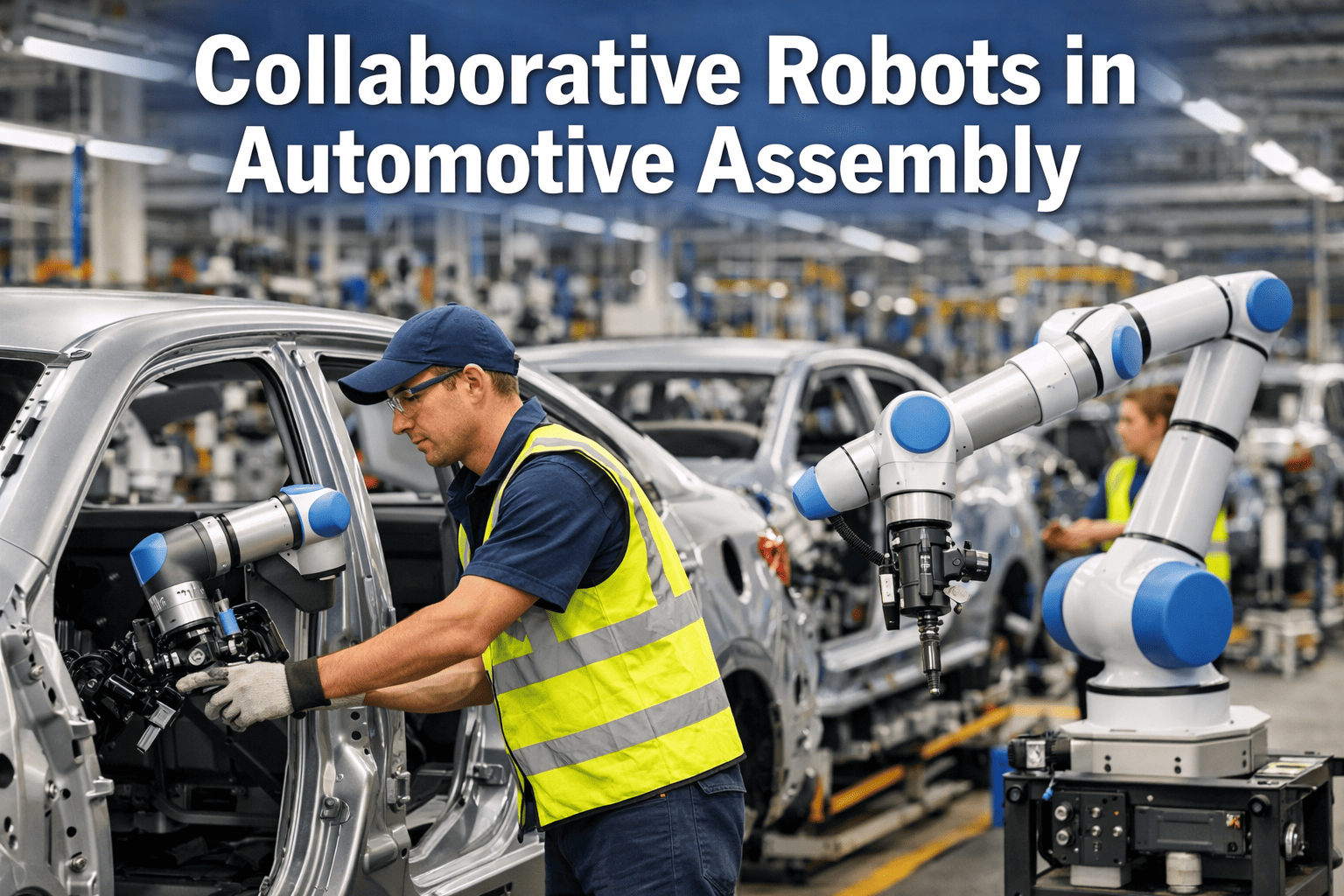
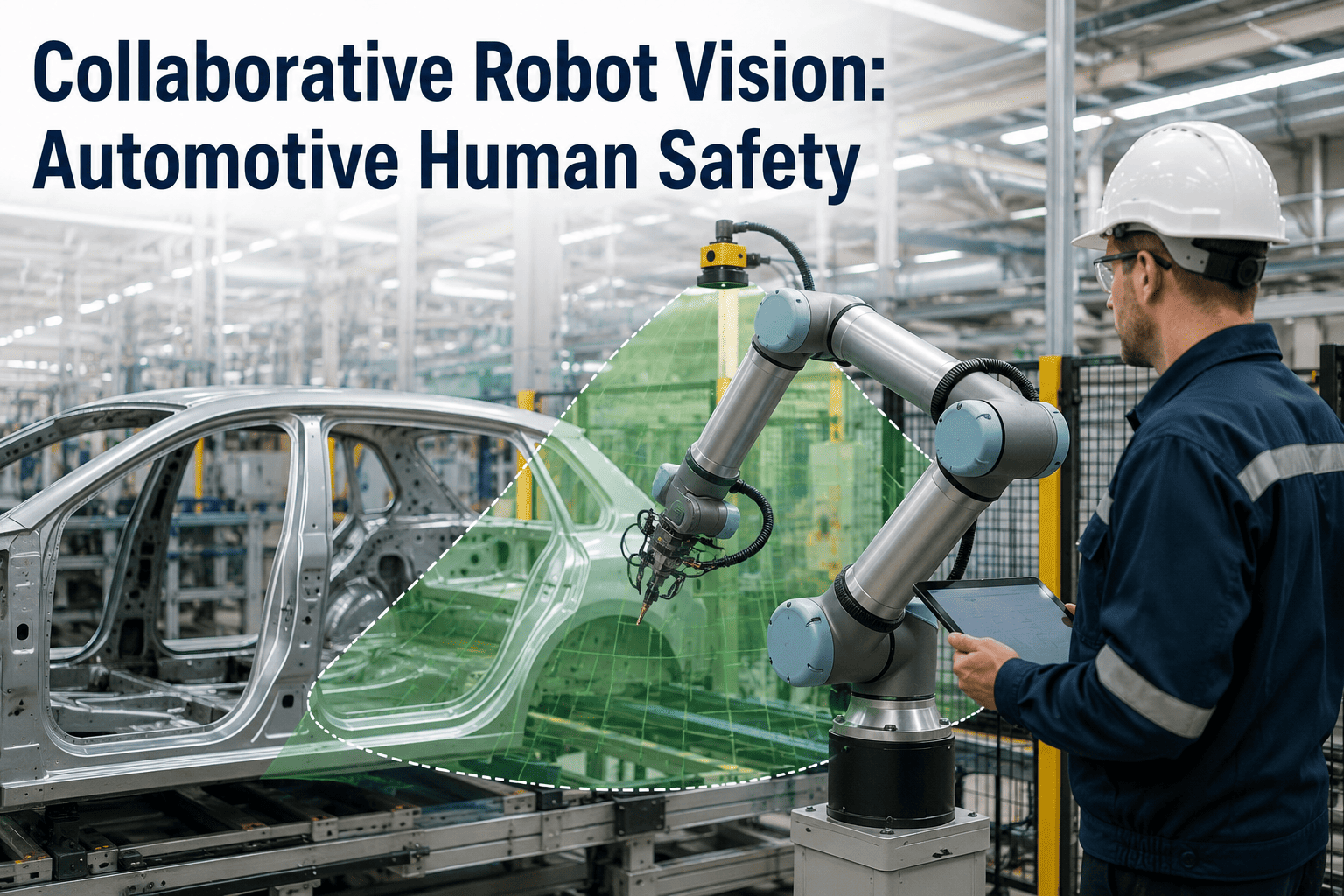
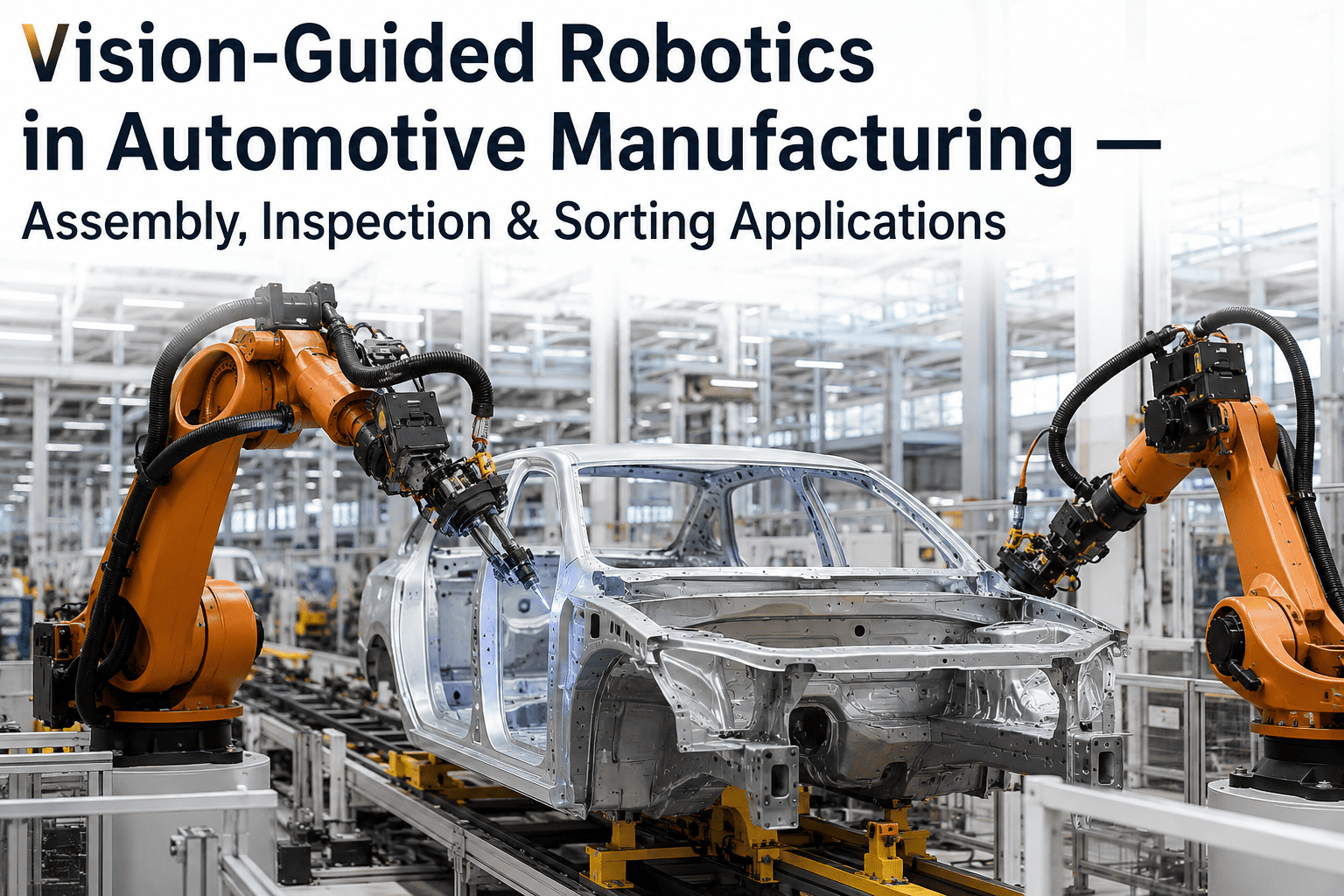
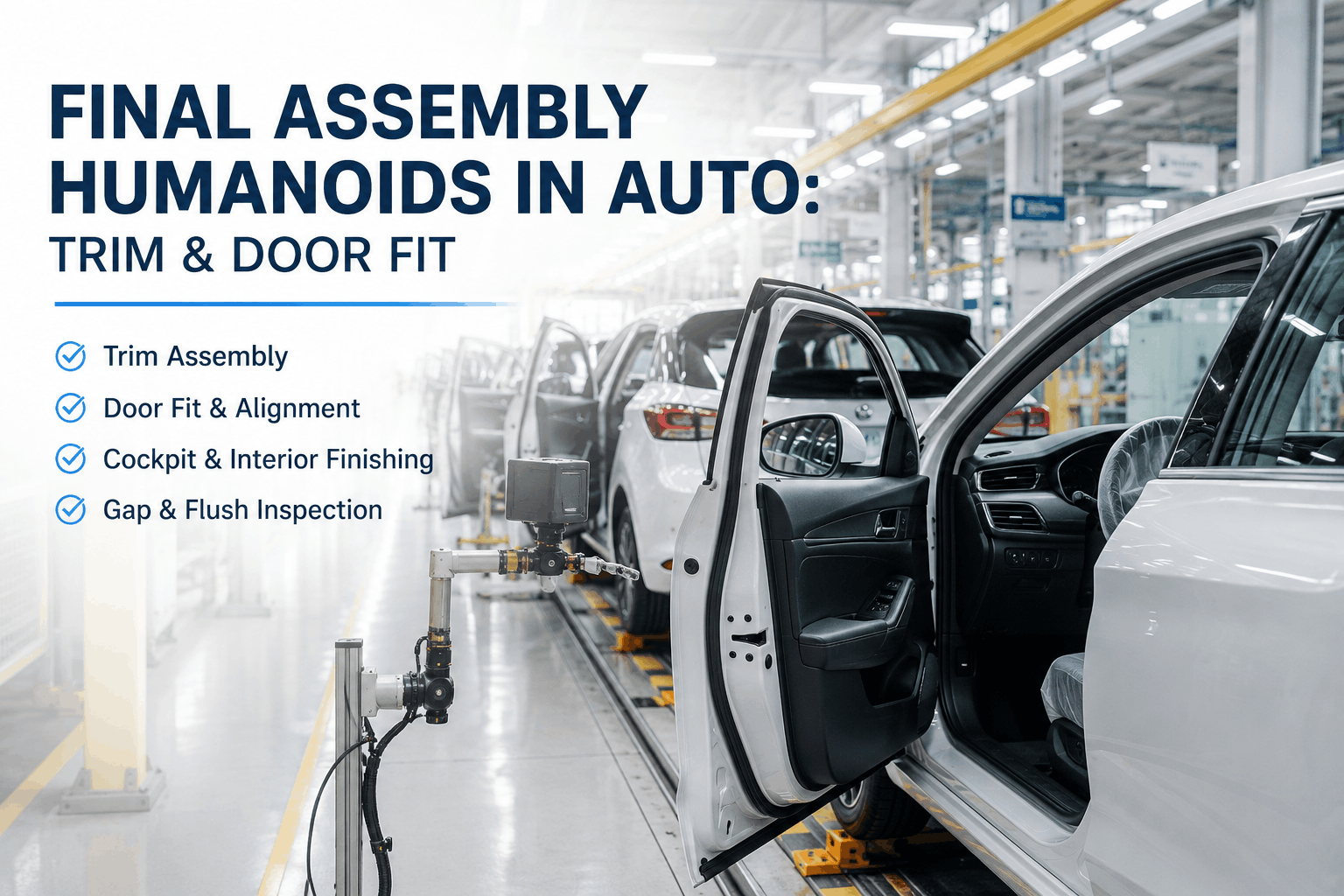
Automotive assembly lines producing 800-1,200 vehicles daily across body shop welding cells, powertrain installation stations, final assembly operations, and quality inspection checkpoints depend on traditional industrial robots executing repetitive tasks behind safety cages where workspace separation prevents human-robot collaboration, limiting manufacturing flexibility when model changeovers require 12-48 hours of downtime for robot reprogramming and fixture modifications costing $220,000-$580,000 per changeover event while equipment failures cause line stoppages averaging $22,000 per hour in lost production, contributing to downtime costs that rose 113% since 2019 reaching $260 billion in global annual losses with automotive plants experiencing 800+ hours of unplanned downtime per month and 47 critical incidents disrupting production schedules and delivery commitments. iFactory's AI-powered collaborative robot platform deploys cobots working safely alongside human operators without safety caging, adapting to mixed-model production through rapid task reprogramming completing changeovers in 2-4 hours versus days for traditional automation, and integrating predictive maintenance analytics detecting mechanical degradation 15-30 days before failures occur reducing unplanned downtime 67% while improving assembly quality through real-time force sensing, visual inspection, and AI-driven anomaly detection achieving 98.7% first-pass yield rates. Book a Demo to see how iFactory deploys AI cobot systems across your assembly operations within 8 weeks.
98.7%
Assembly quality first-pass yield with AI-powered cobot inspection and force control
$4.8M
Average annual cost savings per assembly line from reduced downtime and quality improvements
67%
Reduction in unplanned robot downtime through predictive maintenance analytics
8 wks
Full deployment timeline from assembly audit to live AI cobot operations go-live
Every Assembly Defect Is Compounding Quality Risk. AI Cobots Stop It at the Source.
iFactory's AI platform monitors cobot force feedback, visual inspection patterns, position accuracy, cycle time variations, and mechanical health indicators across your entire robotic fleet delivering 24/7 predictive maintenance without operator fatigue or quality blind spots.
Critical Automotive Manufacturing Problems Driving Cobot Adoption
Modern automotive plants face interconnected production challenges where traditional automation proves inadequate for flexible manufacturing, quality consistency, and operational efficiency required by mixed-model assembly and EV production transitions.
01
Equipment Failure and Line Stoppage
Traditional industrial robots operating behind safety cages experience mechanical failures from wear on motors, gearboxes, and servo systems causing unplanned line stoppages averaging $22,000 per hour in lost production across connected workstations. Downtime costs rose 113% since 2019 as plants increased automation density, tightened production tolerances for EV battery integration, and adopted just-in-time manufacturing eliminating buffer inventory absorbing disruptions. Equipment failures propagate across 15-30 connected stations creating bottlenecks affecting upstream stamping operations and downstream final assembly, while emergency repairs require 8-24 hours for technician mobilization, spare parts procurement, and system validation before production restart.
02
Supply Chain Halt and Production Flexibility
Model changeovers and production mix variations require extensive robot reprogramming, fixture modifications, and safety validation consuming 12-48 hours of downtime per changeover event costing $220,000-$580,000 in lost production plus engineering labor for path teaching and quality validation. Traditional robots lack flexibility for mixed-model lines producing multiple vehicle variants simultaneously, forcing dedicated automation per model limiting production agility responding to demand shifts, new model introductions, or supply chain disruptions requiring alternate component sourcing with different assembly procedures.
03
Massive Quality Losses and Warranty Exposure
Assembly defects from incorrect torque application, missing fasteners, misaligned components, and installation errors escape detection generating warranty claims averaging $850-$1,400 per vehicle for field repairs, component replacements, and customer goodwill compensation accumulating to $260 billion annual global losses. Traditional robots lack real-time quality feedback detecting assembly errors during task execution, relying on downstream inspection stations discovering defects after multiple value-added operations completed requiring expensive rework or scrap. Quality issues affecting safety-critical systems (steering, braking, battery mounting) trigger recalls costing $15-$45 million per campaign including vehicle repairs, regulatory compliance, and brand reputation damage.
04
Worker Safety and Ergonomic Limitations
Manual assembly tasks requiring repetitive motions, awkward postures, and heavy lifting cause musculoskeletal injuries affecting 15-25% of assembly workers annually generating workers compensation costs, productivity losses from restricted duty assignments, and training expenses for replacement personnel. Traditional industrial robots eliminate these hazards but require complete workspace isolation preventing human collaboration for tasks requiring human dexterity, judgment, or flexibility where full automation proves economically unjustifiable or technically infeasible given product variety and changeover frequency.
What Modern Automotive Plants Need for Flexible Assembly
Next-generation automotive manufacturing demands integrated robotic systems supporting EV production precision, mixed-model flexibility, and real-time quality verification across interconnected assembly operations. See how iFactory addresses these exact requirements through AI-powered cobot deployment.
01
Robotic Systems Maintenance and Predictive Analytics
Collaborative robots require continuous health monitoring detecting mechanical degradation, servo drift, and gripper wear before assembly quality impacts appear. AI-powered predictive maintenance analyzes motor current signatures, position repeatability, force feedback variations, and cycle time trends forecasting failures 15-30 days in advance enabling scheduled interventions during planned downtime versus emergency repairs after line stoppages, reducing unplanned downtime 67% while extending robot service intervals 40% through condition-based maintenance.
02
Assembly Line Optimization and Mixed-Model Production
High-mix assembly lines producing 8-15 vehicle variants require rapid task changeovers completing in minutes rather than hours through stored program libraries, automatic fixture recognition, and AI-guided path optimization. Cobots working alongside human operators enable flexible task allocation balancing automation economics against changeover complexity, supporting low-volume variants through manual operations while automating high-volume tasks achieving optimal labor utilization and capital efficiency across diverse production mixes.
03
EV and Battery Production Quality Standards
Electric vehicle battery pack assembly demands precise torque control, contamination-free handling, and hermetic sealing verification where assembly errors compromise safety ratings, performance specifications, and warranty obligations. Cobots equipped with force-torque sensing apply exact fastener preloads within ±2% tolerance preventing overtightening damaging battery cells or undertightening causing connection failures, while vision systems inspect sealing bead continuity, component alignment, and cleanliness standards ensuring zero-defect production for safety-critical assemblies.
04
OEE and Performance Tracking with Quality Integration
Overall Equipment Effectiveness calculations incorporating quality rates, availability percentages, and performance speeds require real-time data integration from cobot controllers, vision systems, and torque verification equipment. Traditional OEE tracking uses production counts without quality weighting, masking true effective output when rework rates increase or cycle times extend compensating for quality issues. AI analytics provide quality-adjusted OEE metrics distinguishing first-pass yield from total production enabling accurate performance benchmarking and continuous improvement prioritization.
How iFactory AI Solves Automotive Cobot Performance Monitoring
Traditional cobot monitoring relies on basic position tracking, manual quality checks, and reactive troubleshooting responding after assembly defects appear or equipment failures occur. iFactory replaces this with continuous AI analysis trained on automotive assembly data detecting mechanical degradation precursors and quality deviations before production impact manifests. See a live demo of iFactory detecting simulated cobot degradation and assembly quality issues.
01
Multi-Parameter Cobot Health Fusion
iFactory ingests data from motor current signatures, joint position encoders, force-torque sensors, cycle time measurements, and temperature monitors simultaneously, fusing multi-source signals into unified robot health scores per unit updated every 10 seconds enabling continuous condition assessment across entire robotic fleet.
02
AI Fault Classification and Severity Ranking
Proprietary machine learning models classify mechanical anomalies as bearing wear, gearbox degradation, servo drift, gripper malfunction, or calibration error with confidence scores attached. Operators receive graded alerts prioritized by production impact, not raw alarm floods. False positive rate drops under 5% through automotive-specific model training.
03
Predictive Maintenance Forecasting
LSTM-based forecasting engine identifies cobots trending toward critical performance degradation 15-30 days before failure threshold, calculating remaining useful life based on current degradation rates, historical failure patterns, and production intensity. Maintenance teams schedule interventions during planned downtime windows, not emergency responses to line stoppages.
04
PLC, SCADA, MES Integration for Automotive
iFactory connects to Siemens, Rockwell, Fanuc, ABB, Universal Robots, and KUKA controllers plus manufacturing execution systems via OPC-UA, EtherNet/IP, and REST APIs. Integration completed in under 2 weeks without hardware replacement, enabling real-time production data correlation with robot health metrics and quality outcomes.
05
Automated Quality Verification Reporting
Every assembly operation generates structured quality records with torque verification, position accuracy, cycle time compliance, and vision inspection results creating audit-ready documentation for IATF 16949, AIAG PPAP, and customer-specific requirements (Ford Q1, GM BIQS, FCA TQM) without manual data compilation.
06
Real-Time Decision Support and Work Order Automation
iFactory presents ranked maintenance recommendations per alert including recalibrate, inspect component, or replace assembly with risk scores and estimated downtime impact per hour of delay. Automated work orders generate in CMMS systems (SAP PM, IBM Maximo, Infor EAM) with cobot diagnostics, repair procedures, and spare parts requirements attached.
How iFactory Is Different from Generic Automation Monitoring Vendors
Most industrial AI vendors deliver generic anomaly detection models trained on public datasets wrapped in dashboards. iFactory builds specifically for automotive assembly environments where cobot mechanics, assembly processes, and quality requirements determine what performance degradation actually means. Talk to our automotive cobot specialists and compare your current monitoring approach directly.
| Capability |
Generic AI Vendors |
iFactory Platform |
| Model Training |
Generic industrial datasets. No cobot-specific failure mode training. High false positive rates affecting maintenance team responsiveness. |
Models pre-trained on 12 cobot failure modes (bearing wear, gearbox degradation, servo drift, gripper malfunction, calibration error, collision damage, cable wear, brake fade, encoder failure, motor burnout, controller fault, software glitch). Automotive assembly-specific fine-tuning in weeks. |
| Sensor Coverage |
Single-parameter position monitoring only. No multi-source signal fusion across mechanical, electrical, and quality data streams. |
Fuses motor current, joint encoders, force-torque sensors, cycle time measurements, temperature monitors, and vision inspection into unified health scores per cobot enabling comprehensive condition assessment. |
| Alert Quality |
Binary threshold alarms generating high false positive volumes that operators learn to ignore within weeks of deployment. |
Graded alert tiers with confidence scores and production impact rankings. False positive rate under 5%. Alert fatigue eliminated through intelligent prioritization and root cause classification. |
| System Integration |
Requires middleware development, custom API programming, or complete controller replacement. Integration timelines of 6-12 months typical. |
Native OPC-UA, EtherNet/IP, and REST connectors for all major cobot vendors and MES platforms. Integration complete in under 2 weeks without hardware changes or production disruption. |
| Compliance Output |
Raw data exports requiring manual compilation into quality records. No automated documentation for automotive quality management systems. |
Auto-generated IATF 16949 compliance reports, AIAG PPAP documentation packages, customer-specific quality records (Ford Q1, GM BIQS, FCA TQM) formatted for audit submissions without manual data entry. |
| Deployment Timeline |
6-18 months to full production deployment. High professional services costs. No fixed go-live commitments or success guarantees. |
8-week fixed deployment program. Pilot results validated in week 4. Full production monitoring live by week 8 with documented ROI evidence and performance guarantees. |
iFactory AI Implementation Roadmap
iFactory follows a fixed 6-stage deployment methodology designed specifically for automotive cobot monitoring, delivering pilot validation in week 4 and full production operations by week 8. No open-ended implementations. No scope creep.
01
Assembly Audit
Critical cobot assessment and data integration mapping across assembly operations
02
System Integration
PLC/MES/cobot controller connection via OPC-UA, EtherNet/IP, REST APIs
03
Model Baseline
AI training on historical cobot performance and assembly quality data
04
Pilot Validation
Live monitoring on 4-6 highest-criticality assembly workstations
05
Alert Calibration
Threshold refinement and maintenance team training on response protocols
06
Full Production
Plant-wide AI cobot monitoring go-live across all assembly lines 24/7
8-Week Deployment and ROI Plan
Every iFactory engagement follows a structured 8-week program with defined deliverables per week and measurable ROI indicators beginning from week 4 of deployment. Request the full 8-week deployment scope document tailored to your assembly operations.
Weeks 1-2
Infrastructure Setup
Critical cobot audit and sensor integration assessment across monitored assembly stations
PLC, MES, and cobot controller connection via OPC-UA or EtherNet/IP without hardware replacement
Historical robot performance and assembly quality data ingestion for baseline model training
Weeks 3-4
Model Training and Pilot
AI model trained on your plant-specific cobot types, assembly tasks, and quality requirements
Pilot monitoring activated on 4-6 highest-criticality assembly workstations
First mechanical and quality anomalies detected with ROI evidence beginning here
Weeks 5-6
Calibration and Expansion
Alert thresholds refined based on pilot false positive rates and detection accuracy data
Coverage expanded to full plant critical cobot inventory across all assembly lines
Maintenance team training completed with alert response protocols and escalation procedures activated
Weeks 7-8
Full Production Go-Live
Full plant AI cobot monitoring live across all robots, all failure modes, 24/7 operations
Compliance reporting activated for IATF 16949, AIAG PPAP, and customer-specific frameworks
ROI baseline report delivered with downtime reduction, quality improvement, and maintenance optimization data
ROI IN 6 WEEKS: MEASURABLE RESULTS FROM WEEK 4
Plants completing the 8-week program report an average of $285,000 in avoided downtime and quality losses within the first 6 weeks of full production monitoring, with assembly line OEE improvements of 3.8-6.2% detected by week 4 pilot validation.
$285K
Avg. savings in first 6 weeks
3.8-6.2%
OEE improvement by week 4
67%
Reduction in unplanned downtime
Full AI Cobot Monitoring. Live in 8 Weeks. ROI Evidence in Week 4.
iFactory's fixed-scope deployment program means no open timelines, no scope creep, and no months of professional services before you see a single result. Guaranteed performance metrics from day one.
Use Cases and KPI Results from Live Automotive Deployments
These outcomes reflect iFactory deployments at operating automotive assembly plants across three cobot application categories. Each use case reflects 6-month post-deployment performance data. Request the full case study report for the assembly application most relevant to your plant.
A mid-size automotive assembly plant operating 38 material handling cobots transferring components between workstations was experiencing recurring bearing failures causing average 6-hour line stoppages at $22,000 per hour production loss. Legacy monitoring identified bearing degradation only after audible noise or position accuracy degradation appeared, typically 24-48 hours before catastrophic failure providing insufficient lead time for scheduled interventions. iFactory deployed multi-parameter health monitoring analyzing motor current signatures, vibration patterns, and temperature trends detecting early-stage bearing wear 18-25 days before failure threshold enabling proactive replacement during planned maintenance windows.
14
Pre-failure bearing anomalies detected in first 6 months preventing unplanned downtime
$3.2M
Annual downtime cost prevented through predictive bearing replacement scheduling
96%
Detection accuracy on early-stage bearing degradation events validated through field verification
An EV battery assembly facility operating 22 cobots installing battery pack fasteners was generating 35-50 torque verification failures per week from legacy threshold monitoring systems lacking force-feedback integration, requiring manual rework and quality holds delaying vehicle completion. iFactory replaced threshold logic with AI torque analysis correlating applied force, joint angle, and fastener seating signatures reducing false rejections to under 3 per week while increasing actual undertorque/overtorque catch rate from 62% to 97%. Rework costs decreased from $180,000 annually to under $25,000 through improved first-pass yield.
97%
Torque defect catch rate increased from 62% with legacy threshold monitoring
$155K
Annual rework cost reduction from improved torque verification accuracy
94%
Reduction in weekly false positive torque alarms eliminating unnecessary rework
A final assembly line operating 16 cobots installing interior trim components was losing average $420,000 annually in damaged parts and production delays from gripper malfunctions causing component drops or crushing damage. Manual inspection identified gripper degradation only after visible damage occurred, typically affecting 3-5 components before detection and replacement. iFactory's gripper force monitoring and cycle time analysis identified all 7 active degradation patterns within 48 hours of go-live, enabling targeted maintenance adjustment without production interruption and component damage elimination.
$420K
Annual component damage cost eliminated through proactive gripper maintenance
48hrs
Time to identify all 7 active gripper degradation patterns from system go-live
$840K
Annual quality and productivity value from predictive gripper management
Results Like These Are Standard. Not Exceptional.
Every iFactory deployment is scoped to your specific plant configuration, cobot types, and assembly processes so you get results calibrated to your operations, not generic benchmarks disconnected from your manufacturing reality.
What Automotive Plant Engineers Say About iFactory
The following testimonials are from plant engineering directors and automation specialists at automotive facilities currently running iFactory's AI cobot performance monitoring platform.
We reduced assembly line downtime by 71% without replacing a single cobot. iFactory tells us exactly which robot needs attention, what component is degrading, and when to act. Our production stability has never been this predictable or cost-effective.
Director of Manufacturing Engineering
Automotive Assembly Plant, Germany
The false positive problem was causing maintenance fatigue and ignored alerts. Within six weeks of iFactory going live, our team was responding to every alert because they trusted the AI classification. That behavioral shift alone prevented four line stoppages in the first quarter.
VP of Operations Excellence
EV Assembly Facility, USA
Integration with our Fanuc cobots and Siemens PLC took 9 days end-to-end. I was expecting months based on past vendor experience with automation monitoring systems. The iFactory team understood both robot mechanics and industrial protocols at a genuinely different technical depth.
Head of Automation Systems
Automotive Manufacturing, South Korea
We prevented a critical battery assembly cobot failure in month two. The iFactory system flagged accelerating servo drift 16 days before it would have reached our quality threshold. Our team scheduled calibration during a model changeover window, not an emergency line stoppage. That outcome alone justified the entire investment.
Plant Automation Manager
EV Battery Assembly, India
Frequently Asked Questions
Does iFactory require new sensors or hardware installations on existing cobots?
In most deployments, iFactory connects to existing cobot sensor infrastructure via controller integration using OPC-UA or EtherNet/IP protocols without hardware additions. Where sensor gaps are identified during Week 1-2 audit (typically force-torque sensors or temperature monitors), iFactory recommends targeted additions only, not complete instrumentation replacement. Standard integration completes within 2 weeks without production disruption.
Book a Demo to review your specific integration requirements.
Which cobot brands and PLC systems does iFactory integrate with?
iFactory integrates natively with Universal Robots, ABB, KUKA, Fanuc, Yaskawa, and Doosan cobots via native controller protocols. For PLCs, iFactory supports Siemens S7 and TIA Portal, Rockwell ControlLogix and CompactLogix, Schneider Modicon, and Mitsubishi via OPC-UA and EtherNet/IP. MES integration includes SAP MII, Dassault DELMIA, and Siemens Opcenter via REST APIs. Custom integration support available for legacy systems with integration scope confirmed during Week 1 assembly audit.
How does iFactory handle different cobot applications across the same assembly line?
iFactory trains separate AI sub-models per application category including material handling, fastening operations, component installation, quality inspection, and adhesive dispensing, accounting for mechanical loading, cycle time patterns, and failure mode differences. Multi-application cobot fleets are fully supported within single deployment. Application-specific detection parameters configure during Week 3-4 model training phase using historical performance data from each workstation type.
Talk to Support about your specific application mix.
What automotive quality compliance frameworks does iFactory's reporting support?
iFactory auto-generates structured quality records formatted for IATF 16949 automotive quality management, AIAG PPAP documentation packages, VDA automotive standards, and customer-specific requirements including Ford Q1, GM BIQS, and FCA TQM. Report templates pre-configure for each framework and generate automatically at work order completion without manual documentation compilation or data entry by quality personnel.
How long before the AI model produces reliable cobot fault detections?
Baseline model training on historical cobot performance and assembly quality data typically requires 5-7 days using 60-90 days of plant operating history. First live detections validate during Week 3-4 pilot phase on highest-criticality workstations. Full model calibration achieving false positive rate under 5% completes within 6 weeks of deployment for standard automotive assembly environments with documented accuracy metrics provided in ROI baseline report.
Can iFactory detect quality issues in EV battery assembly and safety-critical operations?
Yes. iFactory uses multi-source signal fusion combining force-torque feedback, position accuracy, cycle time analysis, and vision inspection to detect assembly quality deviations across all criticality levels. EV battery assembly, brake system installation, steering components, and structural fastening operations are fully supported with enhanced quality verification protocols. Coverage scope and quality thresholds confirm during Week 1 assembly audit with customer-specific quality requirements integrated into AI model training.
Book a Demo for EV assembly-specific capabilities review.
Stop Losing Production. Stop Risking Quality. Deploy AI Cobot Monitoring in 8 Weeks.
iFactory gives automotive plant engineering teams real-time AI cobot monitoring, multi-parameter health fusion, automated quality verification, and predictive maintenance decision support fully integrated with existing PLC and MES systems in 8 weeks, with ROI evidence starting in week 4.
98.7% assembly quality first-pass yield with AI verification
PLC, MES & cobot controller integration under 2 weeks
Graded alerts with under 5% false positive rate
Auto-generated IATF 16949 compliance documentation