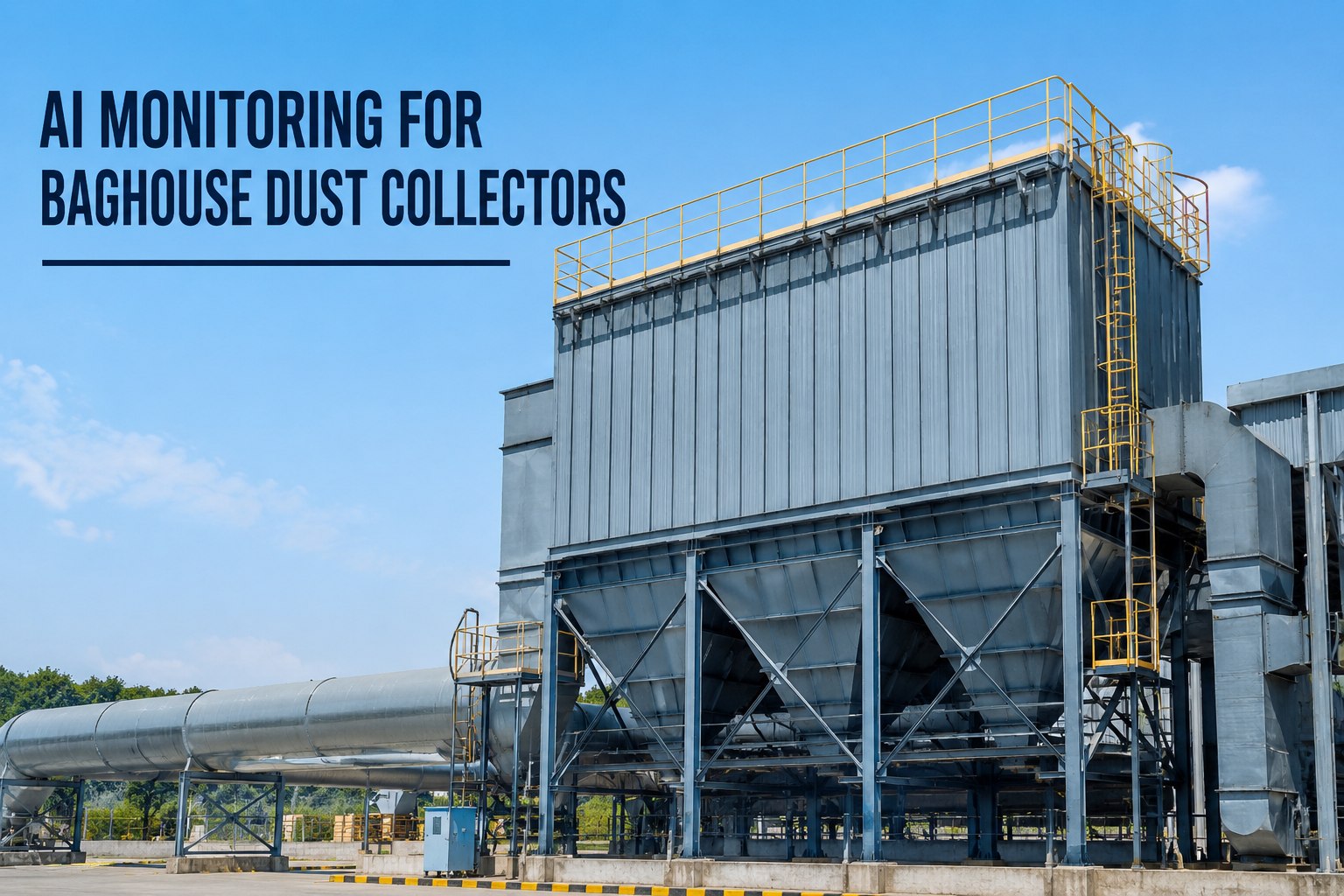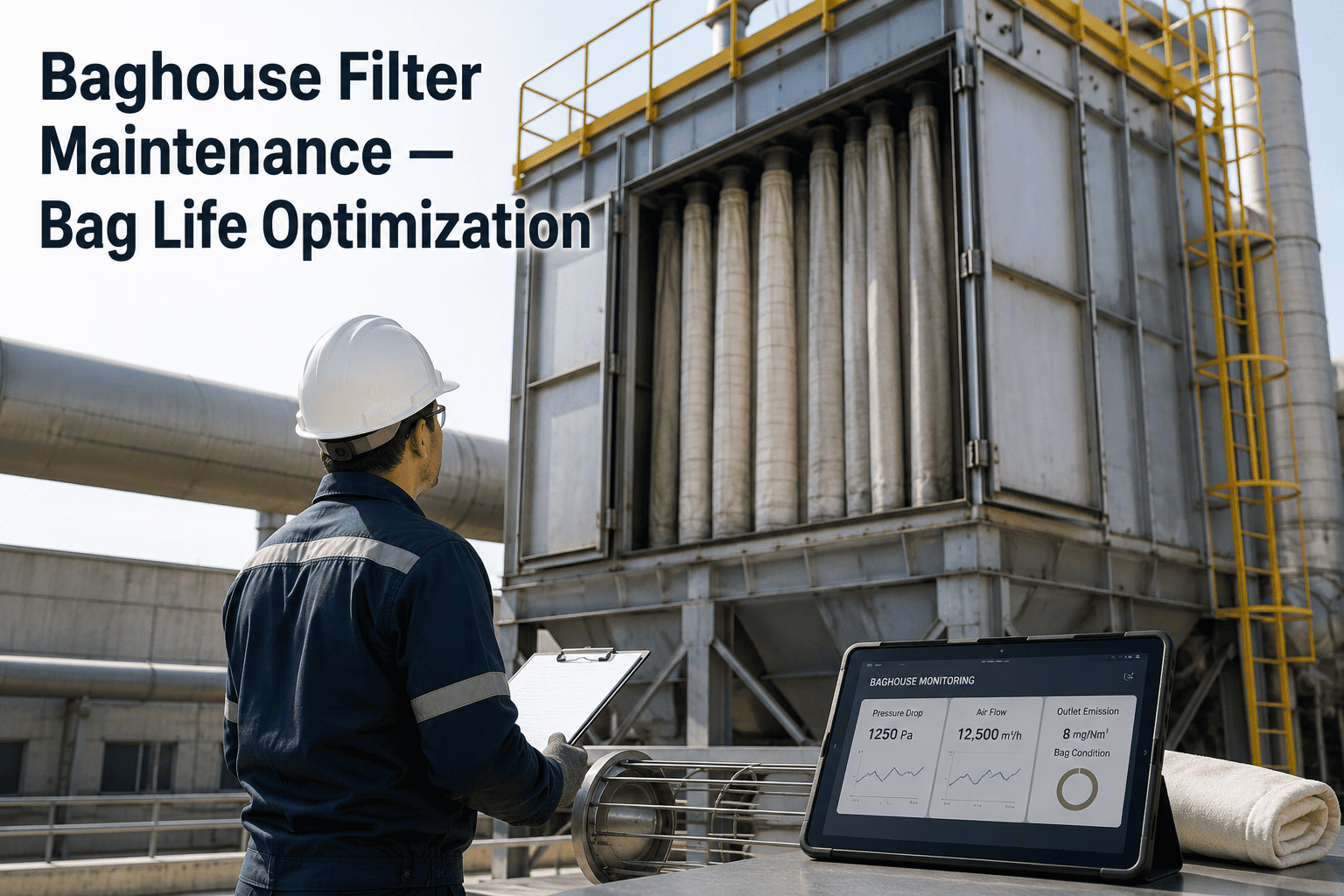
A cement plant baghouse holding thousands of filter bags is only ever as reliable as its worst-performing bag, and most plants replace far more bags than necessary — either too early out of caution, or too late after a pinhole has already let raw mill or kiln dust bypass straight into the stack. Bag life targets of 3-5 years are achievable on most cement applications, but only when cleaning cycles, pulse pressure, and bag material are matched to the actual dust loading and gas conditions a specific compartment sees, not to a generic OEM default setting applied plant-wide. AI-driven baghouse monitoring replaces guesswork with continuous differential pressure trending, cleaning cycle optimization, and failure-mode-specific replacement scheduling. Book a Demo to see how bag life optimization can cut your replacement spend without risking an emissions excursion.
Extend Filter Bag Life Toward the 3-5 Year Target — Without Guesswork
iFactory continuously tracks differential pressure, pulse cycle performance, and failure signatures across every baghouse compartment, so replacement decisions are based on actual bag condition, not a fixed calendar interval.
Why Most Cement Plants Fall Short of Their Bag Life Target
Filter bags in raw mill, coal mill, kiln, and clinker cooler baghouses are subject to wildly different dust loadings, temperatures, and moisture conditions, yet many plants run every compartment on the same cleaning cycle timer and the same pulse pressure setting established at commissioning. A compartment seeing higher-than-design dust loading gets cleaned too infrequently and blinds prematurely, while a lightly loaded compartment gets pulsed on the same schedule anyway, accelerating fatigue failure at the bag cuff and needle-punch seams from unnecessary cleaning cycles.
The result is a bag population that fails in a wide scatter around the 3-5 year target rather than clustering near it — some bags pinholing at 18 months from abrasive dust cutting through weakened fabric, others pulled at 2 years still structurally sound simply because the maintenance team could not tell which bags were actually degrading. Compartment-level differential pressure trending, correlated against pulse performance and dust characteristics, is what allows a plant to push the median bag toward its full rated life while still catching the genuine early failures before they cause an opacity event.
Premature bag replacement driven by generic calendar-based schedules commonly wastes 20-30% of usable bag life across a cement plant's baghouse fleet — while, in the same fleet, a small number of compartments are simultaneously running past the point where pinholing risk becomes significant.
Reading the Differential Pressure Signal: Where Your Baghouse Sits Today
Differential pressure (dP) across a baghouse compartment is the single most useful real-time indicator of bag condition, but only when read against the right reference bands. The gauge below illustrates the operating zones a compartment moves through as bags age, dust cake builds, and cleaning cycles respond.
<3" WC
3-6" WC
6-8" WC
>8" WC
A compartment reading consistently low may indicate bag damage allowing air to bypass rather than genuinely clean bags, while a reading climbing steadily through the high band without responding to increased pulse frequency typically signals blinding from chemical attack or condensation rather than simple dust cake buildup — two very different failure paths that call for different corrective actions entirely.
Six Components of AI-Driven Bag Life Optimization
Continuous Differential Pressure Trending
Compartment-level dP is logged continuously and compared against a compartment-specific baseline, so gradual blinding trends are visible weeks before they would trip a fixed high-dP alarm.
Real-Time MonitoringCleaning Cycle AI Optimization
Pulse-jet cleaning frequency is adjusted per compartment based on actual dust loading and dP trend, rather than a fixed timer, reducing unnecessary cleaning cycles that fatigue bag fabric prematurely.
Cycle TuningPulse Pressure Adjustment
Compressed air pulse pressure is tuned to the minimum level that achieves adequate cake release for the specific bag material and dust characteristics, avoiding the over-pulsing that drives premature seam failure.
Pressure TuningBag Failure Mode Classification
Failure signatures — pinholing, blinding, seam separation, cuff wear — are classified automatically from dP pattern and stack opacity correlation, directing maintenance to the actual root cause rather than a generic replacement.
Failure AnalysisCompartment-Level Replacement Scheduling
Rather than replacing an entire baghouse's bag population on a fixed calendar interval, individual compartments are flagged for replacement based on their own condition trend, spreading capital cost more evenly.
Condition-BasedBag Material and Application Matching
Temperature, moisture, and chemical exposure data for each compartment is used to recommend the appropriate bag fabric and finish, preventing chronic underperformance from a mismatched material choice.
Material SelectionBag Failure Modes: Root Cause, Detection, and Correction
Each bag failure mode leaves a distinct signature in differential pressure and opacity data, and each requires a different corrective action — treating every failure as "replace the bag" misses the underlying process condition that will simply cause the replacement bag to fail the same way.
| Failure Mode | Root Cause | Detection Method | Corrective Action | Life Impact |
|---|---|---|---|---|
| Pinholing | Abrasive dust cutting fabric under high velocity | Sudden dP drop plus opacity spike | Reduce can velocity; upgrade fabric abrasion resistance | Can cut life to under 18 months |
| Blinding | Condensation or chemical attack clogging fabric pores | Steady dP rise unresponsive to pulsing | Address moisture ingress; adjust gas temperature margin | Reduces life 20-40% |
| Seam Separation | Fatigue from excessive or over-pressured pulse cleaning | Localized dP anomaly at compartment level | Reduce pulse pressure and frequency to fabric-rated levels | Can cause failure within 12 months |
| Cuff Wear | Mechanical chafing against cage or tube sheet | Recurring failure at same bag positions | Inspect and correct cage alignment; verify tension | Localized, 20-30% life reduction |
| Thermal Degradation | Gas temperature excursions above fabric rating | Fleet-wide accelerated dP rise post-excursion event | Verify temperature control; consider higher-rated fabric | Can shorten life by 50%+ |
How the AI Cleaning Cycle Optimization Loop Works
Compartment-Specific Baselines
Each compartment's normal dP range is modeled individually based on its process, dust loading, and bag age, rather than applying one plant-wide threshold to every point.
- Baseline updates as bags age
- Seasonal moisture correlation applied
- Dust loading factored from process data
Adaptive Pulse Sequencing
Cleaning frequency and pulse pressure are adjusted continuously against the live dP trend, cleaning only when cake buildup actually warrants it.
- Row-by-row pulse sequencing available
- Minimum-pressure cleaning targeted
- Compressed air consumption reduced
Failure Signature Recognition
Pattern recognition compares live dP and opacity trends against known failure signatures to flag the specific failure mode developing, before a bag fully fails.
- Early pinhole detection
- Blinding vs. cake buildup differentiation
- Maintenance work order auto-generated
See Your Baghouse Fleet's Bag Life Distribution
Bring your differential pressure trend data and replacement history, and iFactory will show you where premature replacements and overdue bags are hiding in your current fleet.
Matching Bag Material to Your Process Conditions
Bag fabric selection is one of the most consequential — and most frequently overlooked — decisions in baghouse performance. A polyester bag rated for 275°F will blind rapidly in a kiln bypass application running consistently above its rating, while a PTFE-membrane bag specified for a lightly loaded dust collector may be significant overkill for the application's actual demands.
Polyester (Standard/Singed)
Suited to raw mill and cement mill applications up to roughly 275°F with moderate abrasion. Cost-effective and widely available, but limited in high-moisture or chemically aggressive conditions.
PPS (Polyphenylene Sulfide)
Handles continuous temperatures to roughly 375°F with good chemical resistance to acidic conditions, making it a common choice for kiln and clinker cooler applications with elevated SO2 exposure.
PTFE Membrane
Provides the highest release efficiency and abrasion resistance for the most demanding applications, at a materially higher cost — best reserved for compartments with a documented history of premature failure on lesser fabrics.
Fiberglass with Finish
Effective for very high-temperature applications above 400°F where synthetic fabrics are unsuitable, though it requires careful handling and cage design due to reduced flex tolerance.
Bag Life Optimization ROI
Reduced Bag Purchase Volume
Eliminating premature calendar-based replacement across a multi-compartment baghouse fleet meaningfully reduces annual bag purchase volume without increasing failure risk.
Fewer Opacity Excursions
Early pinhole and blinding detection prevents the sudden stack opacity events that trigger regulatory reporting obligations and potential fines.
Reduced Compressed Air Consumption
Optimized pulse frequency and pressure reduce compressed air demand from the cleaning system, a meaningful energy cost across a plant-wide baghouse fleet.
Targeted Maintenance Crews
Maintenance teams are directed to the specific compartments and bag positions showing genuine degradation, rather than performing blanket inspections across the entire fleet.
Frequently Asked Questions: Baghouse Filter Maintenance
Get More Life Out of Every Bag You Install
iFactory's AI-driven baghouse optimization platform tracks differential pressure, cleaning cycle performance, and failure signatures across every compartment in your cement plant, replacing calendar-based bag replacement with condition-based decisions that push more of your fleet toward the full 3-5 year life target. Book a Demo to see your own baghouse fleet's bag life optimization potential.
Replace Bags on Condition, Not the Calendar.
Continuous dP trending, cleaning cycle AI, and failure-mode classification — built to push every compartment toward its full rated bag life.