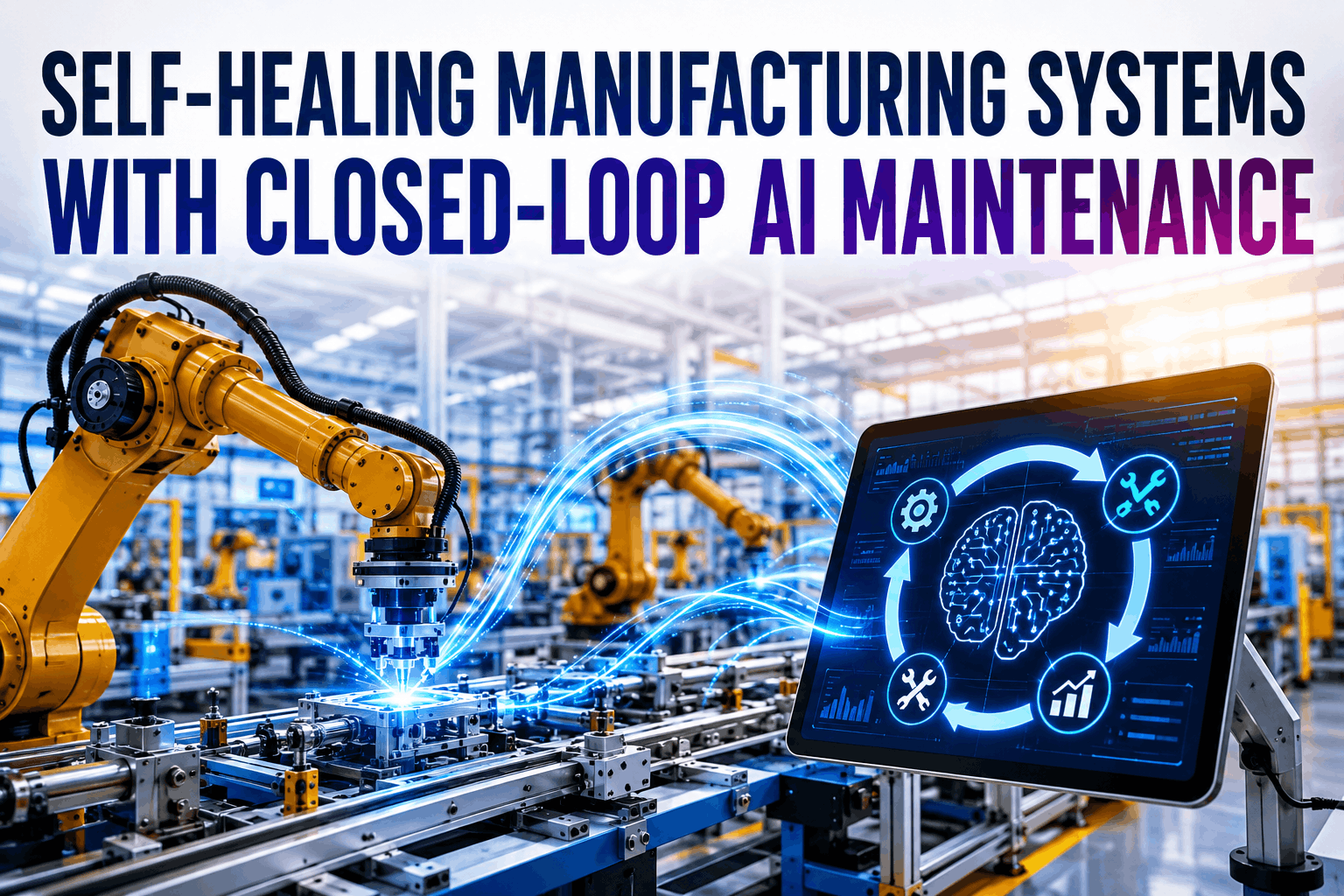
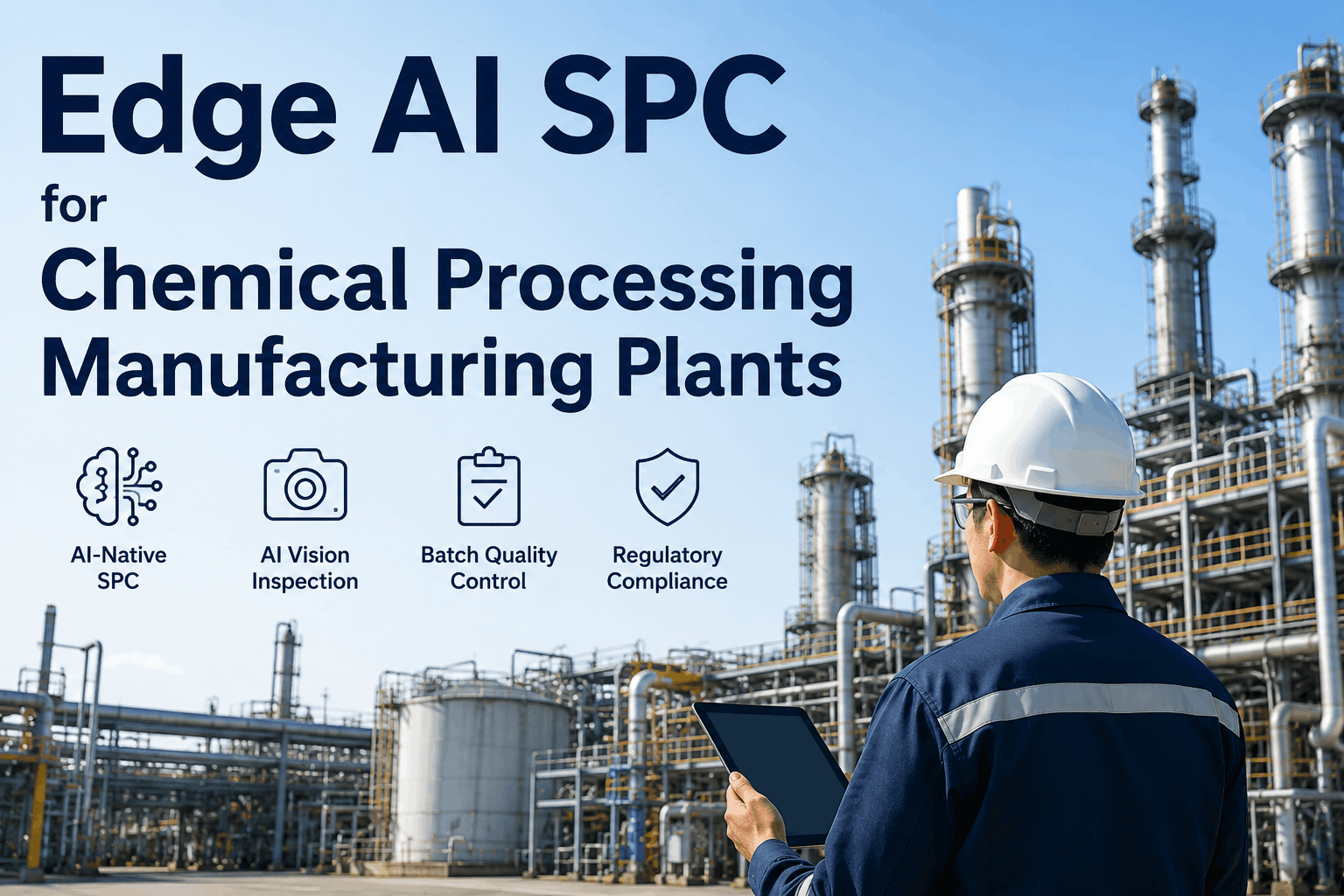
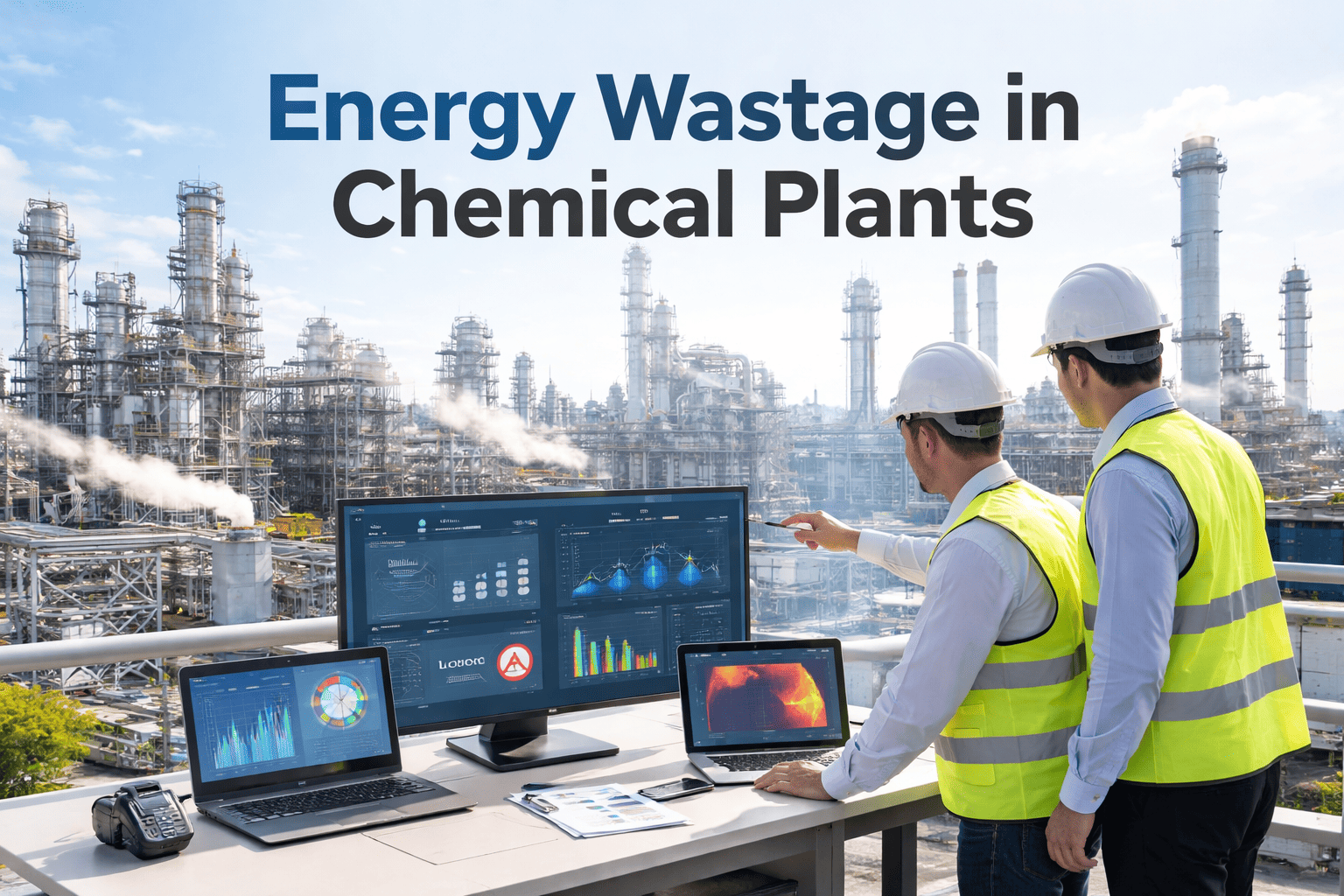
In 2026, manufacturing is shifting decisively toward operations that can sense, respond, and optimize with minimal human intervention. The chemical industry — a $6 trillion global sector producing over 80,000 products — is at the center of this transformation. Autonomous chemical plants are no longer theoretical. Leading producers are deploying agentic AI systems that optimize shift checklists, flag equipment anomalies, and draft work orders without human prompting. Digital twins paired with machine learning are reducing unplanned downtime by 30–50%. Predictive maintenance adoption is surging from 39% today toward 98% by 2028. The question is no longer whether autonomous chemical plants will exist — it is which companies will build them first and capture the competitive advantage that compounds every year. iFactory helps chemical manufacturers design and deploy self-optimizing production systems — from AI-driven process control to autonomous inspection to plant-wide digital twins. Book a 30-minute consultation to start your journey toward autonomous operations.
Autonomous Chemical Plants: The Rise of Self-Optimizing Manufacturing
AI Agents, Digital Twins, and Closed-Loop Control — Redefining How Chemical Plants Operate
$446B
Global Smart Manufacturing Market in 2026, Growing at 14.7% CAGR
76%
Of Chemical Companies Already Using AI to Optimize Production
98%
Projected Predictive Maintenance Adoption in Chemicals by 2028
What Makes a Chemical Plant "Autonomous"?
Autonomy in chemical manufacturing is not about removing humans from the plant. It is about creating systems that can perceive real-time conditions, reason through complex trade-offs, and act on decisions — with humans setting the goals and overseeing the outcomes. The industry has moved through distinct stages: from manual operations, to automated control loops, to AI-assisted advisories. The current frontier is agentic AI — autonomous systems that understand goals, adapt to changing conditions, and make proactive decisions without waiting for human input.
The 5 Levels of Plant Autonomy
Level 1
Manual
Operators control all process variables manually. Decisions based on experience and standard procedures.
Level 2
Automated
DCS and PLCs maintain setpoints. Fixed control loops handle routine adjustments. Humans manage exceptions.
Level 3
AI-Assisted
AI monitors data and recommends actions. Operators review and approve changes. Predictive analytics flag issues early.
Level 4
Semi-Autonomous
AI agents make and execute routine decisions autonomously. Humans oversee critical operations and set strategic goals.
Level 5
Fully Autonomous
Self-optimizing plant manages production, maintenance, energy, and quality end-to-end. Humans define objectives only.
Most chemical plants today operate at Level 2–3. Leaders are deploying Level 4 systems in 2026. Level 5 is the decade-end target.
The Technology Stack Powering Autonomous Plants
An autonomous chemical plant is not built with a single technology. It is an integrated stack of AI, robotics, digital twins, and edge computing — each layer feeding data and intelligence to the others. Together, they create a closed-loop system where the plant continuously senses, decides, acts, and learns.
Function
Autonomous decisions
Adoption 2026
39% and growing fast
Unlike traditional automation that follows static rules, agentic AI understands goals, adapts to changing conditions, and makes proactive decisions. Celanese created JO.AI — a platform of specialized agents where one optimizes shift checklists, another flags corrosion risks, and a third drafts maintenance work orders autonomously.
Function
Virtual plant replica
Market CAGR
14.3% through 2031
Real-time virtual replicas of physical processes that synthesize sensor data, simulations, and historical trends. When paired with machine learning, they detect deviations before alarms trigger, forecast equipment failures, and optimize energy in real time. Leading producers report 20% reduction in unplanned downtime using AI-enabled digital twins.
Function
Inspection & logistics
Impact
32,000+ hours saved
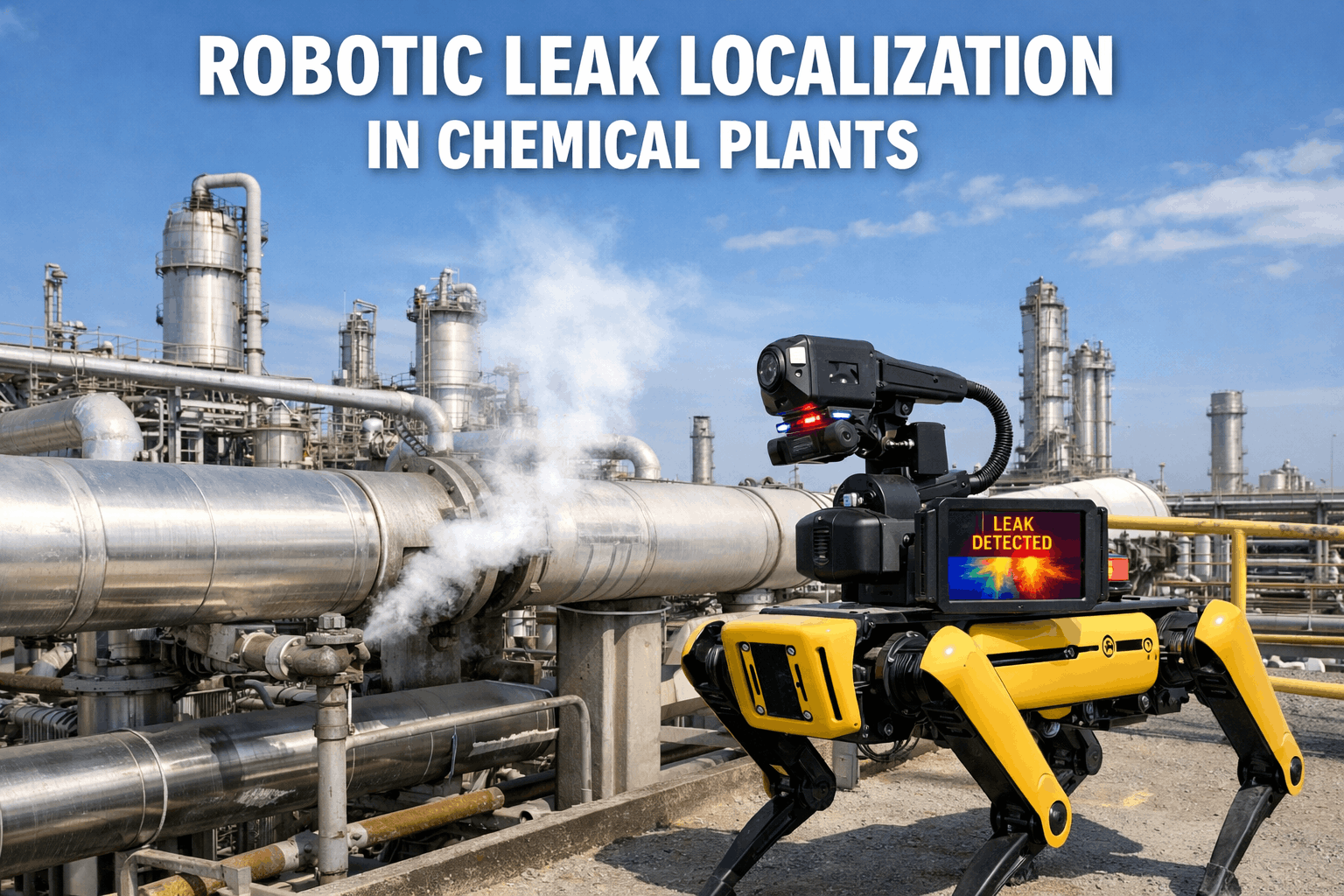
Autonomous inspection robots and drones perform visual checks, thermal scans, and leak detection across hazardous zones — eliminating the need for humans in dangerous environments. BASF deploys walking robots at its Ludwigshafen complex to navigate stairs and complex terrain while reading gauges and monitoring equipment acoustically.
Function
Real-time data capture
Latency
Sub-millisecond
Thousands of IoT sensors feed temperature, pressure, vibration, flow, and chemical composition data into edge computing nodes that process information locally — enabling real-time control loops without cloud latency. Private 5G networks are being deployed to handle the data bandwidth that autonomous operations demand.
Build Your Autonomous Plant Strategy with iFactory
From agentic AI deployment and digital twin integration to autonomous inspection and closed-loop process control — iFactory provides the complete platform for self-optimizing chemical manufacturing.
How Self-Optimizing Systems Work in Practice
A self-optimizing chemical plant operates on a continuous sense-decide-act-learn loop. Sensors feed real-time data into AI models, digital twins simulate outcomes, and the plant autonomously adjusts parameters within seconds. The result is a dynamic, adaptive system where efficiency is maximized continuously — not just during periodic optimization campaigns.
The Autonomous Optimization Loop
1
SENSE
IoT sensors capture thousands of data points per second — temperature, pressure, vibration, flow rates, composition, power draw. Edge processors filter noise and identify signal patterns in real time.
2
DECIDE
AI models analyze incoming data against the digital twin. Agentic AI evaluates multiple options — maximize yield, minimize energy, protect quality — and selects the optimal action or presents choices to the operator.
3
ACT
The system adjusts process parameters autonomously — reactor temperature, catalyst dosage, distillation reflux ratios, compressor loads. Validated changes execute within seconds. Critical decisions route to human approval.
4
LEARN
Every outcome feeds back into the AI models. The system continuously improves its predictions, learns plant-specific patterns, and adapts to seasonal changes, feedstock variations, and equipment aging.
Real-World Autonomous Applications Already in Production
Autonomous chemical plant technology is not a future promise — it is being deployed across multiple sectors of the chemical industry right now. Here are the applications delivering measurable results today.
Petrochemicals
15–20% Energy Reduction
AI models optimize cracking furnace operations in real time, reducing energy intensity without sacrificing yield. Digital twins simulate the impact of feedstock changes before they reach the reactor, enabling autonomous adjustment of operating parameters to maintain optimal conversion rates across variable crude slates.
Pharmaceuticals
95%+ Batch Consistency
Continuous processing guided by self-optimizing reactors is replacing traditional batch operations. AI controls dosing, mixing, and temperature with sub-millisecond precision — improving purity, scalability, and regulatory compliance while reducing waste and the need for manual quality interventions.
Specialty Chemicals
Consistent Global Quality
AI-controlled dosing and mixing systems deliver reproducible product quality across geographically distributed plants. Self-optimizing systems compensate for local variations in water quality, raw material batches, and ambient conditions — ensuring the same product specification from any facility worldwide.
Green Chemistry
Bio-Feedstock Optimization
Optimization engines autonomously balance cost and performance of bio-based feedstocks, helping companies transition from fossil inputs without losing competitiveness. AI handles the inherent variability of biological raw materials that would overwhelm manual process control.
The Business Impact — What Autonomous Operations Deliver
The benefits of autonomous chemical plant operations are not theoretical. Companies already deploying these technologies report substantial, measurable gains across every operational dimension.
24%
Decrease in Plant Downtime
Predictive maintenance and autonomous monitoring catch equipment degradation early. AI-driven scheduling reduces both planned and unplanned shutdowns.
14%
Reduction in Energy Consumption
Continuous optimization of steam, power, and cooling systems eliminates the energy waste hidden in static setpoints and periodic manual adjustments.
20%
Faster R&D Cycle Times
AI-accelerated formulation and process development compresses timelines that traditionally took years into months — through automated experimentation and simulation.
30–50%
Reduction in Unplanned Downtime
Digital twins paired with machine learning detect process deviations before they become failures — catching issues that traditional DCS alarms miss entirely.
15%
Improvement in Customer Satisfaction
Consistent product quality, reliable delivery, and the ability to offer AI-driven performance-based pricing create measurable competitive advantage.
6 to 14%
AI-Driven Revenue Growth (2025–2028)
AI impact on chemical company revenue is projected to grow from 6% in 2025 to 14% by 2028 — representing an $800M+ opportunity for a $10B chemical company.
Roadmap to Autonomous Operations — From Today's Plant to Tomorrow's
The path to autonomous chemical manufacturing is not a single leap — it is a series of achievable steps that build on each other, with each phase delivering measurable ROI while laying the foundation for the next level of autonomy.
Phase 1: Connect and Monitor
Months 1–3
Integrate IoT sensors with existing DCS, SCADA, and historian systems. Establish a unified data layer that gives AI visibility into all plant operations. Deploy real-time dashboards that replace monthly reports with live energy, quality, and throughput monitoring. This phase requires no changes to existing control logic.
Phase 2: Predict and Advise
Months 3–6
Deploy predictive maintenance and anomaly detection models on critical equipment. Build digital twins of key process units. AI begins recommending setpoint changes and flagging issues — but operators make all final decisions. This advisory mode builds trust and validates AI accuracy before any autonomous control.
Phase 3: Automate Routine Decisions
Months 6–12
Transition validated AI models from advisory to closed-loop control on low-risk, high-frequency decisions — utility load scheduling, cooling tower optimization, routine quality adjustments. Deploy agentic AI for operational tasks like shift checklist optimization, anomaly-triggered work orders, and automated compliance reporting.
Phase 4: Scale to Plant-Wide Autonomy
Year 2+
Expand autonomous control across the entire plant. Connect plant-level optimization with supply chain data, customer demand signals, and energy markets. Autonomous inspection robots patrol continuously. The digital twin evolves from a monitoring tool into a plant-wide decision engine that balances production, energy, quality, and sustainability goals simultaneously.
Key Challenges — And How to Overcome Them
The path to autonomous operations is not without obstacles. Understanding these challenges — and knowing the proven approaches to address them — separates successful implementations from stalled pilots.
Data Fragmentation
Data siloed across PLM, ERP, LIMS, MES, and DCS systems prevents AI from acting holistically.
Solution
Deploy a unified data layer using OPC-UA and MQTT that bridges IT and OT systems without replacing them. Start with the highest-value data sources first.
Operator Trust
Experienced operators resist AI-driven recommendations they do not understand or trust.
Solution
Start with advisory mode — AI recommends, humans decide. Build confidence through measurable accuracy. Use explainable AI that shows its reasoning, not just its conclusions.
Cybersecurity Risk
Increased connectivity creates a larger attack surface for operational technology networks.
Solution
Implement IEC 62443 cybersecurity standards. Keep sensitive data within customer-controlled IT systems. Deploy edge processing to minimize cloud dependency for critical control loops.
Frequently Asked Questions
What is an autonomous chemical plant?
An autonomous chemical plant uses AI agents, digital twins, and closed-loop control systems to sense real-time conditions, make operational decisions, and optimize production continuously — with humans setting goals and overseeing outcomes rather than controlling every variable manually. It is not about removing people but about enabling the plant to self-optimize within human-defined boundaries.
How far away are fully autonomous chemical plants?
Most leading chemical producers are currently at Level 3–4 autonomy, with AI advising or controlling specific subsystems. Fully autonomous (Level 5) plants are a decade-end target. However, the ROI case does not depend on reaching Level 5 — each incremental step delivers measurable returns. Companies deploying Level 3–4 systems today are already reporting 14% energy reductions and 24% decreases in downtime.
Do we need to replace our existing control systems?
No. Autonomous capabilities sit on top of existing DCS, SCADA, and MES systems. AI platforms connect to your current sensors and data historians through standard protocols like OPC-UA. The intelligence layer adds new capability without disrupting proven infrastructure.
What is agentic AI and how does it apply to chemical manufacturing?
Agentic AI refers to autonomous AI systems that can perceive conditions, reason through options, and take action without step-by-step human instruction. In chemical plants, AI agents can independently optimize shift checklists, flag anomalies like potential corrosion, draft work orders, and adjust process parameters — all while operating within safety and quality constraints defined by human operators.
Start Building Your Self-Optimizing Chemical Plant
iFactory delivers end-to-end autonomous manufacturing solutions for chemical producers — from AI-driven process control and predictive maintenance to autonomous inspection robotics and plant-wide digital twins. Build the factory that optimizes itself.