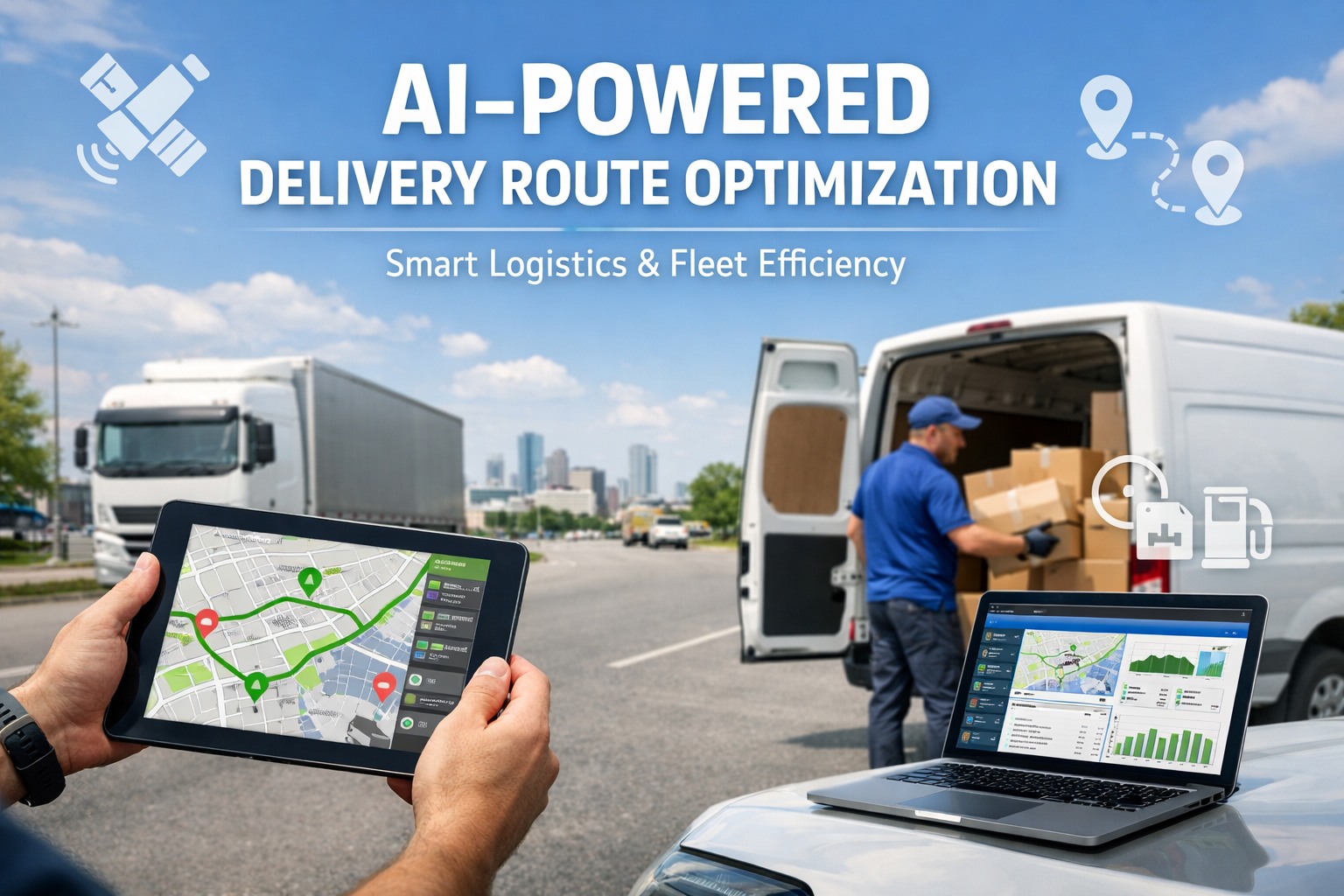
A regional grocery chain operating 47 delivery vehicles across three metro areas was spending $2.3 million annually on fuel — and 19% of their orders were arriving outside the promised delivery window. Their dispatch team started at 5:30 AM every day manually building routes in spreadsheets, a process that took 2.5 hours and produced routes that ignored live traffic, vehicle capacity variations, and driver shift constraints simultaneously. When iFactory AI's machine learning route optimization went live, the same routing process took 4 minutes. Fuel spend dropped 23% in the first 90 days. On-time delivery rate climbed from 81% to 97.4%. And the two dispatchers who spent their mornings on route building moved to exception management and customer escalation — the work that actually required human judgment. This is what machine learning in delivery operations actually looks like: not a futuristic concept, but a measurable operational transformation happening at delivery businesses right now.
AI in Delivery Operations: How Machine Learning is Optimizing Routes and Efficiency
Machine learning has moved from a buzzword to a measurable operational advantage in delivery. Fleets using AI routing are outperforming manual planning competitors by margins that compound every quarter. This guide explains how it works — and what it takes to implement it.
Why Manual Route Planning Is Costing Your Fleet More Than You Realize
The hidden cost of manual routing isn't just the dispatcher's time — it's the compounded inefficiency of every suboptimal decision that cascades through the rest of the day. Here's where that money actually goes.
How Machine Learning Optimizes Delivery Routes — The 5-Step Intelligence Pipeline
ML route optimization is not a smarter GPS. It's a decision engine that processes hundreds of variables simultaneously and continuously — producing route plans no human dispatcher can match in speed or accuracy. Here's exactly how it works.
The 5 AI Capabilities Transforming Delivery Operations in 2026
ML route optimization is the headline capability — but it's one of five interconnected AI capabilities that iFactory AI brings to delivery operations. Each one addresses a specific cost driver that manual systems cannot solve.
Manual Routing vs. AI-Powered Delivery Operations — Every Metric
The performance gap between AI-powered and manually operated delivery fleets compounds across every operational dimension that determines profitability and customer retention.
How Different Delivery Industries Apply ML — What Each Gains
The ML capabilities are the same — the application priorities differ. Here's how iFactory AI addresses the specific ML use cases that matter most in each sector.
Deploying AI in Your Delivery Operations — The First 90 Days
The most common concern delivery operations managers raise about ML deployment is implementation complexity. iFactory AI's deployment is structured to minimize disruption and deliver measurable results within the first 30 days.
AI in Delivery Operations — Detailed Questions Answered
These are the questions delivery operations managers, fleet directors, and logistics technology leads ask when evaluating ML-powered delivery optimization.
What exactly does machine learning do in delivery routing that GPS routing software doesn't?
How does iFactory AI integrate with our existing GPS telematics system?
How long does it take for the ML models to learn our fleet's specific patterns?
How does the AI handle delivery exceptions — customer unavailable, address issues, vehicle problems?
How does iFactory AI's predictive maintenance connect to route optimization?
What ROI should we realistically expect and how quickly does payback occur?
AI route optimization, predictive maintenance, demand forecasting, real-time exception handling, and driver performance analytics — unified in a single platform that connects to your existing telematics in days and delivers measurable ROI within the first month.