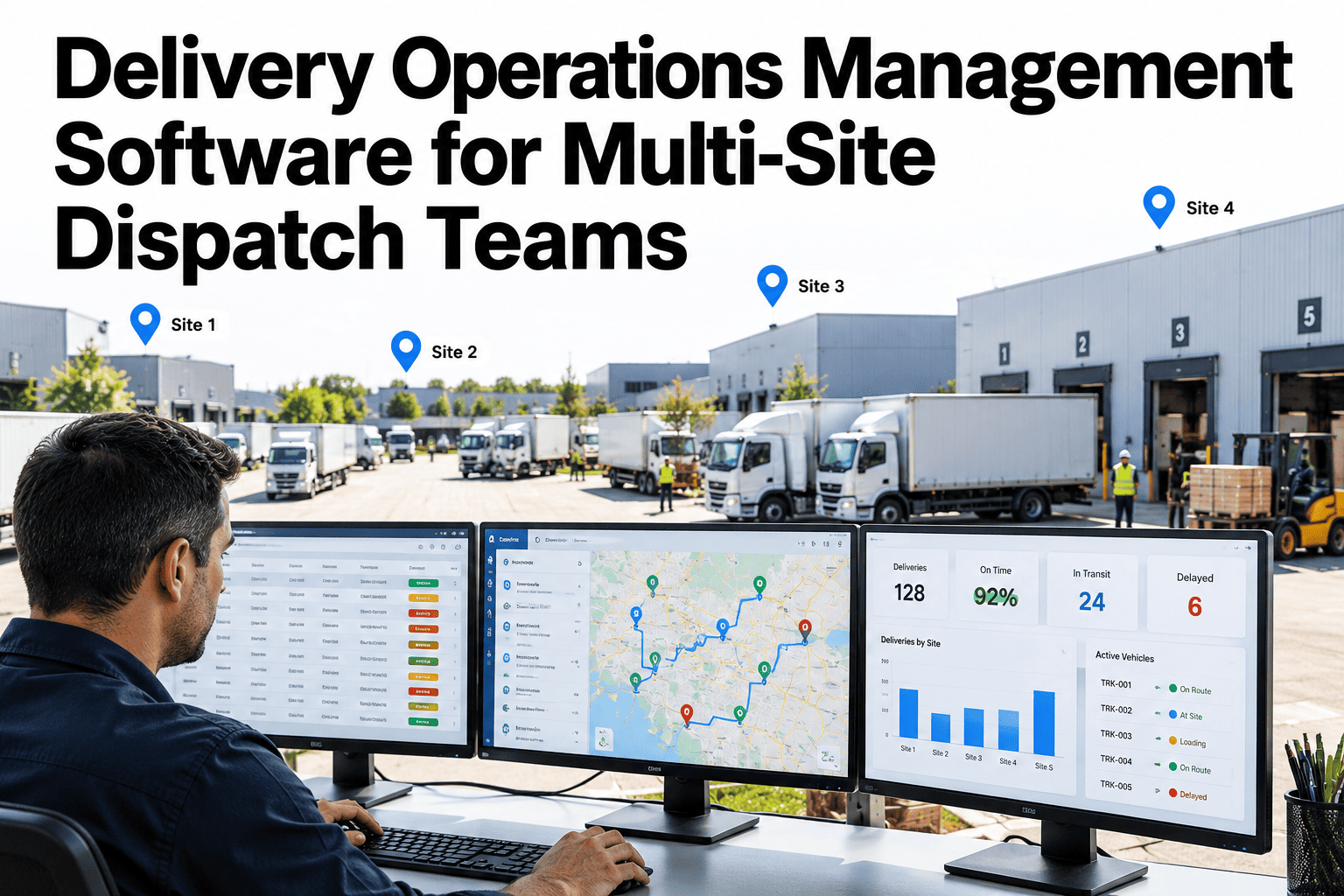
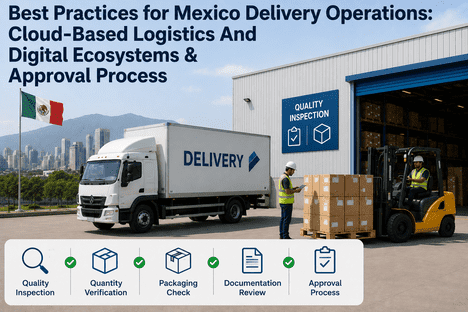
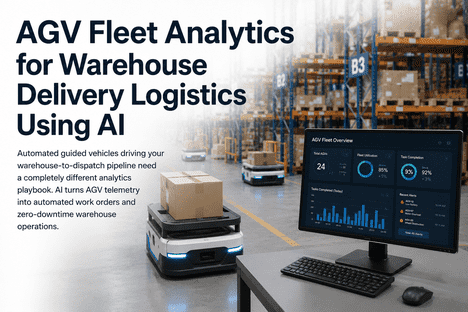
Inside every manufacturing plant, the dispatch department runs one of the most consequential coordination challenges in daily operations — managing inbound vehicle arrivals, dock assignments, receiving workflows, internal material movements, yard vehicle inspections, and outbound dispatch sequences simultaneously, across multiple shifts, with no margin for error. Yet 72% of manufacturers have partially implemented smart factory strategy while the factory delivery department remains the most data-blind function in the plant. Production floors have OEE dashboards. Maintenance teams have CMMS platforms. Quality departments have digital inspection workflows. The dispatch department? Still running on whiteboards, paper gate passes, verbal handoffs, and spreadsheets that nobody fully trusts. The cost is measurable: manual gate processing loses 280+ minutes of dock time daily at a 20-vehicle facility, manual dispatch sequencing generates a 2–3% error rate that goes undetected until a customer complaint surfaces, and 30–40% of production stoppages attributed to material unavailability are actually locating failures — materials that arrived, cleared receiving, and disappeared inside the plant with no location record. This guide covers the key strategies and best practices for optimizing factory dispatch operations, what digital platforms deliver that manual processes cannot, and how iFactory gives operations managers the data and automation layer their dispatch department has always lacked. For questions specific to your facility, talk to our support team directly.
iFactory · Factory Dispatch Department · Operations Guide
Optimizing Factory Dispatch Operations: Key Strategies and Best Practices
Gate passes, dock assignments, inbound receiving, internal material tracking, vehicle inspections, and outbound dispatch sequencing — the factory dispatch department controls everything entering and exiting your plant. This guide covers the strategies that leading operations teams use to digitize, measure, and continuously improve every function in this department.
87%
Gate pass processing time reduction — from 15–20 min manual to under 2 min digital
90%
Fewer dispatch errors — from 2–3% manual rate to under 0.3% with SLA automation
78%
Faster inbound receiving — from 45–60 min to under 10 min per shipment
14 Days
iFactory go-live timeline — fully operational digital dispatch department
The Dispatch Data Gap
What Your Factory Already Measures — and Where Your Dispatch Department Is Flying Blind
Already Tracked with Data Across Your Plant
Production OEE — tracked by 86% of manufacturers in real time
Equipment maintenance work orders and full repair history
Quality control defect rates and first-pass yield per line
Outbound shipment POD and delivery confirmation records
Employee safety training and EHS incident documentation
Finished goods inventory and warehouse location records
Energy consumption per production line and per shift
Supplier qualification and vendor management documentation
Your Dispatch Department Is Still Running Blind On
Gate dwell time per vehicle — no record of arrival-to-clearance duration
Dock utilization rate — which docks occupied and for how long per shift
Inbound receiving cycle time — no benchmark, no variance detection
Dispatch SLA compliance rate — misses undetected until customer complaint
Internal material location — zero tracking record after dock entry
Vehicle inspection pass rate trends — paper results never aggregated
Receiving discrepancy rate by supplier — trends completely invisible
Incident response time — events discovered days after occurrence
8 Operational KPIs
The 8 Factory Dispatch KPIs Every Operations Manager Should Be Measuring — and What Digital Delivers
87%
Gate Pass Processing Time
Time from vehicle arrival to gate clearance. Every minute of unnecessary dwell is a dock occupancy cost and a driver experience failure. At 20 vehicles/day, manual processing loses 280+ minutes of dock time daily.
Manual: 15–20 min/vehicleDigital: under 2 min
78%
Inbound Receiving Cycle Time
Time from dock arrival to completed receiving sign-off. Drives dock utilization rates, production material velocity, and discrepancy resolution speed across every supplier and shift.
Manual: 45–60 min/shipmentDigital: under 10 min
90%
Dispatch SLA Compliance Rate
Percentage of dispatch orders completed within the committed SLA window by priority tier. Manual misses go undetected until a customer complaint; digital pre-breach alerts catch misses before they occur.
Manual: 2–3% error rateDigital: under 0.3%
100%
Audit Trail Coverage
Percentage of gate events, receiving transactions, inspection results, material transfers, and dispatch decisions that are timestamped and person-attributed in a retrievable digital record.
Manual: incomplete coverageDigital: 100% from day one
40%
Inbound Delay Reduction
Proportion of inbound material delays attributable to gate and receiving bottlenecks versus actual supply chain issues. Most factories overestimate supplier delays and undercount internal processing delays.
Manual: 280+ min lost/dayDigital: 40% delay reduction
30–40%
Material Location Failures
Proportion of production stoppages attributed to material unavailability that are actually location failures — materials that arrived and were received but cannot be found without a full physical search.
Manual: no location recordDigital: real-time location
3–6 mo
Platform Payback Period
Time to full iFactory platform payback through recovered dock time, eliminated dispatch errors, reduced compliance overhead, and production stoppage prevention combined.
Legacy platforms: 18–24 moiFactory: 3–6 months
$25.5B
Market Scale by 2035
The global delivery management software market is $11.6B in 2025, growing to $25.5B by 2035 at 8.2% CAGR. Manufacturing dispatch digitization is the fastest-growing adoption segment.
2025: $11.6B market2035: $25.5B projected
iFactory Digitizes Every Function of Your Factory Dispatch Department — and Goes Live in 14 Days.
Gate passes, inbound receiving, material tracking, vehicle inspection, dispatch sequencing, and incident management — all from a single mobile-first platform. No IT project required. No paper.
Talk to our support team for a deployment assessment specific to your facility.
8 Core Strategies
Key Strategies for Optimizing Factory Dispatch Operations
Each strategy addresses a specific operational bottleneck in the factory dispatch department. Together they form the digital operations framework that eliminates manual delays, data gaps, and coordination failures that cost production schedules their most preventable hours every day.
01
Pre-Arrival Gate Pass Digitization
Replace paper gate logs with digital pre-registration completed by drivers before arrival. Security verifies vehicle, driver credentials, and cargo manifest on mobile in under 2 minutes versus 15–20 minutes manual. A 20-vehicle/day facility recovers 280+ minutes of dock time daily from this single change alone.
87% reduction in gate pass processing time
02
SLA-Priority Dispatch Sequencing
Automate dispatch order assignment by SLA priority tier — critical, standard, and economy. The system sequences vehicles against committed SLA windows and fires a pre-breach alert when a departure is approaching threshold. Manual dispatch sequencing generates a 2–3% error rate; SLA automation reduces this to under 0.3%.
90% reduction in dispatch errors
03
Mobile Inbound Receiving with PO Verification
Replace paper receiving forms with mobile PO scanning, barcode verification, and photo proof of delivery. Receiving teams match inbound materials against purchase orders in real time and flag discrepancies with photo documentation. Manual receiving averages 45–60 minutes per shipment; mobile workflows cut this to under 10 minutes.
78% faster inbound receiving completion
04
Real-Time Internal Material Location Tracking
Log every internal material transfer — dock to stores, stores to staging, staging to production — with timestamped, person-attributed digital records. 30–40% of production stoppages attributed to material unavailability are actually location failures. Digital records resolve location queries in seconds.
30–40% of production stoppages eliminated
05
Digital Vehicle Inspection with Auto-Enforcement
Replace paper checklists with digital pre-use inspection workflows on mobile. Failed items are logged with timestamp, operator ID, and photo evidence. Vehicles with open failed items are automatically blocked from dispatch until a verified repair work order is completed — an enforcement mechanism paper checklists can never provide.
100% inspection coverage with auto-block enforcement
06
Dock Utilization Measurement and Optimization
Track which docks are occupied, for how long, and by which vehicle type — generating dock assignment efficiency scores per shift. Digital gate and receiving workflows surface dock utilization data as a natural operational byproduct, revealing peak congestion windows, underutilized dock slots, and optimal dock assignment patterns.
Dock efficiency measurably improves within 30 days
07
Incident Management with Auto-Escalation
Capture all dispatch department incidents — vehicle damage, receiving discrepancies, security exceptions, quality holds — in real time through mobile reporting. Each incident is timestamped and automatically escalated to the appropriate supervisor when resolution thresholds are exceeded. Most factories discover incidents days after occurrence; auto-escalation changes this to minutes.
Incidents resolved before shift-end, not shift-after
08
Digital Shift Handover Dashboard
Replace informal verbal shift handovers with a structured digital dashboard showing open gate passes, dock occupancy, outstanding dispatch orders by SLA tier, vehicle inspection clearance status, and materials in transit. Verbal handovers transmit 30–40% of required information at best; digital dashboards transmit 100% — with an auditable record of what was known and when.
Zero information loss at every shift handover
How iFactory Works
How iFactory Connects Every Factory Dispatch Function Into One Digital Operations Layer
iFactory is not a standalone tracking tool — it is the data layer connecting every function of the factory dispatch department into a single operational system where every event is timestamped, every person is attributed, and every bottleneck is visible to operations managers in real time.
01
Gate Pass Management — Pre-Arrival to Exit
Drivers pre-register via mobile before arrival — entering vehicle details, cargo manifest, and PO references. Security receives the pre-registration on their mobile app and verifies the vehicle on arrival with a guided digital checklist covering vehicle compliance, driver credentials, and cargo authorization. Gate clearance completes in under 2 minutes. The system records exact arrival and exit timestamps, dwell time per vehicle, and any gate-level exceptions — generating the operational data that no paper gate log has ever captured consistently across every shift and every security guard.
Dwell time tracking
Driver pre-registration
Cargo verification
Gate audit trail
02
Inbound Receiving — PO Matching and Discrepancy Capture
Receiving staff open the inbound PO on the iFactory mobile app at dock arrival — scanning barcodes to match received quantities against ordered quantities, capturing photo proof of delivery, and flagging discrepancies with photo documentation and exception notes. Shipments are closed digitally with a timestamped confirmation linked to the original PO, the carrier, and the receiving team member. Over time, this generates supplier discrepancy trend data that identifies which suppliers are creating the most receiving overhead — data that is completely invisible to a paper receiving operation regardless of how long it has been running.
PO verification
Photo POD
Discrepancy logging
Supplier performance data
03
Internal Material Tracking — Dock to Production Floor
Every internal material movement is logged at transfer point — dock to stores, stores to staging area, staging to production line, production to quality hold, quality to release. Each transfer generates a timestamped, person-attributed digital record that makes every material batch's location queryable in seconds. Production supervisors who previously initiated a 20–45 minute physical search to locate missing materials can now resolve location queries from a dashboard in under 10 seconds — eliminating the production stoppages that masquerade as inventory shortages but are in reality data failures where the material is physically present but informationally invisible.
Real-time location
Transfer chain of custody
Production stoppage prevention
Quality hold tracking
04
Dispatch Sequencing — SLA-Priority Order Management
Dispatch coordinators assign outbound orders in iFactory's dashboard, with each order tagged to an SLA priority tier and a committed departure window. The system sequences assignments against available vehicles with current inspection clearance, monitors real-time progress against SLA windows, and fires a pre-breach alert when a departure is approaching the SLA threshold — enabling coordinator intervention before the miss, not discovery after the customer complaint arrives. Every dispatch event generates a record with vehicle ID, departure timestamp, cargo reference, and SLA outcome — creating the operational history that informs future dispatch sequencing improvements.
SLA tier management
Pre-breach alerts
Vehicle clearance check
Departure audit trail
05
Vehicle Inspection — Digital Checklists with Auto-Block
Yard vehicles — tractors, forklifts, shunters — complete digital pre-use inspection checklists on mobile before each shift or operation. Failed inspection items are logged with operator ID, timestamp, and photo evidence. Vehicles with open failed items are automatically blocked from dispatch assignment until a verified repair work order is completed and closed by a qualified technician. This removes the most dangerous gap in paper inspection systems: the ability to operate an uninspected or failed vehicle simply because no mechanical enforcement mechanism exists in a paper-based workflow — a gap that creates both safety risk and compliance exposure simultaneously.
Mobile checklists
Failed vehicle auto-block
Repair work order creation
Inspection audit trail
Measurable Results
What iFactory Customers Measure Within 90 Days of Go-Live
87%
Gate Pass Time Reduction
From 15–20 minutes manual processing to under 2 minutes digital — at 20 vehicles/day, that is 280+ minutes of recovered dock time every shift that previously disappeared into idle gate queues with nothing to show for it.
78%
Faster Receiving Completion
Inbound receiving drops from 45–60 minutes to under 10 minutes per shipment with mobile PO verification and photo POD — while generating a complete receiving chain of custody record simultaneously at zero additional effort from the receiving team.
90%
Fewer Dispatch Errors
Manual dispatch error rates of 2–3% drop to under 0.3% with SLA-priority sequencing and pre-breach alerting — converting near-miss dispatch events into on-time completions rather than post-complaint investigations that consume supervisor time and damage customer relationships.
100%
Audit Trail Coverage
Every gate event, receiving transaction, inspection result, material transfer, and dispatch decision is timestamped and person-attributed. Compliance documentation retrievable in under 60 seconds — not hours of paper binder assembly before every audit event.
3–6 mo
Full Platform Payback
Recovered dock time, eliminated dispatch errors, production stoppage prevention, and reduced compliance overhead combine to deliver full platform payback within 3–6 months of go-live — documented consistently across iFactory deployments in manufacturing operations globally.
14 Days
Go-Live Timeline
From decision to fully operational digital dispatch department in 7–14 days. Cloud-based, mobile-first. No hardware procurement, no server installation, no IT department involvement required. Live operations begin while onboarding continues in parallel.
Before vs. After
Factory Dispatch Department — Manual Operations vs. iFactory Digital Platform
iFactory · Factory Dispatch Department Module
Your Production Floor Has Dashboards. Your Dispatch Department Deserves the Same Visibility.
iFactory digitizes every gate pass, inbound receipt, material transfer, vehicle inspection, dispatch event, and incident report — giving your operations team real-time visibility into the department that controls everything that enters and exits your plant. Deploy in 7–14 days. No IT project. No hardware procurement. Results visible from day one.
87%Gate pass time reduction
78%Faster inbound receiving
100%Audit trail coverage
14 DaysFull deployment
Book A Demo
Frequently Asked Questions
Optimizing Factory Dispatch Operations — What Operations Leaders Ask First
Answers for plant managers, dispatch supervisors, and operations directors evaluating iFactory for their factory dispatch and delivery department. For facility-specific questions, talk to our support team or book a demo to see the platform live.
What exactly is the factory dispatch department and how is it different from a third-party logistics or courier operation?
The factory dispatch department is the internal operational function within a manufacturing plant that manages all vehicle and material movement entering and exiting the facility — distinct from third-party logistics providers, courier services, or external delivery companies. Its scope covers inbound vehicle gate processing, dock assignment, inbound materials receiving and verification, internal material transfer from receiving to stores to production, yard vehicle management and inspection, outbound dispatch sequencing and departure management, and incident and exception handling for every event that occurs in the factory's vehicle and material flow zone. Unlike a courier operation that optimizes routes across a geographic delivery network, the factory dispatch department optimizes flow through a fixed facility — minimizing gate dwell time, maximizing dock utilization, ensuring production floor material availability, and maintaining the documentation chain that regulatory audits require. Most factory dispatch departments currently operate without any dedicated digital platform — relying on paper gate logs, manual receiving forms, whiteboard dispatch sequences, and verbal handovers that create systematic data gaps across every function. iFactory is built specifically for this internal factory delivery department context — not adapted from a courier logistics tool or a warehousing WMS system. For a walkthrough of how iFactory maps to your specific facility layout and operational structure,
talk to our support team or
book a demo.
How does iFactory reduce dispatch errors from 2–3% to under 0.3% — and what does this cost a factory annually in undetected losses?
Manual dispatch sequencing generates a 2–3% error rate through three primary failure modes: wrong vehicle assigned to a dispatch order (vehicle not cleared for the cargo type or weight class), departure executed against a closed or expired SLA window without supervisor awareness, and dispatch order fulfilled on the wrong priority tier without any alert. In manual operations, all three failures are discovered retrospectively — through a customer complaint, an SLA penalty invoice, or a production schedule disruption — because there is no real-time monitoring of dispatch assignments against SLA windows. iFactory eliminates the first failure mode by checking vehicle inspection clearance status and cargo authorization before any dispatch assignment is confirmed. It eliminates the second by continuously monitoring each active dispatch order against its committed SLA departure window and firing a pre-breach alert when the window is approaching close — giving the coordinator intervention time measured in hours, not minutes after the miss. It eliminates the third by enforcing SLA priority tier sequencing in the dispatch queue itself, preventing high-priority orders from being displaced without a deliberate override that creates an auditable record. Financially, a 2–3% dispatch error rate across a mid-size manufacturing operation typically generates $50,000–$200,000 annually in SLA penalty costs, re-dispatch labor costs, and management time consumed by error investigation and customer communication — a cost that most factories carry invisibly because they have no dispatch error rate KPI to measure it against.
Book a demo to see the dispatch SLA management interface live, or
talk to our support team for an error rate assessment for your operation.
How does iFactory deploy in 7–14 days — and what does the onboarding process actually require from our team?
iFactory deploys in 7–14 days because it is cloud-native and mobile-first — there is no server infrastructure to install, no IT department project required, and no hardware procurement needed for the core deployment. The platform is accessed through existing smartphones and tablets using the iFactory mobile app, with web browser access for supervisors and managers. The onboarding process has three structured phases. Days 1–3 (data onboarding): the iFactory implementation team uploads your vehicle registry, driver roster, supplier contact list, PO template library, and facility layout configuration. No technical expertise is required from your team — this is a data upload and configuration process conducted by iFactory's onboarding specialists using information your operations team already has in existing spreadsheets or ERP systems. Days 4–7 (workflow configuration and training): gate pass workflows, receiving checklists, inspection checklists, dispatch SLA rules, dock assignment templates, and user access are configured to your facility's specific operational structure. Role-specific training for security staff, receiving teams, dispatch coordinators, and supervisors takes 2–4 hours per role group through the iFactory mobile app — not a multi-day classroom program. Days 8–14 (go-live and verification): live operations begin with iFactory support monitoring data quality and resolving any workflow gaps in real time. The platform starts generating operational data — gate dwell times, receiving cycle times, dispatch SLA compliance rates — from the first event captured on go-live day, giving management visibility into dispatch department performance that has never existed before.
Talk to our support team about your specific deployment timeline, or
book a demo to see the onboarding process in detail.
How does internal material tracking eliminate production stoppages — and what does this look like operationally for our receiving and production teams?
Internal material tracking addresses the most systematically misdiagnosed production stoppage cause in manufacturing: stoppages attributed to material unavailability that are actually material location failures. The failure pattern is consistent across facilities: materials arrive at the receiving dock, are verified and signed off by the receiving team, then physically transferred to stores or a staging area — where they exist but are no longer tracked. When production requests the material and finds it absent from the expected staging location, the production supervisor raises a stock-out exception. Procurement is notified. An emergency order may be placed. The existing material is eventually found in stores, or an alternate staging area, or a quality hold zone — in a location it was moved to during a previous shift without any transfer record. iFactory eliminates this failure mode by capturing every internal material transfer as a timestamped, person-attributed digital record at the moment of transfer — from dock confirmation to stores receipt, stores to staging, staging to production line, and production to quality hold or release. When a production supervisor queries a material's location, they receive the current location from the last logged transfer in under 10 seconds on the iFactory dashboard, rather than initiating a full physical search of stores and staging areas. Across manufacturing operations deploying iFactory, 30–40% of production stoppages previously attributed to material shortages are confirmed as location failures — meaning digital transfer tracking eliminates this proportion of stoppages without any change to inventory management or procurement processes whatsoever.
Book a demo to see the material tracking interface in a live factory environment, or
talk to our support team about your specific facility layout and transfer workflow configuration.
Can iFactory manage factory dispatch operations across multiple plant locations — and how does the multi-site dashboard work?
iFactory is built as a multi-site platform from its core architecture — a single deployment covers all plant locations in your portfolio under a unified operations dashboard, with site-specific configuration for each facility's gate workflows, dock layouts, inspection checklists, and dispatch SLA rules. For operations managers and plant directors overseeing multiple sites, the cross-site dashboard provides a single view of every site's live operational status: active gate passes by site, dock utilization rates by facility, dispatch SLA compliance by plant, and material tracking status across the full portfolio. Each site maintains its own operational data and user configuration while sharing a centralized reporting layer — so site-level managers see their facility's data while corporate-level operations directors see the aggregated multi-site view with comparative performance benchmarks between facilities. Site-specific compliance requirements are handled through configurable templates — a facility operating under Schedule M GMP requirements can run the appropriate documentation workflows while a US facility on the same deployment runs OSHA and DOT documentation workflows, all from the same platform instance without any separation between systems. For manufacturing groups with 2–20 plants that currently manage each facility's dispatch operations independently — with no cross-site visibility, no performance benchmarking, and no shared best practice documentation between sites — iFactory's multi-site architecture delivers the portfolio-level operational visibility that is otherwise impossible to achieve through disconnected per-site tools.
Talk to our support team about multi-site deployment configuration, or
book a demo to see the multi-site dashboard operating with real facility data.
What audit documentation does iFactory generate automatically — and how quickly can it be retrieved when a regulatory inspector arrives?
iFactory generates six categories of audit-relevant documentation automatically from daily factory dispatch operations — without any separate reporting step, compliance documentation workflow, or data re-entry. Gate records capture vehicle type, arrival timestamp, exit timestamp, dwell time, driver identity, cargo manifest, and any gate-level exceptions for every vehicle that enters or exits the facility — building a continuous, searchable gate activity log across every shift and every security team member. Receiving records capture supplier, carrier, PO reference, material description, quantity received versus quantity ordered, discrepancy documentation with photos, and the receiving team member for every inbound shipment — creating the chain of custody record from supplier to factory floor. Vehicle inspection records capture pre-use inspection results by checklist item, operator ID, timestamp, photo evidence of any failed items, and the repair work order that resolved each failure — providing a continuous inspection audit trail for every yard vehicle in your fleet. Dispatch records capture vehicle ID, dispatch order reference, SLA tier, departure timestamp, cargo reference, and SLA outcome for every outbound dispatch event — documenting the complete dispatch operation history. Material transfer records capture material batch ID, transfer origin, transfer destination, timestamp, and the person completing each internal transfer — extending the chain of custody from dock entry through to production floor consumption. Incident records capture event type, timestamp, vehicle or shipment reference, operator involvement, and full resolution timeline for every exception that occurs in the dispatch department. All six categories are stored in iFactory's searchable cloud database and retrievable through the audit dashboard in under 60 seconds — covering any combination of dates, vehicles, suppliers, or operators that an audit request specifies, rather than the 4–8 hours of manual binder assembly that paper-based compliance documentation requires per audit event.
Book a demo to see the audit report generation interface live, or
talk to our support team about compliance requirements specific to your facility and industry.
iFactory · Factory Dispatch Department Module
Your Dispatch Department Is the Last Undigitized Function in Your Plant. iFactory Changes That in 14 Days.
86% of manufacturers track production OEE. Almost none measure gate pass dwell time, dispatch SLA compliance, or inbound receiving cycle time — the metrics that define how efficiently your plant's delivery department actually operates. iFactory closes this gap with a purpose-built digital platform that deploys in 7–14 days and starts generating operational data from day one.
87%Gate time reduction
78%Faster receiving
90%Fewer errors
14 DaysFull deployment
Book A Demo